
Sign up to save your podcasts
Or



“I met Miles backstage at the Hollywood Bowl—the last gig he ever played. Miles asked, “Who’s that white boy?” I introduced him to Bob Thiele Jr., whose father produced Coltrane. When Miles discovered this, he said, “Well, you can hang,” following this friendly gesture with me walking Miles to his car. I did not know he was dying. I kissed him on both cheeks. And 18 days later, he was gone.”
Peter Weller is a renowned theater and Hollywood actor. His performances in films such as RoboCop and Naked Lunch garnered him much critical and commercial success over the years. His television acting and directing credits include Sons of Anarchy, Dexter, and 24. Unbeknownst to most, Weller has spent decades honing his appreciation for the visual and musical arts through his studies of the Renaissance era. Earning a Master's in Roman architecture from Syracuse University before moving on to a PhD in Renaissance Art from UCLA. Dr. Weller has just written a book, Leon Battista Alberti in Exile: Tracing the Path to the First Modern Book on Painting.
Weller has also contributed an essay remembering his friend Miles Davis for Jazz and Literature. The book, co-edited by Mia Funk, features many of her interviews and artworks, as well as poetry, art, and essays by our contributors.
Episode Website
www.creativeprocess.info/pod
Instagram:@creativeprocesspodcast
“What I have done in my career is just try to assess who we are, what we are, why we are here, and how come we, as animals, are able to walk around and wear pants and dresses and talk on the internet, while the other animals are not. It's been my obsession since I was young. I think if I hadn't become a novelist, I might have been happy to be a naturalist or a field biologist.
There is some kind of magic in the creative process. I am reaching for things in my unconscious that surprise me. I don't know what it's going to be. I'd like to do many, many things. It's all my life's work. I don't want to just write the same book over and over again as some other authors do. I don't want to become formulaic.”
T.C. Boyle is a novelist and short story writer based out of Santa Barbara, California. He has published 19 novels, such as The Road to Wellville and more than 150 short stories for publications like The New Yorker, as well as his many short story collections. His latest novel Blue Skies is a companion piece to A Friend of the Earth. His writing has earned numerous awards, including winning the PEN/Faulkner Award for Best Novel of the Year for World's End.
Episode Website
www.creativeprocess.info/pod
Instagram:@creativeprocesspodcast
Why are we filled with so many contradictions? How does writing help us make sense of the absurdity and of the absurdity and chaos of the world?
T.C. Boyle is a novelist and short story writer based out of Santa Barbara, California. He has published 19 novels, such as The Road to Wellville and more than 150 short stories for publications like The New Yorker, as well as his many short story collections. His latest novel Blue Skies is a companion piece to A Friend of the Earth. His writing has earned numerous awards, including winning the PEN/Faulkner Award for Best Novel of the Year for World's End.
“What I have done in my career is just try to assess who we are, what we are, why we are here, and how come we, as animals, are able to walk around and wear pants and dresses and talk on the internet, while the other animals are not. It's been my obsession since I was young. I think if I hadn't become a novelist, I might have been happy to be a naturalist or a field biologist.
There is some kind of magic in the creative process. I am reaching for things in my unconscious that surprise me. I don't know what it's going to be. I'd like to do many, many things. It's all my life's work. I don't want to just write the same book over and over again as some other authors do. I don't want to become formulaic.”
Episode Website
www.creativeprocess.info/pod
Instagram:@creativeprocesspodcast
Photo credit: Spencer Boyle in Santa Barbara, CA
How do the arts help us find purpose and meaning? What role do stories play in helping us preserve memories, connect us to each other, and answer life’s big questions?
MAX RICHTER(Award-winning Composer & Pianist · His album Sleep is the most streamed classical album of all time) reflects on the importance of creativity and how literature, music, and visual art offer windows into other people’s perceptions and experiences, fostering understanding and connection.
ETGAR KERET (Cannes Film Festival Award-winning Director · Author of Fly Already · Suddenly a Knock on the Door · The Seven Good Years) shares insights from his upbringing and how his mother's storytelling shaped his perception of creativity and authenticity.
ANTHONY JOSEPH (T.S. Eliot Prize-winning Poet, Novelist & Singer-songwriter · Author of Sonnets for Albert) discusses the fragmented documentation of Caribbean life and how his poetry attempts to piece together these fragments.
CLAUDIA FORESTIERI (Emmy Award-winning Writer · Creator of HBOMax’s Gordita Chronicles) talks about the crucial role of immigrants in building and revitalizing America, portraying them as "Born Again Americans."
BRIGITTE MUNOZ-LIEBOWITZ (Showrunner Gordita Chronicles · One Day at a Time) highlights the inevitability of adversity in life and its role in fostering growth. She underscores the importance of a positive outlook in overcoming the challenges of immigration.
JOHNJOE McFADDEN (Author of Life is Simple: How Occam’s Razor Set Science Free and Shapes the Universe · Professor of Molecular Genetics at University of Surrey) explores the communicative power of art, detailing how complex ideas and feelings can be conveyed holistically.
SHEHAN KARUNATILAKA (Booker Prize-winning Author of The Seven Moons of Maali Almeida) discusses his choice of writing in the second person to explore the spiritual dimension.
CATHERINE CURTIN (Actress · Stranger Things · Orange Is the New Black · Homeland) reflects on creative freedom, experimental theater and her work in film and television.
KATE MUETH (Founder/Artistic Director of the award-winning dance theater company The Neo-Political Cowgirls) emphasizes the importance of connecting stories to meaning and how her creative process prioritizes authenticity and personal fulfillment over industry expectations.
To hear more from each guest, listen to their full interviews.
Episode Website
www.creativeprocess.info/pod
Instagram:@creativeprocesspodcast
Where does our intuition come from? How are lifelong creative partnerships formed and what role do friendship and personal connection play? How do our personal lives influence the art we make?
Erland Cooper (Scottish composer, producer, and multi-instrumentalist) explores the emotional and transformative effects of music and visual arts. He underscores how music can transport individuals to different places and evoke emotional responses and relates his personal experiences of homesickness for his native Orkney.
Debora Cahn (television creator, writer, and Emmy-nominated showrunner and executive producer of Netflix’s The Diplomat) discusses the craft of long-form storytelling in television. She highlights the process of building immersive worlds and the challenge of integrating ideas into narratives that resonate with audiences on a universal level.
Julian Lennon (singer-songwriter and documentary filmmaker, founder of The White Feather Foundation, and photographer/author of Life’s Fragile Moments) reflects on the influence of his heroes and teachers and remembers the thing his mother taught him. He speaks about the importance of empathy, respect, and positivity, and how these values shape his creative and humanitarian efforts.
Ed Zwick (Academy-Award-winning writer, director, and producer, and author of Hits, Flops, and Other Illusions) analyzes the elusive nature of talent and the magical moments in casting where undeniable potential shines through. Zwick shares insights into the subtle and unspoken aspects of directing that elevate a performance and bring a story to life.
Chris Blackwell (Founder of Island Records and inductee of the Rock & Roll Hall of Fame) highlights the importance of instinct in recognizing and nurturing talent. He recounts his initial hesitation before signing Cat Stevens to Island Records. He shares how artistic partnerships grow out of personal connections and friendship.
Joy Gorman Wettels (Executive producer of UnPrisoned and the founder of Joy Coalition) highlights stigmatized social issues through her storytelling. She emphasizes that humanizing these issues by creating relatable, empathetic characters can lead to real-world change and understanding.
Rick Carnes (Songwriter and President of the Songwriters Guild of America) discusses the fundamental elements of songwriting and how music marks significant moments in people’s lives. He elaborates on his creative process and the importance of mindfulness and emotional awareness in writing meaningful songs.
To hear more from each guest, listen to their full interviews.
Episode Website
www.creativeprocess.info/pod
Instagram:@creativeprocesspodcast
“I think a lot of joy comes from helping others. One of the things that I've been really focusing on is finding that balance in life, what’s real and what’s true and what makes you happy. How can you help other people feel the same and have a happier life? I think whatever that takes. So if that's charity, if that's photography, if that's documentary, if that's music, and I can do it, then I'm going to do it.
From traveling, especially in Ethiopia, Kenya, and even South America, we just see these scenarios and situations where they don't have enough support or finances. Anything I’m involved in, a good percentage goes to The White Feather Foundation. From what I witnessed, I just wanted to be able to help. My best teacher ever was Mum because I watched her live through life with dignity, grace, respect, and empathy. To me, those are some of the key things that are most important in living life. I think you have to love everybody and yourself. Respect is a real key issue, not only for people but for this world that we live in, Mother Earth. It's of key importance that we honor and respect this beautiful little blue ball that we live on.”
Julian Lennon is a Grammy-nominated singer-songwriter, photographer, documentary filmmaker, and NYTimes bestselling author of the Touch the Earth children’s book trilogy. This autumn, Whispers – A Julian Lennon Retrospective is being presented at Le Stanze della Fotografia, culminating in the publication of Life’s Fragile Moments, his first photography book. It features a compilation of images that span over two decades of Lennon's unique life, career, adventures, and philanthropy. He founded The White Feather Foundation in 2007, whose key initiatives are education, health, conservation, and the protection of indigenous cultures. He was the executive producer of Kiss the Ground and other environmental documentaries and was named a Peace Laureate by UNESCO in 2020.
www.creativeprocess.info
www.oneplanetpodcast.org
IG www.instagram.com/creativeprocesspodcast
Photo credit: © 2024, Julian Lennon. All rights reserved.
Life’s Fragile Moments, published by teNeues, www.teneues.com, August 2024. 27,5 x 34 cm |10 5/6 x 13 3/8 in., 240 pages, Hardcover, approx. 200 color photographs, texts English & German ISBN: 978-3-96171-614-2
What is the power of photography? How do images and songs bookmark our lives, reminding us of what we care about, who we love, and what it means to be alive?
Julian Lennon is a Grammy-nominated singer-songwriter, photographer, documentary filmmaker, and NYTimes bestselling author of the Touch the Earth children’s book trilogy. This autumn, Whispers – A Julian Lennon Retrospective is being presented at Le Stanze della Fotografia, culminating in the publication of Life’s Fragile Moments, his first photography book. It features a compilation of images that span over two decades of Lennon's unique life, career, adventures, and philanthropy. He founded The White Feather Foundation in 2007, whose key initiatives are education, health, conservation, and the protection of indigenous cultures. He was the executive producer of Kiss the Ground and other environmental documentaries and was named a Peace Laureate by UNESCO in 2020.
“I think a lot of joy comes from helping others. One of the things that I've been really focusing on is finding that balance in life, what’s real and what’s true and what makes you happy. How can you help other people feel the same and have a happier life? I think whatever that takes. So if that's charity, if that's photography, if that's documentary, if that's music, and I can do it, then I'm going to do it.
From traveling, especially in Ethiopia, Kenya, and even South America, we just see these scenarios and situations where they don't have enough support or finances. Anything I’m involved in, a good percentage goes to The White Feather Foundation. From what I witnessed, I just wanted to be able to help. My best teacher ever was Mum because I watched her live through life with dignity, grace, respect, and empathy. To me, those are some of the key things that are most important in living life. I think you have to love everybody and yourself. Respect is a real key issue, not only for people but for this world that we live in, Mother Earth. It's of key importance that we honor and respect this beautiful little blue ball that we live on.”
www.creativeprocess.info
www.oneplanetpodcast.org
IG www.instagram.com/creativeprocesspodcast
Photo credit: © 2021 Marilyn Clark
"The state of being in flow and seeking out that state, sort of disappearing from the here and now... it must have been something that has been part of human cultures for many millennia. We know that, for example, dancing can bring you into these states. And we know from many anthropological works that people dance themselves into trance, a type of flow. So, there is that flow in this scientific sense of a state of well-being. And we will speak about what that does to our brain and our broader wellbeing, but also the flow in what cues enter into our senses. So that would be a scientific field that looks at brain synchrony, physiology synchrony, these waves that we see that sort of connect with us.”
Dr. Julia F. Christensen is a Danish neuroscientist and former dancer currently working as a senior scientist at the Max Planck Institute for Empirical Aesthetics in Germany. She studied psychology, human evolution, and neuroscience in France, Spain and the UK. For her postdoctoral training, she worked in international, interdisciplinary research labs at University College London, City, University London and the Warburg Institute, London and was awarded a postdoctoral Newton International Fellowship by the British Academy. Her new book The Pathway to Flow is about the science of flow, why our brain needs it and how to create the right habits in our brain to get it.
https://www.linkedin.com/in/dr-julia-f-christensen-36539a144https://www.instagram.com/dr.julia.f.christensen?igsh=cHZkODgxczJqZmxl
www.creativeprocess.info
www.oneplanetpodcast.org
IG www.instagram.com/creativeprocesspodcast
How can we unlock a state of flow in our daily lives? How does connecting with nature influence our mental and physical well-being? How do movement, dance and play help us feel more creative, connected, and content?
Dr. Julia F. Christensen is a Danish neuroscientist and former dancer currently working as a senior scientist at the Max Planck Institute for Empirical Aesthetics in Germany. She studied psychology, human evolution, and neuroscience in France, Spain and the UK. For her postdoctoral training, she worked in international, interdisciplinary research labs at University College London, City, University London and the Warburg Institute, London and was awarded a postdoctoral Newton International Fellowship by the British Academy. Her new book The Pathway to Flow is about the science of flow, why our brain needs it and how to create the right habits in our brain to get it.
"The state of being in flow and seeking out that state, sort of disappearing from the here and now... it must have been something that has been part of human cultures for many millennia. We know that, for example, dancing can bring you into these states. And we know from many anthropological works that people dance themselves into trance, a type of flow. So, there is that flow in this scientific sense of a state of well-being. And we will speak about what that does to our brain and our broader wellbeing, but also the flow in what cues enter into our senses. So that would be a scientific field that looks at brain synchrony, physiology synchrony, these waves that we see that sort of connect with us.”
https://www.linkedin.com/in/dr-julia-f-christensen-36539a144https://www.instagram.com/dr.julia.f.christensen?igsh=cHZkODgxczJqZmxl
www.creativeprocess.info
www.oneplanetpodcast.org
IG www.instagram.com/creativeprocesspodcast
Photo credit: Hans Scherhaufer
What does it mean to live a good life? How can the arts help us learn to speak the language of the Earth and cultivate our intuitive intelligence? What is the power of mentorship for forging character and creative vision? How can we hold onto our cultural heritage and traditions, while preparing students for the needs of the 21st century?
Alan Poul (Emmy & Golden Globe-winning Executive Producer · Director · Six Feet Under · Tales of the City · Tokyo Vice · My So-Called Life) shares his personal journey and the importance of mentorship in shaping one's creative path. He discusses his experiences with influential figures such as Stephen Sondheim, Paul Schrader, and Robert Wilson, emphasizing the value of learning from those you admire.
Rupert Sheldrake (Biologist · Author of The Science Delusion · The Presence of the Past · Ways to Go Beyond and Why They Work) explores the significance of cultural and religious traditions in education. He argues that knowing the open questions in science, integrating arts, and learning by heart are crucial for a well-rounded education.
Jericho Brown (Pulitzer Prize-winning Poet · Director of Creative Writing Program at Emory University · Author of The Tradition · The New Testament) emphasizes the power and agency that young writers have to create change. He encourages persistence and the importance of trying, despite the fear of failure.
Sy Montgomery (Naturalist · Author of The Soul of an Octopus · The Hawk’s Way · Of Time and Turtles: Mending the World, Shell by Shattered Shell) reflects on how animals have been her mentors and teachers. From her Scottish Terrier, Molly, to wild emus in Australia, she shares how her interactions with animals have guided her career and life choices.
Manuela Lucá-Dazio (Exec. Director of the Pritzker Architecture Prize · Fmr. Exec. Director of Venice Biennale · Dept. of Visual Arts & Architecture) discusses the necessity of reconnecting with cultural heritage and expanding educational tools. She advocates for a more imaginative approach to integrating different fields of knowledge and teaching methods.
Jeffrey D. Sachs (Economist · President of UN Sustainable Development Solutions Network · Director of Center for Sustainable Development · Columbia University) highlights the global consensus on Sustainable Development Goals (SDGs) and the critical importance of education. He specifically advocates for SDG 4, which focuses on inclusive and equitable quality education for all.
Todd B. Kashdan (Psychologist · APA Award-winning Author of The Art of Insubordination: How to Dissent and Defy Effectively · Curious? · The Upside of Your Dark Side · Leading Authority on Well-being, Curiosity, Courage & Resilience) analyzes the shortcomings of the current education system. He stresses the need to teach critical thinking and develop superior information-gathering strategies.
Tiokasin Ghosthorse (Founder · Host · Exec. Director of First Voices Radio · Founder of Akantu Intelligence · Master Musician of the Ancient Lakota Flute) offers a unique perspective on our connection to the Earth. He delves into Indigenous wisdom about living in harmony with nature, our ancestors, and recognizing the timeless energy around us.
Erland Cooper (Songwriter · Producer · Multi-instrumentalist · Composer of Folded Landscapes) reminisces about his upbringing surrounded by nature and traditional folk music. He shares how these elements have influenced his work and creative process.
Peter Singer (Philosopher · Author of Animal Liberation · Founder of The Life You Can Save) examines the core philosophical questions about living a good life. He discusses the principles of Effective Altruism and the importance of using our resources wisely to make the world a better place.
To hear more from each guest, listen to their full interviews.
www.creativeprocess.info
www.oneplanetpodcast.org
IG www.instagram.com/creativeprocesspodcast
From the publisher's feed
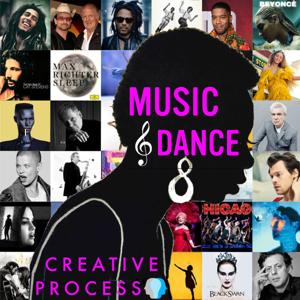
Music & Dance episodes of the popular The Creative Process podcast. To listen to ALL arts & creativity episodes of “The Creative Process · Arts, Culture & Society”, you’ll find our main podcast on Apple: tinyurl.com/thecreativepod, Spotify: tinyurl.com/thecreativespotify, or wherever you get your podcasts!
Exploring the fascinating minds of creative people. Conversations with writers, artists & creative thinkers across the Arts & STEM. We discuss their life, work & artistic practice. Winners of Oscar, Emmy, Tony, Pulitzer, leaders & public figures share real experiences & offer valuable insights. Notable guests and and organizations include: Pacific Northwest Ballet, Pilobolus Dance Company & Five Senses Festival, Harvard Dance Center, Songwriters Hall of Fame, Carter Burwell, John Powell, Edmar Castaneda, Kovacs, Marcelo Zarvos, Paulo Szot (Chicago, South Pacific), Jill Johnson (Ballet Frankfurt, The Forsythe Company), Mario Alberto Zambrano (Juilliard Dance), Nano Stern, Michael Daugherty, Bright Sheng, François Clemmons (Mister Rogers’ Neighborhood, Harlem Spiritual Ensemble), Rick Carnes (Songwriters Guild of America), Peter Boal, Noelani Pantastico, Itamar Kubovy, Jonah Bokaer Choreography & The Hudson Eye, Renée Jaworski, Matt Kent, Trish Sie (Pitch Perfect 3), Emily Kent, Seán Curran (NYU Tisch School of the Arts), Carolyn Waters Broe (Four Seasons Orchestra), Yuval Sharon, Aaron P. Dworkin (Sphinx Organization), Lorenda Ramou (Onassis Cultural Center), Terry Radigan, among others.
The interviews are hosted by founder and creative educator Mia Funk with the participation of students, universities, and collaborators from around the world. These conversations are also part of our traveling exhibition. www.creativeprocess.info
For The Creative Process podcasts from Seasons 1 2 3, visit: tinyurl.com/creativepod or creativeprocess.info/interviews-page-1, which has our complete directory of interviews, transcripts, artworks, and details about ways to get involved.
27,977 Listeners
276 Listeners
3 Listeners
149 Listeners
26 Listeners

26 Listeners
55 Listeners
55 Listeners
48 Listeners
35 Listeners

7 Listeners
89 Listeners

125 Listeners
33 Listeners
13 Listeners
7 Listeners
18 Listeners
40 Listeners
81 Listeners
11 Listeners
35 Listeners
2 Listeners
3 Listeners