
Sign up to save your podcasts
Or

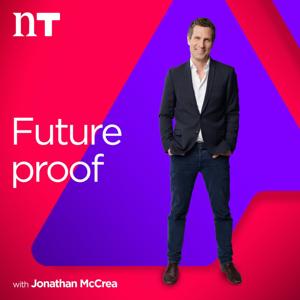


Scientists at the European Space Agency have used the James Webb Space Telescope to reveal the presence of pairs of planet-like objects in the Orion Nebula that have never been detected before.
Referred to as "JuMBOs" - free-floating objects the size of Jupiter - the discovery has the potential to upend our understanding of how stars and planets are formed.
Joining Jonathan to discuss this is Mark McCaughrean, ESA Senior Advisor for Science & Exploration.
Researchers at the University of Cambridge have conducted the largest-ever study of the genetics of our brain structure. But how can the shape and size of our brain impact our understanding of neurological and psychiatric conditions? Joining Jonathan to discuss is the co-lead of this study Professor Richard Bethlehem who specialises in brain imaging, genomics, and computational neuroscience.
What are the consequences of living in a world so driven by efficiency, pace, and cost? Applied mathematician Coco Krumme, uses mathematical modelling to get to the bottom of this in her new book 'Optimal Illusions: The False Promise of Optimisation' - she joins Jonathan to discuss.
Also joining Jonathan to go through the top news stories from the world of science is Dr. Fergus McAuliffe from iCRAG & Laura Healy, Sustainable Food Production Scientist with Teagasc.
What if we told you that a tiny parasite might be influencing the very core of wolf behaviour, making these fierce predators act in ways contrary to their survival instincts?
Enter Toxoplasma Gondii, the unseen puppeteer.
Kira Cassidy, a leading research biologist from the Yellowstone Wolf Project - who has delved deep into the mysteries of this parasite and its staggering effects not just on wolves, but possibly on us humans as well - joins Jonathan to discuss.
Listeners to the show might remember that last year we spoke to Dr. Vera Gorbunova from Rochester Aging Research Center at the University of Rochester about her work on SIRT6 - often referred to as the “longevity gene” because of its important role in organising proteins and recruiting enzymes that repair broken DNA.
Since then, she and her team have made significant progress in the study of longevity by successfully transferring a different gene from naked mole rats into mice, resulting in improved health and an extension of the mouse’s lifespan.
Jonathan is joined by Dr. Vera Gorbunova to discuss.
Walk into any national museum, in any part of the world, and you will see artifacts of significance – from coins and jewellery, to weapons, utensils, artwork, clothing, and even human remains. They are preserved because these objects tell us something about who we are and where we came from.
But what if there is an artifact that is tens, or even hundreds, of meters underwater? How do we protect it from deterioration?
Joining Jonathan to discuss this is Dr. David Gregory, Senior Researcher and Honorary Professor from the National Museum of Denmark.
While the question of 'what is a robot?' might have been easily answered just a few years ago, it is increasingly difficult to define.
So, rather than try to fit robots into the existing categories of what is a person and what is a thing, do we need a new framework for the twenty-first century?David J. Gunkel thinks so.
He is Professor of Media Studies at Northern Illinois University and author of ‘Person-Thing-Robot: A Moral and Legal Ontology for the 21st Century and Beyond’ - he joins Jonathan to discuss.
Dust. You might hate it, you might want to get rid of it, you might not know where it comes from, but did you know there are actually two billion tonnes of dust lifted into the Earth’s atmosphere each year? Joining Jonathan to discuss the world of dust is researcher Jay Owens, who has written a new book called ‘Dust – The Modern World in a Trillion Particles’.
We think of our eyes as external organs, but anatomically we can also consider them to be an extension of the brain, and this feature is proving to be really useful when trying to understand not just what's happening in our brains, but in our bodies as well.
Joining Jonathan to discuss is David Keegan, Consultant Ophthalmologist at the Mater Hospital.
Did you know that in one sleep you will have travelled close to million miles by the time you wake up? This is due to the fascinating science of spin and rotational force. Joining Jonathan to detail his fascinating new book “The Science of Spin" and explain how understanding this force we can enhance our lives was Roland Ennos visiting professor of biological sciences at the University of Hull
From the publisher's feed
Jonathan responds to your texts and tweets, is joined in studio for all the latest science stories for Newsround and speaks to one of our two guests featured on the show.
CONVERSATION…
Listen to Newstalk at http://newstalk.com/listenlive | Download the GoLoud app now, the new home for Newstalk
5 Listeners
6 Listeners
2 Listeners
10 Listeners

48 Listeners
51 Listeners
141 Listeners

57 Listeners
58 Listeners
18 Listeners
4 Listeners

14 Listeners
0 Listeners
0 Listeners
2 Listeners

0 Listeners
3 Listeners
1 Listeners

0 Listeners
3 Listeners
344 Listeners
0 Listeners

89 Listeners
38 Listeners
2 Listeners
40 Listeners

48 Listeners
2 Listeners
36 Listeners

26 Listeners
0 Listeners

9 Listeners
0 Listeners
0 Listeners
0 Listeners