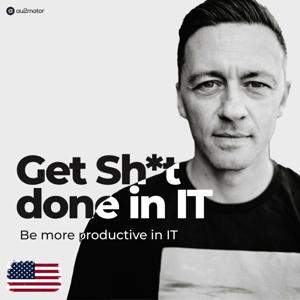
Get Sh*t done in IT (EN)

Get Sh*t done in IT (EN)

Download on the App Store

Get Sh*t done in IT (EN) episodes

  • EPISODE 038 - Organisation: How do I increase my concentration in everyday work?
    In this episode of the Get Sh*t done in IT podcast, Michael Seidl shares practical advice on how to increase concentration in everyday work. He emphasizes the importance of finding the right environment, utilizing techniques like the Pomodoro Technique, and minimizing distractions to enhance focus. Michael also discusses the significance of taking breaks to maintain productivity throughout the workday.
    Takeaways
    Finding the right environment is crucial for productivity.
    Using headphones can help reduce distractions.
    The Pomodoro Technique is effective for maintaining focus.
    Scheduling focus time in your calendar can prevent interruptions.
    Removing physical distractions from your workspace is essential.
    Utilizing Do Not Disturb mode on devices can minimize interruptions.
    Closing unnecessary applications can help maintain concentration.
    A clean desk can lead to a clearer mind.
    Taking regular breaks can enhance overall productivity.
    Staying organized is key to maintaining focus.
    Sound Bites
    "Put on some headphones to focus."
    "Remove all your distractions."
    Chapters
    00:00 Finding the Right Environment for Productivity
    02:57 Techniques to Enhance Concentration
    05:49 Minimizing Distractions for Better Focus
    09:10 Maintaining Concentration Through Breaks

    10 min
  • EPISODE 037 - Organisation: How can I optimize the onboarding process for new IT employees?
    In this episode, Michael Seidl discusses how to optimize the onboarding process for new IT employees. He emphasizes the importance of having a structured onboarding plan, assigning a mentor, and gathering feedback to continuously improve the process. The conversation highlights the need for clear communication and support for new hires to ensure a smooth transition into the company.
    Takeaways
    Have a structured onboarding plan for new employees.
    Ensure the new employee knows their journey from day one.
    Assign a mentor to help the new employee settle in.
    Gather feedback on the onboarding process regularly.
    Document the onboarding process for future reference.
    Automation can enhance the onboarding experience.
    Take time to engage with the new employee on their first day.
    Provide challenges to keep new employees motivated.
    Adjust the onboarding process based on feedback received.
    Create a welcoming environment for new hires.
    Chapters
    00:00 Optimizing the Onboarding Process
    06:08 Feedback and Continuous Improvement
    8 min
  • EPISODE 036 - Technical: How do I deal with technical debt?
    In this episode of the Get Shit Done in IT podcast, Michael Seidl discusses the concept of technical debt, its implications, and how to manage it effectively. He defines technical debt, explains how it occurs, and outlines a three-step process for identifying, planning, and preventing future technical debt. The conversation emphasizes the importance of documentation, resource planning, and team education to maintain a healthy IT environment.
    Takeaways
    Technical debt refers to outdated systems and practices.
    Identifying technical debt is crucial for IT management.
    Documentation helps in managing technical debt effectively.
    External consultants can provide valuable insights.
    Prioritize technical debt based on impact and urgency.
    Educating the team can prevent future technical debt.
    MFA is a critical security measure to implement.
    Planning resources is essential for addressing technical debt.
    Awareness of technical debt is key to minimizing it.
    Continuous improvement is necessary to maintain IT standards.
    Chapters
    00:00 Understanding Technical Debt
    06:07 Planning and Preventing Future Technical Debt
    8 min
  • EPISODE 035 - Organisation: How do I keep track of my Doings?
    In this episode of the Get Sh*t done in IT podcast, Michael Seidl discusses strategies for maintaining productivity and organization after the holiday season. He emphasizes the importance of managing emails, keeping track of tasks, and maintaining a systematic approach to work. Drawing on principles from David Allen's 'Getting Things Done', he encourages listeners to regularly clean up their inboxes and stay on top of their to-dos to avoid chaos and overwhelm.
    Here is the Book
    Takeaways
    It's essential to reserve time to manage your emails after holidays.
    Clean up your inbox to maintain productivity.
    Regularly track your tasks to prevent chaos.
    Aim to have no unread emails or open tasks by week's end.
    The feeling of control is worth the effort put in.
    Implementing a system helps in managing daily tasks effectively.
    Reading 'Getting Things Done' can provide deeper insights into productivity.
    Revisit productivity books regularly to refresh your mindset.
    Small, consistent efforts lead to better organization.
    Stay productive and organized to start the new year right.
    Chapters
    00:00 Introduction to Productivity and Planning
    05:51 Maintaining Control and Systematic Organization
    8 min
  • EPISODE 033 - Organisation: How Do I take advantage of the quieter time in IT?
    In this episode, Michael Seidl discusses how to utilize quieter times in the IT field to enhance productivity and prepare for the upcoming year. He emphasizes the importance of organizing tasks, removing unnecessary items from to-do lists, and planning for future projects. The conversation encourages listeners to take control of their workload and prioritize effectively, ensuring a smoother transition into the new year.

    Takeaways
    Don't wait for New Year's resolutions; start now.
    Organize everything into a single source of information.
    Remove outdated tasks from your to-do list.
    Categorize tasks into personal and business-related.
    Prioritize tasks based on urgency and importance.
    Plan projects for the upcoming year in advance.
    Understand your capabilities to set realistic priorities.
    Maintain a feeling of control over your tasks.
    Use quiet times for personal development and learning.
    Enjoy time with family during the holiday season.

    Sound Bites
    "Everything is under control."

    Chapters
    00:00 Maximizing Productivity During Quiet Times
    08:40 Planning for the Upcoming Year
    10 min
  • EPISODE 032 - Organisation: How to improve my daily planing?
    In this episode, Michael Seidl discusses effective strategies for daily planning, emphasizing the importance of planning ahead, being flexible for unforeseen events, and regularly reviewing to-do lists. He outlines three key points: planning your day the night before, allowing for unplanned tasks, and maintaining a single source for all tasks to enhance productivity and organization.
    Takeaways
    Plan your day ahead, ideally the night before.
    Be flexible for unplanned events that may arise.
    Regularly review your to-do list and remove unnecessary tasks.
    Prioritize important tasks in the morning.
    Maintain a single source for all your tasks to avoid confusion.
    Allow some buffer time in your schedule for unexpected issues.
    If a task hasn't been touched in a year, consider removing it.
    Planning helps in understanding what is truly important.
    Stay relaxed if your plans don't work out as expected.
    A clear overview of tasks is essential for effective planning.

    Sound Bites
    "Plan your day ahead."

    Chapters
    00:00 Effective Daily Planning Strategies
    02:51 Flexibility in Planning for the Unforeseen
    05:46 Regular Review and Maintenance of To-Do Lists
    7 min
  • EPISODE 031 - Organisation: How to achieve Zero Inbox?
    In this episode of the Get Shit Done in IT podcast, Michael Seidl discusses the concept of Zero Inbox, a method aimed at keeping email inboxes free of read emails. He explains the importance of processing emails effectively, setting dedicated time slots for email management, and the benefits of reducing distractions to enhance productivity. The episode provides practical steps to achieve Zero Inbox and emphasizes the need for commitment to this methodology for better focus and efficiency in work.

    Takeaways
    Zero Inbox means no read emails in your inbox.
    Process your emails and remove them from your inbox.
    Read every email just once and decide the action.
    Email is a messaging system, not a to-do system.
    Commit to the zero inbox methodology for better focus.
    Don't check your emails every five minutes.
    Set dedicated time slots for email processing.
    Batch processing can help manage your emails effectively.
    Reducing distractions increases your productivity.
    Let me know if you already use Zero Inbox.

    Chapters
    00:00 Introduction to Zero Inbox
    05:50 Practical Steps to Achieve Zero Inbox
    10 min
  • EPISODE 030 - Career: Are flexible working hours a blessing or a curse?
    In this episode of the Get Shit Done in IT podcast, Michael Seidl explores the concept of flexible working hours, discussing its advantages and challenges. He emphasizes the importance of discipline and communication in remote work, and how maintaining team spirit is crucial for productivity. Ultimately, he encourages listeners to reflect on whether new work is a blessing or a curse for them personally.

    Takeaways
    Flexible working hours can provide better family care.
    Discipline is essential for productivity in remote work.
    Communication is key to maintaining trust with clients.
    Output should be prioritized over time spent working.
    Regular team meetings can enhance collaboration and spirit.
    New work can be a blessing if managed well.
    The environment plays a role in the effectiveness of new work.
    Team spirit can be maintained through informal gatherings.
    It's important to set clear expectations with clients.
    Each individual must assess their own work preferences.

    Chapters
    00:00 Introduction to Flexible Working Hours
    06:10 The Importance of Communication in Remote Work
    12 min
  • EPISODE 029 - Organisation: Why are meetings often a waste of time?
    In this episode of the Get Shit Done in IT podcast, Michael Seidl discusses the common issue of unproductive meetings and offers practical advice on how to improve meeting efficiency. He emphasizes the importance of defining meeting topics and outcomes beforehand, considering alternatives to meetings, and prioritizing who should attend. Seidl also highlights that meetings do not have to conform to traditional time slots, advocating for shorter, more focused meetings to enhance productivity.

    Takeaways
    Meetings often waste time and could be replaced by emails.
    Define meeting topics and expected outcomes beforehand.
    Invite only those who can contribute to the meeting.
    Consider alternatives like emails or team updates instead of meetings.
    Shorter meetings can lead to more focused discussions.
    Participants should clarify their roles in meetings.
    Meetings do not have to be scheduled for long durations.
    Encourage concise communication to avoid unnecessary meetings.
    Use internal channels for information sharing instead of meetings.
    Focus on outcomes rather than filling time in meetings.

    Sound Bites
    "Ask the invite, what is my role?"

    Chapters
    00:00 The Problem with Meetings
    03:05 Improving Meeting Efficiency
    05:57 Alternatives to Meetings
    08:48 Prioritizing Meeting Attendance
    10 min

About Get Sh*t done in IT (EN)

From the publisher's feed

Welcome to 'Get Sh*t Done in IT' with Michael Seidl. With 20 years in the field and running his own company, Michael shares straightforward advice for enhancing your IT skills and productivity. Whether you're looking to advance your career or just get more done, this podcast, straight from Austria and the life of a father of two, is your guide to succeeding in the tech world.