
Sign up to save your podcasts
Or

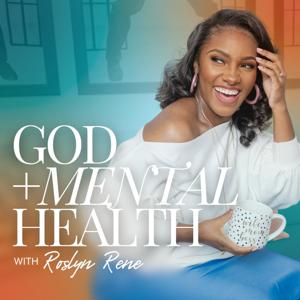


What happens when a theology professor's own panic attacks and trauma make his lifelong understanding of faith fall apart? In this episode of the God and Mental Health Podcast, Roslyn talks with Dave, a professor of New Testament studies and Christian theology, about the anxiety, panic attacks, and trauma that reshaped his faith, and how tracing the Bible's recurring theme of water and chaos gave him language for suffering he didn't have before. Their conversation covers trauma, embodiment, shame, and community, and previews Dave's upcoming book, In the Sea Was No More: Reading the Bible in the Deep.
Scripture ReferencedA "high-functioning nervous wreck." Dave describes living with anxiety since childhood while still functioning well in daily life, including through a PhD in theology and a career as a professor. He explains that this changed significantly after the birth of his first child 22 years ago, when his anxiety began to escalate.
When panic attacks began. Dave traces his first major panic attack to December 26, 2004 — Boxing Day — while watching footage of the Indian Ocean tsunami. As his son grew older, approaching the age Dave was during a significant childhood trauma, Dave began experiencing panic attacks, intrusive images, and intrusive thoughts, describing himself as coming close to, but never fully entering, psychosis.
Getting help. Dave's wife, who is also a therapist, connected him with a trauma therapist. Through roughly three years of EMDR therapy, Dave says he came to understand how much unprocessed trauma his body was carrying separately from his conscious mind, and began learning to recognize his triggers.
Faith as a "bag of tricks" that stopped working. Dave explains that his usual coping tools — prayer, Bible reading, and spiritual disciplines — became inaccessible once his anxiety intensified, forcing him to confront how cognitive and disembodied his faith had been up to that point. He describes having to discover what he calls an "embodied Christianity," recognizing that he wasn't just a mind carrying a body around, but that he was a body.
Rediscovering scripture through Psalm 69. While attending a retreat and speaking publicly again after years away, Dave opened his Bible to Psalm 69 and found its opening imagery of drowning in deep water spoke directly to his experience for the first time. This led him to trace water and chaos imagery throughout scripture, from Genesis through Revelation, and became the foundation for his book.
The theme of "the deep." Dave unpacks the biblical concept of "the deep" — the watery chaos present at creation in Genesis, which God doesn't destroy but instead gives structure and purpose within. He connects this to the flood narrative, where the waters of chaos "undo" creation, and explains that throughout scripture, water and waves become a recurring metaphor for catastrophic, uncontrollable overwhelm — illness, sin, invading armies, and grief.
Death as the ultimate uncontrollable force. Dave explains that in scripture, believers are told they can resist Satan but not death, which he calls "the last enemy" — a force with total dominion over creation that only God has power over, paralleling the sea in biblical imagery. He connects this to the closing vision in Revelation, where the sea, along with death, mourning, and pain, is finally removed.
Rethinking suffering and God's sovereignty. Dave shares that his crisis of faith wasn't about doubting God's existence or goodness, but about reconciling belief in God's sovereignty with a world that could "blow up on a heartbeat" without clear reason. He describes coming to see chaos and unpredictability as part of God's good creation rather than evidence of God's absence.
Community over isolation. Dave emphasizes that humans aren't made to face suffering alone, describing how his wife, his therapist, and eventually others he opened up to all played a role in his healing by consistently showing up and saying "I'm with you." He talks about the need to be able to be, in his words, "naked and unashamed" before other people, not just before God.
How this changed his teaching. Dave now speaks openly about his own mental health struggles in every class he teaches, noting that most of his students are navigating similar issues. He also teaches scripture through the lens of what it means to struggle as a human being, and reframes the power described in Paul's writing on the resurrection as something that enables deeper vulnerability and openness rather than an escape from weakness.
A critique of "big church" culture. Dave and Roslyn discuss how mainstream American Christianity often emphasizes victory and control rather than making space for vulnerability and shame, using Alcoholics Anonymous as an example of the kind of small, honest community that church often fails to provide. Roslyn connects this to the biblical account of Adam and Eve hiding and covering themselves after sinning, framing shame as something rooted in disconnection rather than exposure.
About the book. Dave's book, In the Sea Was No More: Reading the Bible in the Deep, ships September 22nd and interweaves his personal story with a chapter-by-chapter walk through scripture's water and chaos imagery. He describes it as "a memoir in scripture," noting that he spent about a year and a half considering publishing it anonymously due to shame before ultimately deciding to publish it under his own name.
What does faith-based addiction recovery look like when it treats trauma and mental health as seriously as the addiction itself? In this episode of the Guided Mental Health Podcast, Roslyn talks with Adrienne Bumpers, Director of The Potter's House at Atlanta Mission, about the year-long residential program that walks men through recovery from substance abuse and homelessness. They cover why addiction and mental health are inseparable, what actually happens inside the program's first 30 days, and why understanding the "why" behind addiction matters more than treating the symptoms on the surface.
Adrienne's path into this work. Adrienne shares a personal "God encounter" at 16, when a man experiencing homelessness at a gas station asked her to commit to helping five homeless people in her lifetime in exchange for a bracelet. That moment, paired with mission work through her church and later work with a nonprofit while attending seminary, set her on a path toward full-time ministry with people experiencing homelessness and addiction.
Why she chose seminary over an MSW. Adrienne explains that she felt called to seminary rather than a traditional social work master's degree, pursuing a Master of Arts in Social Change Studies. She describes seminary as a place where she broke down and rebuilt her faith, giving her a rooted theological foundation she says she uses every day in her work, even though she ultimately felt called to community ministry rather than a pulpit.
The history of The Potter's House. Atlanta Mission has operated since 1938 and runs three campuses, including two serving women with children and one serving men. The Potter's House, located on a 550-acre farm near Jefferson, Georgia, has served men with substance abuse struggles since 1967, after a family connected to Atlanta Mission's board donated the property, which had previously been used informally as a place where men in their own family worked through addiction.
Why mental health and addiction can't be separated. Adrienne explains that a substance use disorder is itself classified as a mental health diagnosis, and that co-occurring conditions like anxiety, depression, PTSD, bipolar disorder, and schizophrenia are common among clients. She stresses that nearly everyone who comes through their doors is dealing with an underlying mental health need, not just a substance problem.
What the first 30 days look like. Clients arrive at The Potter's House through court mandates, probation referrals, or voluntary entry into the year-long program. Rules are strict: no nicotine use, and limited communication with the outside world, including cell phone access, to reduce distractions. Adrienne describes the early transition as emotionally overwhelming — grief, fear, withdrawal symptoms, and adjusting to community life among roughly 125 other men in the program at once.
The interdisciplinary care model. Every client is paired with a counselor (licensed or working toward licensure), a peer in recovery who has walked the same journey, and a social worker focused on reducing barriers. Clients go through psychoeducation, evidence-based curriculum, and 12-step coaching with their peer mentor over the course of the year-long program, with employment introduced in the second half.
Reframing "getting right with God." Adrienne describes pushing back on clients who say they need to "get right with God," reframing the relationship as one of ongoing pursuit rather than a transactional exchange based on behavior. She emphasizes that God is not withholding acceptance based on performance, but consistently drawing people closer, and that shame and guilt after a mistake don't reflect how God actually responds.
Will's story. Adrienne shares the story of a client named Will, who came into the program with an undiagnosed and untreated case of schizophrenia, initially resistant to engaging in services. Through the trust he built with his counselor, he eventually pursued a full diagnosis and medication, finished his GED, stabilized in a job, and continues to manage his mental health independently — a story Adrienne credits to both the counseling relationship and his faith.
Common misconceptions about addiction and homelessness. Adrienne addresses the assumption that addiction and homelessness are simply personal choices, explaining that most clients were introduced to substances at a young age and that addiction physically changes brain chemistry over time. She notes that most clients carry significant childhood trauma, and that understanding a person's story — the "why" behind the addiction — is essential to addressing it rather than just managing symptoms.
Addiction as isolation, recovery as connection. Adrienne describes addiction as fundamentally isolating, and recovery communities as built around forced, intentional connection — sponsors, home groups, regular meetings, and accountability relationships. The Potter's House aims to send clients out with sustained income, housing, and community: a church home, a social group, a sponsor, and ongoing recovery meetings.
Why the "why" matters. In closing, Adrienne explains that treating addiction without understanding its root cause is like using a band-aid on a serious infection — the underlying issue, often rooted in trauma, has to be addressed directly for recovery to hold.
Message for anyone feeling too ashamed to ask for help. Adrienne closes by acknowledging that addiction can be a life-or-death matter, that relapse is a normal part of recovery rather than a failure, and that asking for help takes real courage. She encourages listeners who feel disconnected from faith or ashamed of their struggle that help and hope are available, wherever they live.
How to get help. The Potter's House program is entirely free for men without income, and interested individuals can learn more or apply directly at www.tphrecovery.org. Adrienne notes that people come into the program from all over, not just locally.
What does it actually take to build emotional endurance instead of just pushing through stress until you burn out? In this episode of the God and Mental Health Podcast, executive leadership coach, TEDx speaker, and author Leslie Bosserman joins Roslyn to unpack the science and scripture behind her new book, Emotional Endurance: Faith-Fueled Skills for Bouncing Back. They talk through stress thresholds, emotional safety, capacity, and what it looks like to let God into the process of recovering from burnout instead of overworking your way out of it.
Scripture ReferencedWhat emotional endurance actually is. Leslie describes emotional endurance as a dynamic capacity built over time, combining the science of hope, resilience, and strength psychology with a faith-based understanding that we're designed to be "kingdom builders." She's clear that anyone can build this capacity, whether or not they currently identify as a believer.
From residence halls to writing the book. Leslie traces her path from managing a 900-student UCLA residence hall, to building a coaching program at the University of Illinois, to becoming an early-adopter professional coach in her mid-twenties, to spending roughly a decade developing the framework that eventually became her book. She describes it as "a golden thread" — teaching what people needed, not what she planned to publish.
Curiosity versus judgment. One of the episode's central ideas is that curiosity is the antidote to self-criticism. Leslie explains that asking "what motivates you?" instead of "why did you do that?" opens a person up to understanding themselves rather than shutting down in judgment.
Understanding your stress threshold. Leslie unpacks the Yerkes-Dodson framework: stress improves performance only up to a tipping point, after which performance drops off sharply. She talks about helping clients identify their personal stress capacity and recognize what triggers them before those triggers "hijack" their best work and intentions.
Emotions as messengers, not marching orders. A recurring theme in the conversation: emotions are meant to inform us, not command us. Leslie describes letting an emotion "wash over you like an ocean" rather than dismissing it or letting it dictate behavior. Roslyn connects this to her own experience of hearing that emotions are "information," like a thermometer reading rather than a directive.
The emotion-to-character pipeline. Leslie walks through her coaching process: name the emotion, explore what's underneath it without diagnosing, decide how you want to feel instead, take that reframed thought captive, let it shape consistent action, and let that action shape character over time. She frames character as the lasting, "eternal" outcome of this work.
Rest, Sabbath, and capacity. Leslie shares that without a commanded, intentional Sabbath, she would never stop working. She discusses building sustainable rhythms of rest and renewal before burnout hits, and describes her own "timeout" practices — a glass of water, a walk, even jumping jacks — as ways to get back into her body during moments of overwhelm.
Defining capacity. Using the image of stretching a rubber band between your fingers, Leslie defines capacity as what you're able to handle before you break — and stresses that capacity isn't meant to be built alone. Asking for help, including relying on God, is part of expanding that capacity rather than a failure to have enough of it.
The six principles of the book. Leslie explains that Emotional Endurance is structured around six core principles, each paired with science and scripture and broken into three actionable skills, plus reflection questions and a companion book club guide. The book is designed to be read in any order, with busy parents specifically in mind.
Her own story with faith and timing. Leslie closes part one of the conversation by sharing her personal story of meeting her husband at age eight, staying close friends through their teenage years, and eventually marrying him at 27 — a story she uses to illustrate trusting God's timing over her own plans, and to reinforce the book's broader message about enduring through uncertainty with faith.
A struggle God strengthened her through, rather than removed. In part two, Leslie gets personal about raising her son Luke, who has autism. She describes him as her greatest teacher — present, authentic, and full of joy — and pushes back on the assumption that a special-needs diagnosis is only a hardship. She shares the "God story" underneath it: her husband Joel spent 22 years working in early intervention with children with autism before Luke was born, which Leslie frames as divine equipping rather than coincidence.
Reframing "good hard." Leslie talks about the mindset shift of separating what's hard from what's bad, and using difficult seasons to ask what God is building in her rather than trying to escape the discomfort. She ties this directly back to the idea that God's strength shows up in weak, unresolved moments rather than only after a struggle is removed.
Her personal spiritual and nervous-system practices. Asked what holds her together, Leslie names three core practices for this season of her life: slowing her internal pace through a daily walk (often praying or listening to scripture through the Dwell app, sometimes attending a yoga class instead), immersing her home in worship music, and treating writing itself as a spiritual practice and a way of creating from truth.
"Show up where you are." Leslie's closing piece of advice for anyone feeling burnt out or emotionally exhausted: no guidebook or prerequisite is required to come to God or to community exactly as you are. She encourages naming the hurt out loud, whether to God, a journal, a friend, or a partner, rather than waiting until you feel more put-together.
Book structure and release details. Leslie confirms the book released July 28th and describes its structure in more detail: 18 core skills organized around six foundational principles for developing emotional endurance, designed to be practical and immediately usable rather than purely conceptual.
Follow Roslyn onYoutube
Most high performers don't recognize burnout until their body forces them to stop — and for Dr. Jessica Houston, that recognition took years of overextending herself to outrun a childhood shaped by poverty and survival mode. In this episode, Dr. Jessica joins Roslyn to talk about healing from a condemning image of God, learning to trust him instead of perform for him, and building the self-awareness it takes to set real boundaries. If you've ever felt like rest is something you have to earn, this conversation is for you.
Scripture ReferencedDr. Jessica Houston is a keynote speaker and self-leadership strategist based in Atlanta. In this conversation, she shares the layered story behind her work: a physically abusive relationship in college, years of infertility met with two unexpected pregnancies (including one after being told she had only a 5% chance of conceiving naturally), and a childhood marked by poverty, homelessness, and domestic conflict that she didn't fully recognize as trauma until she became a school social worker.
Growing up in survival mode. Dr. Jessica didn't realize her family had experienced homelessness until she was an adult working in trauma training — she had assumed "homeless" only meant someone living on the street, not a family staying with relatives after an eviction. She discusses how this conditioning followed her into adulthood: even after achieving financial stability, she found herself anxious over small expenses and unable to expect good things to happen to her, because she'd been conditioned for lack and stress rather than blessing.
A condemning view of God. Dr. Jessica also opens up about growing up in a strict, "condemning" church environment where she believed God was primarily watching for her mistakes — right down to feeling guilty for listening to secular music or saying a curse word. She describes spending roughly a decade rebuilding her relationship with God on her own terms, praying specifically that he would reveal who he actually is to her, rather than relying on what she'd been taught about him. She's candid that in the process of healing from religious condemnation, she noticed herself becoming judgmental of others in the same way — a pattern she had to confront in herself.
Writing as obedience. Her first book, Women's Secrets, began as an act of obedience rather than a business plan — she describes God waking her up at 3 and 4 a.m. prompting her to be honest about her struggles. The book became the foundation for her speaking career and eventually her business, though she's candid that it took years of learning the "CEO side" of things — niching down, building an audience, and understanding that a book alone doesn't build a business.
High performing and burnout. The conversation moves into the heart of Dr. Jessica's newest book: why high performers overextend themselves. She names two core drivers — the desire to win, and the fact that overgiving is socially rewarded while overworking rarely draws criticism. She unpacks the internal dialogue behind it ("If I don't do this, who will? I don't want to let them down") and the early warning signs people miss: chronic exhaustion that isn't fixed by sleep, irritability with loved ones, forgetfulness, restlessness in bed, and working through exhaustion rather than resting.
The spiritual cost of burnout. Dr. Jessica speaks directly to what unmanaged burnout does to a person's relationship with God — he gets pushed to the back burner, only approached when something is needed, rather than being a daily priority. Her personal practice for combating this is giving to herself first, meaning she spends time with God before the rest of the household wakes up, before she's pulled into meeting everyone else's needs.
Understanding capacity. She defines capacity as the amount of pressure or responsibility a person can carry without becoming overwhelmed, stressed, or burned out — and argues most people don't know their own capacity because they're afraid of disappointing others or being seen as selfish.
The three questions before saying yes. From the "Value Your Yes" chapter of her new book, Dr. Jessica shares the three questions she asks herself before agreeing to anything:
Roslyn connects this practice to the biblical concept of giving cheerfully rather than reluctantly (2 Corinthians 9), noting that the pause between being asked and answering is where the real work — and the real heart-posture check — happens.
Boundaries as self-protection. Dr. Jessica describes using a personal filtering system before taking anything on: Does this align with my values? Does it move me toward what I actually want, or am I just doing it to be liked? She frames boundaries not as guarding herself from other people, but as "guarding me from me" — protecting herself from her own instinct to overgive.
Who the book is for. Dr. Jessica closes by describing Give Your All Without Losing Yourself as a book for the person everyone calls on — the go-to friend, family member, or leader who is quietly running on empty while still showing up for everyone else. Her central message: self-leadership means being honest with yourself about who you are and what you need, rather than waiting for someone else to give you permission to rest.
Follow Roslyn:
Youtube: Click Here
Instagram: Click Here
Shame doesn't always look like guilt — sometimes it looks like silence, distraction, or simply not tracking the thing you don't want to see. In this episode, Roslyn unpacks the spiritual roots of shame starting in the Garden of Eden, traces how it quietly shapes our relationships, and gets vulnerable about her own weight loss journey and the moment she realized why she'd stopped tracking her food. Drawing from Genesis 3 and 2 Corinthians 12, this episode reframes exposure — to God, to ourselves, and to others — as the doorway to intimacy, not the danger we've made it out to be.
Timestamps00:00 — Welcome back + episode intro
01:15 — Why this episode: a listener request for a deep dive on shame
02:10 — Episode roadmap: the Garden, relationships, a personal story, Paul on weakness, and practical tools
02:55 — The thesis: we were never meant to hide from God
04:00 — Reading Genesis 3:7-11 (NLT) — Adam and Eve hide from God
05:30 — God's first question wasn't condemnation, it was "Where are you?"
06:45 — The spiritual architecture of shame: why exposure starts to feel like a threat
08:00 — How shame shows up in relationships: self-protection, deflection, busyness, control
09:30 — Substitutes we reach for instead of being known (food, scrolling, achievement, numbing)
11:00 — Personal story: Roslyn's weight loss journey and why she stopped tracking her food
14:45 — The connection between tracking, budgeting, therapy avoidance, and addiction — why we hide what we don't want to face
17:00 — God never designed us to hide from Him — even Jesus modeled vulnerability in Gethsemane
19:00 — Naming the tension: exposure is uncomfortable and can feel anxiety-provoking
20:15 — Reading 2 Corinthians 12:5-10 (NLT) — Paul's thorn and "my power works best in weakness"
24:00 — Weakness as the entry point to faith, not the opposite of it
26:00 — How Roslyn applies this to her own self-sabotage doing the podcast
28:00 — Three practical tools to begin exposing yourself to God
31:00 — Closing thought: Adam and Eve's blame cycle (a preview of a possible part two)
32:00 — Land the message: exposure isn't danger, concealment is — this is about identity, not performance
33:00 — Outro + how to connect with Roslyn
(Note: timestamps are estimated proportionally from the transcript — adjust once you have final edited runtime.)
Scriptures ReferencedGenesis 3:7-11 (NLT)
At that moment their eyes were opened, and they suddenly felt shame at their nakedness. So they sewed fig leaves together to cover themselves. When the cool evening breezes were blowing, the man and his wife heard the LORD God walking about in the garden, so they hid from the LORD among the trees. Then the LORD God called to the man, "Where are you?" He replied, "I heard you walking in the garden, so I hid. I was afraid because I was naked." "Who told you that you were naked?" the LORD God asked. "Have you eaten from the tree whose fruit I commanded you not to eat?"
2 Corinthians 12:5-10 (NLT)
Such a person could boast about that experience, but I don't want to boast about myself, except about my weaknesses... Even if I did boast, I would not be a fool, for I would be telling the truth. But I won't do it, because I don't want anyone to give me credit beyond what they can see in my life or hear in my message... So to keep me from becoming proud, I was given a thorn in my flesh, a messenger from Satan to torment me and keep me from becoming proud. Three different times I begged God to take it away. Each time he said, "My grace is all you need. My power works best in your weakness." So now I am glad to boast about my weaknesses, so that the power of Christ can work through me. That's why I take pleasure in my weaknesses, and in the insults, hardships, persecutions, and troubles that I suffer for Christ. For when I am weak, then I am strong.
Three Practical Tools for Exposure📱 Instagram: @roslynrene
🎥 Watch this episode on YouTube: Click Here
💬 Send a voice memo or DM — I read every message
Episode Description:
We're closing out the Kindness of God series, and this one is the most practical episode of the three. In Episode 1 we talked about who God actually is toward us — kind, not shameful. In Episode 2 we looked at how Jesus modeled curiosity in his ministry. Now in Episode 3, Roslyn brings it all home with a practical framework for how you can apply that same kindness and curiosity to your own mental health journey. She introduces the KIND framework — four postures to move into when things feel heavy, stuck, or overwhelming — and closes with practical tips you can start using this week.
What's Covered in This Episode
Why we need a framework in the first place Most of us default to criticism, comparison, and condemnation when we're struggling. Our inner critic is loud — and for many of us, it sounds exactly like what we incorrectly believe God's voice sounds like toward us. The way we talk to ourselves in hard moments is often a mirror of the version of God we've been relating to. Kindness and curiosity aren't just theological concepts — they are practices that have to be learned and repeated. And the brain can actually build new pathways when we practice new patterns consistently.
The KIND Framework
K — Know What You're Actually Feeling Without Judging It The first step is simply naming it — not what you're supposed to feel, but what's actually happening inside you right now. Emotions are not good or bad. As the Holy Spirit once reminded Roslyn on a walk: "Emotions are just information." When you don't name what you feel, it drives you. When you name it, you can begin to work with it.
Scripture: James 1:5 NLT — "If you need wisdom, ask our generous God and he will give it to you. He will not rebuke you for asking."
I — Inquire Instead of Indict Once you've named the feeling, the next step is to ask questions rather than make accusations against yourself. Indicting sounds like: "Why am I always like this? What is wrong with me?" Inquiring sounds like: "I wonder what this is connected to. What might God be trying to show me here?" The difference is not just tone — it's direction. Indictment closes things down. Inquiry opens them up. The Holy Spirit is your partner in this — you can ask him directly what something is connected to and trust that he will show you.
Scripture: John 16:13 NLT — "When the Spirit of truth comes, he will guide you into all truth."
N — Normalize — You Are Not the Only One and Brokenness Is Part of the Journey Shame thrives in isolation. It tells you that you are uniquely broken and that no one else is struggling the way you are. Normalizing is not excusing — it's acknowledging that this is a human experience and you are not alone in it. Brokenness is not a disqualifier in the kingdom — it is actually the prerequisite. And healing was never designed to happen alone.
Scriptures: 1 Corinthians 10:13 NLT — "The temptations in your life are no different from what others experience. And God is faithful." James 5:16 NLT — "Confess your sins to each other and pray for each other so that you may be healed."
D — Depend — Your Weakness Is an Invitation for God's Strength Dependency is countercultural. The world tells you to be self-sufficient and figure it out — but carrying what was meant for God to carry is what steals your peace. In the kingdom, dependency is the posture that opens the door for God to move. And God's kindness is what makes dependency feel safe. If you believe he is kind, you can lean on him. If you believe he is disappointed in you, leaning feels like exposure.
Scripture: 2 Corinthians 12:9-10 NLT — "My grace is all you need. My power works best in weakness. So now I am glad to boast about my weaknesses, so that the power of Christ can work through me."
Practical Tips to Walk This Out
Scriptures Referenced
Searchable Keywords Christian mental health, faith and mental health, God and mental health podcast, how to stop being hard on yourself, shame and faith, kindness of God, curiosity and mental health, Christian therapy, mental health framework, healing and faith, inner critic Christian, trauma and faith, how to hear God's voice, emotional awareness Christian, dependent on God, mental health and shame, Christian wellness, Holy Spirit and healing, brokenness and faith, sanctification and mental health
Links Mentioned:
Instagram: Follow ME
W Method, Time with God Journal: Get Here
Youtube Channel: Subscribe Here
Episode Summary
In episode two of the Kindness of God miniseries, we're going deeper — from God's character into the way Jesus actually engaged with people during his ministry. This episode explores curiosity as a spiritual and mental health practice, grounded in how Jesus consistently used questions rather than condemnation to invite people into truth. If you've ever found it easier to criticize yourself than to get genuinely curious about what's going on inside you, this episode is for you.
What We Cover
Reflection Practice for This Week
Scriptures Referenced
Connect with Roslyn
Missed Episode 1? Go back one episode to hear the foundation: God's character is not shame or disappointment — he is kind, and his kindness is what makes curiosity possible.
Episode Overview
This week on the God and Mental Health Podcast, Roslyn kicks off a brand new mini-series on the kindness of God — and she is not holding back. If you've ever come to God braced for correction, bracing for rejection, or feeling like he's somewhere in the distance shaking his head at you, this episode is for you. Roslyn gets into the actual character of God — backed by scripture — and begins dismantling the version of him that shame has built in our heads. This is the foundation for everything coming in this series, and it is rich.
What's Covered in This Episode
Why this series exists Roslyn has been wanting to talk about curiosity and kindness as tools for mental health, but realized she needed to start at the beginning first — with who God actually is toward us. Before we can practice curiosity and kindness with ourselves, we need to understand that it's modeled in God's own character. That's what this episode is all about.
Point 1 — God's Nature Is Not Shame. It Never Was.
The shame we feel toward God is something we project onto him — it is not something he projects onto us. His character is consistently described throughout Scripture as gracious, compassionate, slow to anger, and filled with unfailing love. Roslyn shares a personal moment where God spoke something to her heart: "Roslyn, I am obsessed with you" — and how becoming a parent helped her finally understand what that actually means.
Scriptures:
If his mercies are new every morning, he is not holding yesterday against you today. Shame says he is. His character says otherwise.
Point 2 — He Moves Toward Our Brokenness, Not Away From It
The world's pattern — and the enemy's lie — is that broken people get left behind. The kingdom pattern is the opposite. God runs toward what is broken. Roslyn unpacks the Prodigal Son story not just as a story about a son coming home, but about a father running while the son was still far off. She also shares a personal story about hiding a childhood scar on her knee — and what God showed her through it about how he sees ours.
Scriptures:
God doesn't just tolerate you in your brokenness — he sings over you in it. That is not the posture of a God who is ashamed of you.
Point 3 — His Kindness Is What Actually Changes Us
Shame doesn't produce transformation — it produces hiding. Roslyn breaks down how it's actually God's kindness, not guilt or correction, that moves us toward repentance and genuine change. She uses the example of someone genuinely apologizing versus hiding something — and how the openness is what allows things to move forward. The same is true in our relationship with God.
Scriptures:
Shame makes us hide. Kindness makes us come home.
Practical Tips
Name the version of God you've been relating to. Journal it out. What does the God in your head actually look like — is he disappointed, distant, watching you fail? Is he the God of Scripture or a version shaped by a parent, a painful experience, or a person who let you down? Getting that on paper is the first step to separating the lie from the truth.
Read Psalm 103 slowly this week. The entire chapter is a description of God's character toward us. Read it out loud if you can and let it begin replacing the wrong images.
Practice receiving, not just confessing. Many of us are good at coming to God with what we've done wrong. This week, try coming to him and just receiving — sit with a verse about his love for a few minutes without asking for anything or apologizing for anything. You may be surprised at what happens when you simply make space.
Notice when shame shows up in your prayer life. Do you brace yourself before you pray? Do you feel like you have to earn the right to ask? That's a signal. Name it directly — "God, I still feel like you're disappointed with me, even though I know that's not your character. Help me experience who you actually are."
Meditate on Zephaniah 3:17. He rejoices over you with singing. He takes delight in you with gladness. He calms your fears with his love. Sit with that image until it starts to feel more true than the shame does.
What's Next in This Series
Episode 2 — Jesus and Curiosity: How Jesus used curiosity as one of his primary tools in healing and discipleship, and what that means for how we can approach our own mental health journey.
Episode 3 — Curiosity and Kindness in Your Mental Health: Practical application of both — including the KIND acronym — for how to walk this out in your everyday life.
Connect with Roslyn Instagram: @RoslynRene Enjoying the podcast? Leave a review and rate it — Roslyn reads every comment and loves responding on Spotify. Know someone who needs to hear this? Share this episode with them.
Episode Synopsis:
In this episode of the God and Mental Health Podcast, Roslyn opens up an honest conversation about one of the most common struggles she sees in her therapy practice and hears from listeners — feeling disconnected from God. She unpacks what that disconnection actually looks and feels like, why it happens, and how God is always drawing us back to him. From shame and comparison to unrepentant sin and spiritual exhaustion, Roslyn names the real barriers to intimacy with God and offers practical, personalized ways to reestablish that connection — no matter what season you're in. This episode is full of scripture, personal stories, and the kind of honest faith talk that gives you language for what you've been feeling but couldn't quite say.
Key Points Covered:
What disconnection looks and feels like
How God draws us close
Why intimacy aids in healing, especially in trauma
Practical Tips to Reestablish Connection
Scriptures Referenced:
On abiding and remaining: John 15:4-5 — "Remain in me, and I will remain in you. For a branch cannot produce fruit if it is severed from the vine, and you cannot be fruitful unless you remain in me."
On drawing near: James 4:8 — "Come close to God, and God will come close to you. Wash your hands, you sinners; purify your hearts, for your loyalty is divided between God and the world."
On stillness: Psalm 46:10 — "Be still, and know that I am God! I will be honored by every nation. I will be honored throughout the world."
On rest and quietness: Isaiah 30:15 — "This is what the Sovereign LORD, the Holy One of Israel, says: Only in returning to me and resting in me will you be saved. In quietness and confidence is your strength."
On the secret place: Matthew 6:6 — "But when you pray, go away by yourself, shut the door behind you, and pray to your Father in private. Then your Father, who sees everything, will reward you."
On grace, not performance: Ephesians 2:8-9 — "God saved you by his grace when you believed. And you can't take credit for this; it is a gift from God. Salvation is not a reward for the good things we have done, so none of us can boast about it."
On God's love that cannot be earned or lost: Romans 8:38-39 — Nothing can separate us from the love of God in Christ Jesus our Lord.
On longing for God: Psalm 27:8 — "My heart says of you, 'Seek his face!' Your face, Lord, I will seek."
On dwelling in his shelter: Psalm 91:1 — He who dwells in the shelter of the Most High will rest in the shadow of the Almighty.
On lament and frustration with God: Psalm 13:1-2 — "O Lord, how long will you forget me? Forever? How long will you look the other way? How long must I struggle with anguish in my soul, with sorrow in my heart?"
Psalm 22:1 — "My God, my God, why have you abandoned me? Why are you so far away when I groan for help?"
On unrepentant sin creating distance: Isaiah 59:2 — "It's your sins that have cut you off from God. Because of your sins, he has turned away and will not listen anymore."
Psalm 66:18 — "If I had not confessed the sin in my heart, the Lord would not have listened."
On the way back: 1 John 1:9 — "But if we confess our sins to him, he is faithful and just to forgive us our sins and to cleanse us from all wickedness."
Connect with Roslyn: Instagram: @RoslynRene Leave a review or comment on Spotify — Roslyn reads and responds to them! If this episode helped you, share it with someone who needs language for what they've been feeling.
After months away, Roslyn is back with a brand-new framework that will shape the future of the God + Mental Health Podcast. In this episode, she unveils the 4-pillar framework she's been secretly developing—a simple yet profound map for understanding how mental health and faith intersect in your life.
Born from a quiet retreat in November 2025 where God led her to study Genesis and identity, this framework provides clear language for concepts that often feel overwhelming: trauma, the nervous system, your relationship with God, and your authority as a believer.
This isn't about staying stuck in your past—it's about understanding where you've been, addressing where you are now, and taking practical steps toward where God is calling you to go.
In This Episode, You'll Discover:The 4-Pillar Framework:
Plus:
"I am 100% God's daughter in my identity. There is a crafted identity in Him—a blueprint of who we are and how He sees us."
"God is obsessed with loving me and knowing me."
"When we reclaim safety, we are reclaiming this aspect of us not adapting to what we've known."
"Undoing feels like dying."
"Rest allows us to understand that God's presence Himself is restful. It's powerful. It's full. It's heavy, but it's restful."
"Authority is the delegated power God offers us through His son Jesus."
"The past should hold information, but I also think we have to get curious about the past enough to where we can use that as not our current place, but our ability to say, I don't want to do this anymore and move forward."
"This podcast will never replace mental health counseling. Just because I'm a licensed therapist does not mean I'm your therapist."
"You are wanted and welcome in all that you do."
What to Expect Moving Forward:This framework will become the foundation of every future episode. You'll hear Roslyn break down:
Episodes will be:
📱 Instagram: @roslynrene
💬 DM Roslyn to let her know this was helpful
⭐ Leave a review on Apple Podcasts or comment on Spotify
📤 Share in your stories if this resonated with you
Resources Mentioned:✅ This podcast is a tool, like a devotional—not a replacement for the Bible or professional therapy
✅ If you need mental health support, please seek a licensed counselor
✅ Test everything against Scripture and wrestle with God through it
✅ You are wanted, welcomed, understood, and you belong—no matter where you've been
Keywords:Faith and mental health, Christian mental health framework, identity in Christ, reclaiming safety, trauma healing, nervous system and faith, rest and spiritual health, delegated authority, emotional literacy, Christian therapy, mental health for believers, undoing trauma, God's presence, Christian counseling, faith-based healing
Next Steps: Subscribe so you don't miss the next episode where Roslyn dives deeper into these four pillars. This is just the beginning of something beautiful.
God + Mental Health Podcast with Roslyn Rene
Formerly Therapy as a Christian
Available on Apple Podcasts, Spotify, iHeart, and everywhere you listen to podcasts
From the publisher's feed
God + Mental Health Podcast is a show for all things mental health and Christ. We discuss how therapy can aid in helping us healing from our past and how God can assist us in that effort. We will…

2,178 Listeners

5,678 Listeners
6,956 Listeners

2,809 Listeners

1,150 Listeners

2,715 Listeners

1,731 Listeners
1,265 Listeners

2,124 Listeners

679 Listeners

1,199 Listeners

1,067 Listeners

1,111 Listeners

2,968 Listeners
2,284 Listeners