
Sign up to save your podcasts
Or

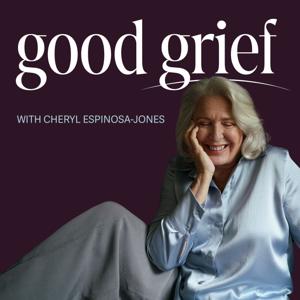


Marty Ross-Dolen grew up in the shadow of her mother's grief. Her mother's parents had died in a plane crash when she was 14, just 5 years before Marty was born. She knew that her mother was different from her friend's mothers. Knowing this led to Marty trying to protect her mother, never really asking to know the whole story. The ways in which she could still know them were also blocked off. But as an adult, Marty investigated their lives to form a strong relationship with them. As the heads of Highlight Magazine, they were very visible and public. There were also letters and newspaper clippings. Over time, Marty came to know them, even in their absence. And that is how she came to love them and repair the break in her family legacy.
Marty Ross-Dolen is a graduate of Wellesley College and Albert Einstein College of Medicine and is a retired child and adolescent psychiatrist. She holds an MFA in Writing from Vermont College of Fine Arts. Prior to her time at VCFA, she participated in graduate-level workshops at The Ohio State University. Her essays have appeared in North Dakota Quarterly, Redivider, Lilith, Willow Review, and the Brevity Blog, among others. Her essay entitled "Diphtheria" was named a notable essay in The Best American Essays series. She teaches writing and lives in Columbus, Ohio.
When Dr. Paul Kalanithi faced a stage IV lung cancer diagnosis in his last year as a neurosurgical resident, his wife, Dr. Lucy Kalanithi faced it with him. In the twenty-two months that followed, they continued to work, had a child and he wrote a best selling book . But since his death, how have her grief and her love showed themselves? She made sure that his book, when Breath Becomes Air, was published and promoted, most importantly by her. She carried his love forward into her own life and parenting of their daughter Cady. And she lent her energy to projects that reflect the intersection between that most impactful walk through cancer with Paul, and her interest in meaning in medicine, patient-centered care and end-of-life care. So it is no surprise that she is on the advisory board of the OpenIDEO end of life challenge, exploring how to improve end of life experiences world wide. Hear how this newest passion connects with what she and Paul experienced during his illness and death.
Dr. Lucy Kalanithi is a Clinical Assistant Professor of Medicine at the Stanford School of Medicine and the widow of the late Dr. Paul Kalanithi, author of the #1 New York Times bestselling memoir, When Breath Becomes Air, for which she wrote the epilogue. She completed her medical degree at Yale, residency at the University of California-San Francisco, and a postdoctoral felllowship in healthcare delivery innovation at Stanford's Clinical Excellence Research Center. Her late husband Paul Kalanithi was diagnosed with stage IV lung cancer at age 36 while a chief neurosurgical resident at Stanford. In the 22 months between Paul's cancer diagnosis and his death last year, Lucy and Paul continued to work as physicians and decided to have a baby daughter, and Paul wrote When Breath Becomes Air, which was published posthumously in January 2016 and immediately went to #1 on the New York Times nonfiction bestseller list. At the cross-section of her medical career and her personal experience standing alongside her husband during his illness, she has special interests in healthcare value, meaning in medicine, patient-centered care and end-of-life care. She has been interviewed by PBS NewsHour, Charlie Rose, NPR's Morning Edition, yahoo news with Katie Couric, and the New York Times. She lives in the Bay Area with her daughter, Cady.
When Leslie Streeter's husband, the love of her life, died suddenly after asking for kisses, she struggled to fulfill the life they had built together. Would she be able to complete the adoption of their son, not even 3 years old? How would she raise him alone? And how would she navigate this crushing grief? She would rely on community, family and humor to clear a path, taking one step at a time and guided by what her husband, Scott, had envisioned for them. Slowly, and surely, her way forward would become clear. But the pain of losing Scott, for herself and for their son, would have to be felt!
Leslie Gray Streeter is an author, veteran journalist and speaker. whose memoir "Black Widow:" was published in March 2020 by Little, Brown and Company. Until recently, she was the longtime entertainment and lifestyle columnist and writer for the Palm Beach Post. A native of Baltimore, Md and a University of Maryland graduate, she and her work have been featured in The Washington Post, The Atlanta Journal-Constitution, the Atlantic, the Today show, SiriusXM, O, The Oprah Magazine and more. She lives with her son Brooks and her mother Tina in her hometown of Baltimore, which she moved back to last summer. She's a slow runner, an amateur vegan cook and a true crime and "Law and Order" enthusiast. She's a not-bad guitar player but she sometimes sings loud over the bad notes.
Raised with a keen awareness that everything is impermanent, that all life ends, Sunita Puri was challenged to find a way to come to terms with medicine's inability to accept these truths. Her perspective was at odds with the training she was receiving as a medical student, where any death, even an inevitable one, was a failure. When she was finally exposed to a palliative care rotation she found her home in medicine. Palliative care, which supports patients to live well for as long as possible, brought these two parts of her together. How do her early family teachings in a Hindu family inform her work now? And how does her medical training support her palliative care work and the training she offers to others?
Aditi Sethi was a doctor who agreed to act as a death doula for Ethan SIsser, who wanted to die in joy and share it with the world. The extraordianry film The Last ecstatic Days, tells the tale not only of Ethan but of the loving and open community that coalesced around him, fulfilling his deepest wish. Aditi was changed by the commuity that showed up and continues to work towards a world in which death can be seen as a beautiful part of living. Join us as she shares her story.
Founder of the Center for Conscious Living & Dying and featured in the documentary "The Last Ecstatic Days," Dr. Aditi Sethi is a hospice and palliative care physician, end-of-life doula and musician. Aditi is an emerging and important voice for shifting our culture's understanding and approach to dying, death, and bereavement care, and was a featured speaker for TEDxAsheville in March 2024.
Growing up with a sister who might at any moment die, a father who was an angry alcoholic, Maura Casey learned to take care of herself. She also learned to drink and run from the bullies. When her mother donated a kidney to save her sister's life, the whole family thought their troubles were over. But it would take decades for Maura to heal the hurt of alcoholism, illness, and the sexual assault she experienced at twelve. Her memoir, Saving Ellen, tells her story and inspires others with challenging histories to imagine they can find their ways to a beautiufl life.
Bio: Maura grew up in an Irish-American family in Buffalo, New York, the youngest of six children. For more than 30 years, Casey was an opinion writer for three New England newspapers and The New York Times, where she had a seat on the exalted Times editorial board. Over the course of her career, Casey won 45 state, regional and national awards for her writing. She and her husband Pete have two adult children and two grandchildren. They live on a small Connecticut farm with their two dogs and a barn cat. Casey writes a weekly column, Casey's Catch, (https://maurac.substack.com), and when the breeze is right, she coasts on Long Island Sound in her sailboat, Second Wind. "Saving Ellen" (Skyhorse Publishing, April 1, 2025) is her first book. Find out more about her at www.caseyink.com.
When Molly Peacock's husband died, poetry supported her grief. Already a published poet with several books, she captured her experience of grief, navigating the twists and turns through creative expression. Some grievers rely on the skills they already have and some must learn new ways of being. But even for those of us who continue to do what we did before, the way we do those things is often profoundly changed. What changed in Molly Peacock when she faced deep loss? Join us to talk about her poetry, grief, and how we go forward without the one we love the most.
After a lifetime of deep loss, her parents at twelve, and many others after that, Casey Mulligan Walsh longed for a family. She married young and had three children but ultimately lost the marriage. Still, the epiphany she had after her sons death at 21 pushed her to capture her own story and write it all down. The resulting memoir, The Full Catastropher, speaks eloquently about grief, resilience, and going forward after loss.
Casey Mulligan Walsh has written for The New York TImes, HuffPost, Next Avenue, Modern Loss, and numerous literary magazines. Her essay, "Still" published in Split Lip, was nominated for the Best of the Net. Casey lives in upsate New York with her husband, Kevin and can be reached at www.caseymulliganwalsh.com.
Women of color are reliably at the forefront of every progressive movement, both in sheer numbers and in activism. Yet there are many factors that limit their leadership and put an undue burden on them, resulting in a loss to the movements themselves. Former Groundswell Fund founder and executive Vanessa Priya Daniel knows first hand the toll these underlysing factors take. She also interiewed some of the most groundbreaking leaders and has written a profound book about what holds back our most capable leaders, and what we can all do to shift the tide.
Vanessa Priya Daniel has worked in social justice movements for 25 years as a labor and community organizer, writer, researcher, and funder. The heart of her work is connecting people and resources to achieve vibrant grassroots power and realize a multiracial, feminist democracy. She is the founder of Groundswell Fund (a 501c3), and Groundswell Action Fund (a 501c4), two leading funders of organizations led by women of color, and transgender people. Under her leadership, Groundswell moved over $100M to the field, centering intersectional grassroots organizing led by women of color and using a breakthrough philanthropic model that featured supermajorities of women of color movement leaders and former grassroots organizers on its staff and boards of directors. During her tenure, more than 40 foundations and over 2,000 individual donors relied on Groundswell to help them move resources to 200+ organizations at the grassroots. Groundswell received the National Committee of Responsible Philanthropy's "Impact Award" for smashing issue silos. Vanessa was featured in the Chronicle of Philanthropy as one of 15 "Influencers" who are changing the non-profit world and named by Inside Philanthropy as one of their "Top 100 Most Powerful Players in Philanthropy". She is the recipient of the 2022 Smith Medal from her alma mater Smith College, the 2017 National Network of Abortion Funds' Abortion Action Vanguard Award, and the 2012 Gerbode Foundation Fellowship. Her writing has appeared in the New York Times and the San Francisco Bay Guardian, among other publications and her first book, Unrig the Game: What Women of Color Can Teach Everyone About Winning. is being published by Random House in 2025. Vanessa has organized homecare workers with SEIU; helped win a landmark living wage law with the East Bay Alliance for a Sustainable Economy; and conducted research to support the organizing efforts of welfare mothers with the Applied Research Center (now Race Forward). Currently, through her firm, Vanessa Daniel Consulting, LLC, she offers strategic advising and coaching support to donors, foundations, grassroots organizations and organizational leaders. She serves on the boards of directors of the National LGBTQ Task Force and Common Counsel Foundation, and on the Advisory Board/Brain Trust of the Kataly Foundation's Environmental Justice Resource Collective, and the Democracy Frontline Fund. She is currently a fellow with the Decolonizing Wealth Project. Vanessa and her co-parent Tricia, are mothers to two daughters, ages five and thirteen.
When a child grows up with a single mentally ill mother, chaos seems normal. How did Sarah LaBrie find her way to a life not defined by fear and confusion? In part, it was through writing, whether or not she knew she was trying to heal on the page. And in part it was through love. Her memoir, No One Gets to Fall Apart, follows her as she finds her way, with inevitable gains and losses. In beautiful prose she captures her childhood and her mother's schizophrenia, and all the steps it took to create a life for herself.
Guest Sarah LaBrie is the author of No One Gets to Fall Apart, a 2024 New York Times Notable Book and Editors' Pick and a best memoir of the year according to NPR, Elle and Esquire. Born in the Bay Area and raised in Third Ward in Houston, Texas, she lives in Los Angeles where she works as a TV writer. She was most recently a producer on the HBO and Starz television show, Minx. She also wrote on Blindspotting (Starz), Made for Love (MAX), and Love, Victor (Hulu/Disney). Her work appears in The Guardian, Guernica, Lit Hub, Electric Literature and the Los Angeles Review of Books and her libretti have been performed at Walt Disney Concert Hall and the Apollo Theater. She's held residencies at Yaddo, UCross and the Virginia Center for the Creative Arts. She holds an MFA from NYU where she was a Writers in the Schools Fellow.
From the publisher's feed

190 Listeners

10,762 Listeners

31 Listeners

281 Listeners
94 Listeners

60 Listeners
52 Listeners

114 Listeners

67 Listeners

15 Listeners
29 Listeners
27 Listeners

10 Listeners