
Sign up to save your podcasts
Or

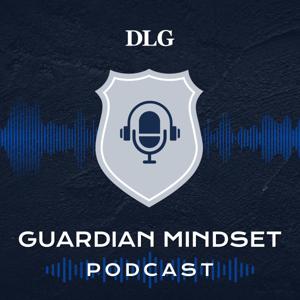


In this compelling episode of the Guardian Mindset Podcast, Attorney Eric Daigle returns to further explore the intricate concept of duty of care in law enforcement, with a special focus on the public duty doctrine. Building on the foundations laid in our previous episode, this discussion delves deeper, intertwining legal theory with human perspectives to offer a comprehensive understanding of law enforcement responsibilities.
We begin by examining the delicate balance law enforcement officers must maintain in differentiating between subjects and suspects in both non-criminal and criminal situations. This episode takes a close look at landmark legal cases such as South vs Maryland, Warren vs District of Columbia, and Shaney vs Winnebago County, dissecting their impact on the duty of care in the field of law enforcement.
Our conversation then shifts to the complex interplay between the legal and moral duties of care for officers, especially when dealing with individuals who are incapacitated or suffering from mental health issues. Attorney Daigle provides insights into the challenges and potential liabilities officers face in their tactical decision-making processes.
A crucial part of this episode is dedicated to clarifying the often misunderstood distinction between a 'suspect' and a 'subject', and why grasping this difference is essential for law enforcement professionals. We wrap up the discussion by underlining the importance of protecting and assisting those in need, while simultaneously ensuring the safety of all parties involved.
Tune in for an enlightening session that not only sheds light on the legalities but also humanizes the complex decisions faced by law enforcement officers daily. Join us as we navigate these challenging yet vital issues that are fundamental to the role of every law enforcement officer.
Hosted by Attorney Eric Daigle, this episode of the Guardian Mindset Podcast offers a deep dive into the intricate landscape of duty of care in law enforcement. Attorney Daigle opens with a compelling analysis of the history of use of force, qualified immunity, and key Supreme Court cases, highlighting the critical importance of officers adhering to established laws.
The discussion explores essential questions surrounding the moral and legal obligations of law enforcement, particularly in crises like mental health emergencies and suicide threats. Drawing on real-life examples, the episode highlights a deputy initially charged with child abuse for hesitating during an active shooter situation, sparking a broader exploration into the historical aspects of use of force, qualified immunity, and recent Supreme Court cases that shape the legal landscape.
Shifting to the intersection of mental health and law enforcement, the episode conducts a thorough analysis of court cases, advocating for a joint approach to effectively assist individuals in crisis situations. The exploration extends to the use of force in medical cases, featuring an in-depth examination of two court cases and introducing the Hill Test as an evaluation tool for an officer's use of force against non-criminal suspects.
The episode concludes by scrutinizing the legal and moral responsibility of law enforcement to act against individuals posing a threat to themselves and others. As a thought-provoking finale, the implications of mental health applications on law enforcement are explored, emphasizing the nuanced balance between legal and moral obligations.
Tune in for an insightful conversation that unveils the duty of care concept, navigates the evolving landscape of policing, and underscores the crucial guardianship role of law enforcement in preserving both legal standards and moral imperatives.
Today, we welcome Dr. Katherine Kuhlman to the Guardian Mindset podcast. As a distinguished police and public safety psychologist, Dr. Kuhlman brings a wealth of knowledge and expertise to our exploration of wellness and resilience in law enforcement.
Our conversation takes us back to the history of mental health in the folds of law enforcement, highlighting the deep-rooted mantra of "suck it up, buttercup" and its lingering influence in many departments. We shed light on the preventive measures that can act as anchors during times of crisis, such as the power of simple conversations and building direct contacts. Dr. Kuhlman articulates the importance of mental health support in law enforcement, debunking common misconceptions and emphasizing the crucial role of family support in an officer’s well-being. The episode concludes with a focus on self-care practices and resilience strategies for officers, showcasing the crucial role of mental health professionals in supporting those who protect our communities.
Dr. Katherine (Katie) Kuhlman, ABPP, is a board-certified psychologist in Police and Public Safety Psychology, and has expertise in the treatment of PTSD, depression, anxiety, and general life stressors. She has worked since 2014 providing services to first responders and their family members, truly understanding the unique stressors inherent in these occupations. She has presented nationally on wellness issues related to law enforcement, as well as school safety. She served as a subject matter expert on traumatic stress on the Colorado Governor's Expert Emergency Epidemic Response Committee prior to moving to Arizona. Dr. Kuhlman has responded and provided debriefing services to critical incidents including officer-involved shootings, suicides, line-of-duty deaths, and mass shootings. Understanding trauma, keeping schools and workplaces safe, and helping first responders are her true passions.
Ever contemplated the complexity of decision-making in high-stress, life-changing moments? In this compelling episode, we delve deep into the multifaceted realm of human factors in law enforcement, shedding light on how they directly shape the perceptions and responses of officers amidst life-altering, high-pressure situations. Join us as we unpack the importance of specialized training, the significance of networking in use of force investigations, and venture into the groundbreaking research conducted by Dr. Taylor.
Our discussion covers topics such as dispatch priming, muzzle position, and the seamless transition between tools used by officers in the field. From developing automatic response tactics to recognizing environmental stimuli, this episode will make you rethink how we perceive law enforcement, especially as it relates to use of force.
If you're eager to hear more from the insightful Dr. Paul Taylor, don't miss the opportunity to register for the Use of Force Summit. Dr. Taylor's keynote, "The Impact of Human and Organizational Factors on Use of Force Investigations," promises an enlightening exploration of how these factors can influence both investigators and the investigations themselves. Discover strategies to minimize potential biasing influences on these cases. Additionally, Dr. Taylor will be presenting on two other thought-provoking topics: "Perception-Response Times for OIS Investigations" and "Introduction to Interviews for Use of Force Investigations." Join us for a comprehensive examination of this critical subject matter.
Paul Taylor, Ph.D.
Paul Taylor is an Assistant Professor in the School of Public Affairs at the University of Colorado Denver where he studies decision-making, human factors, and system safety in the context of police interactions with the public. He is also the founder and lead instructor for the Association of Force Investigators (AFI). Dr. Taylor has over ten years of practical law enforcement experience including time as a department training manager, patrol sergeant, and use-of-force instructor. He has delivered law enforcement related instruction for academy, field training, and advanced in-service audiences as well as graduate and undergraduate level courses. Dr. Taylor is actively engaged in law enforcement research and training across the United States and internationally.
In this captivating episode, we have the privilege of welcoming retired Chief Terri Wilfong, a trailblazing female leader in law enforcement, to share her incredible journey.
Terri's story, starting from her humble beginnings in Kentucky and reaching the highest levels of law enforcement, is undeniably inspiring. Join us as Terri reflects on her experiences, from her very first day on the job to her remarkable rise to the position of Chief.
Our conversation with Chief Terri Wilfong (Ret.) goes beyond a mere recollection of her experiences; it's a treasure trove of insights for anyone in a supervisory role. Her leadership style is centered around nurturing her team and fostering intellectual growth, making it a valuable masterclass for those in leadership positions.
Looking ahead, Terri provides her perspective on the ever-evolving landscape of law enforcement, sharing her observations on the changes she's witnessed and offering guidance on how officers can navigate the current media scrutiny. This enlightening conversation is not to be missed.
From embracing passion in the job to building strong relationships, Terri's wisdom is a beacon for those in, or aspiring to join law enforcement.
Terri Wilfong served as the Chief of Police in the City of Greenville, South Carolina after a seven-year tenure. As the Chief of Police, the agency was the first in the state of South Carolina to implement a Crisis Intervention Team. The agency of 250 persons is recognized as one of the top ten cities to live in the United States.
During 30 + years in law enforcement, she has previously served in the Jefferson County Sheriff’s Department, Kentucky State Police, and the Jefferson County Police Department. Terri was assigned to multiple units including Criminal Investigation, Internal Affairs, Accreditations Manager, and the Hostage Negotiations Team. In 2003, the Jefferson County Police Department and the Louisville Division of Police were merged into the new Louisville Metro Police Department. Terri was selected to serve as a Lieutenant Colonel in the first command staff of the Louisville Metro Police Department. She was assigned to the operations division including the Patrol Division, Specialty Divisions, and the Kentucky Derby.
She currently is a Master Instructor with the FBI-LEEDA teaching the Trilogy, Internal Affairs, and the Reflective Leadership. Terri is a Law Enforcement Consultant for Daigle Law Group with the responsibility of reviewing and revising law enforcement policies and procedures to maintain and reflect constitutional police practices regarding the use of force legal standards, training and investigations involving the use of force. She is a Law Enforcement Consultant for Lockup Police Training Systems and provides training in communication skills, evidence based active de-escalation strategies and Fair and impartial policing. Terri is a certified law enforcement trainer for the Department of Criminal Justice Training (DOCJT) in the Commonwealth of Kentucky
Terri works with National Public Safety Partnership (PSP). She is the Strategic Site Liaison Assigned to Richmond VA Police Department. The Expedited Delivery of Assistance as a DOJ-wide program is in the core areas: Criminal Justice Collaboration, Community Engagement, Crime Analysis, Gun Violence, Constitutional Policing, Federal Partnerships, Technology and investigations.
Terri currently serves as a member of a monitoring team that oversees the implementation of a Consent Decree by the Department of Justice (DOJ). The Decree requires several specific reforms aimed at ensuring effective, safe and constitutional policing is implemented into the law enforcement agency.
Terri has presented to the Use of Force Summit, IACP, Southern Police Institute, local government hearings and both public and private entities. Ms. Wilfong served as the IACP Chair of the Crime Prevention Committee and the Conference Committee. She has served as the National Secretary to the Southern Police Institute Alumni Associations
She has received the Liberty Award by the Greenville Bar Association, the YMCA Women of Achievement Award, the Breaking Class Ceiling Award from the National Center for Women and Policing and the Southern Police Institute Alumni Association Outstanding Performance Award.
Ms. Wilfong holds Bachelor's and Master's Degrees in Justice Administration, both from The University of Louisville. She is a graduate of the Southern Police Institute, 95th Administrative Officer's Course and served on the National SPIAA Executive Board.
Does freedom of speech shield menacing threats? Or does the law have the right to step in when verbal threats instill fear and potential harm? We found ourselves in a labyrinth of these questions in our latest episode, guided by the landmark Supreme Court decision on Counterman versus Colorado. We unwind the intricate layers of defining a threat, especially in this digital age, where threats can be disguised behind the veil of anonymity. We weigh the subjective intent of the speaker against the objective perspective of a reasonable person and question which should hold more weight in legally certifying a threat.
In this episode of the Guardian Mindset Podcast, Chief Liam Duggan joins host Attorney Eric Daigle for an engaging discussion on the future of law enforcement. Chief Duggan, who has recently assumed the role of chief, shares his insights and optimism about the profession.
The conversation begins with Chief Duggan reflecting on his transition into the new position and the invaluable support he received from his colleagues. They acknowledge the current challenges faced by law enforcement and commend the dedication of officers who choose to serve their communities.
Chief Duggan emphasizes the importance of adapting to the ever-changing environment and highlights the resilience and flexibility of law enforcement personnel. He discusses the advancements in technology that can enhance police operations and expresses enthusiasm about the opportunities they present.
The conversation also delves into the mindset of new officers and the significance of staying focused on the present. Chief Duggan believes that the majority of individuals entering law enforcement are service-minded and committed to performing their challenging duties exceptionally. He emphasizes the need for support, including adequate resources and adaptable legislation to address evolving circumstances.
Chief Duggan underscores the importance of character and competency in law enforcement, emphasizing the potential risks associated with lowering standards to meet recruitment quotas. He stresses the significance of acknowledging achievements and establishing accountability within police organizations, while also recognizing the need to support and cultivate future leaders.
Overall, the episode paints a positive outlook for the future of law enforcement, highlighting the unwavering dedication of officers and the potential for ongoing improvement and excellence in the profession. Chief Duggan's steadfast commitment and belief in the excellence of law enforcement professionals serve as an inspiration to both current and future generations.
His career began in 1997 with the Burnsville (MN) Police Department before being hired by the St. Paul Police Department 2011 and now the metro area suburb of Prior Lake. Chief Duggan has served in leadership roles for investigations, patrol, vice/narcotics, SWAT, undercover operations, and training. Chief Duggan has a BS in Law Enforcement and is a graduate of the Northwestern School of Staff and Command. He is one of only two police officers in the world accepted to graduate studies in Human Factors and Safety Systems study through Lund University in Sweden. He serves on the board of Advisors for the National Law Enforcement Firearms Instructors Association and as the Director of Training and Development for the Special Operations Training Association. Chief Duggan is a Sr. National instructor for Calibre Press, LouKa Tactical and KFD Consulting and specializes in human performance factors analysis, training force options, firearms, arrest and control, and leadership development. Additionally, he is a certified Advanced Specialist in the Behavioral Analysis of Force Encounters through the Force Science Institute and consults as an expert witness in use-of-force incidents and policing best practices at the Federal and State levels.
In this episode of the Guardian Mindset Podcast, Attorney Eric Daigle discusses the intersection of freedom of speech and video recording in law enforcement. Attorney Daigle focuses on the First Amendment rights of citizens to record and live stream interactions with the police. He mentions a recent decision by the Fourth Circuit Court of Appeals that established the extent of First Amendment protections for recording and live-streaming officer interactions.
Attorney Eric Daigle provides historical background on the issue, starting with the landmark Glik decision in 2010, which recognized the citizen's right to record police. He explains that First Amendment auditors, individuals who film law enforcement in public spaces, have become more common in recent years, often challenging police and seeking media exposure. Daigle discusses the challenges these encounters pose for law enforcement and offers recommendations for handling them.
He emphasizes that citizens have the constitutional right to record law enforcement officers as long as they are not interfering with their duties. However, he also highlights that there are limitations to this right, such as considerations of public safety and reasonable time, place, and manner restrictions.
Attorney Eric Daigle stresses the importance of maintaining courtesy, respect, and tact when interacting with First Amendment auditors or individuals recording police. He advises officers to be mindful of their own safety and the safety of others while ensuring compliance with constitutional guidelines. He also encourages agencies to have clear policies in place and provide training to officers on handling these situations.
Overall, the episode aims to provide insights and strategies for law enforcement professionals to navigate the complex landscape of freedom of speech and video recording in relation to policing.
Navigating the intersection of freedom of speech and video recording in law enforcement.
Reviewing laws regarding recording police and the issues related to recording police interactions.
The Fourth Circuit Court of Appeals' decision on the First Amendment right to live stream officer interactions.
The rights of First Amendment auditors and their challenges to law enforcement.
The First Amendment rights of citizens to record law enforcement officers in public spaces.
The Glik v. Cunniffe case and its significance in establishing the right to record police.
Recommendations for law enforcement agencies in dealing with First Amendment auditors and civilians who have the right to film.
Time, place, and manner restrictions on the right to film police.
Balancing public safety considerations with First Amendment rights.
Strategies for officers in maintaining courtesy, respect, and tactfulness during encounters with auditors.
Officers' duty to ensure officer safety and respond to illegal activity.
Resources:
Attorney Eric Daigle specializes in Civil Rights litigation and law enforcement operations consulting. Attorney Daigle also conducts training on use of force standards, including electronic control weapons and responses to force/deadly force incidents. Attorney Daigle acts in his capacity as a Law Enforcement Consultant providing guidance and oversight to department command staff on operations, force response, and risk management. He has served as an expert witness in use of force cases and has reviewed use of force incidents around the Attorney Daigle serves as a member of independent monitoring teams and acts as an auditor in reviewing police department organizational compliance with procedural revisions directed or overseen by the Federal court system.
In this podcast episode, Eric invites Geoffrey Desmoulin from GTD Scientific to discuss video analysis and its applications in various fields. He shares his educational background in kinesiology and engineering, which provides him with a unique perspective on analyzing injuries. He explains how his company combines engineering and life sciences to analyze the force that caused an injury and its magnitude.
Desmoulin emphasizes the importance of starting with the injury and using it to drive the analysis and testing process. The company also employs a feedback loop to ensure consistency with independent sources of information, such as case materials and scientific literature.
Desmoulin also shares his experiences in communicating technical concepts in court, especially when dealing with violence. He emphasizes the importance of using visual aids and limiting the number of concepts to three to explain arguments effectively.
The podcast concludes with Desmoulin highlighting how they used machine vision to analyze a video of a police shooting incident, highlighting the importance of shape recognition and algorithms for object identification. Listeners are encouraged to visit GTD Scientific's website to learn more about video analysis and the company's operations. Overall, the episode provides valuable insights into the intersection of engineering, life sciences, and video analysis in investigating incidents of violence.
Dr. Desmoulin is the Principal of GTD Scientific Inc. GTD offers Biomechanical Consulting Services on behalf of clients throughout North America, as well as abroad. Focused practice areas include Injury Biomechanics, Incident Reconstruction, and Physical Testing with a sub-specialty in the Science of Violence®. GTD has been retained in significant complex injury litigation cases involving municipal police department use of force, violent encounters, and TASER International to name just a few examples. Furthermore, landmark testing and shooting reconstruction methodology developed by Dr. Desmoulin was recently upheld as reliable and admissible by the U.S. Federal District Court for the 9th District of California. This methodology has now been published in the International Journal of Forensic Engineering entitled “Application of biomechanical modeling to police shooting reconstruction”.
From the publisher's feed

31,925 Listeners

152,851 Listeners

56 Listeners

30,713 Listeners

111,873 Listeners

56,396 Listeners

46,046 Listeners

85 Listeners

39,362 Listeners
964 Listeners

26,558 Listeners

76 Listeners
664 Listeners

15,937 Listeners
95 Listeners