
Sign up to save your podcasts
Or



Based on Podcast App listening data
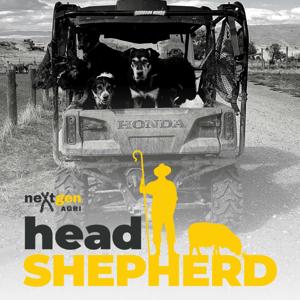
This week on the Head Shepherd podcast, we're changing gears a little and chatting with author Michelle Scott Tucker.
Having an audience of mostly sheep tragics, Mark thought the parallels between Michelles book, Elizabeth Macarthur: a life at the edge of the world; and our listeners was too good not to make the most of.
Michelle tells us more about the wonderful Elizabeth Macarthur and the foundations of the Merino wool industry of Australia.
Elizabeths story begins in on a farm in North Devon, after marrying a not-strongly liked soldier named John Macarthur. In 1790, Elizabeth followed him to "make his fortune" in Australia- the only officers wife to go and what Michelle refers to as a "pretty stupid decision".
June 1790 she arrived in Sydney Harbour excited to see this mythical township she'd been promised Australia held , and instead saw an army campsite of tents full of soldiers without shoes, food or women to talk to.
In 1793, the Macarthurs got their first land grant of 100 acres in a place that is now called Parramatta. They spent a few years working hard turning the place into a mixed farm. Livestock numbers were incredibly low so they had sheep but not in huge numbers.
In 1801 John Macarthur was sent back to England to be court marshalled after shooting his commanding officer during a duel, and left Elizabeth to run the recently expanded farm alone with the youngest children.
John escaped his court-marshalling in the UK and sweet-talked his way into supplying British wool mills with Australian wool, despite not having the sheep or the experience in importing wool. John also sweet talked his way into exporting a flock of the kings Merinos he'd purchased, despite export of them being illegal. He returned to Australia in 1905 with 5,000 acres and some "scrubby" fine wool sheep.
But, nearly 4 years later John gets sent back to the UK after causing more political trouble.
And so Elizabeth was left running the farm, and the wool export industry for the next 12 years. She was the first person to send commercial quantities of wool to England.
-
Although different to our usual podcasts, this is a fantastic relaxing listen. Michelles years of research into the beginning of the Australian wool industry, and much much more, is really commendable and enjoyable listening for any sheep tragic.
If you'd like to find out more about Michelles books, follow the link below:
https://michellescotttucker.com/elizabeth-macarthur/
Head Shepherd is brought to you by neXtgen Agri International Limited.
We help livestock farmers get the most out of the genetics they farm with. Get in touch with us if you would like to hear more about how we can help you do what you do best: [email protected].
Thanks to our sponsors at MSD Animal Health and Allflex, Heiniger Australia and New Zealand, and ProWay Livestock Equipment. Please consider them when making product choices, as they are instrumental in enabling us to bring you this podcast each week.
Check out the MSD range HERE
Check out Allflex products HERE
Check out Heiniger's product range HERE
Check out ProWay's product range HERE
This week on the Head Shepherd podcast we have Sarah talking about genetics, technology and solving problems in the Agricultural industry.
Sarah is currently Global Strategy and New Ventures Manager at Gallagher and also breeds Polled Dorsets in the Waikato, NZ. Sarah grew up on a farm with a father who was a ram breeder. "I have always been around stud sheep," says Sarah
After spending some time after university as an Agricultural journalist, Sarah returned to genetics and started working for the the Ultrafine Merino Company.
"I looked after the breeding programme of their nucleus flock at Tara Hills and helped sell the wool into Asia, developing different pricing mechanisms."
"We did a lot of testing around spinning efficiently and the wool. We could show the company we were working with that we could add more value to their processing efficiency and then we shared the premiums with them."
Mark explains what the company is. "Breeders came together and measured the micron of over 20,000 ewes and bought them into a central nucleus of 600. Then they set about breeding the worlds finest merino, essentially."
"A lot of those foundation breeders are still chopping away and producing some
exquisite fibre"
Sarah currently breeds Polled Dorsets. She recently moved from Canterbury to the Waikato. "That would have been quite a challenge moving to an FE area for the sheep?" ask Mark
"It's a really big challenge. We will bolus the ram hoggets but we don't do anything else, they just have to survive." says Sarah. "We've already seen some sire lines that are much more resistant to it."
Very early in on in the sheep DNA pedigree days, Sarah was involved with Ovita. "We had the problem at the time that it was pretty expensive tech. So we came up with a product that only had 7 markers in the panel and developed some smart ways of being able to get more accuracy."
"There was lots of challenges along the way of getting people on board. Over time as we got the price down, people saw the value and we added more traits into the panel that told you about muscling, fecundity, worm resistance and things like that," Sarah explains. "Then we moved in top the SNP chip days, so now accuracy is very high. So it was a journey and understanding the problem... and that's what a lot of my career has been about. Then working out a way to solve it and taking people on the journey."
Sarah has been at Gallagher for nearly 7 years. "We've been on a journey about future thinking and looking further out and thinking; what is the future on farm?
"We've been working really hard to get a product to market that has the reliability of the products that we traditionally are known for, which is extremely high. When you read statistics our products are more reliable than Boing!"
Mark asks Sarah what she thinks the next 10 years will bring in Ag.
"I think it's going to be a journey towards precision farming. It's really hard to do this in pastural remote areas but it's not impossible."
Head Shepherd is brought to you by neXtgen Agri International Limited.
We help livestock farmers get the most out of the genetics they farm with. Get in touch with us if you would like to hear more about how we can help you do what you do best: [email protected].
Thanks to our sponsors at MSD Animal Health and Allflex, Heiniger Australia and New Zealand, and ProWay Livestock Equipment. Please consider them when making product choices, as they are instrumental in enabling us to bring you this podcast each week.
Check out the MSD range HERE
Check out Allflex products HERE
Check out Heiniger's product range HERE
Check out ProWay's product range HERE
This week on the Head Shepherd podcast we have Professor Simon de Graaf, a fellow podcaster and a world expert in sheep reproduction, sperm sexing and AI.
Simon is currently a Professor of Animal Reproduction at The University of Sydney, where he says 90% of the work he does now is sheep "But my background is such that we've dealt with a lot of different species."
Simons work in reproduction began during his PhD where he studied sexed semen. Mark asks for a run through of the process of sexing semen.
"It's all based on the fact there's a different amount of DNA in a male sperm and a female sperm." explains Simon. "The X chromosome is bigger than the Y chromosome so if you add a special dye to it, you can pick up the higher florescence in the X chromosome."
The method for successfully separating sexed semen was a success. "The big challenge, after they initially developed the technology, was keeping the sperm alive though the process." explains Simon. "It's a lot to be shot through a cannon at 80 miles an hour...it's not a recipe for long life. So there was a lot of research that went into keeping them happy and healthy in the process"
Fast forward 20 years and the results of sexed semen have pretty good conception rates.
"There's certainly been some people that have gotten fantastic results in recent times and [they] are going back for second or even third sexed semen programs. You should expect, if everything goes right, around your normal AI, which is around 70%."
Mark asks if Simon is involved in anything that might explain the variability of AI success.
"With in my team, Dr Jessica Rickard and Eloise Spanner, they have just commenced a project on prediction of AI success."
Part of this project is to attempt to place a few more numbers or gather more information on what makes for a success or what makes for a failure.
Mark and Simon then cover "Reproduction Co", Simons latest venture.
"I've always been quite interested in the commercial space and I was keen to offer the semen assessment service at a national level. So what I decided to do was set up this business. Amongst other things it's offering standardised semen testing."
"We have three labs where everyone is doing the same thing, following the same protocols. They've been trained in the same way and we exchange reference samples to check we're all seeing the same thing and scoring the same thing."
"We all talk about how expensive AI programs are...I would argue that you should take a look at the semen that you are going to be using. Check it for numbers, looks, swimming patterns.... Why not test for those things if they are relatively inexpensive in comparison to a failure?" he asks.
Simon delves into the science behind artificial insemination and he and Mark discuss the future of AI. Currently work is going on to facilitate cervical AI in sheep with frozen semen.
And finally, Simon discusses his podcast "Repro Radio" which covers all aspects of reproduction. From human fertility to wildlife conservation.
If you would like to know more about Simon, The Reproduction Co or his podcast "Repro Radio" you can follow the links below.
https://www.thereproductionco.com/
https://www.simondegraaf.com/
Head Shepherd is brought to you by neXtgen Agri International Limited.
We help livestock farmers get the most out of the genetics they farm with. Get in touch with us if you would like to hear more about how we can help you do what you do best: [email protected].
Thanks to our sponsors at MSD Animal Health and Allflex, Heiniger Australia and New Zealand, and ProWay Livestock Equipment. Please consider them when making product choices, as they are instrumental in enabling us to bring you this podcast each week.
Check out the MSD range HERE
Check out Allflex products HERE
Check out Heiniger's product range HERE
Check out ProWay's product range HERE
This week on the Head Shepherd podcast we have Jason Strong, Managing Director of Meat & Livestock Australia Ltd. (MLA)
Jason grew up on a farm and says "I can never remember not wanting to be a cow farmer." He says that winning a scholarship to the University of Illinois in his late teens was "transformative" in his career.
"The most important thing was learning about meat grading and meat science. I got really excited about being a meat grader and came home [...] and realised we didn't have a meat grading system.... which is quite career limiting."
"That's what got me started working with Dr Rod Polkinghorne and John Webster [...] that set up the Meat Standards, Australia system."
Jason worked in various roles in Agriculture but with one common goal, to make the industry better for everyone. Now, as Managing Director of MLA, Jason gives us a run down of what MLA do, for our non-Australian listeners, and also what they are focusing on in the next few years.
"At our core, we focus on research development and marketing."
Jason makes a great point in saying that over MLAs time, they have invested in 12-13,000 projects. Which means it's hard to find something in the livestock sector they haven't looked into.
"When we think about research and development, so much of what was a challenge for us twenty years ago, [...] so many of those things have been solved or improved. So the breadth of things that we need to invest in, is a much shorter list now than it was 32 years ago"
Jason says that MLA are focusing on the importing things going forward. "When we put our strategic plan together, we took a "Fewer, Bigger, Bolder approach."
Mark asks what the "big ticket" items that MLA are focusing on.
"Sustainability," Jason says. "We've doubled investment in that space. We've committed to double our investment in adoption and extension and we also significantly increased our investment in traceability and biosecurity"
Jason is very enthusiastic about the future of the industry, and as he should be. "The industry is in an amazing shape. Particularly in the last five years. The success of the collective industry are coming to the fore"
Considering the past few years and everything that has happened, Jason says that prices for red meat will remain strong. He says that the collective effort of the last 20 years, building markets and connecting with consumers, is now showing benefits.
"It's not a mistake. It didn't just happen [..] there's absolutely a component of where we're at at the moment. The underlying strength of where we are has come from all of the other things''
One benefit of such a strong market is that we have more certainty in our investments. "We can now make a direct connection between investment and benefit." Jason says. When it comes to genetics, farmers now know their decisions will actually pay off financially. Farmers can now buy rams with traits they know they will be rewarded for by the supply chain.
This episode is a great reminder of how far the industry has come in the past 20 years and how exciting the next 20 will be.
Thank you Jason for sharing your time with us here at neXtgen Agri.
Head Shepherd is brought to you by neXtgen Agri International Limited.
We help livestock farmers get the most out of the genetics they farm with. Get in touch with us if you would like to hear more about how we can help you do what you do best: [email protected].
Thanks to our sponsors at MSD Animal Health and Allflex, Heiniger Australia and New Zealand, and ProWay Livestock Equipment. Please consider them when making product choices, as they are instrumental in enabling us to bring you this podcast each week.
Check out the MSD range HERE
Check out Allflex products HERE
Check out Heiniger's product range HERE
Check out ProWay's product range HERE
This week on the Head Shepherd Podcast, we head over to Europe to chat with Cathy Dwyer.
Cathy is based in Edinburgh and splits her time between two roles. One at Scotlands Rural College, leading a team of researchers in Animal Welfare and Behaviour and the other at the Royal School of Veterinary Studies where they have a centre for Animal Welfare Education of which Cathy is a Director.
We invited Cathy onto the podcast because of her research into the maternal bond and maternal behaviour at birth in sheep. It has been one of her core research areas.
Cathy says they started out thinking about just the behaviour of the ewe. "Everyone thought it was the mothers fault if the lamb didn't survive, so we started [research] with the mother"
"One of the key things that we found, as part of that work using embryo transfer between two of our different Scottish breeds with different levels of maternal care, was that the lamb was really important... although we tended to blame the mother, the behaviour of the lamb was just as important."
"We've done some work looking at the heritability of lamb activity at birth. We know it is fairly heritable (25%) so we can select rams in particular that produce offspring that are active" Says Cathy. "So certainly there's a lot of potential to improve lamb survival by honing on what the lamb was doing, rather than just looking at the ewe"
Mark asks what measures they were using to measure lamb activity. "We looked in particular at what was the lamb was doing five minutes after birth... We had very specific scores that we asked farmers to collect [...] To make it more objective to farmers."
They've also been looking onto thermoregulation in the lamb.
"You have this downward spiral, they're born with their brown fat backpack of energy, but they've got to replenish that as quick as they can. So having a good suckling relationship with their mother sits in the middle of the success of the whole story."
"Some of the work we've looked at is how does that early thermoregulation start and how is that brown fat being used. There are differences in some of the animals that we've looked at in the thyroid hormones, which are involved in the onset of thermoregulation."
Another weak point in lamb survival at birth is in triplet lambs. Cathy says that triplet lambs are compromised on many fronts. "Singles and twins physiologically and behaviourally are on a continuum, whereas triplets drop off the bottom of the scale. And I think really understanding where that's coming from."
"A ewe has two uterine horns. When she has twins she has a lamb in either side, but when she has triplets theres going to be a second lamb in the second horn, and how does she deal with that? Theres going to be some sharing of the amount of space and amount of placenta. So there are anatomical differences between having twins and having triplets"
Mark and Cathy also cover maternal behaviours in hoggets/maidens and other research projects she's involved with.
There is plenty to be learnt from this podcast so thank you to Cathy for sharing her time with us and our listeners.
You can find out more about the research Cathy has been involved with here
https://pure.sruc.ac.uk/en/persons/cathy-dwyer/projects/
Head Shepherd is brought to you by neXtgen Agri International Limited.
We help livestock farmers get the most out of the genetics they farm with. Get in touch with us if you would like to hear more about how we can help you do what you do best: [email protected].
Thanks to our sponsors at MSD Animal Health and Allflex, Heiniger Australia and New Zealand, and ProWay Livestock Equipment. Please consider them when making product choices, as they are instrumental in enabling us to bring you this podcast each week.
Check out the MSD range HERE
Check out Allflex products HERE
Check out Heiniger's product range HERE
Check out ProWay's product range HERE
This week on the Head Shepherd podcast we have Charlie de Fegely chatting about things all things sub clover and beyond.
Charlie farms in Western Victoria in the foothills of The Grampians. They average around 550mm of rainfall per year and are in a predominantly cropping area but they have chosen to be all stock because of their heavy clay soils.
Charlie and his family will be mating 10,000 ewes this year. Last year he mated 8,300 and marked 12,000 lambs. Figures to be very happy with.
Charlie chats about his time at the Grassland Society and the "Longterm Phosphate Trial" and Sub Clover research.
"It was a terrible time [in sheep farming], and we were looking at alternatives to retain viability and long term profitability. Dr Peter Schroder came to me when I was president of the Grasslands Society and he said "Charlie, we've got the help these farmers pick themselves back up after the wool prices have been shot."
"The work they'd done at the long-term phosphate trial, it showed clearly that if you put fertiliser on for not much cost you can actually increase your productivity." Charlie says. "One of the ideas behind it was to not have to put a tractor and seeder through the paddock. And it did work. The sub clover seed was there, it just had to be grazed hard enough to let it come back, and fertilised. And people were ecstatic"
"It was a great time to be part of extending information to farmers as it actually put a smile back onto farmers faces... It was amazing to be a part of it." He says. "That was one of the programs they (MLA) ever invested in and there's a lot of people that actually need it again to understand pasture quality and the impact on the animal."
Charlie is still implementing those principles and is a huge fan of sub clover with some phenomenal looking pastures on his farm. "We've applied the principles... fertilising and grazing. Then all of a sudden the clover comes up"
Charlieexplains his weaning pastures which are an impressive sight. "We use a combination of sub clover and perennial ryegrass. I will say at 12/14kg ha of clover some people might think that's a lot, but it ends up looking like a fodder crop of clover."
"It carries another month of great quality. It allows us to finish weaning of mum and get a month of extra growth."
The "measure to manage" mindset has followed Charlie through his career. After period of consulting, Charlie realised "I could actually do better staying at home because we had the opportunity to expand."
Now at home full time, with the farm ever growing, Charlie is starting to dabble in genetics. When Charlie bred merinos he managed to remove dag from his flock, something of which he's keen to do again in his Composites. "We've got some really productive sheep but we've bought some traits in we don't like. So by breeding our own rams we can take out some of those traits."
Charlie and Mark also cover the Zanda McDonald award, mating hoggets and much more in this podcast.
Thanks Charlie for sharing your time with us.
Head Shepherd is brought to you by neXtgen Agri International Limited.
We help livestock farmers get the most out of the genetics they farm with. Get in touch with us if you would like to hear more about how we can help you do what you do best: [email protected].
Thanks to our sponsors at MSD Animal Health and Allflex, Heiniger Australia and New Zealand, and ProWay Livestock Equipment. Please consider them when making product choices, as they are instrumental in enabling us to bring you this podcast each week.
Check out the MSD range HERE
Check out Allflex products HERE
Check out Heiniger's product range HERE
Check out ProWay's product range HERE
This week, to tide you over between seasons, we've released two of our Head Shepherd Premium podcasts for you.
Mark recently uploaded a series on different traits that might be important for our clients. In the "Breeding Series", Mark covers many traits. From staple length, to growth to muscling.
We've decided to share CVoFD and Fat with you today. CVoFD might seem like an unusual one but as Mark says, "It's quite cool as its correlated with lots of things."
They are both linked to whole body energy, which is why we put these two together.
If you are interested in more Head Shepherd Premium podcasts, contact us on [email protected]
We will be releasing an episode every week alongside all transcripts of the podcasts as well as giving you access to the other 28 bonus episodes.
We will be back next week with Season 9.
Head Shepherd is brought to you by neXtgen Agri International Limited.
We help livestock farmers get the most out of the genetics they farm with. Get in touch with us if you would like to hear more about how we can help you do what you do best: [email protected].
Thanks to our sponsors at MSD Animal Health and Allflex, Heiniger Australia and New Zealand, and ProWay Livestock Equipment. Please consider them when making product choices, as they are instrumental in enabling us to bring you this podcast each week.
Check out the MSD range HERE
Check out Allflex products HERE
Check out Heiniger's product range HERE
Check out ProWay's product range HERE
We've reached the end of season 8 and we've got a great Q&A podcast for you.
We have questions from “What's your opinion on Australia’s LEQ index compared to focusing solely on IMF and shear force figures if your number one breeding objective is to increase eating quality?” to "Is there any correlation between worm burdens/high genetic WEC and dermatitis/wool rot?"
Mark also covers breeding for footrot resistance in crossbred (non-merino) sheep and how the industry can go about improving that at a producer level.
We also cover the future of neXtgen Agri and where Mark hopes the industry will be in 20/30 years time, and it's an exciting place to be sure!
Head Shepherd is brought to you by neXtgen Agri International Limited.
We help livestock farmers get the most out of the genetics they farm with. Get in touch with us if you would like to hear more about how we can help you do what you do best: [email protected].
Thanks to our sponsors at MSD Animal Health and Allflex, Heiniger Australia and New Zealand, and ProWay Livestock Equipment. Please consider them when making product choices, as they are instrumental in enabling us to bring you this podcast each week.
Check out the MSD range HERE
Check out Allflex products HERE
Check out Heiniger's product range HERE
Check out ProWay's product range HERE
This week on the Head Shepherd podcast we have Charlie Wootton.
Charlie is currently based in Adelaide but is originally from Jigsaw Farms in South West Victoria.
Charlie is doing his honours project on the "Magnificent Maidens" project, which is the topic of todays podcast.
The MLA funded PDS project, "Magnificent Maidens", is to demonstrate best-bet management of maiden ewes on their reproductive performance and carryover effects on subsequent performance.
"There's not much research done on maiden merino hoggets that join at 18-19 months of age" Charlie says. He also says that improving maiden hogget performance is a "low hanging fruit."
Maiden ewes can represent up to 30% of the whole farm ewe flock and their reproductive performance is usually 20-30% lower than that achieved at their subsequent joinings.
"You can't prioritise all of the sheep in your flock. So that means that maiden hoggets are often put on the back burner [...] and forgotten about until their first joining at 18 months of age"
Mark says when it comes to putting that weight on maidens, "Do it early and do it the easy way rather than trying to stack weight on at the end."
"It's about working out how we do that in a cost effective way." Agrees Charlie.
Mark and Charlie go on to discuss the results of the trials and what the key drivers are to maiden performance.
"For every one kilo increase in live weight at joining there was a 2.2% increase in reproductive rate" Charlie says. "We also found that during joining, weight gain is positively correlated with an increasing scanning rate. For every 100g per day of increased weight gain, during the joining period there, was a 7.3% increase in reproductive rate"
If you would like to hear more from Charlie and learn how to improve the performance of your maiden ewes, you can attend our FREE online course for the Magnificent Maiden project.
The course will be run over 3 x 1 hr sessions over 4 weeks - starting 5pm AEDT Wed 2 November
Presentations and project progress updates will be given by:
For more information about this project check out our project site here: https://www.nextgenagri.com/magnificent-maidens
https://www.nextgenagri.com/articles/magnificent-maidens
Head Shepherd is brought to you by neXtgen Agri International Limited.
We help livestock farmers get the most out of the genetics they farm with. Get in touch with us if you would like to hear more about how we can help you do what you do best: [email protected].
Thanks to our sponsors at MSD Animal Health and Allflex, Heiniger Australia and New Zealand, and ProWay Livestock Equipment. Please consider them when making product choices, as they are instrumental in enabling us to bring you this podcast each week.
Check out the MSD range HERE
Check out Allflex products HERE
Check out Heiniger's product range HERE
Check out ProWay's product range HERE
This week on the podcast we have Duncan Humm. Duncan farms Deer for venison and velvet and is also one of the minds behind NZ Farming on Facebook.
Mark and Duncan discuss deer farming, a topic not often covered on the Head Shepherd podcast. Duncan farms with his partner Lorna in the picturesque foothills of the Southern Alps in the South Island of New Zealand.
They have two different lines of deer with their velvet hinds looking drastically different to their venison hinds, rather than attempting a duel purpose animal.
"The velvet hinds are like these tiny little 'Perendale' type things versus our massive venison animals"
Duncan says he focuses on temperament and maternal ability when picking replacements. "The velvet industry has been a bit too focused just on kilos which has left a few of those maternal traits behind as a result"
"They wouldn't be the first industry to get lost chasing the product and forgetting about the animals" Mark says.
"There's still so much potential in deer genetics. With one good stag, you can jump the genetics up not by 100's of grams, but by kilos" Duncan says. "It's pretty exciting.. if you have deep pockets"
Duncan is now planning on putting in 35Ha of solar on their Canterbury farm. It will be the second solar farm in the area.
"It's been something we've been looking for for quite some time. A big part of driving it is farm succession and resilience to climate and governance."
Their proximity to infrastructure and their summer climate means they are well set up to produce power. "Mid-Canterbury power demands are opposite to that of the rest of the country. Peak usage is in the summer in the middle of the day. So solar is the perfect fit for this area, it's pretty cool."
Duncan Humm is also one of the brains behind NZ Farming, "New Zealand's #1 grass roots social media community. Telling the story of real farm life and where your food comes from through the eyes of farmers".
The initial intent was for it to be a community for those who couldn't get down to a local rugby club or pub for a yarn. Tyler, the original creator wanted a space for people to have a chat with likeminded individuals and it definitely worked with over 420,000 followers across a range of platforms.
If you're not already following NZ Farming, make sure you do!
NZ Farming Facebook
Nz Farming Instagram
Designer Genes
Later this month neXtgen Agri will be on the road in the North and South Island to bring our "Designer Genes" workshop to you.
https://www.nextgenagri.com/events
Check out The Hub
thehub.nextgenagri.com
Our community where our members have the opportunity to keep up to date with everything we are working on.
Thanks to our Sponsors
Allflex Livestock Intelligence is the leader in the design, development, manufacturing, and delivery of animal monitoring, identification, and traceability solutions. Their data-driven solutions are used by farmers to manage animals. By putting intelligent, actionable information into farmers’ hands, their solutions empower them to act in a timely manner for optimal outcomes.
A big thank you to our sponsors, Allflex Livestock Intelligence and MSD Animal Health Intelligence
www.allflex.global/nz/
Head Shepherd is brought to you by neXtgen Agri International Limited.
We help livestock farmers get the most out of the genetics they farm with. Get in touch with us if you would like to hear more about how we can help you do what you do best: [email protected].
Thanks to our sponsors at MSD Animal Health and Allflex, Heiniger Australia and New Zealand, and ProWay Livestock Equipment. Please consider them when making product choices, as they are instrumental in enabling us to bring you this podcast each week.
Check out the MSD range HERE
Check out Allflex products HERE
Check out Heiniger's product range HERE
Check out ProWay's product range HERE
From the publisher's feed
Mark Ferguson from neXtgen Agri brings you the latest in livestock, genetics, innovation and technology. We focus on sheep and beef farming in Australia and New Zealand, and the people doing great…
322 Listeners
12 Listeners

3 Listeners
29 Listeners

1 Listeners

4 Listeners
0 Listeners
1 Listeners
266 Listeners
13 Listeners

29 Listeners
67 Listeners

2 Listeners

5 Listeners

66 Listeners