
Sign up to save your podcasts
Or



Based on Podcast App listening data
Growing up in Western Sydney with no connection to agriculture, Samantha Wan’s path into the wool industry was anything but typical.
In this week's episode, Sam talks with Ferg about finding agriculture through high school ag, building confidence without a family farming background, and the role mentors and community played in shaping her career.
She and Mark discuss her work across the wool value chain, including auctioneering, technology and systems innovation within Elders, and the development of the world-first automated wool handling facility in Melbourne. Sam also shares why understanding the full journey of wool matters, from on-farm decisions through to market outcomes
Sam is a great example of what you can achieve if you really chase your goals in the agricultural industry.
----
For more information on our fundraising efforts for the 'Cure Brain Cancer Foundation' visit this link:
https://fundraise.curebraincancer.org.au/fundraisers/markferguson/twentysix2000
Head Shepherd is brought to you by neXtgen Agri International Limited.
We help livestock farmers get the most out of the genetics they farm with. Get in touch with us if you would like to hear more about how we can help you do what you do best: [email protected].
Thanks to our sponsors at MSD Animal Health and Allflex, Heiniger Australia and New Zealand, and ProWay Livestock Equipment. Please consider them when making product choices, as they are instrumental in enabling us to bring you this podcast each week.
Check out the MSD range HERE
Check out Allflex products HERE
Check out Heiniger's product range HERE
Check out ProWay's product range HERE
How can commercial producers use breeding values without recording full pedigrees? This week, Mark chats with Carel Teseling, Chief Operating Officer at Angus Australia, to find out.
Carel's career has taken him from South Africa's regional performance recording programs to 14 years of developing genetic tools for Angus Australia, a decade leading Australian Wagyu Association's genetics, and now back to Angus again, giving him unique insight into what actually works for producers across different systems and breeds.
Carel begins by sharing the story behind South Africa's groundbreaking work in livestock genetics during the 1990s, as well as his early days tackling genetic conditions in Angus, and his time at the Australian Wagyu Association.
After 10 years at the Australian Wagyu Association, Carel returned to Angus Australia in 2025 as Chief Operating Officer, where he's overseeing the parallel running of the trans-Tasman (TACE) analysis and Angus's new internal analysis.
He explains how the internal system has been in development for almost five years, includes new traits like immune competence and body condition, and uses different methodological approaches such as avoiding pre-adjustments on carcass data.
Angus Australia is letting breeders compare both systems to see how they re-rank animals. Carel explains that while there will be some re-ranking, both point in the same direction and will still guide breeders toward genetic improvement.
Carel and Mark also cover
----
For more information on our fundraising efforts for the 'Cure Brain Cancer Foundation' visit this link:
https://fundraise.curebraincancer.org.au/fundraisers/markferguson/twentysix2000
Head Shepherd is brought to you by neXtgen Agri International Limited.
We help livestock farmers get the most out of the genetics they farm with. Get in touch with us if you would like to hear more about how we can help you do what you do best: [email protected].
Thanks to our sponsors at MSD Animal Health and Allflex, Heiniger Australia and New Zealand, and ProWay Livestock Equipment. Please consider them when making product choices, as they are instrumental in enabling us to bring you this podcast each week.
Check out the MSD range HERE
Check out Allflex products HERE
Check out Heiniger's product range HERE
Check out ProWay's product range HERE
Ferg shares his thoughts on genetic gain in the sheep and beef industries. He has often said that we should be seeking to achieve a minimum of 2% genetic gain, but the top operators we deal with here at neXtgen Agri are consistently achieving 3-4%. Ferg explains how they’ve achieved that with the use of selection accuracy and the compounding effect of disciplined breeding decisions over time.
Ferg also talks about what that genetic gain actually means for each farm and what traits we should be looking at to optimise performance. Some traits benefit all farms, no matter the location (things like worms, dags and feet), and others that are more system-specific.
----
For more information on our fundraising efforts for the 'Cure Brain Cancer Foundation' visit this link:
https://fundraise.curebraincancer.org.au/fundraisers/markferguson/twentysix2000
Head Shepherd is brought to you by neXtgen Agri International Limited.
We help livestock farmers get the most out of the genetics they farm with. Get in touch with us if you would like to hear more about how we can help you do what you do best: [email protected].
Thanks to our sponsors at MSD Animal Health and Allflex, Heiniger Australia and New Zealand, and ProWay Livestock Equipment. Please consider them when making product choices, as they are instrumental in enabling us to bring you this podcast each week.
Check out the MSD range HERE
Check out Allflex products HERE
Check out Heiniger's product range HERE
Check out ProWay's product range HERE
What if measuring worm resistance didn't require high parasite burdens and ALSO delivered double the heritability of egg counts?
Sarah Preston, Lecturer at Federation University and cofounder of Swabtec, explains the development of their saliva-based test designed to measure immune responses to gastrointestinal worms in sheep, allowing resistance to be assessed without relying on high worm egg counts.
She and Mark discuss why egg counts often fail to reflect adult worm burden, particularly in mixed infections and with species that regulate egg production, and how this affects breeding and management decisions in well-managed, low challenge systems.
They also discuss progress with the development and validation of Swabtec. Work is underway to validate the test across breeds and environments, with plans to develop breeding values as the data builds. The test has been found to have a heritability of 0.4 (compared to a heritability of 0.2 for WEC), meaning that flock improvements based on the insights and data from Swabtec testing can accelerate twice as fast!
Find out more about Swabtec below:
https://swabtec.com/
----
For more information on our fundraising efforts for the 'Cure Brain Cancer Foundation' visit this link:
https://fundraise.curebraincancer.org.au/fundraisers/markferguson/twentysix2000
Head Shepherd is brought to you by neXtgen Agri International Limited.
We help livestock farmers get the most out of the genetics they farm with. Get in touch with us if you would like to hear more about how we can help you do what you do best: [email protected].
Thanks to our sponsors at MSD Animal Health and Allflex, Heiniger Australia and New Zealand, and ProWay Livestock Equipment. Please consider them when making product choices, as they are instrumental in enabling us to bring you this podcast each week.
Check out the MSD range HERE
Check out Allflex products HERE
Check out Heiniger's product range HERE
Check out ProWay's product range HERE
What limits ewe productivity in current sheep systems?
Our guest this week, Tara Dwyer, is the breeding manager at Headwaters Genetics and a farm manager within the Lone Star Farms group. Her work covers stud breeding, commercial supply chains, and large-scale sheep systems. And, in amongst all of that, she has found time to do a Kellogg report, 'A New Fleece on Life: How the Sheep Farming Sector in Aotearoa Can Halt Terminal Decline to Secure a Sustainable and More Secure Future.'
Starting with her 'day job', Tara and Mark discuss the value of genetics within a value chain, and how Headwaters is focusing on eating quality traits alongside maternal performance, resilience and low-input efficiency. Tara explains how and why Headwaters selects for intramuscular fat and fatty acid profiles while still prioritising reproduction, lamb survival and health traits.
Mark and Tara then discuss her recent Kellogg report, which looks at why lambs weaned per ewe have barely shifted for decades, why carcass output improved while reproduction stalled, and why relying on ram breeders alone is not a reproductive strategy. Tara explains her findings on where current systems have plateaued, what existing technology already allows producers to measure, and why individual ewe performance will be one of the next major productivity levers.
If you're interested in getting involved in the Head Shepherd TwentySix2000 campaign, click the link below:
https://fundraise.curebraincancer.org.au/fundraisers/markferguson/twentysix2000
Strava link:
https://www.strava.com/clubs/1858801
Head Shepherd is brought to you by neXtgen Agri International Limited.
We help livestock farmers get the most out of the genetics they farm with. Get in touch with us if you would like to hear more about how we can help you do what you do best: [email protected].
Thanks to our sponsors at MSD Animal Health and Allflex, Heiniger Australia and New Zealand, and ProWay Livestock Equipment. Please consider them when making product choices, as they are instrumental in enabling us to bring you this podcast each week.
Check out the MSD range HERE
Check out Allflex products HERE
Check out Heiniger's product range HERE
Check out ProWay's product range HERE
Gus Rose shares the recent results from the 'Genetics of foot health in Merinos' project, which is looking at footrot and foot structure in sheep in Australia. Gus shares what the data shows on the heritability of foot shape and its relationship with footrot, as well as other foot structure traits.
Gus Rose explains how the dataset is being built, which traits are proving to be correlated, and where the current limits sit. Gus and Mark discuss the project's future and the significance of the results for the industry.
If you would like to know more about how to get involved, please email Amy at [email protected]
The project is funded by Australian Wool Innovation, Animal Health Australia and collaborating Merino breeders, and is being conducted by Murdoch University and neXtgen Agri in collaboration with AGBU and SheepMetrix.
You can view our webinar here:
https://thehub.nextgenagri.com/c/articles/live-genetics-of-foot-health-in-merinos
Head Shepherd is brought to you by neXtgen Agri International Limited.
We help livestock farmers get the most out of the genetics they farm with. Get in touch with us if you would like to hear more about how we can help you do what you do best: [email protected].
Thanks to our sponsors at MSD Animal Health and Allflex, Heiniger Australia and New Zealand, and ProWay Livestock Equipment. Please consider them when making product choices, as they are instrumental in enabling us to bring you this podcast each week.
Check out the MSD range HERE
Check out Allflex products HERE
Check out Heiniger's product range HERE
Check out ProWay's product range HERE
On this week's episode, Tim Gole shares how sheep farmers can increase their profits by shifting from responding to problems to preventing them in the first place.
Tim runs ForFlocksSake, a vet-based sheep consultancy company. After a lightbulb moment during the drought, Tim became a self-confessed sheep fanatic.
With both Tim and Mark clearly in their element, they spend nearly an hour talking all things sheep. They discuss lifetime ewe programs, scanning strategies, the use of genetics to make production easier and more profitable, and the benefits and drawbacks of EID. They also cover reproductive efficiency, worm control lessons and lots of other sheep-related topics.
Head Shepherd is brought to you by neXtgen Agri International Limited.
We help livestock farmers get the most out of the genetics they farm with. Get in touch with us if you would like to hear more about how we can help you do what you do best: [email protected].
Thanks to our sponsors at MSD Animal Health and Allflex, Heiniger Australia and New Zealand, and ProWay Livestock Equipment. Please consider them when making product choices, as they are instrumental in enabling us to bring you this podcast each week.
Check out the MSD range HERE
Check out Allflex products HERE
Check out Heiniger's product range HERE
Check out ProWay's product range HERE
What do the genetics of tail length and the genetics of semen quality have in common? Not much, except that our guest, Marnie Hodge, Sheep Genetics Senior Development Officer, has researched them both.
Tail length is moderately to highly heritable, but in her research, Marnie found that measuring tail length in centimetres versus a scored system gives you far more accuracy and picks up significantly more genetic variation, which means faster rates of genetic gain if you're selecting for it.
But what's actually changing when tails get shorter? Are we dropping vertebrae or just shortening bones? And what about correlations with body structure? Marnie explains what we know, what we don't, and why we don't have a tail length breeding value quite yet.
On the opposite end of the scale, as with all reproduction traits, semen quality is lowly heritable. Marnie's research, "Heritability and Genetic Parameters for Semen Traits in Australian Sheep", showed that most of the variation in AI success wasn't down to motility, but more down to the variation in ewe management on each farm. So what does that mean for the establishment of a potential future breeding value? Marnie explains on the podcast.
Plus Marnie gives us some updates on what's coming from Sheep Genetics and the combined analysis.
Head Shepherd is brought to you by neXtgen Agri International Limited.
We help livestock farmers get the most out of the genetics they farm with. Get in touch with us if you would like to hear more about how we can help you do what you do best: [email protected].
Thanks to our sponsors at MSD Animal Health and Allflex, Heiniger Australia and New Zealand, and ProWay Livestock Equipment. Please consider them when making product choices, as they are instrumental in enabling us to bring you this podcast each week.
Check out the MSD range HERE
Check out Allflex products HERE
Check out Heiniger's product range HERE
Check out ProWay's product range HERE
How simple rotations and tight feed management lift whole farm performance.
Mark chats with Bevan Ravenhill, WA General Manager for Lawson Angus WA, to talk about what really drives a productive grazing business. Bevan grew up on a dairy farm, and that early training in grass, rotation, and pressure has shaped the way he now runs sheep and beef across a mixed enterprise.
Bevan explains how a simple rotation, tight feed management and a focus on leaf stage have transformed grass utilisation on the farm. He talks through how their accelerated lambing system works in practice, why confinement feeding has become such a reliable tool, and how silage underpins the whole engine when feed becomes tight.
On the cattle side, Bevan shares the shift to moderate, efficient Angus cows and the lessons learnt from years of collecting real on-farm data. He digs into maternal efficiency, cow size, raw phenotypes and why consistency matters more than chasing extremes. They also cover spring calving, OptiWeigh and the role of pressure testing cattle rather than compensating for them.
Tune in to hear some great insights from someone who has spent a lifetime thinking about how to turn grass into kilograms.
Head Shepherd is brought to you by neXtgen Agri International Limited.
We help livestock farmers get the most out of the genetics they farm with. Get in touch with us if you would like to hear more about how we can help you do what you do best: [email protected].
Thanks to our sponsors at MSD Animal Health and Allflex, Heiniger Australia and New Zealand, and ProWay Livestock Equipment. Please consider them when making product choices, as they are instrumental in enabling us to bring you this podcast each week.
Check out the MSD range HERE
Check out Allflex products HERE
Check out Heiniger's product range HERE
Check out ProWay's product range HERE
Ever wondered what it takes to build a succesfull seedstock buisness from the ground up? Well, this is the podcast for you.
This week, Mark chats with Jasmine and Hayden Green, owners of Summit Livestock, about how they built their Angus and Limousin seedstock business from the ground up (and the challenges they faced), the importance of crossbreeding for production, how they balance phenotype with data, and the challenges of getting started without your own land.
Jasmine and Hayden have built a successful dual-breed business, and they run us through the decision to run both breeds and the advantages of crossbreeding for both themselves and their clients. They also discuss the importance of embryo transfer in expanding their herd while keeping genetic quality at the forefront.
Head Shepherd is brought to you by neXtgen Agri International Limited.
We help livestock farmers get the most out of the genetics they farm with. Get in touch with us if you would like to hear more about how we can help you do what you do best: [email protected].
Thanks to our sponsors at MSD Animal Health and Allflex, Heiniger Australia and New Zealand, and ProWay Livestock Equipment. Please consider them when making product choices, as they are instrumental in enabling us to bring you this podcast each week.
Check out the MSD range HERE
Check out Allflex products HERE
Check out Heiniger's product range HERE
Check out ProWay's product range HERE
From the publisher's feed
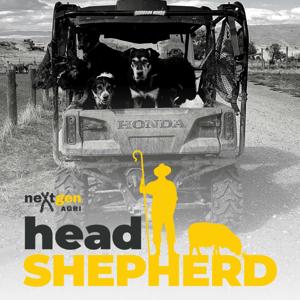
Mark Ferguson from neXtgen Agri brings you the latest in livestock, genetics, innovation and technology. We focus on sheep and beef farming in Australia and New Zealand, and the people doing great…
Ranked by our users in the last 21 days
323 Listeners
12 Listeners

3 Listeners
28 Listeners

1 Listeners

4 Listeners
0 Listeners
1 Listeners
265 Listeners
13 Listeners

29 Listeners
66 Listeners

1 Listeners

5 Listeners

63 Listeners