
Sign up to save your podcasts
Or



After months of training, what is it actually like to hike hut-to-hut in the Swiss Alps for the first time? This is the reality of a first Swiss hut-to-hut experience.
In Part 2, Dave is joined by Alex, founder of The WanderWeGo Co. and the consultant who designed his Swiss Alps route. Together, they move from preparation to lived experience—talking honestly about what surprised Dave on the trail, what challenged him most, and where his training showed up when it mattered.
They discuss why Alex intentionally steered Dave toward a more local, off-the-beaten-path region instead of the famous tourist routes, and how that decision shaped the entire experience. Dave reflects on the moments that stayed with him most, from physically demanding sections to unexpectedly emotional highs, and explains how knowing he was prepared allowed him to simply “show up” and enjoy the experience.
This episode connects the dots between smart planning, structured training, and what it actually feels like to hike day after day in the Alps as a first-timer.
Topics covered:
Get expert advice on hiking in the Swiss Alps from Alex, founder of The WanderWeGo Co.
HikeStrong mobile App: https://hikestrongapp.com/
Check out the audio podcast version on all platforms:
https://hikestrongpodcast.buzzsprout.com
LIKE & SUBSCRIBE for new videos:
https://www.youtube.com/@HikeStrongPodcast
What does it really take to train for a Swiss Alps hut-to-hut hike at 63—especially if you’re new to multi-day hiking? For Dave, it became a path back to strength, confidence, and independence.
In Part 1 of this three-part series, I sit down with Dave, a first-time hut-to-hut hiker, to talk about the training journey that prepared him for the Alps—and how that process became much more than physical preparation. Week after week, our training check-ins evolved into deeper conversations about aging, independence, freedom, and what it means to stay capable later in life.
Dave shares how walking and hiking—basic human movements—often need to be relearned in a modern, sedentary world, and how losing the ability to move long distances can quietly erode freedom and confidence. Training for the Swiss Alps helped him reclaim both.
This episode is for anyone wondering if they’re “too old,” “too late,” or “not experienced enough” to take on a big hiking goal—and for anyone who believes preparation can unlock more than just a successful trip.
Topics covered:
Get expert advice on hiking in the Swiss Alps from Alex, founder of The WanderWeGo Co.
HikeStrong mobile App: https://hikestrongapp.com/
Check out the audio podcast version on all platforms:
https://hikestrongpodcast.buzzsprout.com
LIKE & SUBSCRIBE for new videos:
https://www.youtube.com/@HikeStrongPodcast
In Part 2 of this conversation, Blake Hansen returns to Mount Rainier with lessons learned from his first attempt. This episode focuses on what changed the second time — particularly around gear, systems, and on-mountain decision making.
We talk through how Blake refined his pack, clothing, hydration setup, food strategy, and break efficiency, and how those adjustments made the climb feel more controlled and sustainable. Blake also shares what he learned about layering, managing temperature, and staying ahead of fatigue as conditions changed throughout the climb.
Part 2 brings the story full circle, showing how applying lessons from the first attempt — especially around gear and execution — helped Blake move more confidently and ultimately reach the summit of Mount Rainier.
HikeStrong mobile App: https://hikestrongapp.com/
Check out the audio podcast version on all platforms:
https://hikestrongpodcast.buzzsprout.com
LIKE & SUBSCRIBE for new videos:
https://www.youtube.com/@HikeStrongPodcast
In Part 1 of this two-part conversation, I sit down with Blake to walk through the beginning of his Mount Rainier journey — why the mountain became a goal, how his first training cycle unfolded, and what happened during his initial summit attempt.
We talk through the early training data, the challenges that showed up both in preparation and on the mountain, and how travel fatigue, limited sleep, hydration mistakes, and respiratory symptoms factored into the climb and ultimately led him to turn around just below 13,000 feet on summit day.
This episode focuses on the learning phase of training for Mount Rainier — what the first set of numbers revealed, where expectations didn’t match reality, and why a rebuild became necessary. Part 1 sets the foundation for the changes that follow, before Blake returns to Mount Rainier and successfully reaches the summit in Part 2.
HikeStrong mobile App: https://hikestrongapp.com/
Check out the audio podcast version on all platforms:
https://hikestrongpodcast.buzzsprout.com
LIKE & SUBSCRIBE for new videos:
https://www.youtube.com/@HikeStrongPodcast
In this episode, Michele shares how one miserable backpacking experience in Yosemite — a trip that began with a rolled ankle and a 5,000-foot descent — nearly pushed her away from backpacking altogether. But instead of giving up, she decided to try again. With structured training and a clearer understanding of how to prepare for a heavy pack, she returned to the trail for a four-day trek in Death Valley and had a completely different experience.
Michele talks about rebuilding confidence in midlife and discovering that the right training made the trail feel not just doable, but enjoyable. She explains how stair sessions, incline treadmill work, balance training, and learning proper pack fit transformed her comfort and stability. She also shares a memorable moment when her guide told her she was the only person in the group using trekking poles correctly — a small but powerful sign of her growth.
We explore why running didn’t help her as much as hiking-specific training, how she adapted her weekly routine to fit the plan, and why consistency mattered more than long hours outside. By the end of her trip, she felt strong, capable, and proud to say, “I don’t hate backpacking anymore,” a line that reflects just how far she’d come.
If you’ve ever had a rough outing or wondered whether it’s too late to build real trail confidence, Michele’s story will show you what’s possible with the right approach.
There’s some B-roll at the very end, so stick around for a little extra conversation after the official podcast wraps.
For updates on the upcoming HikeStrong App, visit HikeStrongApp.com.
HikeStrong mobile App: https://hikestrongapp.com/
Check out the audio podcast version on all platforms:
https://hikestrongpodcast.buzzsprout.com
LIKE & SUBSCRIBE for new videos:
https://www.youtube.com/@HikeStrongPodcast
In Part 2, Hilary and Alexis take us through the final weeks of training, their milestone breakthroughs, and the moments on Mount Kilimanjaro that revealed not just their physical readiness — but their resilience, mindset, and bond as a mother-daughter team.
We talk about how they balanced real life with peak-phase training, including graduation, a full-time job, and a family bike trip that forced them to consolidate workouts and rely on discipline rather than perfect circumstances. Hilary describes how the lunge progression and balance work finally resolved decades of knee pain from an old ACL reconstruction, giving her confidence heading into the steepest sections. Alexis explains how she made the wise decision to stop running late in training to avoid injury — and why stair training became her biggest asset.
Inside the peak phase, they share:
Once on the mountain, the conversation shifts to what it felt like to truly disconnect. Alexis talks about the quiet magic of being unreachable — no phone, no news, no notifications — and how that presence reshaped the experience. Hilary shares the “calm exhilaration” of being in the moment each day, guided by a team that focused them on one day at a time.
They also discuss:
The episode ends with a lively lightning round: tent rituals, packing mistakes, favorite snacks, who woke up first, who took longest to get ready, summit emotions, what the stars looked like at 15,000+ feet, and what they ultimately learned about themselves — and each other.
And don’t miss the very end — stay after the outro music for a fun bit of behind-the-scenes B-roll from our conversation.
HikeStrong mobile App: https://hikestrongapp.com/
Check out the audio podcast version on all platforms:
https://hikestrongpodcast.buzzsprout.com
LIKE & SUBSCRIBE for new videos:
https://www.youtube.com/@HikeStrongPodcast
When Hilary and her daughter Alexis signed up to climb Mount Kilimanjaro, they each trained on their own schedule but stayed connected through shared goals, encouragement, and a deep commitment to see the journey through together.
In this first half of their story, Hilary shares how her customized training plan—and especially the lunge progression—transformed the knee she’d struggled with since ACL surgery, leaving it stronger and more stable than it had felt in years. Alexis talks about something different but equally powerful: the gift of disconnection. High on the mountain, without her phone or constant notifications, she found a deeper presence and appreciation for the moment.
You’ll hear:
This episode is part inspiration, part practical guide—and a reminder that when families train for something big together, the results go far beyond the mountain.
HikeStrong mobile App: https://hikestrongapp.com/
Check out the audio podcast version on all platforms:
https://hikestrongpodcast.buzzsprout.com
LIKE & SUBSCRIBE for new videos:
https://www.youtube.com/@HikeStrongPodcast
In Part 2 of this conversation, Marcus and Lisa pick up where they left off—digging into the peak phase of her 20-week training plan leading up to the Tour du Mont Blanc. They talk about how Lisa managed higher mileage and tougher elevation goals, how she kept her body feeling good and avoided overtraining as the workouts got tougher, and the mindset that carried her through the final stretch of preparation.
Later in the episode, Marcus brings in Travis Wardell, Program Director for Europe at Mountain Travel Sobek—one of, if not the, world’s oldest adventure travel company. It’s Travis’s first time meeting Lisa, and he shares insights on what makes MT Sobek’s version of the TMB different from the classic route, how the company designs and curates world-class trekking experiences, and the activity level system they use to help travelers choose the right adventure for their goals and abilities.
The episode wraps with a relaxed, behind-the-scenes exchange after the formal interview—a fun, unscripted glimpse of the conversation once the mics were supposed to be off.
Mountain Travel Sobek - The Adventure Company | Est. 1969
HikeStrong mobile App: https://hikestrongapp.com/
Check out the audio podcast version on all platforms:
https://hikestrongpodcast.buzzsprout.com
LIKE & SUBSCRIBE for new videos:
https://www.youtube.com/@HikeStrongPodcast
I had a pretty ambitious goal going into this conversation with my client, Lisa. The idea was to cover all 20 weeks of her Tour du Mont Blanc training plan, and my hope was that each week you’d learn something you could apply to your training — or at least walk away with a little inspiration.
And the good news is — it turned out great. I’d never done this format before, and it ended up becoming a two-part series. Part 1 focuses on Lisa’s base training phase — the foundation that built her strength, balance, and confidence for the Tour du Mont Blanc. Part 2 dives into her peak phase and includes a special guest from Mountain Travel Sobek, the company she traveled with.
In this episode, Lisa shares lessons from the early weeks of her program — from mastering lunges and stair work to staying consistent while juggling family life and flat Michigan terrain. Whether you’re training for your first big hike or just need a dose of motivation, you’ll come away with practical tips, insights, and a few laughs from Lisa’s journey.
Mountain Travel Sobek - The Adventure Company | Est. 1969
HikeStrong mobile App: https://hikestrongapp.com/
Check out the audio podcast version on all platforms:
https://hikestrongpodcast.buzzsprout.com
LIKE & SUBSCRIBE for new videos:
https://www.youtube.com/@HikeStrongPodcast
What does it take to climb Kilimanjaro when you don’t live near mountains? And what happens when you decide to do it all over again for the Inca Trail?
In this episode, I sit down with Alicia—a self-described “non-athlete” who trained on 23 stairs behind a building and a treadmill with a pack on her back to summit Kilimanjaro. She’s funny, self-deprecating, and brutally honest about what it really feels like to take on a trek of this size. Expect a few laugh-out-loud moments mixed with some hard-earned wisdom.
Now she’s training with me again, this time for the Inca Trail. By Week 5 she’s already logged 67 miles and 25,623 feet of elevation gain—compared to 62 miles and 17,749 feet at the same point in her Kilimanjaro plan. Why the difference? This time, the training is packed into 8 weeks instead of 12, and with experience comes a new awareness of how to push and how to know your limits.
HikeStrong mobile App: https://hikestrongapp.com/
Check out the audio podcast version on all platforms:
https://hikestrongpodcast.buzzsprout.com
LIKE & SUBSCRIBE for new videos:
https://www.youtube.com/@HikeStrongPodcast
From the publisher's feed
The HikeStrong Podcast is where I share practical guidance on hiking, backpacking, and trekking preparation. Each episode blends fitness insight with real-world training strategies to help you…
I sit down with guests to break down how to train for demanding hiking, backpacking, and trekking goals using smart strength training, endurance training, and conditioning approaches. You’ll hear clear advice on altitude training, uphill training, and injury prevention, all woven into training conversations that support preparation for major destinations such as Kilimanjaro, Everest Base Camp, Rim to Rim, Tour du Mont Blanc, the Camino de Santiago, Patagonia, Machu Picchu, the Alps, and the Dolomites.
Because training is never one‑size‑fits‑all, I also bring listeners inside real programs. In select episodes, I interview clients in a deep‑dive format that reveals week‑by‑week training details — real data, real challenges, and real solutions — offering a clearer picture of how people actually prepare for hiking, backpacking, and trekking goals.
A cornerstone of my approach is elevation‑gain training. I believe that consistently building weekly elevation gain is one of the strongest predictors of success on any major adventure. In each episode, I share clear, actionable ways to develop that strength — even if you don’t have access to hiking terrain — so you can stay on track whether you train on hills, treadmills, stair machines, or step‑ups.
If you're preparing for a major trip, gearing up for a multi-day backpacking route, or building a long-term plan for tougher hiking or trekking challenges, you’ll find episodes that support every step of your training.
Beyond training, some episodes feature voices from across the hiking, backpacking, and trekking worlds — guides, operators, storytellers, and industry experts whose insights can shape how you think about adventure. These conversations broaden your perspective and influence your outdoor experiences, even when the focus isn’t directly on training.
Listen, train with purpose, share with your adventure partners — then take on at least one unforgettable hiking, backpacking, or trekking experience each year. Train | Hike | Repeat
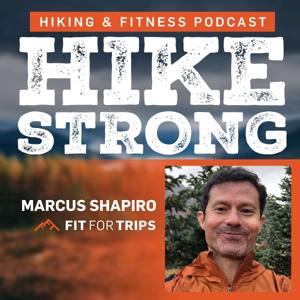
I’m Marcus Shapiro, a hiking strength and conditioning coach and an early pioneer in online training for hiking, backpacking, and trekking, helping adventurers get physically ready for everything from local elevation goals to high-altitude expeditions.

43,352 Listeners

513 Listeners
582 Listeners
345 Listeners

7,954 Listeners
111 Listeners
227 Listeners
109 Listeners

29,185 Listeners
62 Listeners

3,036 Listeners

19,151 Listeners
597 Listeners
12 Listeners