
Sign up to save your podcasts
Or

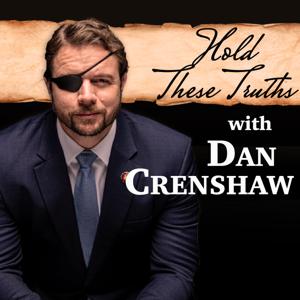


Based on Podcast App listening data
Kay Coles James is President of Heritage Foundation and leads the National Coronavirus Recovery Commission, an independent panel that works closely with the White House and congressional leaders to provide recommendations for the plan moving forward to protect the lives and livelihoods of Americans.
What looming threats to economic freedom and liberty do we see beginning to play out across America and how can we stop them? What actions need to be taken at the federal, state, and local levels of government to get America back on track? How can private individuals and institutions take ownership of the recovery process? Kay brings decades of experience in public service to create a blueprint for restoring the American economy while also protecting public health and individual freedom.
Learn more about the National Coronavirus Recovery Commission's recommendations at www.coronaviruscommission.com.
Steven Nabil is a journalist with extensive experience covering Iraqi politics and security. He joined Dan to examine the current state of Iraq and its long conflict with Iran. What has become of ISIS? How effective was the Soleimani strike at disrupting Iranian operations in Iraq, and what does this tell us about Iran's military power structure? What should we make of the ongoing Iraqi protests? Is it a movement toward peace and democracy or further terror across the region?
Follow Steven Nabil on Twitter at @thestevennabil.
On this very special episode, Dan brings listeners into the historic site of Biblical Jerusalem, the City of David, to discover the cultural, political, and spiritual connections this once lost city has with our world today. How was the City of David lost and then rediscovered? What major discoveries have archaeologists recently made that link back to the times of Jesus and King David? What are the important geopolitical implications for this site which is at the heart of a city under constant threat from Palestinian terrorism?
Our guide is Ze'ev Orenstein, the Director of International Affairs at the City of David Foundation. Learn more at https://www.cityofdavid.org.il/en
Dr. Nicole Saphier, physician and author of "Make America Healthy Again," joins Dan to examine the current state of the American health care system and the path to making it more accessible for everyone. Why is there a disconnect between the growing prevalence of preventable diseases in America and the culture of healthy diets and exercise which is projected on social media? Is there a difference between health care access and rights? What does the race to develop a cure for COVID-19 tell us about the rising cost of health care? Is there a practical middle ground between government-run and free market systems? Medicaid, the Affordable Care Act, rising cancer rates among millennials, and the opioid crisis are all examined in depth, along with practical ways for individuals to take ownership of their own health and well being. Follow Dr. Saphier on Twitter at @NBSaphierMD.
With everyone in America so focused on dealing with the hardships brought on by the economic shutdown, it is easy to miss the disaster unfolding in Iran at the hands of their totalitarian regime. What role has China played in causing Iran to become the epicenter of the coronavirus outbreak in the Middle East? How do the Iranian people view the regime's handling of the crisis? What is the state of the Iranian regime five months out from the Soleimani strike?
Behnam Ben Taleblu is a senior fellow at the Foundation for Defense of Democracies, a non-partisan research institute focusing on foreign policy and national security, where he focuses on Iranian security and political issues. Behnam has authored or coauthored articles appearing in Foreign Affairs, Foreign Policy, Fox News, The Hill, and The National Interest. Follow Foundation for Defense of Democracies on Twitter at @FDD.
Harvard University's Dr. Edward Glaeser joins Dan to examine the implications of COVID-19 on the economics of American cities. Why has the role of cities in battling pandemics changed dramatically over the past century? Will urban or rural communities recover more quickly after the economic shutdown ends? What is the best way to reduce the economic harm to workers who lost their incomes because of the shutdown? Should cities approach their housing and infrastructure policies differently going forward? Dr. Glaeser also sheds light on the more fundamental question of why cities exist in the first place.
Dr. Edward Glaeser is the Fred and Eleanor Glimp Professor of Economics in the Faculty of Arts and Sciences at Harvard University. He has published dozens of papers on the growth, law, and economics of cities. His work is focused on the determinants of city growth and the role of cities as centers of idea transmission. He received his PhD from the University of Chicago.
On this episode we dive right into the mind of Dave Rubin. How did Dave evolve from being a "woke" leftist to a free thinking defender of individual rights and limited government? What's the difference between old school liberals and the progressive left that dominates the Democratic Party today? From starting out as a comedian struggling to make it in New York City, to the epiphany he had about the far left and outrage culture while working with the Young Turks, and now as the host of The Rubin Report and author of "Don't Burn This Book: Thinking for Yourself in the Age of Unreason" - Dave has developed deep, fascinating insights into the motivations of the far left and their governing principles - or lack thereof.
Eric Hargan is the Deputy Secretary of Health and Human Services and is responsible for overseeing the day-to-day operations and management of the department in addition to leading policy and strategy development. What does it actually takes to develop a test for a new virus like COVID-19? What's the strategy for implementing nationwide testing? How are HHS regulations evolving to enable telehealth? Eric joined Dan to answer these questions and more.
Courtney Litvak was a junior in high school when her life took a downward spiral into the world of drugs and sex trafficking. With help from her faith and family, she pulled herself out of that world and dedicated her life to educating and supporting families who are affected by this crime. On April 24th, Courtney was appointed by President Trump to serve on the U.S. Advisory Council on Human Trafficking.
Courtney joined Dan to talk about her journey, explain how sex traffickers target their victims, and the red flags to watch out for. Courtney debunks all the stereotypes about sex trafficking that we see in movies like Taken. The truth is it is a crime which can happen in any neighborhood, anywhere in America.
Courtney Litvak serves as Ambassador to Childproof America, an organization which empowers families in the battle against sex trafficking. Learn more at www.childproofamerica.org.
While considerations of health are of the utmost importance during a pandemic, they may not tell the full story. Millions of Americans face increasing economic challenges in the face of COVID-19, and questions are looming as how best to respond. In this episode, Dr. Russ Roberts of the Hoover Institution and Rep. Crenshaw discuss the current economic crisis, as well as past economic struggles. What constitutes human flourishing and truly "living"? Do our usual economic metrics take into account the "intangibles" or rather, those factors which are not traditionally quantified? Which economic policies would make the most sense right now, given the relatively unknown nature of this pandemic? How have long-standing, warped incentives within the healthcare industry contributed to our current supply chain woes? Dr. Roberts answers these questions, as well as a host of others.
Dr. Russ Roberts is a Fellow at Stanford University's Hoover Institution and hosts the weekly podcast EconTalk. He has written extensively, including his latest book Gambling With Other People's Money: How Perverse Incentives Caused the Financial Crisis, which examines the role that historical bailouts played in fueling the 2008 crisis. He has taught at George Mason University, Washington University in St. Louis, University of Rochester, Stanford University, and UCLA. Dr. Roberts earned his PhD from the University of Chicago and his undergraduate degree in economics from the University of North Carolina at Chapel Hill.
From the publisher's feed
Ranked by our users in the last 21 days

152,942 Listeners
472 Listeners
41,474 Listeners

6,891 Listeners
22,663 Listeners
33,485 Listeners
28,298 Listeners
6,549 Listeners

43,746 Listeners
6,532 Listeners

39,401 Listeners

6,201 Listeners
2,905 Listeners
26,560 Listeners
3,360 Listeners