
Sign up to save your podcasts
Or

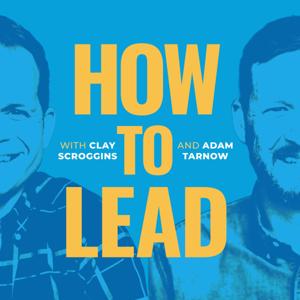
By Clay Scroggins


4.8
4242 ratings


The podcast currently has 229 episodes available.
The most played episodes among Podcast App listeners.
Growing older is automatic. Growing up isn't. I've noticed there are a few childish instincts I still haven't completely grown out of. I’m just better at hiding them now. 😂 In this episode, I unpack three: I want it now. What about me?! I'm telling! They show up differently as adults—in impatience, comparison, envy, gossip, and avoiding hard conversations—but the instincts aren't all that different. Maybe maturity isn't getting to the point where those instincts disappear. Maybe it's getting better at recognizing them when they show up—and learning not to let them drive. Because growing older is automatic. Growing up isn't.

In this episode of the How to Lead Podcast, Clay and Ryan Bradley discuss the importance of establishing team norms and fostering a culture of trust and communication within organizations. Ryan shares his journey from athletics to higher education leadership, emphasizing the need for clear expectations and shared values to enhance team dynamics. The conversation highlights practical strategies for creating a supportive work environment, including the significance of overcommunication and celebrating team successes. Ryan encourages leaders to engage their teams in defining norms that resonate with their unique organizational culture, ultimately aiming to empower individuals to thrive in their roles. TakeawaysTeam norms are essential for creating a cohesive work environment.Clear expectations foster trust among team members.Overcommunication is crucial, especially during challenging times.Defining core values helps guide team behavior.Celebrating unsung heroes reinforces positive team dynamics.Leaders should focus on empowering their teams rather than enforcing rules.An iterative approach to team norms allows for continuous improvement.Engaging the team in discussions about norms enhances buy-in and commitment.Shared expectations can prevent misunderstandings and frustrations.A strong culture is built on trust, communication, and collaboration. Chapters: 00:00 Introduction to Team Leadership 01:33 Ryan Bradley's Journey in Leadership 03:48 Transitioning to Vice President Role 05:39 Establishing Team Norms 09:22 The Importance of Trust and Shared Expectations 12:37 Defining Core Values and Team Norms 14:51 Creating a Culture of Overcommunication 18:21 Celebrating Team Successes 20:14 Practical Applications of Team Norms 26:33 Encouragement for Team Leaders
What if self-leadership isn’t primarily a discipline problem, but a relationship problem? In this episode, Clay explores the relationship between who you are today and the person who has to live with your decisions tomorrow. He shares three practical ways to become more generous to “future you." And one simple question that can change how you approach your work, calendar, and leadership. David Cain, “Do Things You’ll Love Yourself For” (Read the article on Raptitude)
We've all done it: said yes before we even finished thinking, then immediately regretted it. Clay and Adam dig into why people-pleasing feels like the kind thing to do, why it isn't, and what it quietly costs you as a leader: trust, clarity, energy, and the hard conversations that only get harder the longer you wait. Plus, five moves to start breaking the reflex this week.
Most leaders run one-on-ones every week. Almost none of them run one-on-ones their people actually want to show up to. The problem isn't effort — it's a fundamental mismatch: you think you're running a status meeting. Your direct report came hoping for something else entirely. In this episode, Adam and Clay break down why the most powerful recurring meeting on your calendar is also the most wasted one — and what to do about it. You'll learn the difference between a status meeting and a trust meeting, what your direct reports actually need from 30 minutes with you, and a handful of small shifts that turn a hollow check-in into the best meeting of someone's week. This podcast is produced by Sound of a Rose.
shownotes
The podcast currently has 229 episodes available.

2,263 Listeners

10,756 Listeners

2,268 Listeners

19,491 Listeners

1,932 Listeners

4,433 Listeners
1,478 Listeners
1,177 Listeners

2,438 Listeners

4,657 Listeners

6,547 Listeners

1,123 Listeners
412 Listeners

1,814 Listeners

434 Listeners