
Sign up to save your podcasts
Or

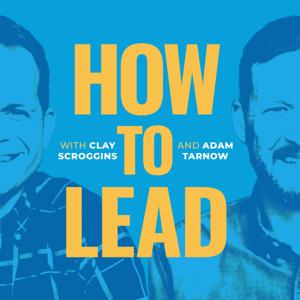


Clay and Adam reflect on key moments from 2025 and share a few trends they see shaping 2026.
When Clay first started speaking, he’d shut down his calendar and memorize his talk word for word. It was exhausting and it didn’t make him a better communicator.
In this episode, Clay and Adam unpack why memorizing your message actually works against you, causing you to sound robotic, panic when you miss a line, and lose connection with your audience. They argue that great communicators don’t memorize; they understand.
You’ll learn a simple framework to prepare your message so you can speak with confidence, flexibility, and authenticity. Whether you’re leading a meeting, giving a presentation, or standing on a stage.
Big idea: Don’t memorize your message. Understand it, and serve the people in front of you.
Public speaking is one of the most vulnerable things a leader can do. You’re exposed, you’re being judged in real time, and the stakes feel high — which is why most speakers either avoid feedback altogether or settle for vague encouragement like, “Great job!” In this episode, Clay and Adam unpack why that’s a problem and how the right kind of feedback is the fastest path to becoming a better communicator.
Clay opens with the classic Seinfeld line about people preferring to be in the casket rather than giving the eulogy — a reminder that speaking triggers deep vulnerability. Adam follows by naming the trap: if we don’t seek real feedback, we end up believing we crushed it when we may have simply survived it.
The conversation explores three big ideas:
Why speakers need feedback: You’re too close to your own message to see what the audience sees. Your last talk is your best teacher — but only if you know what to listen for.
Why feedback feels so hard: Speaking ties into identity, vulnerability, fear of rework, and the awkwardness of unsolicited critiques.
How to get better feedback: Ask better questions, ask multiple people, and use tools like recordings, surveys, and time-stamped comments to see what you missed.
The episode closes with one simple takeaway:
Growth = vulnerability + curiosity.
The quickest way to get better is to ask for the feedback before the feedback finds you.
Call to Action:
Before your next talk, line up three people and ask,
“Will you give me honest feedback after I speak?”
Most leaders rush to the solution. They skip the most essential part of compelling communication—creating tension. In this episode, Clay and Adam break down why tension matters, how the brain is wired to crave it, and how stronger tension-building can instantly transform any meeting, presentation, or keynote.
In this conversation, Scott Bedgood emphasizes the critical role of audience connection in effective communication, whether in standup comedy, keynotes, or meetings. He discusses how initial engagement is crucial for maintaining attention and ensuring that messages resonate with the audience. Scott also highlights the importance of making communication matter to foster follow-through and engagement.
Follow Scott:
Takeaways:
June 29, 2007— the day public speaking changed forever. Before smartphones, a bored audience member had to doodle or stare at the ceiling. Now they have a casino in their pocket. If you want to hold people’s attention, you’re not just competing with distractions… you’re competing with the most addictive technology ever created.
In this episode, we break down why engagement is no longer optional. Every time you open your mouth, you become a guest in your listener’s mind. And every mind has a ruthless bouncer whose job is to kick out anything boring.
We explore the five main causes of boredom—Irrelevance, Complexity, Aimlessness, Apathy, and Predictability—and give you practical tactics to beat each one. You’ll learn how to stay relevant, simplify your message, create structure, tap into emotion, and use vulnerability to surprise your audience.
The bottom line: It’s your job to engage, not their job to pay attention. If you want to influence people, you have to talk about what they want and show them how to get it.
A simple, powerful guide to making your communication impossible to ignore.
Most people think becoming a great speaker means mastering body language, vocal tone, and slide design. But the truth? None of that matters if you don’t have something worth saying.
In this episode, Adam and Clay unpack why public speaking isn’t about polish — it’s about purpose. Drawing from Rob Fitzpatrick’s idea of pseudoteaching, they explore how even flawless delivery can fall flat when the message lacks substance.
You’ll learn:
The myth of mechanics and why performance doesn’t equal impact
Two practical tests for knowing if your message is worth sharing
How to shift your focus from sounding good to saying something good
Whether you’re leading a meeting, pitching an idea, or giving a keynote, this episode will help you stop performing and start communicating.
______________________
Have a message you need help preparing? Send us an email [email protected] to learn more about our coaching services.
Work is serious — but does it have to feel that way? In this episode, Adam and Clay explore how humor can make us better leaders. From lowering defenses to building trust and sparking creativity, humor isn’t a distraction — it’s a leadership superpower. You’ll learn the kind of humor that works (and what to avoid), why joy is serious business for healthy teams, and three practical ways to lighten up without losing your edge. Plus, a funny story to kick things off and a challenge to bring more laughter into your leadership this week.
As AI transforms the workplace by automating tasks and boosting productivity, leaders face a new challenge: keeping humans engaged, connected, and valued. This episode explores how the real threat isn’t artificial intelligence—it’s disconnection—and offers three ways leaders can respond: coach more, lean into human skills, and make purpose visible. The message is clear: in an AI-driven world, your greatest responsibility is to make work feel more human.
George Bernard Shaw once said, “The single biggest problem in communication is the illusion that it has taken place.” In this episode, Adam and Clay dig into why miscommunication happens so often at work—and how leaders can prevent it. From funny mix-ups (like a cake with the wrong message) to frustrating real-life examples of missed handoffs and unclear priorities, they explore why clarity is a leader’s most important tool.
You’ll learn five simple habits to make sure your message actually lands:
Repeat back what you hear
Use visuals, not just words
Preview where you’re going
Match tone to intent
Share bad news in person
The big takeaway? Don’t assume communication happened just because you said something. Clarity is leadership.
From the publisher's feed
Ranked by our users in the last 21 days

2,262 Listeners
10,732 Listeners

2,264 Listeners

19,446 Listeners

1,932 Listeners

4,430 Listeners

1,479 Listeners
1,180 Listeners

2,420 Listeners

4,657 Listeners

6,592 Listeners

1,126 Listeners

413 Listeners

1,820 Listeners

433 Listeners