
Sign up to save your podcasts
Or



Based on Podcast App listening data
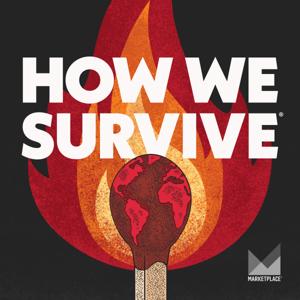
Buckle up, grab a hard hat, a tent (and maybe a snack). It’s going to be a bumpy ride! From camping on top of a glacier, right before billions of tons of ice melt off of it, to dealing with the aftermath of a hurricane that destroys Miami, this episode we’re diving head first into the realclimate predictions — and the imagined ways society will handle them.
We’re unpacking why a glacier halfway around the world is causing sea levels around South Florida to rise faster, and then we’re heading to an imagined world (that doesn’t seem too far from reality) where millions of people in Miami and South Florida are displaced after a hurricane ravages the metro area. With every twist and turn of the episode, we’re exploring the ways we can still have hope in the face of what’s to come.
The Little River community in Miami is known for frequent flooding during heavy rains, high tides and storms. And when the neighborhood floods, sewage can spill into the yard; toilets back up. Even though it floods, the housing market here is hot. Long-time residents face displacement. This episode looks at flooding and flipping and how the two are related.
Whether you live on the coast or not, sea-level rise will have profound impacts on all of us. So we packed up our bags and headed to Miami, a city that is considered one of the most vulnerable coastal cities in the world. How Miami responds will serve as a test case for how other places around the country survive the effects of climate change. Experts say seas here could rise by 5 feet or more by 2100, eventually leaving whole parts of the city underwater. So if the city is doomed, why isn’t the housing market acting like it? From multimillion-dollar waterfront mansions to a flood-prone block miles from the beach, we went on the hunt for answers.
A powerful hurricane was churning toward the southwest coast of Florida. It looked like it was going to be bad. So we hopped on a plane and headed first to Boston where we embedded with a team of catastrophe modelers who were tracking the disaster and calculating the potential losses.
The number they came up with is staggering high: $100 billion. And only $63 billion of that is insured.
We then visited Gasparilla Mobile Home Estates in Placida, Florida to see what these data points looked like on the ground, and talk to people who lost everything.
There’s the mythical version of Miami, the version that’s all about wealth and glamour and a never-ending party on the beach. And then there’s the real Miami, a deeply unequal place that could eventually be swallowed up by the Atlantic Ocean because of glaciers melting halfway around the world. Miami has been called the most vulnerable coastal city in the world because of climate change. South Florida could be one of the first places in the United States to see true devastation wrought by the climate crisis, devastation that threatens its very existence. This season, we’re asking: How will South Florida survive sea-level rise?
Technology will help us avoid the worst outcomes of the climate crisis, and it’ll help us adapt to a warming planet. But technology alone can’t save us. Humans need to make profound changes. We need to change our behavior, our consumption, our policies and our mindsets.
In the final episode of the season, we talk to a climate psychologist about how our minds react to change and hear from a politician relying on Fergie and Megan Thee Stallion to get Americans excited about energy policy. We also visit an encampment in the desert where people are already adapting to a changing climate, living off-grid and generating their own renewable energy.
Imagine a future where all the lithium we need has already been extracted from the ground and is endlessly recycled. Or where the batteries we use to store renewable energy are made from abundantly available materials — like salt.
This episode, we visit a lab where a couple of brilliant scientists are trying to build the batteries of the future. And we drop in on a company that’s extending the life cycle of lithium through something called “urban mining.”
Our favorite place to look for climate solutions: Science fiction. In fact, sci-fi (and its sub-genre, cli-fi) is what got us thinking about adaptation in the first place.
Cli-fi can get a little bleak — weather turns deadly; earth becomes uninhabitable; humans flee to space. And while it’s entertaining to imagine the worst-case scenarios, the best of the writing is hopeful. It allows us to dream up solutions that don’t involve billionaires, rockets or climate-changing satellite stations.
This week, Molly sits down with climate fiction author Kim Stanley Robinson to discuss his most recent book, “The Ministry for the Future,” which almost reads as a blueprint for saving the planet.
Our journey through the California desert continues. We visit the quiet front-runner in the race to extract lithium from the superhot, corrosive brine bubbling underground. And we dive into the past to look at an earlier attempt to harvest lithium from the Salton Sea. That project ended in failure, but its patents live on. And those patents could be a roadblock for the companies racing to extract the “white gold” today. With millions of dollars invested and a global supply of lithium waiting below the Salton Sea, there is a lot on the line.
We’re back on the road this week, to California’s Salton Sea, a salty lake in the desert that was once marketed as “Palm Springs with water.” Today the water is receding and increasingly toxic. The community that once thrived here now has one of the highest unemployment rates in the country.
But there is some hope. There’s a huge amount of lithium all around the Salton Sea in the bubbling hot brine deep underground. Some hopeful modern-day 49ers have big plans to get it out. If they can only succeed, the lithium here could meet 40 percent of the world’s demand.
From the publisher's feed
Ranked by our users in the last 21 days

43,852 Listeners

32,046 Listeners

30,701 Listeners

8,731 Listeners

9,187 Listeners

933 Listeners

1,384 Listeners

1,286 Listeners

6,431 Listeners
2,175 Listeners

5,441 Listeners

9,537 Listeners

10,267 Listeners
16,365 Listeners

3,614 Listeners

6,585 Listeners

163 Listeners

2,992 Listeners

90 Listeners