
Sign up to save your podcasts
Or

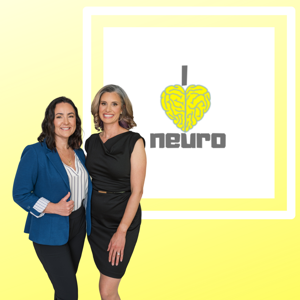


We know there are so many things we can and should be doing for our patients to help them achieve better outcomes and reach their goals. What do you know about priming? Are you doing anything that primes their system for learning? If so, how are you measuring it? How do you know it’s working? Join us for a discussion on the latest research, inspired by a podcast by the Academy of Neurologic Physical Therapy of the APTA released on June 29, 2023 where the authors of a 2023 article discuss their interpretation of the findings: “A Systematic Review on the Effects of Acute Aerobic Exercise on Neurophysiological, Molecular, and Behavioral Measures in Chronic Stroke.” Staying up to date with the latest research can be challenging. Finding time to discuss that research with others is also a challenge - so join us today and listen in on our discussion!
We will discuss the key takeaways from the research including the recommendation to perform 20-30 min of aerobic exercise. This bout gets them in the intensive zone, creates aerobic priming that helps them get the heart rate up, so their brain is primed for learning during cognitive, functional or gait activities in the session.
Want to see videos and brainstorm ways to implement the research into practice??
Join us for a free webinar entitled “Priming Activities to Enhance Intensive Practice in Neuro”
Register here: https://www.neurocollaborative.com/priming
References:
ANPT podcast June 29th
Sivaramakrishnan A, Subramanian SK. A systematic review on the effects of acute aerobic exercise on neurophysiological, molecular, and behavioral measures in chronic stroke. Neurorehabilitation and Neural Repair. 2023 Feb;37(2-3):151-64.
ANPT Podcast June 4th
Boyne P, Billinger SA, Reisman DS, Awosika OO, Buckley S, Burson J, Carl D, DeLange M, Doren S, Earnest M, Gerson M. Optimal intensity and duration of walking rehabilitation in patients with chronic stroke: a randomized clinical trial. JAMA neurology. 2023 Apr 1;80(4):342-51.
If you have someone with PPPD or suspect it, this is the episode for you! Dr. Haylie Leighton, PT, DPT, NCS is clinical director at Advanced Neurologic Rehabilitation in Arizona and she is here to explain what Persistent Postural Perceptual Dizziness (or PPPD) is, how to evaluate it, and how to treat it.
In the show you’ll learn all about this chronic functional disorder, which falls under the umbrella of Functional Neurologic Disorders (or FND). Haylie will break down the 5 diagnostic criteria to rule it in: 1) Unsteadiness lasting most days for at least 3 months, 2) Persistent dizziness without provocation that can be made by worse by standing upright, active/passive movement, or a complex visual environment, 3) The person may have have past vestibular insult, 4) It is connected to high functional distress (ex - high scores on the Dizziness Handicap Index) 5) Other central signs or causes of dizziness have been ruled out.
In PPPD maladaptive strategies are developed, where the nervous system uses different strategies for balance. It can provoke anxiety, so we discuss how it differs from anxiety-related dizziness.
Learn what key tests and measures to perform in your evaluation, which screens to perform, and the best treatment approach for optimal outcomes. There is a 3-pronged approach to treatment, which includes vestibular rehabilitation, medication, and psychology or cognitive-behavioral therapy. For therapists, best practice treatment may include: the OPTIMAL theory approach, habituation training, autonomic regulation, VOR, sensory reweighting, vision rehab, AHA walking program. Tune in to hear all the details and this complicated condition explained so you can help people recover from it once and for all!
Clinic social media @azneurorehab
Personal social media @theoptimal_DPT
Dr. Beth Fisher, PhD, PT, FAPTA joins us on the show again to talk about something that has been the impetus of her career: movement analysis. As rehab professionals sometimes we can overcomplicate movement impairments thinking it is always due to pathology and overlook the simpler underlying cause, namely implicit choice. Do people with neurologic conditions move a certain way because they must or because they (unknowingly) choose to? How do you decide? What if you could correct dysfunctional movement patterns you thought were due to the injury with a shift in perspective? If the ultimate goal for all of us is to help our patients and clients achieve greater success, it will pay off to listen to what Dr. Fisher has to share!
Listen to our the past episode with Dr. Fisher, #158
Be sure to watch Beth’s lecture here:
24th John H.P. Maley Lecture: Beyond Limits – Unmasking Potential Through Movement Discovery
On today’s show speech therapist, Sharan Sangha shares what her experience has been like navigating the early years of her career path. Just 2 years out of school, she started working in the hospital setting and quickly found it wasn’t for her. She wasn’t sure whether she was just feeling nervous and needed more experience or whether she really just needed to change to another setting. It can be difficult to listen to the signs that we’re not in the right place. As healthcare workers we understand that our jobs can be stressful and challenging, so what are the signs that you’re actually in the wrong place? I know I’ve had experiences of going to work feeling tired or dread going in, and it took too long to actually listen to the fact that it was time for a change. Maybe you’ve felt (or are feeling) the same way. If so, you’re not alone and we know you’ll find some good company in this episode!
https://parkinsonvoiceproject.org/
https://www.dvtherapy.com/
On today’s show we were excited to have a discussion with Dr. Helena Esmonde, PT, DPT, NCS. She is a vestibular expert and shares her journey as a vestibular therapist in multiple settings, including the ED, as well as the very interesting course her career has taken. Helena has over 18 years of clinical experience as a neurologic clinical specialist, was vestibular trained at Emory's vestibular competency course, and co-founded Vestibular First, a company which makes affordable infrared video goggles and educational tools. Helena has taught vestibular topics at universities, national conferences, and continuing education courses as well as hosting an online Journal Club with renowned vestibular experts serving as her special guests each month, because she loves discussing all things vestibular!
In this episode you’re going to learn:
A little known fact about people with Parkinson’s and hypofunction and what to do about it
How common vestibular disorders are
The best screening assessments to perform
The importance of the cervical spine and rotational movement in vestibular function
Why infrared video goggles are crucial to vestibular assessment
Where to get a 3D printed vestibular system for educational purposes
Where to get resources you need in order to help your patients with vestibular dysfunction
Learn more about Helena and all of the resources she has here:
@VestibularFirst (Instagram, Facebook, Twitter, and LinkedIn)
http://vestibularfirst.com
On today’s show we interview one of our amazing NeuroSpark instructors, Dr. Jamie Haines, PT, DScPT, NCS. Jamie is an Associate Professor in the Physical Therapy Department at Central Michigan University where she teaches neurologic physical therapy content. She is passionate about teaching students and clinicians and working with people with Parkinson’s. One of Jamie’s missions is to improve access to care in rural communities and she is working on this in Michigan through a program funded by a recent Parkinson’s Foundation grant. She discusses the basis of the program, what they are seeing so far and where they hope to see it go.
Another of her passions is overground and dual task training for people with Parkinson’s. Jamie has taught and spoken on these topics many times, including inside the NeuroSpark program. Coming up in August 2023 she’ll be teaching clinicians how to approach dual task training, stratify it, assess it, understand the cost of dual task activities, and she will provide loads of tangible examples with videos. On the show, she dives into what that will look like and gives you a taste of something you can use in the clinic immediately!
Sign up for the Parkinson’s Conference on Aug 25th here! www.neurocollaborative.com/parkinsons
An on-demand option is also available!
Get in touch with Jamie via email: [email protected]
On today’s show Dr. Melissa Kimmerling, an occupational therapist in Nebraska, outlines the visual changes that can occur in a person with Parkinson’s, why these changes are happening, what red flags to look for if you need to refer to OT or another professional, and how you can cue or address the issue. As the Director of Occupational Therapy programs at Nebraska Methodist College and Vice President of Policy and Advocacy for the Nebraska Occupational Therapy Association (NBCOT) Melissa shares her views on the opportunities and challenges facing future occupational therapists, her views on student-led rehabilitation clinics, and critical practice areas for occupational therapists.
It is an enlightening and beneficial conversation for people in all disciplines to hear!
She’ll be leading a presentation on visual dysfunction in Parkinson’s disease in an upcoming Parkinson’s Conference and will highlight the topics learners will benefit from when attending the conference.
Sign up for the Parkinson’s Conference on Aug 25th here! www.neurocollaborative.com/parkinsons
An on-demand option is also available!
Get in touch with Melissa Kimmerling on LinkedIn here: linkedin.com/in/melissa-kimmerling-edd-mot-otr-l-1179389b
On today’s show we interviewed our first speech therapist! Stephanie Callander, MS, CCC-SLP has worked with people with Parkinson's since 2016 to help them improve and maintain their speech, voice, and swallow function. She is certified in SPEAK OUT! from Parkinson Voice Project.
In this episode you’ll learn:
What SPEAK OUT! is and how it differs from LSVT LOUD
What to look for when someone needs to be referred to speech therapy (hint: there are key indicators you may not realize!)
How to properly cue your clients to improve their speaking
What hypomimia is and how it is correlated to the severity of PD symptoms
The importance of speech therapy for people with Parkinson’s because of the high rate of speech and swallowing dysfunction, including the sobering fact that most causes of mortality in Parkinson’s are related to choking
How you can learn more from Stephanie, including facial exercises that drastically improve the quality of life of your clients!
Sign up for the Parkinson’s Conference on Aug 25th here! www.neurocollaborative.com/parkinsons
An on-demand option is also available!
Get in touch with Stephanie here: [email protected]
Exercise equipment, gyms and programs have not always been available to people of all ability levels. It’s something that is extremely important for quality of life, independence, and function, so when we learn about something that can help we want to know more! We get genuinely curious about the innovative products out there, particularly ones with a big mission and trying to get the word out. We wanted to know more about the EvolutionVN Home Gym selfishly to help our clients and figured you might also want to learn about it in case it would be a good fit for your clinic!
In today’s show Erin had a great conversation with Amy Bois, the Chief Partnership Officer and Disability Specialist for EvolutionVN and founder of Fit With Amy B providing inclusive, adaptive fitness for everyone. Tune in to learn more about the options and opportunities for anyone you know and work with who could benefit from adaptive fitness.
The EvolutionVN is a home gym platform that offers a variety of applications for independent therapy and exercise. It includes a parallel bar set up on a platform and resistance bands that can be set up in multiple ways to provide resistance training as well as support and stability. It works for people in wheelchairs, with limb loss, instability, and more.
Learn more about the EvolutionVN at www.evolutionvn.com
Email Amy at: [email protected]
Follow Amy on IG @Fitwithamyb
Learn about the programs Amy offers at www.fitwithamyb.com
Find her on LinkedIn at Amy Bois
On today’s show Erin interviews Dr. Jefferson Holm PT, DPT, NCS, the owner and founder of Advanced Neurologic Rehabilitation in Arizona. Jefferson took a different approach to start and build his neuro rehab clinic than many people we’ve talked to. He dove right into getting the space, the equipment, and the big bank loan rather than starting small and safe. Not seeing what his community needed for the people living with neurologic conditions after they were discharged from the hospitals, he wanted to build it. He knew what he wanted his practice to look like and it started with having it all, so that’s what he did. Jefferson shares his insights into how he got started, what gave him the confidence to pursue his dream, who helped him to make sure it would work, and where he is now. This is a great listen if you’re someone contemplating your own practice and you’re not sure if you want to start mobile or with rented space. Maybe you want to build your dream rehab facility right now. Jefferson will share his insights and help you understand what it takes and assure you that you can do it!
Follow Advanced Neurologic Rehab on IG at @azneurorehab for great videos and information about their vestibular rehab course
Website: https://azneurorehab.com
From the publisher's feed
195 Listeners

109 Listeners
155 Listeners

111,874 Listeners

7,986 Listeners

46,926 Listeners
54 Listeners
37 Listeners

29,191 Listeners
23 Listeners