
Sign up to save your podcasts
Or

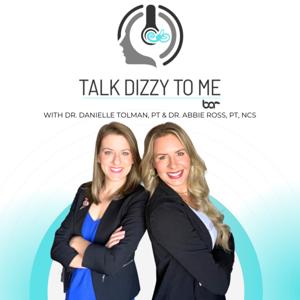


Finding the right provider for dizziness can be a long and frustrating process. In this episode of Talk Dizzy To Me, we welcome back Patrick Esmonde to introduce Dizzy Care Network, a platform designed to help connect people experiencing dizziness with clinicians who are best suited to evaluate their symptoms.
We explore how the platform works for both patients and providers, the technology and clinical reasoning behind its matching process, and how it could help reduce the time spent searching for answers. We also discuss what Patrick and his team have learned so far and their vision for the future of more accessible, efficient, and individualized vestibular care.
Learn More Here: https://dz.care/TDR
Hosted by:
🎤 Dr. Abbie Ross, PT, NCS
🎤 Dr. Danielle Tolman, PT
For episode recommendations or requests, email us at: [email protected]
Partnered with:
→ Avulux glasses, use code DIZZYRESET for $25 off
→ Just Ingredients, use code TALKDIZZYTOME for 5% off
Connect with Us:
→ Book a free call with us
→ Get free resources straight to your inbox
→ Join our online program and community, The Dizzy Reset™
→ Watch podcast episodes (and more) on YouTube
→ Follow us on Instagram
→ Follow us on TikTok
→ Follow us on Facebook
→ Disclaimer
→ Enjoying the podcast? Leave us a review!
This episode is for educational purposes only and is not a substitute for medical advice. Always consult a qualified healthcare provider for diagnosis and treatment. The views expressed by guests are their own and do not necessarily reflect those of the hosts.
Timestamps
00:13 – Meet Patrick Esmonde
00:54 – From Vestibular First to Dizzy Care Network
05:32 – The problem with finding vestibular care
08:07 – Who is Dizzy Care Network for?
12:32 – The patient questionnaire
14:26 – Making the platform dizziness-friendly
18:04 – Symptoms, timing & triggers
18:25 – How patient-provider matching works
22:47 – Customizing your provider match
25:12 – Building an evidence-based questionnaire
28:06 – DHI, PHQ-8 & GAD-7 integration
30:13 – Improving the vestibular evaluation
33:05 – Beta testing & unexpected lessons
36:45 – Expanding access across the U.S.
38:05 – Virtual vestibular care
40:57 – The future of Dizzy Care Network
42:38 – Using it as a clinician intake tool
45:13 – Expanding dizziness diagnoses & symptom clusters
48:29 – Is Dizzy Care Network free?
50:10 – Data, growth & future possibilities
In this special episode of Talk Dizzy to Me, we’re joined by members of the Dizzy Moms Club for an honest conversation about the challenges of parenting with vestibular disorders, including vestibular migraine, PPPD (Persistent Postural-Perceptual Dizziness), vestibular neuritis, unilateral vestibular hypofunction, BPPV, and Ménière’s disease.
Our guests share their lived experiences navigating the unpredictable nature of dizziness while raising children—and the strategies they’ve learned for adapting without losing meaningful connection with their families.
Hosted by:
🎤 Dr. Abbie Ross, PT, NCS
🎤 Dr. Danielle Tolman, PT
For episode recommendations or requests, email us at: [email protected]
Partnered with:
→ Avulux glasses, use code DIZZYRESET for $25 off
→ Just Ingredients, use code TALKDIZZYTOME for 5% off
Connect with Us:
→ Book a free call with us
→ Get free resources straight to your inbox
→ Join our online program and community, The Dizzy Reset™
→ Watch podcast episodes (and more) on YouTube
→ Follow us on Instagram
→ Follow us on TikTok
→ Follow us on Facebook
→ Disclaimer
→ Enjoying the podcast? Leave us a review!
This episode is for educational purposes only and is not a substitute for medical advice. Always consult a qualified healthcare provider for diagnosis and treatment. The views expressed by guests are their own and do not necessarily reflect those of the hosts.
Episode Timestamps
00:13 – Introduction: Parenting While Dizzy
01:14 – Meet the Dizzy Moms Club
06:41 – Adapting Parenting on Dizzy Days
11:02 – Prioritizing & Pacing
14:51 – Making Treatment Plans Fit Real Life
19:28 – Fitting Vestibular Rehab Into Motherhood
26:22 – Sleep & Vestibular Symptoms
28:56 – Mom Guilt & Giving Yourself Grace
39:55 – The Power of Support & Community
43:49 – Learning to Ask for Help
49:54 – A Message of Hope for Dizzy Parents
51:36 – What Clinicians Need to Understand
53:28 – Dizzy Moms Club & Dizzy Parents Day
In this episode of Talk Dizzy To Me, vestibular physical therapists Dr. Abbie Ross, PT, NCS and Dr. Dani Tolman, PT sit down with Dr. David Sandlin, a vestibular and oculomotor neurologist at Emory Brain Health Center, to discuss how eye movements can provide critical clues to progressive neurologic diseases.
From Parkinson's disease and Progressive Supranuclear Palsy (PSP) to Multiple System Atrophy (MSA), cerebellar disorders, and Multiple Sclerosis (MS), Dr. Sandlin explains how a detailed bedside eye movement examination can detect neurologic disease long before imaging does. He shares the clinical reasoning behind evaluating nystagmus, saccades, smooth pursuit, VOR testing, and other vestibular examination findings that help differentiate central from peripheral causes of dizziness.
This episode also discusses the importance of making timely referrals and understanding where vestibular rehabilitation fits into the care of progressive neurologic disorders.
Hosted by:
🎤 Dr. Abbie Ross, PT, NCS
🎤 Dr. Danielle Tolman, PT
For episode recommendations or requests, email us at: [email protected]
Partnered with:
→ Our online program and community, The Dizzy Reset™, use code TALKDIZZYTOME for 40% off your first payment
→ Avulux glasses, use code DIZZYRESET for $25 off
→ Just Ingredients, use code TALKDIZZYTOME for 5% off
Connect with Us:
→ Book a free call with us
→ Get free resources straight to your inbox
→ Join our online program and community, The Dizzy Reset™
→ Watch podcast episodes (and more) on YouTube
→ Follow us on Instagram
→ Follow us on TikTok
→ Follow us on Facebook
→ Disclaimer
→ Enjoying the podcast? Leave us a review!
This episode is for educational purposes only and is not a substitute for medical advice. Always consult a qualified healthcare provider for diagnosis and treatment. The views expressed by guests are their own and do not necessarily reflect those of the hosts.
Time Stamps:
00:00 – Introduction to Dr. David Sandlin
02:15 – Why Dr. Sandlin specialized in vestibular & ocular motor neurology
06:05 – What are progressive neurologic diseases?
08:15 – Can dizziness be the first symptom?
10:55 – How Dr. Sandlin evaluates dizzy patients
12:45 – Eye movement examination: fixation, nystagmus & ocular alignment
15:35 – Saccades and what they reveal about the brain
18:25 – Smooth pursuit, convergence & VOR suppression
21:50 – Why eye movements reveal so much about neurologic disease
24:20 – Vestibular testing beyond the bedside exam
26:10 – Red flag patterns of nystagmus clinicians should recognize
28:55 – Hypermetric saccades, stroke & cerebellar findings
30:20 – Pendular nystagmus and multiple sclerosis
32:10 – MRI: when imaging helps—and when your clinical exam is better
36:45 – Central vs. peripheral findings: what provides reassurance?
41:45 – Progressive Supranuclear Palsy (PSP): recognizing early signs
45:10 – Multiple System Atrophy (MSA), Parkinsonism & autonomic dysfunction
49:20 – AI, ChatGPT & patients researching their symptoms
51:00 – The future of AI-assisted eye movement analysis
53:00 – Virtual reality and the future of vestibular diagnostics
56:25 – Key takeaways for patients and clinicians
In this episode of Talk Dizzy to Me, vestibular physical therapists Dr. Abbie Ross, PT, NCS and Dr. Dani Tolman, PT are joined by Dr. Ben Shaw, a London-based consultant audiovestibular physician specializing in dizziness, vertigo, balance disorders, tinnitus, and hearing loss.
Dr. Shaw explains how he evaluates patients with vague, recurrent, or chronic dizziness and why understanding the timing, triggers, and associated symptoms is essential for reaching the correct diagnosis.
The conversation discusses various vestibular conditions, including Benign Paroxysmal Positional Vertigo (BPPV), vestibular migraine, Ménière’s disease, vestibular neuritis, labyrinthitis, Persistent Postural-Perceptual Dizziness (3PD/PPPD), and Cerebellar Ataxia, Neuropathy, and Vestibular Areflexia Syndrome (CANVAS).
The episode also includes an in-depth discussion of tinnitus. Dr. Shaw explains why tinnitus is a symptom rather than a diagnosis and presents a holistic approach to tinnitus management.
Hosted by:
🎤 Dr. Abbie Ross, PT, NCS
🎤 Dr. Danielle Tolman, PT
For episode recommendations or requests, email us at: [email protected]
Partnered with:
→ Our online program and community, The Dizzy Reset™, use code TALKDIZZYTOME for 40% off your first payment
→ Avulux glasses, use code DIZZYRESET for $25 off
→ Just Ingredients, use code TALKDIZZYTOME for 5% off
Connect with Us:
→ Book a free call with us
→ Get free resources straight to your inbox
→ Join our online program and community, The Dizzy Reset™
→ Watch podcast episodes (and more) on YouTube
→ Follow us on Instagram
→ Follow us on TikTok
→ Follow us on Facebook
→ Disclaimer
→ Enjoying the podcast? Leave us a review!
This episode is for educational purposes only and is not a substitute for medical advice. Always consult a qualified healthcare provider for diagnosis and treatment. The views expressed by guests are their own and do not necessarily reflect those of the hosts.
Time Stamps
00:15 Meet Dr. Ben Shaw
01:34 Audiovestibular medicine explained
02:53 Evaluating dizziness
06:12 The vestibular examination
07:59 When additional testing is needed
08:55 Central red flags
10:23 Vestibular migraine and PPPD
11:49 Vestibular neuritis
12:19 Ménière’s disease
13:44 Neuritis vs. labyrinthitis
16:04 Understanding tinnitus
18:27 Managing tinnitus
20:46 CBT, mindfulness, and habituation
22:39 Tinnitus red flags
23:07 Sudden hearing loss
24:28 Pulsatile and unilateral tinnitus
25:28 Complex dizziness cases
25:58 CANVAS syndrome
27:53 Vestibular migraine and anxiety case
29:21 Treating migraine before vestibular rehab
31:19 Advice for clinicians
34:41 What patients should know about vertigo
36:04 Vestibular suppressant medications
37:03 Preventing vestibular migraine
37:56 Connect with Dr. Ben Shaw
39:21 Closing thoughts
In this episode of Talk Dizzy To Me, vestibular physical therapists Dr. Abbie Ross, PT, NCS and Dr. Danielle Tolman, PT are joined by Dr. Katherine Deines, PT, NCS and Dr. Jaimy Wahab, PT, NCS, also known as the Neuro Dizzy Duo, for a deep dive into one of the most overlooked parts of the vestibular system: the otolith organs.
While many people associate vertigo and dizziness with the semicircular canals and spinning sensations, this episode explores how the utricle and saccule help us sense gravity, acceleration, head position, vertical orientation, and linear movement. The conversation highlights why otolith dysfunction may contribute to symptoms such as rocking, swaying, bobbing, feeling pulled or pushed, floating, walking on marshmallows, disorientation, and feeling “off.”
The guests also explain how otolith dysfunction may show up in conditions such as BPPV, vestibular migraine, PPPD/3PD, Mal de Débarquement Syndrome, concussion, dysautonomia, POTS, Parkinson’s disease, and other complex vestibular presentations.
This episode is especially helpful for vestibular clinicians, physical therapists, audiologists, patients with chronic dizziness, and anyone trying to better understand why dizziness is not always “spinning.”
Episode Resources:
Where to find The Dizzy Duo on Instagram: @neuro_dizzy_duo
Email address: [email protected]
Courses, publications, or resources:
Their Positive Spin on Dizziness advanced vestibular courses cover many lesser discussed topics:otolith dysfunction, the difference between vestibular dysfunction and hypersensitivity, visual motion hypersensitivity, Vestibular Migraine, Mal de Debarquement Syndrome, Meniere’s disease
Recommended products or links: https://www.reactiveeducation.com/store
Hosted by:
🎤 Dr. Abbie Ross, PT, NCS
🎤 Dr. Danielle Tolman, PT
For episode recommendations or requests, email us at: [email protected]
Partnered with:
→ Our online program and community, The Dizzy Reset™, use code TALKDIZZYTOME for 40% off your first payment
→ Avulux glasses, use code DIZZYRESET for $25 off
→ Just Ingredients, use code TALKDIZZYTOME for 5% off
Connect with Us:
→ Book a free call with us
→ Get free resources straight to your inbox
→ Join our online program and community, The Dizzy Reset™
→ Watch podcast episodes (and more) on YouTube
→ Follow us on Instagram
→ Follow us on TikTok
→ Follow us on Facebook
→ Disclaimer
→ Enjoying the podcast? Leave us a review!
This episode is for educational purposes only and is not a substitute for medical advice. Always consult a qualified healthcare provider for diagnosis and treatment. The views expressed by guests are their own and do not necessarily reflect those of the hosts.
Episode Timestamps:
01:36 – Jaimy's introduction
03:28 – Katherine’s introduction
06:38 – Why otolith organs are often overlooked
09:21 – Why dizziness is not always spinning
12:38 – Conditions linked to otolith dysfunction
16:42 – Otoliths, dysautonomia, POTS, and concussion
21:28 – Understanding linear vertigo and non-spinning dizziness
22:23 – How clinicians assess otolith function
25:14 – Why patient descriptions matter
27:28 – Using weights to help patients feel grounded
30:16 – Individualizing vestibular rehab treatment
31:37 – Head tilts, balance, and otolith-based exercises
35:22 – How much weight may help without overdoing it
39:52 – Vibration plates, BPPV, and vestibular concerns
42:15 – Avoiding overreliance on tools and strategies
44:33 – Astronauts, gravity, and otolith function
46:28 – Key takeaways for vestibular clinicians
52:05 – Key takeaways for patients with dizziness
53:21 – Final thoughts and closing
In this episode of Talk Dizzy To Me, vestibular physical therapists Dr. Abbie Ross, PT, NCS and Dr. Danielle Tolman, PT sit down with neurologist Dr. Kristen Steenerson to unpack Persistent Postural Perceptual Dizziness, also known as 3PD or PPPD.
If you feel dizzy, floaty, rocking, disoriented, or visually overwhelmed most days — especially in places like grocery stores, airports, busy restaurants, or while scrolling screens — this episode explains what may be happening in the brain and nervous system.
Dr. Steenerson breaks down the diagnostic criteria for 3PD, why symptoms can continue even after the original vestibular problem improves, how 3PD overlaps with vestibular migraine, and why treatment often requires a combination of education, vestibular therapy, medication, cognitive strategies, lifestyle support, and gradual exposure.
This conversation also addresses why 3PD is sometimes misunderstood, how hypervigilance plays a role, and why there is real hope for recovery and improved quality of life.
Hosted by:
🎤 Dr. Abbie Ross, PT, NCS
🎤 Dr. Danielle Tolman, PT
For episode recommendations or requests, email us at: [email protected]
Partnered with:
→ Our online program and community, The Dizzy Reset™, use code TALKDIZZYTOME for 40% off your first payment
→ Avulux glasses, use code DIZZYRESET for $25 off
→ Just Ingredients, use code TALKDIZZYTOME for 5% off
Connect with Us:
→ Book a free call with us
→ Get free resources straight to your inbox
→ Join our online program and community, The Dizzy Reset™
→ Watch podcast episodes (and more) on YouTube
→ Follow us on Instagram
→ Follow us on TikTok
→ Follow us on Facebook
→ Disclaimer
→ Enjoying the podcast? Leave us a review!
This episode is for educational purposes only and is not a substitute for medical advice. Always consult a qualified healthcare provider for diagnosis and treatment. The views expressed by guests are their own and do not necessarily reflect those of the hosts.
Timestamps:00:00 – Welcome to Talk Dizzy To Me
00:15 – Introducing Dr. Kristin Steenerson
01:10 – What is 3PD/PPPD?
01:37 – Diagnostic criteria: persistent, postural, perceptual dizziness
02:47 – Common triggers and risk factors
04:52 – Why some providers question the diagnosis
06:34 – Hypervigilance and lack of biomarkers
08:20 – Why symptoms can continue after the original issue resolves
09:35 – Education, reassurance, and moving from “detective mode” to rehab
11:24 – Brain health habits: sleep, food, exercise, hydration, stress
12:16 – Why symptom tracking can sometimes backfire
15:38 – Why grocery stores, airports, screens, and busy spaces trigger symptoms
17:47 – Fear, memory, and the brain’s threat response
19:39 – Avoidance vs gradual exposure
21:03 – Neurology evaluation and ruling out other causes
23:24 – What vestibular testing can and cannot show
25:14 – The gap in measuring perception
26:34 – fMRI research and brain network changes in 3PD
29:51 – Vestibular therapy for 3PD
31:00 – Medication options and why SSRIs/SNRIs may help
35:38 – 3PD vs vestibular migraine
41:05 – What progress looks like in recovery
43:49 – Permission to do hard things without fear of damage
44:47 – Community support and celebrating wins
45:42 – Future research: medications, CGRP, TMS, neuromodulation
48:54 – Mic drop takeaway for clinicians and patients
In this episode of Talk Dizzy To Me, Dr. Dani Tolman, PT and Dr. Abbie Ross, PT, NCS welcome back Sarah Renberg for her third appearance on the podcast. Sarah shares an inspiring update on her journey after a traumatic brain injury (TBI), vestibular dysfunction, autonomic dysfunction, ocular motor challenges, and more — and how she is now navigating medical school while continuing to manage her health. Sarah offers a powerful patient perspective on recovery, self-advocacy, support systems, and redefining progress after brain injury.
Episode Resources:
-Instagram: @Sren20
-Sarah’s 1st TDTM Episode 2021
-Sarah’s 2nd TDTM Episode 2023
Sarah’s Team on TDTM:
-Dr. Appelbaum
-Dr. Keiser
Hosted by:
🎤 Dr. Abbie Ross, PT, NCS
🎤 Dr. Danielle Tolman, PT
For episode recommendations or requests, email us at: [email protected]
Partnered with:
→ Our online program and community, The Dizzy Reset™, use code TALKDIZZYTOME for 40% off your first payment
→ Avulux glasses, use code DIZZYRESET for $25 off
→ Just Ingredients, use code TALKDIZZYTOME for 5% off
Connect with Us:
→ Book a free call with us
→ Get free resources straight to your inbox
→ Join our online program and community, The Dizzy Reset™
→ Watch podcast episodes (and more) on YouTube
→ Follow us on Instagram
→ Follow us on TikTok
→ Follow us on Facebook
→ Disclaimer
→ Enjoying the podcast? Leave us a review!
Timestamps:
00:58 — Sarah’s TBI, vestibular symptoms & surgical history
02:53 — Understanding symptoms and protecting self-worth
04:40 — How the visual, vestibular, neck & autonomic systems connect
07:02 — Support systems & asking for help
12:31 — Identity shifts after brain injury
13:54 — Resilience vs. “recovery”
16:46 — Embracing hard moments without getting stuck
17:46 — Building systems and routines for success
20:06 — Navigating plateaus, setbacks & goals
22:21 — Rehab habits, consistency & reducing barriers
24:41 — Redefining progress and celebrating small wins
28:30 — Getting through low moments
31:50 — Managing grocery stores and sensory overload
35:43 — Self-advocacy in healthcare appointments
41:26 — What Sarah would tell her 2014 self
46:01 — Being brave enough to try
48:23 — A message for clinicians
49:23 — Resources, where to find Sarah & closing
This episode is for educational purposes only and is not a substitute for medical advice. Always consult a qualified healthcare provider for diagnosis and treatment. The views expressed by guests are their own and do not necessarily reflect those of the host(s).
In this episode of Talk Dizzy To Me, vestibular physical therapists Dr. Abbie Ross, PT, NCS and Dr. Dani Tolman, PT welcome back Dr. Shin Beh for a deeper conversation on the diagnosis and treatment of vestibular migraine, Persistent Postural-Perceptual Dizziness (PPPD), and Mal de Débarquement Syndrome (MdDS).These conditions can overlap, feel confusing, and leave patients feeling stuck in their recovery. Dr. Beh breaks down how he differentiates these diagnoses clinically, why vestibular migraine can precipitate PPPD symptoms, and how treatment plans need a whole-person approach.
Treatment plans may combine lifestyle optimization strategies, vestibular rehabilitation, medication or supplements, neuromodulation, stress management, and more... and should absolutely be individualized.
Whether you're living with chronic dizziness or treating patients with vestibular disorders, this episode offers a practical, compassionate look at why there is no one-size-fits-all approach to recovery.
Episode Resources:
www.vestibularmd.com
Dr. Beh's Books: www.vestibularmd.com/about-dr-beh/books
Hosted by:
🎤 Dr. Abbie Ross, PT, NCS
🎤 Dr. Danielle Tolman, PT
For episode recommendations or requests, email us at: [email protected]
Join our online program and community, The Dizzy Reset™. Use code TALKDIZZYTOME for 40% off your first month!
Connect with Us:
→ Book a free call with us
→ Get free resources straight to your inbox
→ Join our online program and community, The Dizzy Reset™
→ Watch podcast episodes (and more) on YouTube
→ Follow us on Instagram
→ Follow us on TikTok
→ Follow us on Facebook
→ Disclaimer
→ Enjoying the podcast? Leave us a review!
→ Avulux glasses, use code DIZZYRESET for $25 off
This episode is for educational purposes only and is not a substitute for medical advice. Always consult a qualified healthcare provider for diagnosis and treatment. The views expressed by guests are their own and do not necessarily reflect those of the host(s).
Timestamps:
01:37 How vestibular migraine, PPPD, and MdDS are diagnosed
04:20 How these conditions overlap
06:29 Why patients can feel stuck in recovery
08:17 Vestibular migraine treatment approach
08:45 Lifestyle foundations for migraine management
10:07 Supplements for vestibular migraine
11:04 Medication and neuromodulation options
12:01 Addressing sleep apnea, neck pain, TMJ, iron, and hormones
14:44 How to layer treatment without the overwhelm
16:03 When supplements, rescue meds, or preventives may be appropriate
18:25 Medication sensitivity and starting low/slow
21:11 PPPD treatment approach
22:08 Vestibular therapy, movement, and visual desensitization
23:59 Medications and neuromodulation for PPPD
25:53 CBT and the dizzy-anxious cycle
26:45 Lab values, vitamin D, B vitamins, magnesium, and ferritin
32:31 Timolol eye drops for migraine rescue
33:53 MdDS treatment approach
34:22 Travel and MdDS
35:44 Therapy for MdDS
36:39 Defining progress beyond symptom reduction
39:05 Knowing when to use rescue medication
43:24 Why vestibular disorders affect more women
45:08 COVID, vestibular dysfunction, and fibromyalgia
48:30 Migraine-related ear symptoms and hearing changes
49:37 Vestibular migraine and vestibular test findings
51:02 Final advice for patients and clinicians
In this episode of Talk Dizzy To Me, vestibular physical therapists Dr. Abbie Ross, PT, NCS and Dr. Danielle Tolman, PT sit down with Dr. Yonit Arthur, AuD (aka The Steady Coach) to break down her approach to chronic dizziness recovery.
If you’ve been told “it’s just anxiety,” feel stuck with PPPD (Persistent Postural-Perceptual Dizziness), vestibular migraine, or lingering dizziness... this episode may change how you think about healing.
We explore the role of the brain in chronic symptoms and how recovery is possible through neuroplasticity, not just medication or diagnosis labels.Whether you’re a patient or clinician, this episode offers hope, clarity, and actionable tools.
Episode Resources:
-thesteadycoach.com
-Free Healing Chronic Dizziness Course
-The Steady Coach's Youtube Channel
Hosted by:
🎤 Dr. Abbie Ross, PT, NCS
🎤 Dr. Danielle Tolman, PT
For episode recommendations or requests, email us at: [email protected]
Join our online program and community, The Dizzy Reset™. Use code TALKDIZZYTOME for 40% off your first month!
Connect with Us:
→ Book a free call with us
→ Get free resources straight to your inbox
→ Join our online program and community, The Dizzy Reset™, for FREE
→ Watch podcast episodes (and more) on YouTube
→ Follow us on Instagram
→ Follow us on TikTok
→ Follow us on Facebook
→ Disclaimer
→ Enjoying the podcast? Leave us a review!
→ Avulux glasses, use code DIZZYRESET for $25 off
This episode is for educational purposes only and is not a substitute for medical advice. Always consult a qualified healthcare provider for diagnosis and treatment. The views expressed by guests are their own and do not necessarily reflect those of the host(s).
Timestamps
02:32 – Why traditional approaches to dizziness fall short
03:56 – Personal story: Dr. Yo's mom’s dizziness
06:47 – Why chronic dizziness is deeply misunderstood
09:38 – The harm of “it’s just anxiety” or endless testing
11:04 – Software vs hardware issues1
2:29 – Why symptoms are real
13:56 – Conditions like PPPD, vestibular migraine, and MdDS
16:41 – What makes someone more prone to chronic dizziness
18:01 – Nervous system sensitization explained
19:28 – The cycle that keeps you stuck
21:14 – Does modern society contribute to dizziness?
24:09 – Personality traits: people-pleasers & Type A
26:05 – Lifestyle factors: stress, screens, and overstimulation
27:21 – What does recovery actually look like?
27:49 – You are NOT broken
29:13 – Reframing symptoms: not the enemy
30:09 – Breaking the fear–symptom cycle
32:29 – Practical calming exercise (live demo)
40:01 – Why sitting with symptoms works
40:31 – Pillar #1: Acceptance (reprogramming the brain)
41:29 – Pillar #2: The “Stress Bucket”
46:17 – Pillar #3: Exposure & reducing avoidance
48:14 – The importance of individualized recovery
52:53 – Somatic tracking explained
54:50 – Final message: Hope & healing are possible
In this episode of Talk Dizzy To Me, Dr. Abbie Ross, PT, NCS and Dr. Danielle Tolman PT are joined by Dr. Mickey Shah, PT, D.Sc. NCS, OCS, FAAOMPT, Dip. MDT; Certified Vestibular Rehabilitation Specialist - Emory, AVPT (Pittsburgh) to unpack the connection between pain and dizziness.
Together, they explore how the neck plays a critical role in balance, why dizziness isn’t always vestibular, and how clinicians can better assess and treat patients with overlapping symptoms.
From real clinical insights to practical strategies, this episode bridges the gap between vestibular therapy, pain science, and musculoskeletal care—making it a must-watch for clinicians and patients alike.
Episode Resources:
www.EvidenceCEU.com
www.Goodliferehab.com
Midwest Vestibular Rehab Symposium
Hosted by:
🎤 Dr. Abbie Ross, PT, NCS
🎤 Dr. Danielle Tolman, PT
For episode recommendations or requests, email us at: [email protected]
Join our online program and community, The Dizzy Reset™. Use code TALKDIZZYTOME for 40% off your first month!
Connect with Us:
→ Book a free call with us
→ Get free resources straight to your inbox
→ Join our online program and community, The Dizzy Reset™, for FREE
→ Watch podcast episodes (and more) on YouTube
→ Follow us on Instagram
→ Follow us on TikTok
→ Follow us on Facebook
→ Disclaimer
→ Enjoying the podcast? Leave us a review!
→ Avulux glasses, use code DIZZYRESET for $25 off
This episode is for educational purposes only and is not a substitute for medical advice. Always consult a qualified healthcare provider for diagnosis and treatment. The views expressed by guests are their own and do not necessarily reflect those of the host(s).
Episode Timestamps
01:26 From neuro rehab to orthopedic & vestibular care
05:18 Why dizziness & pain are not owned by one specialty
06:18 Definition of cervicogenic dizziness (updated understanding)
06:48 Prevalence: How common is it really?
08:14 Cervical spine involvement in dizziness cases
10:12 Why movement loss matters more than pain
11:36 Real-world complexity: vestibular + cervical overlap
14:20 Neck’s role in balance reflexes
17:12 Why function matters more than symptoms
19:07 Testing beyond standard vestibular exams
21:04 Why symptoms alone can mislead treatment
22:02 Helping patients understand the neck-dizziness connection
24:02 Real-life clinical example explained
26:28 Pain science vs dizziness: overlapping principles
27:55 Drivers of symptoms: stress, lifestyle, comorbidities
29:17 Functional neurological disorders & validation
30:41 Nervous system regulation strategies
32:09 Practical tools: breathing, guided imagery, small wins
33:35 Therapist challenges with patient buy-in
35:00 Posture tips that actually work
36:54 Simple, effective home exercise strategies
38:17 Clinical pearls: what clinicians must remember
39:15 Words matter: how language affects recovery
40:13 Using reassurance to reduce fear
41:35 Why joy and meaningful activity matter in recovery
44:06 Empowerment: patients can change and improve
From the publisher's feed
3,964 Listeners
6,694 Listeners

27,855 Listeners

354 Listeners

8,094 Listeners
1,954 Listeners
33 Listeners

29,191 Listeners

2,028 Listeners

909 Listeners

19,270 Listeners

339 Listeners

301 Listeners
58 Listeners

10 Listeners