
Sign up to save your podcasts
Or

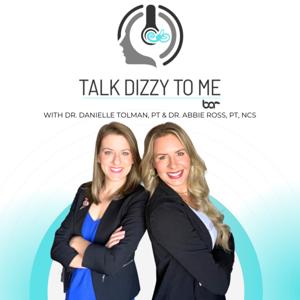


In this episode of Talk Dizzy To Me, Dr. Abbie Ross, PT, NCS is joined by vestibular and neuro experts Dr. Carly Lochala, PT, NCS and Dr. Sara MacDowell, PT to break down facial paralysis, including Bell’s palsy, Ramsay Hunt syndrome, and facial nerve recovery.
They dive into how facial paralysis affects not just movement, but also confidence, communication, and daily life... and what both clinicians and patients need to know about assessment, treatment, and recovery.
Key Takeaways:
- Facial paralysis is commonly caused by Bell’s palsy, but can also result from Ramsay Hunt syndrome, tumors, trauma, or infections
- The facial nerve (cranial nerve VII) controls facial expression, taste, tear production, and more
- Recovery depends on degree of nerve damage, not just diagnosis
- You cannot “exercise” your way out of paralysis early on... the nerve must heal first
- Improper exercises or overstimulation can worsen recovery
- Facial paralysis has a major psychosocial impact
- There are treatment options—even long-term—despite common myths
Episode Resources:
https://facialtherapyspecialists.com/
https://www.facialpalsy.org.uk/
http://bellspalsy.ws/
https://facialparalysisfoundation.org/bells-palsy/Webinar:
Sara's Webinar
Where to Find Sara: @dizzydiagnostics
Where to Find Carly: @balancingactrehab
Hosted by:
🎤 Dr. Abbie Ross, PT, NCS
🎤 Dr. Danielle Tolman, PT
For episode recommendations or requests, email us at: [email protected]
Join our online program and community, The Dizzy Reset™. Use code TALKDIZZYTOME for 40% off your first month!
Connect with Us:
→ Book a free call with us
→ Get free resources straight to your inbox
→ Join our online program and community, The Dizzy Reset™, for FREE
→ Watch podcast episodes (and more) on YouTube
→ Follow us on Instagram
→ Follow us on TikTok
→ Follow us on Facebook
→ Disclaimer
→ Enjoying the podcast? Leave us a review!
→ Avulux glasses, use code DIZZYRESET for $25 off
This episode is for educational purposes only and is not a substitute for medical advice. Always consult a qualified healthcare provider for diagnosis and treatment. The views expressed by guests are their own and do not necessarily reflect those of the host(s).
In this episode of Talk Dizzy To Me, vestibular physical therapists Dr. Abbie Ross, PT, NCS and Dr. Dani Tolman, PT are joined by vestibular PT and social media educator Dr. Amy Moore , PT to break down some of the biggest myths and misconceptions about dizziness, vertigo, and vestibular rehab.
If you've ever been told “your tests are normal so nothing is wrong,” “just take meclizine,” or “do the Epley maneuver and it will fix everything,” this episode is for you.
Together they discuss what’s myth vs fact in the world of dizziness, why vestibular conditions are often misunderstood, and what patients should actually know about vestibular rehab.
Whether you're a patient living with dizziness, a healthcare professional, or simply curious about how the vestibular system works, this episode is for you.
Key Takeaways:
-Normal tests don’t mean your dizziness is made up
-Meclizine should not be used long-term
-Good vestibular rehab is much more than physical exercises
-A little dizziness during therapy is necessary
-Not all dizziness or vertigo is due to BPPV
-There's no silver bullet when it comes to chronic dizziness
-Movement helps recovery
Where to find Amy: @thedizzypt_amy
Hosted by:
🎤 Dr. Abbie Ross, PT, NCS
🎤 Dr. Danielle Tolman, PT
For episode recommendations or requests, email us at: [email protected]
Connect with Us:
→ Book a free call with us
→ Get free resources straight to your inbox
→ Join our online program and community, The Dizzy Reset™, for FREE
→ Watch podcast episodes (and more) on YouTube
→ Follow us on Instagram
→ Follow us on TikTok
→ Follow us on Facebook
→ Disclaimer
→ Enjoying the podcast? Leave us a review!
This episode is for educational purposes only and is not a substitute for medical advice. Always consult a qualified healthcare provider for diagnosis and treatment. The views expressed by guests are their own and do not necessarily reflect those of the host(s).
Episode Timestamps:
04:32 Myth or Fact: If imaging is normal, nothing is wrong
06:24 Myth or Fact: Meclizine is not a long-term solution for vertigo
08:14 Myth or Fact: Vestibular rehab is only eye and head exercises
10:21 Myth or Fact: If exercises make you dizzy, they’re harmful
11:49 Myth or Fact: There is no one-size-fits-all treatment for dizziness
13:38 Myth or Fact: Anxiety causes dizziness
15:29 Myth or Fact: BPPV isn’t always easy to diagnose or treat
21:27 Myth or Fact: Rest and avoidance are the best treatment
23:50 Myth or Fact: There is a quick fix for chronic dizziness
26:58 Myth or Fact: Everyone with dizziness should get a VNG
32:27 Myth or Fact: Waiting until dizziness fully resolves can slow recovery
33:36 Myth or Fact: If you’re not better by now, you never will be
In this episode of Talk Dizzy To Me, vestibular physical therapists Dr. Abbie Ross, PT, NCS and Dr. Danielle Tolman, PT sit down with Kayla McCain, who shares her lived experience with Vestibular Migraine and PPPD (Persistent Postural-Perceptual Dizziness).
Kayla opens up about what symptoms she experienced, the long road to getting correctly diagnosed, and the strategies that helped her get back to living life again and rebuilding her confidence.
Key Takeaways:
-Validation and education reduce fear
-Vestibular migraine vs. PPPD presentations
-Recovery is often multi-factorial
-The “dizzy–anxious-dizzy cycle” is real
-Small strategies matter in real life
-Advocate for yourself
Where to find Kayla: @true_kaylaisms
Hosted by:
🎤 Dr. Abbie Ross, PT, NCS
🎤 Dr. Danielle Tolman, PT
For episode recommendations or requests, email us at: [email protected]
Connect with Us:
→ Book a free call with us
→ Get free resources straight to your inbox
→ Join The Dizzy Reset™ for FREE
→ Watch podcast episodes (and more) on YouTube
→ Follow us on Instagram
→ Follow us on TikTok
→ Follow us on Facebook
→ Disclaimer
→ Enjoying the podcast? Leave us a review!
This episode is for educational purposes only and is not a substitute for medical advice. Always consult a qualified healthcare provider for diagnosis and treatment. The views expressed by guests are their own and do not necessarily reflect those of the host(s).
Timestamps
02:10 Kayla’s background + work
03:03 The beginning: Halloween onset + “felt like a stroke” + terrifying dizziness
05:23 ER visit, fever, CT scan, ruled out cancer, sent home with meclizine
05:53 Misdiagnoses: anxiety dismissal + MS misdiagnosis (twice) + diagnosis finally at ~7 months
06:49 Early clues: menstrual migraine patterns + computer screen symptoms
08:43 Life impact: fear, avoiding leaving home, stopping running, weight gain, depression/anxiety
09:10 Panic + MRI + “Alice in Wonderland syndrome” episode during a trip
11:00 What is Alice in Wonderland syndrome?
11:58 How Kayla describes vestibular migraine
13:54 Triggers: hormones, stress, overstimulation, lights/sounds, grocery stores, concerts
15:22 Postpartum: aura/floaters, attacks while caring for an infant, fear of falling while holding baby
17:13 Trust + parenting: setting limits, positioning for safety, saying “no” when needed
19:33 Persistent vs episodic phases + supplements/therapy + later meds after kids
20:29 Feeling “seen”: why diagnosis and education changed everything
25:08 What helped most: counseling, vestibular therapy, exercise, pacing, rescue meds, acceptance
29:51 Practical tips: shopping at low-traffic times, migraine glasses, planned breaks, quiet resets
31:24 Resilience through chronic illness
32:51 Message for people with vestibular migraine + suspected 3PD: same principles can work again
36:13 VM vs 3PD: how symptoms felt different
39:03 3PD treatment journey: sensitive to meds, trying options, continued exercise, gradual dosing approach
42:26 Improvements
43:54 Advocacy + right provider: feeling heard is half the battle
45:19 Don’t give up: treatment options + therapy + counseling + meds (if needed)
46:16 Hope in action: Kayla races again
47:14 Where to follow Kayla: Instagram @true_true_kaylaisims
47:41 Closing thoughts: hope, mindset, and a path forward
Functional Neurological Disorder (FND) is often misunderstood... but it’s real, common, AND treatable. In this episode of Talk Dizzy To Me, vestibular physical therapists Dr. Abbie Ross, PT, NCS and Dr. Carly Lochala, PT, NCS sit down with Dr. Julie Hershberg, PT, NCS to explain what FND is, why it’s been minimized in healthcare, and how it overlaps with dizziness, migraine, dysautonomia/POTS, hypermobility/EDS, and vestibular disorders.
They break down brain networks like the default mode network and salience network, discuss common clinical clues (variability, attention-related shifts), and explain how treatment often starts with nervous system regulation, trust-building, and whole-person care—not just exercises.
If you’ve been told your symptoms are “all in your head,” this episode is for you.
Guest: Dr. Julie Hershberg / Reactive PT Instagram: @reactivept
Resources: FND resources hub, reactivept.com/FNDresources
Hosted by:
🎤 Dr. Abbie Ross, PT, NCS
🎤 Dr. Carly Lochala, PT, NCS
For episode recommendations or requests, email us at: [email protected]
Connect with Us:
→ Book a free call with us
→ Get free resources straight to your inbox
→ Join The Dizzy Reset™ for FREE
→ Watch podcast episodes (and more) on YouTube
→ Follow us on Instagram
→ Follow us on TikTok
→ Follow us on Facebook
→ Disclaimer
→ Enjoying the podcast? Leave us a review!
This episode is for educational purposes only and is not a substitute for medical advice. Always consult a qualified healthcare provider for diagnosis and treatment. The views expressed by guests are their own and do not necessarily reflect those of the host(s).
Timestamps
00:00 Welcome to Talk Dizzy To Me (intro)
01:42 What is Functional Neurological Disorder (FND)? How to explain it to patients
02:08 FND as a brain network dysfunction (function vs structure)
03:32 Why education improves outcomes in vestibular care + FND
04:02 Why FND has been misunderstood/minimized in healthcare
04:12 From “hysteria” and “conversion disorder” to modern neuroscience
06:05 Harmful stigma: being told symptoms are “fake” + medical trauma
08:19 What to look for when you suspect FND (clinical clues)
09:13 Variability, attention-related shifts, symptoms “moving”
10:35 Screening for other diagnoses + doing a thorough neuro screen
11:04 Common comorbidities missed: migraine, EDS/hypermobility, POTS/dysautonomia, vestibular disorders
12:53 What you’ll hear in the subjective history that suggests FND
15:13 Why “one test” (like Hoover) isn’t enough + signs vary by symptom type
16:54 Diagnostic criteria: what exists, what’s lacking, what needs improvement
19:12 Risk factors & triggers: sex differences, pain, sleep, physical injury/illness
21:01 Dizziness in FND: how common is it + vestibular system connection
21:59 Autonomic + sensory overlap (vestibular sympathetic reflex, otolith sensitivity)
24:44 Treatment approach: why there’s no one-size-fits-all protocol
25:38 Whole-person assessment + “pie chart” contributors + education foundation
29:00 Building trust, validation, and safety (especially after medical trauma)
31:18 Why play, fun, and salience matter for nervous system regulation + motor learning
32:45 Default mode network vs salience network explained simply
37:48 Social media + FND: what we think vs what research shows
41:26 Adapting vestibular rehab when FND is part of the picture
44:26 Safety + motor symptoms: when you prioritize regulation over exercise
48:18 Sensory inventory & building a regulation toolkit (OT-informed strategies)
51:00 Not everyone needs “calm”—some people need safe movement to regulate
52:18 “Mic drop” messages for people who feel stuck
55:21 Where to find Dr. Julie Hirschberg’s FND resources
In this episode of Talk Dizzy To Me, vestibular physical therapists Dr. Abbie Ross, PT, NCS and Dr. Danielle Tolman sit down with Laura Ehlers to share a powerful, real-life story of chronic dizziness, plus the long road to obtaining answers in a healthcare system that often defaults to “it’s BPPV” or “it’s anxiety.”
Laura walks us through how her symptoms evolved after being hit in the head and what her life looks like living with dizziness. She also shares the layered diagnoses that often show up together in complex dizziness cases—vestibular migraine, PPPD (Persistent Postural-Perceptual Dizziness), dysautonomia/POTS (Postural Tachycardia Syndrome), and hypermobility/EDS (Ehlers-Danlos Syndrome), as well as the strategies that have helped her rebuild capacity.
You’ll hear practical advice on:
- How to advocate for yourself when you’re not being believed
- Why the right healthcare provider can be a game-changer
- Medication realities: from sensitivities to finding what works
Guest: Laura Ehlers
Instagram: @laurasnaturallife
Hosted by:
🎤 Dr. Abbie Ross, PT, NCS
🎤 Dr. Danielle Tolman, PT
For episode recommendations or requests, email us at: [email protected]
Connect with Us:
→ Book a free call with us
→ Get free resources straight to your inbox
→ Join The Dizzy Reset™ for FREE
→ Watch podcast episodes (and more) on YouTube
→ Follow us on Instagram
→ Follow us on TikTok
→ Follow us on Facebook
→ Disclaimer
→ Enjoying the podcast? Leave us a review!
This episode is for educational purposes only and is not a substitute for medical advice. Always consult a qualified healthcare provider for diagnosis and treatment. The views expressed by guests are their own and do not necessarily reflect those of the host(s).
01:11 Laura’s background: chronic migraine, holistic health, and early dizziness tools
02:37 Early warning signs: highway driving issues, tunnel vision, “is it anxiety?”
03:05 Vision therapy → severe spinning vertigo onset
04:33 Current symptoms: nonstop rocking/boat sensation + visual flow triggers
04:59 Life impact: driving intolerance, travel limits, parenting challenges
06:27 The advocacy problem: being believed, speaking the “right language”
07:52 Misconceptions in healthcare
09:47 Resources that helped: clinicians online + vestibular education on social media
10:42 Why primary care matters
11:09 Diagnoses explained
12:07 Layering issues: infections, mold gene, mast cell activity
13:06 Clinician perspective: frustration when patients get conflicting medical input
14:31 Hope vs acceptance: living in the chronic illness “seesaw”
15:59 Biggest mindset tool
17:35 “Early whispers” of symptoms
20:58 What helped most: rehab principles + sensory integration focus
21:20 Proprioception strategies: weighted inputs, holds, stomps, boots, blanket
23:15 Scaling exposure: “one sidewalk square at a time”
24:14 Breakthrough: walking on grass increased capacity
25:14 Histamine/mast cell stabilization: Zyrtec and sleep/sensory benefits
26:35 EDS/hypermobility: why screening matters in the “triad” conversation
28:40 Daily habits: caffeine consistency, electrolytes, potassium vs sodium insight
29:10 Nervous system work: somatic therapy + staying committed to movement
31:10 Mindset during flares: you’re not at square one; you’re stepping off the path
36:19 Encouragement for beginners: slow progress still adds up
37:45 Identity shift: grief + reinventing life (reading, painting, new interests)
39:06 Community: why 1:1 connections can beat unmoderated groups
41:30 Medication journey: fear, hesitancy, and why meds became a useful tool
44:55 Rescue meds (Ativan): pre-treating to participate in life moments
45:54 Micro-dosing approach: ultra-low starts + pharmacist check-ins
46:52 LDN + Zyrtec wins; sensitivity to other meds
48:40 Mic drop moments: what clinicians must understand + patient hope message
If you’re a physical therapist treating dizziness (or a patient trying to understand what’s going on), this episode is packed with practical, clinic-ready guidance. Dr. Abbie Ross, PT, NCS and Dr. Dani Tolman, PT welcome Dr. Sara MacDowell, PT & Dr. Sydney Duhe, PT from Dizzy Diagnostics to break down real-world vestibular cases—including BPPV with lingering symptoms, acute vertigo after the ER (vestibular neuritis / hypofunction), and the common overlap of vestibular migraine (VM) + Persistent Postural-Perceptual Dizziness (PPPD) with visual motion sensitivity.
You’ll learn how to think beyond textbook presentations, how to avoid missing multi-canal or bilateral BPPV, how to build patient buy-in with education, and how to dose and progress VOR/gaze stabilization and visual desensitization exercises for busy environments like grocery stores.
Episode Resources:
-Follow Dizzy Diagnostics on Instagram: @DizzyDiagnostics
-Advanced Neurotherapy Education (ANTE): advancedneurotherapyed.com
Hosted by:
🎤 Dr. Abbie Ross, PT, NCS
🎤 Dr. Danielle Tolman, PT
For episode recommendations or requests, email us at: [email protected]
Connect with Us:
→ Book a free call with us
→ Get free resources straight to your inbox
→ Join The Dizzy Reset
→ Watch podcast episodes (and more) on YouTube
→ Follow us on Instagram
→ Follow us on TikTok
→ Follow us on Facebook
→ Disclaimer
→ Enjoying the podcast? Leave us a review!
This episode is for educational purposes only and is not a substitute for medical advice. Always consult a qualified healthcare provider for diagnosis and treatment. The views expressed by guests are their own and do not necessarily reflect those of the host(s).
Timestamps
00:15 - Meet the guests: Sydney & Sarah (Dizzy Diagnostics) + their vestibular journeys
05:18 - Case 1: BPPV treated… but lingering dizziness/imbalance remains
06:39 - “First check: is BPPV truly resolved?” (all canals + short arm considerations)
07:36 - Fear avoidance + habituation: getting patients moving again safely
09:56 - Look beyond BPPV: hypofunction, migraine, cervicogenic contributors
12:45 - Multi-canal BPPV: why it’s tricky + how to prioritize treatment
14:36 - Treating multiple canals in one session
19:49 - Do you always schedule a follow-up after “straightforward” BPPV?
21:46 - Teaching self-treatment + “seeing is believing” re-check visits
24:08 - Case 2: ER “vertigo,” meclizine, lingering unsteadiness weeks later
25:35 - Full vestibular exam even with “negative imaging”
27:26 - What you expect in unilateral hypofunction: oculomotor, HIT/VHIT, balance, gait
29:14 - Treatment: education first, then VOR + balance + functional head movement
32:03 - Anxiety/fear avoidance: reframing dizziness as a “learning opportunity”
33:59 - Time-crunched HEP: “stacking” exercises into daily life
36:47 - VOR progression: dosing, symptom monitoring, advancing complexity
39:10 - The future of gaze stability: more specific dosing, unilateral work, wearables
42:37 - Case 3: Mid-30s postpartum, floaty dizziness + visual motion sensitivity (VM + PPPD/3PD)
44:03 - VM education: migraine features without head pain; hormonal shifts as triggers
45:28 - PPPD/3PD overlap + early prevention
51:49 - Treating visual motion sensitivity: patterns, videos, salience, real-world exposure
58:00 - Where to find Dizzy Diagnostics + resources
In this special episode of Talk Dizzy to Me, vestibular physical therapists Dr. Abbie Ross, PT, NCS and Dr. Dani Tolman, PT sit down with two giants in the vestibular field: Jeff Walter, PT, DPT, NCS and Helena Esmonde, PT, DPT, NCS (Vestibular First).
Jeff tries to stump the group with vestibular questions covering:
-The history of John Epley and his contributions to the field
-Alexander’s law, Brun’s nystagmus, and the origin of the word nystagmus
-A precise definition of vertigo
-Advanced use of the bow and lean test for horizontal canal BPPV
-What happens when BPPV maneuvers go “wrong” (short arm, conversion, retesting)
-Practical use of the Rinne test, recruitment, and tuning forks in vestibular practice
-How to interpret CT scans that “show” superior canal dehiscence (SCD)
-A rare case of cough-induced nystagmus
-The reality that some dizzy patients don’t fit neatly into any diagnosis—and why that’s okay
Whether you’re a vestibular therapist, audiologist, ENT provider, or someone with dizziness hungry for answers, this episode is packed with clinical pearls, red flags, and pattern recognition tips for vertigo, BPPV, nystagmus, and beyond.
Episode Resources:
Jeff Walter, PT, DPT, NCS
-https://www.vestibular.today
-MedBridge Courses: https://www.medbridge.com/educate/instructors/jeff-walter-dpt-ncs
Helena Esmonde, PT, DPT, NCS
-https://vestibularfirst.com
-Journal Club: https://vestibularfirst.com/education/journal-club/
-Educational Resources/Handouts: https://vestibularfirst.com/education/resources/
-Vestibular First 's Journal Club- Clinical Pearls from an Unusual Case of Vertigo: https://youtu.be/ASjx5Yet1So?si=3qu5LkiD_pEDagHq
For more FREE resources, click here.
Hosted by:
🎤 Dr. Abbie Ross, PT, NCS
🎤 Dr. Danielle Tolman, PT
For episode recommendations or requests, email us at: [email protected]
Connect with Us:
→ Book a free call with us
→ Get free resources straight to your inbox
→ Join The Dizzy Reset
→ Watch podcast episodes (and more) on YouTube
→ Follow us on Instagram
→ Follow us on TikTok
→ Follow us on Facebook
→ Disclaimer
→ Enjoying the podcast? Leave us a review!
Timestamps
00:00 – Intro
00:15 – Meet the Hosts & Guests
02:09 – Education Resources & Journal Club
03:08 – History Lesson: Dr. John Epley
06:21 – Alexander’s Law Explained
09:39 – Gustav Alexander’s Shocking Death
11:10 – Origin of the Term “Nystagmus”
13:31 – Brun’s Nystagmus & CPA Tumors
15:10 – Defining Vertigo (ICVD-Based)
18:22 – Bow & Lean Test: Angles, Mechanics & Clinical Pearls
23:24 – Short Arm / Anterior Arm BPPV & Tricks to Get Crystals Moving
27:34 – Retesting Posterior Canal BPPV: When You Re-Create the Problem
32:23 – Short Arm Debris & “Wimpy” Persistent Torsion
35:08 – Maneuver Names, Variations & Confusion in the Literature
38:53 – Tuning Forks in Vestibular & ENT Practice
45:19 – CT & Superior Canal Dehiscence: Might vs Definitely
49:22 – Cough-Induced Nystagmus
51:39 – Pattern Recognition, Edge Cases & Not Knowing Everything
56:15 – Reassuring Patients & “Doing the Next Right Thing”
Vestibular physical therapists Abbie Ross, PT, DPT, NCS, and Danielle Tolman, PT, DPT, sit down with Rob Landel, PT, DPT, FAPTA, to unpack cervicogenic dizziness (CGD) — what it is and isn’t, how to tell neck-driven dizziness apart from inner ear causes, and the clinical tools that actually make a difference.
They dive into the head–neck differentiation test, cervical joint position error (JPE) testing with a laser, and why CGD rarely causes vertigo or spinning. You’ll also hear how concussion, whiplash, BPPV, and migraine can overlap with neck-related dizziness — plus practical insights on manual traction, cervical strength and endurance training, “pain-first” strategies, and when a short-term collar might help (despite its bad reputation).
Episode Resources:
Website: skillworks.biz
Email: [email protected]
For more FREE resources, click here.
Hosted by:
🎤 Dr. Abbie Ross, PT, NCS
🎤 Dr. Danielle Tolman, PT
For episode recommendations or requests, email us at: [email protected]
Connect with Us:
→ Book a free call with us
→ Get free resources straight to your inbox
→ Join The Dizzy Reset
→ Watch podcast episodes (and more) on YouTube
→ Follow us on Instagram
→ Follow us on TikTok
→ Follow us on Facebook
→ Disclaimer
→ Enjoying the podcast? Leave us a review!
Timestamps:
00:00 – Welcome & show open
00:45 – Dr. Lindell’s background & early vestibular days
03:01 – How far vestibular rehab has come
03:58 – Defining CGD clinically
05:26 – Symptoms CGD
06:26 – CGD with vestibular or central issues; trauma link
07:25 – Secondary CGD from guarding & “moving in blocks”
08:31 – Is CGD over- or under-diagnosed?
12:11 – BPPV + trauma: when to probe the neck
14:10 – Migraine, vestibular migraine, cervicogenic headache—untangling overlap
16:26 – How neck input feeds spatial orientation
19:43 – Mismatch analogy: why CGD feels like seasickness
21:10 – History taking: get precise about “dizzy”
22:38 – Traumatic vs. atraumatic onset; red flags & neuro screen
26:28 – Exam flow once central/peripheral causes are ruled down
27:22 – Head–Neck Differentiation Test (separating head vs. neck motion)
30:17 – Cervical Relocation / Joint Position Error (JPE) Test with laser
33:27 – Testing extension: stabilizing neck vs. moving head in block
35:03 – Treatment blueprint: mobility, pain, motor control, strength/endurance
37:26 – Laser tracing progressions
38:20 – Timelines: why strength/endurance take the longest
46:18 – Why one therapist managing vestibular + MSK is ideal
49:18 – Evidence & experience with traction/manipulation for CGD
50:43 – “Heavy-headedness”
53:22 – Fatigue → increased sway; training normalizes it
54:48 – Wrap-up & future part 2 ideas
In this Talk Dizzy to Me episode, vestibular physical therapists Dr. Abbie Ross, PT, NCS and Dr. Dani Tolman, PT sit down with Dr. Mike Studer, DPT, MHS, NCS, CEEAA, CWT, CSST, CSRP, CBFP, FAPTA to unpack neuroplasticity—what it is, how it works, and how to apply it in vestibular rehabilitation. We cover dual tasking, prediction error, fear-avoidant vs. fear-adapted movement, motivational interviewing, and patient-directed dosage using the OPTIMAL theory of motor learning. Mike shares practical clinic and real-life examples (driving, grocery stores, cooking), mic-drop lines you’ll quote to patients, and how to talk to insurers using objective measures.
If busy visuals or movement bother you, consider listening on Apple Podcasts/Spotify.
-Neuroplasticity = learning. It’s not just more pathways; it’s stronger, faster, better-fed pathways that consolidate during sleep.
-Dose the meaningful. Intensity, repetitions, salience, and task specificity drive consolidation (“put a post-it on that memory”).
-Exposure works. Habituation/adaptation creates prediction error (“that wasn’t as bad as I expected”), reinforcing change via dopamine.
-Fear shows up in movement. Beyond fear-avoidant behavior, watch for fear-adapted movement (reduced head turns, co-contraction, slow/over-intentional strategies).
-Dual tasking is two goals, not ‘think-and-move’ toward one goal. Use cognitive+motor or visual+motor loads that are personally salient.
-Autonomy accelerates progress. Let patients choose dosage (keep, dial down, or push), using motivational interviewing and OPTIMAL theory.
-No expiration date. Neuroplastic change remains possible well beyond 1 year—set expectations and use objective measures to justify care.
Episode Resources:
Email: [email protected]
Website: mikestuder.com
Instagram: @MikeStuderDPT
Book: The Brain That Chooses Itself
For more FREE resources, click here.
Hosted by:
🎤 Dr. Abbie Ross, PT, NCS
🎤 Dr. Danielle Tolman, PT
For episode recommendations or requests, email us at: [email protected]
Connect with Us:
→ Book a free call with us
→ Get free resources straight to your inbox
→ Join The Dizzy Reset
→ Watch podcast episodes (and more) on YouTube
→ Follow us on Instagram
→ Follow us on TikTok
→ Follow us on Facebook
→ Disclaimer
→ Enjoying the podcast? Leave us a review!
Time Stamps:
03:29 Neuroplasticity defined
05:21 Core principles: intensity, repetitions, salience, task specificity, sleep consolidatio
09:35 Zooming into vestibular reha
10:06 VR as proof of neuroplasticity; predictive processing
11:32 Habituation/adaptation as exposure-based therapy; links to pain & psycholog
13:32 Fear, expectations, and patient education
14:28 Therapeutic alliance: precision starts with the person
17:42 Treating fear: exposure-response prevention & prediction error (dopamine wins)
20:05 Dosage variables + motivational interviewing + OPTIMAL theory
21:27 Threat perception, amygdala, and “roadblocking” fear pathways
24:13 Fear-avoidant vs. fear-adapted movement (new concept in progress)
26:11 Cognitive load, exhaustion, and dual-task intolerance
29:32 Building alliance between sessions (check-ins)
30:00 What dual tasking is (and isn’t): two separate goals
31:32 Clinic examples: cognitive+motor; visual+motor with busy backgrounds
34:51 Real life: driving with kids, grocery stores, cooking; task switching vs. dual tasking
38:40 Overtraining in clinic to empower life outside
39:10 Progression: patient-controlled dosage (autonomy)
43:27 Neuroplasticity at any age; caveats for degenerative conditions
45:26 “Road crew at night” metaphor; why sleep matters
47:13 The “1-year” myth; talking to insurers with objective measures
49:27 Mic-drop lines
Dizziness in the emergency department is common... and complicated. Today, we talk with Dr. Peter Johns (MD) and Dr. Rebekah Griffith, PT about what actually works in the ED: using the HINTS exam correctly, avoiding unnecessary imaging and meclizine-only discharges, knowing when to call the stroke team, and why physical therapists in the ED can transform safety, outcomes, and costs.
You’ll hear about how to triage dizzy patients, spot posterior circulation stroke red flags, treat BPPV efficiently, and keep patients safe when answers aren’t immediate. We also cover topics such as orthostatic hypotension, POTS, rapid-access dizzy clinics, and practical discharge planning.
Episode Resources:
Peter Johns, MD — Emergency physician and vertigo educator (creator of “Spin Class” vertigo course and a popular YouTube channel).
Rebekah Griffith, PT, DPT — Emergency Department physical therapist and educator advocating for PT/OT presence in EDs nationwide.
Key Takeaways:
If this episode helped you, subscribe, like, and share. Comment with your biggest ED dizziness challenge—and we may just cover it in a future episode!
For more FREE resources, click here.
Hosted by:
🎤 Dr. Abbie Ross, PT, NCS
🎤 Dr. Danielle Tolman, PT
For episode recommendations or requests, email us at: [email protected]
Connect with Us:
→ Book a free call with us
→ Get free resources straight to your inbox
→ Join The Dizzy Reset
→ Watch podcast episodes (and more) on YouTube
→ Follow us on Instagram
→ Follow us on TikTok
→ Follow us on Facebook
→ Disclaimer
→ Enjoying the podcast? Leave us a review!
Time Stamps:
01:11 Dr. Johns: path to ED & vertigo education
02:41 Dr. Griffith: why PT belongs in the ED
04:01 What PTs actually do in the ED
06:52 Living with diagnostic ambiguity in the ED
07:21 How common is dizziness; risk of dangerous causes
08:17 PT share of dizzy patients in the ED
10:43 Why every ED should have PT (throughput, safety, cost)
13:27 ED goals for dizzy patients & discharge planning
14:52 Gait assessment as a safety linchpin15:22 Rapid Access Dizzy (RAD) clinic model
16:21 When PT flags central signs & stroke alerts
18:09 HINTS exam: when to use it in the ED
20:56 Why no HINTS without nystagmus23:23 Central “red flags” to screen before HINTS
25:18 Imaging realities: CT/CTA vs MRI, US vs Canada
27:36 How ED PTs cut holds, imaging, burnout
28:57 Discharging symptomatic but safe patients
30:21 When not to discharge: gait + no nystagmus
33:12 “Vertigo” isn’t a diagnosis—referrals that help
35:59 Most mismanaged: BPPV and posterior strokes
37:26 The sleeper culprit: orthostatic hypotension
39:24 POTS awareness & functional vitals in motion
42:12 Upstream care: keeping dizzy patients out of the ED
43:45 Training ED clinicians to manage dizziness46:11 PT/OT courses to build ED programs
47:37 Hands-on feedback for HINTS proficiency
#Dizziness #Vertigo #BPPV #HINTSExam #Stroke #EmergencyMedicine #VestibularRehab #PhysicalTherapy #POTS #OrthostaticHypotension #NeuroPT #TalkDizzyToMe
From the publisher's feed
3,964 Listeners
6,694 Listeners

27,855 Listeners

354 Listeners

8,094 Listeners
1,954 Listeners
33 Listeners

29,191 Listeners

2,028 Listeners

909 Listeners

19,270 Listeners

339 Listeners

301 Listeners

58 Listeners

10 Listeners