
Sign up to save your podcasts
Or

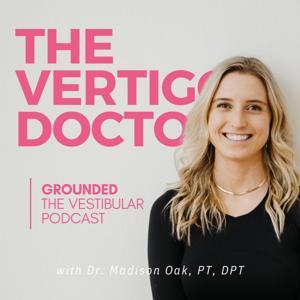


In this episode, we’re going to cover some common questions about advocating for treatments at the doctor’s office, which can occur for a few different reasons.
Having research to help advocate for your needs not only helps you educate future people, it also helps provide objective evidence for your specific needs.
Areas we’re gonna talk about are: CGRPs, why tryptans are often less effective for the dizziness side of VM, benefits of Botox, benefits of Timolol eye drops, and VM masquerading as BPPV. We’re also talking about the triad of VM, hypermobility, MCAS, and POTS. And then BPPV, MDDS, and PPPD.
Save this episode! You’re going to want to listen to it more than once because there is so much good stuff in here.
Knowledge is one of the most powerful tools you have when it comes to advocating for your care—and now you have a little more of it.
Connect with Dr. Madison (@TheVertigoDoctor): https://instagram.com/thevertigodoctor
Work with Dr. Madison:
Connect with Dr. Jenna (@dizzy.rehab.therapist): https://www.instagram.com/dizzy.rehab.therapist/
Learn about the Oak Method: http://thevertigodoctor.com/why-vestibular-group-fit
Love what you heard?
Consider leaving a review on your favorite podcast platform to help us reach more vestibular warriors like you!
This podcast is for informational purposes only and may not be the best fit for you and your personal situation. It shall not be construed as medical advice. The information and education provided here is not intended or implied to supplement or replace professional medical treatment, advice, and/or diagnosis. Always check with your own physician or medical professional before trying or implementing any information read here.
treatment for vestibular migraine, botox for vestibular migraine, living with vestibular migraine, VM, CGRP medications, CGRPs for migraine, BPPV, PPPD, chronic dizziness, vestibular group fit, VGF, migraine management
Histamine and MCAS are everywhere on the internet right now, but there’s a huge piece missing from the conversation. Genetics.
In this episode, I’m joined by two board-certified genetic counselors, Natalie Samson and Sarah Upp of Golden Genetics. They’re here to break down what’s going on at a DNA level when it comes to histamine intolerance, MCAS, connective tissue disorders, and the symptoms so many vestibular warriors are navigating.
The biggest takeaway might just be how you can start advocating for yourself with your providers (especially if these things are new to them). This one is dense, practical, and unlike any conversation I’ve had on this podcast before.
Histamine intolerance and MCAS aren’t just about what you’re eating.
They’re rooted in your genetics, and understanding your specific DNA can help you stop guessing and start identifying the right interventions for your body.
Natalie Samson and Sarah Upp are both board-certified genetic counselors and the team behind Golden Genetics, an integrative genetic counseling practice. They specialize in helping people understand their DNA, order the right tests and turn results into a personalized action plan—with a special focus on histamine, inflammation, connective tissue, and nutrigenomics.
Natalie founded Golden Genetics to bring genetics into the integrative health conversation, and together she and Sarah are currently conducting research on the genetic links to vestibular migraine.
Connect w/ Natalie Samson & Sarah Upp:
Connect with Dr. Madison (@TheVertigoDoctor): https://instagram.com/thevertigodoctor
Work with Dr. Madison:
Connect with Dr. Jenna (@dizzy.rehab.therapist): https://www.instagram.com/dizzy.rehab.therapist/
Learn about the Oak Method: http://thevertigodoctor.com/why-vestibular-group-fit
Love what you heard?
Consider leaving a review on your favorite podcast platform to help us reach more vestibular warriors like you!
This podcast is for informational purposes only and may not be the best fit for you and your personal situation. It shall not be construed as medical advice. The information and education provided here is not intended or implied to supplement or replace professional medical treatment, advice, and/or diagnosis. Always check with your own physician or medical professional before trying or implementing any information read here.
is histamine intolerance genetic, genetics and mcas, genetics and histamine, genetic counselors, vestibular migraine, VM, chronic dizziness, PPPD, nervous system regulation, migraine management, vestibular group fit, VGF
If you have a vestibular disorder, there’s a good chance your thyroid is part of the story.
You know I love bringing in other qualified professionals to dig deeper on these more nuanced topics, so for this conversation we have Registered Dietitian and fellow Hashimoto’s patient, Alisha Knicely!
She breaks down all things thyroid—what Hashimoto’s is, how it’s different from hypothyroidism, what optimal labs look like, how gut health and leaky gut are connected to autoimmune conditions, and what you can do about all of this.
We also touch on gluten, dairy, mold, and water quality. You’re going to want to bookmark this one because it’s jam packed!
Whether it’s your thyroid, your gut, your water, or the air you’re breathing, the root causes are addressable and you don’t have to figure it out alone.
Alisha Knicely is a Registered Dietitian, certified in Integrative and Functional Medicine, and a fellow Hashimoto’s patient of nearly a decade. Her own experience navigating an autoimmune thyroid diagnosis (and not getting the answers she needed) led her to specialize in thyroid and hormonal health. She helps clients get to the root of their Hashimoto’s through nutrition, gut health, lifestyle and functional testing so they can finally start feeling like themselves again.
Connect w/ Alisha Knicely:
Connect with Dr. Madison (@TheVertigoDoctor): https://instagram.com/thevertigodoctor
Work with Dr. Madison:
Connect with Dr. Jenna (@dizzy.rehab.therapist): https://www.instagram.com/dizzy.rehab.therapist/
Learn about the Oak Method: http://thevertigodoctor.com/why-vestibular-group-fit
Love what you heard?
Consider leaving a review on your favorite podcast platform to help us reach more vestibular warriors like you!
This podcast is for informational purposes only and may not be the best fit for you and your personal situation. It shall not be construed as medical advice. The information and education provided here is not intended or implied to supplement or replace professional medical treatment, advice, and/or diagnosis. Always check with your own physician or medical professional before trying or implementing any information read here.
hashimoto’s and gut health, integrative functional medicine, autoimmune thyroid condition, thyroid dietitian, graves disease, vestibular migraine, chronic dizziness, hormone health, gut issues, lifestyle changes, optimal lab values, migraine management
Histamine is quite possibly the most popular buzzword in healthcare right now and for good reason.
For those living with a vestibular condition and dealing with a histamine intolerance, it can feel like a lot to understand and manage.
In this episode, I’m breaking down what histamine is, what histamine intolerance can look like, how it’s impacting vestibular disorders and migraine, and what you can do about it.
When there’s too much histamine in the body than what the body can actively remove, you’ll have more histamine reactions and a harder time processing histamine in general. I want you to remember though that all hope is not lost!
For additional support, we have the webinar with Isabel Smith that touches on histamine intolerance, as well as liver and gut support inside Vestibular Group Fit.
We will also have Natalie Sampson, a Board Certified Genetic Counselor, joining me on a future podcast episode!
Connect with Dr. Madison (@TheVertigoDoctor): https://instagram.com/thevertigodoctor
Work with Dr. Madison:
Connect with Dr. Jenna (@dizzy.rehab.therapist): https://www.instagram.com/dizzy.rehab.therapist/
Learn about the Oak Method: http://thevertigodoctor.com/why-vestibular-group-fit
Love what you heard?
Consider leaving a review on your favorite podcast platform to help us reach more vestibular warriors like you!
This podcast is for informational purposes only and may not be the best fit for you and your personal situation. It shall not be construed as medical advice. The information and education provided here is not intended or implied to supplement or replace professional medical treatment, advice, and/or diagnosis. Always check with your own physician or medical professional before trying or implementing any information read here.
histamine and vestibular conditions, vestibular migraine, chronic dizziness, migraine attacks, vestibular disorders, vestibular group fit, food sensitivities, MCAS, gut issues, holistic approach, bucket theory, lifestyle changes, allergies and vestibular disorders
If you have recurring sinus infections, got the allergy shots, maybe even had sinus surgery, and still don’t feel better, this episode might shock you.
For starters: 75-90% of people with self-diagnosed sinus headaches actually meet migraine criteria.
I’m so excited to welcome back Dr. Jessica Lee, double board-certified ENT and lifestyle medicine physician to hopefully provide some answers you’ve been looking for. We’re going deep on sinus headache vs migraine, Eustachian tube dysfunction, as well as migraine and sinus management.
So many people are cycling through antibiotics, steroids, and booking surgeries without anyone ever connecting the dots to what’s going on in the body as a whole. Dr. Lee is here to change that and to give you the questions to ask, the scans to request, and the framework to finally get some answers.
Whether it’s sinus headaches, ear pressure, or chronic infections that never fully resolve, the answer might not be another antibiotic. And with what you heard in the episode, you’ll be able to ask the right questions to get the help you need.
Dr. Jessica Lee, MD, DipABLM is a double board-certified Otolaryngologist (ENT) and Lifestyle Medicine physician with over 100 hours of additional training in integrative and functional medicine. After more than a decade in traditional medicine, Dr. Lee noticed a major gap in how chronic inflammatory conditions (like sinusitis, allergies & sinus headaches) were being treated, and set out to change that. She’s the founder of Integrative ENT Health, a Castle Connolly Top Doctor (2023–2026), and co-founder of the Keto Hope Foundation. She brings a whole-person approach to ENT care, blending conventional expertise with nutrition, lifestyle & root-cause thinking to help patients get real, lasting answers.
Connect w/ Dr. Jessica Lee:
Connect with Dr. Madison (@TheVertigoDoctor): https://instagram.com/thevertigodoctor
Work with Dr. Madison:
Connect with Dr. Jenna (@dizzy.rehab.therapist): https://www.instagram.com/dizzy.rehab.therapist/
Learn about the Oak Method: http://thevertigodoctor.com/why-vestibular-group-fit
Love what you heard?
Consider leaving a review on your favorite podcast platform to help us reach more vestibular warriors like you!
This podcast is for informational purposes only and may not be the best fit for you and your personal situation. It shall not be construed as medical advice. The information and education provided here is not intended or implied to supplement or replace professional medical treatment, advice, and/or diagnosis. Always check with your own physician or medical professional before trying or implementing any information read here.
sinus headache, integrative ent, eustachian tube dysfunction, chronic dizziness, vestibular migraine, vestibular disorder symptoms, vestibular group fit, symptom tracking, phases of vestibular migraine, holistic approach, lifestyle changes, nervous system regulation, allergies
Men’s health in the vestibular space? Yes, we’re finally talking about it!
I get so many questions about this especially from men with vestibular migraine, Ménière’s disease, and other vestibular disorders who feel like all the health content out there is geared toward women. So I brought in Dr. Mark Heisig, naturopathic physician and creator of the Healthy on Purpose framework, to help us navigate the topic of men’s health.
In this episode, we’re covering how men age hormonally, what’s behind the global decline in testosterone, the labs you should be requesting, and why mindset is such a foundational principle of health.
Whether you’re a man with a vestibular disorder, or you just love one—this one’s for you.
Whether you’re healthy on purpose or unhealthy by accident, the good news is that the levers to pull are the same ones we talk about every week on the podcast and in group. The better news? It’s never too late to start making changes.
Dr. Mark Heisig, ND is a naturopathic doctor licensed in Arizona and Washington, with 8 years in personal training, nutrition coaching, and exercise physiology before that. Through his practice, Healthy on Purpose, he helps men and women in their 30s and 40s who are doing “everything right” but still hitting a wall. He’s also a husband, dad, and still lacing up for BJJ and hockey.
Connect w/ Dr. Mark Heisig
Connect with Dr. Madison (@TheVertigoDoctor): https://instagram.com/thevertigodoctor
Work with Dr. Madison:
Connect with Dr. Jenna (@dizzy.rehab.therapist): https://www.instagram.com/dizzy.rehab.therapist/
Learn about the Oak Method: http://thevertigodoctor.com/why-vestibular-group-fit
Love what you heard?
Consider leaving a review on your favorite podcast platform to help us reach more vestibular warriors like you!
This podcast is for informational purposes only and may not be the best fit for you and your personal situation. It shall not be construed as medical advice. The information and education provided here is not intended or implied to supplement or replace professional medical treatment, advice, and/or diagnosis. Always check with your own physician or medical professional before trying or implementing any information read here.
naturopathic doctor, vestibular migraine, chronic dizziness, men’s health, nervous system regulation, PPPD, living with vestibular migraine, vestibular disorders, optimal lab values, hormone health, gut issues, lifestyle changes, mindset and chronic illness, holistic approach
If you’ve been to a million and one doctors and still don’t have a clear diagnosis—you are not alone, and you are not crazy.
Dizziness is notoriously undertreated, and a lot of providers just don’t like dealing with it.
So in this episode, I’m giving you a comprehensive resource guide: which providers to see, what to ask when you call, and what tests are available so you’re better prepared for what you’re walking into.
This is the episode I wish existed when people first started experiencing dizziness. Share it and save it so you can refer back to it.
And remember, finding the right provider can make all the difference! A willing-to-learn provider beats a dismissive expert every single time.
Getting the right diagnosis starts with knowing who to see, what to ask, and what to expect. And now, you have a roadmap to help you get started.
Connect with Dr. Madison (@TheVertigoDoctor): https://instagram.com/thevertigodoctor
Work with Dr. Madison:
Connect with Dr. Jenna (@dizzy.rehab.therapist): https://www.instagram.com/dizzy.rehab.therapist/
Learn about the Oak Method: http://thevertigodoctor.com/why-vestibular-group-fit
Love what you heard?
Consider leaving a review on your favorite podcast platform to help us reach more vestibular warriors like you!
This podcast is for informational purposes only and may not be the best fit for you and your personal situation. It shall not be construed as medical advice. The information and education provided here is not intended or implied to supplement or replace professional medical treatment, advice, and/or diagnosis. Always check with your own physician or medical professional before trying or implementing any information read here.
dizziness diagnosis, vestibular migraine, living with vestibular disorder, ENT, neurotologist, otologist, chronic dizziness, medical provider, vestibular disorder diagnosis, vestibular disorder treatment, vestibular rehabilitation therapy, vestibular group fit, occupational therapist, neuro-optometrist, vertigo
“Progesterone will hold up the mirror for you and show you about your habits. Estrogen is forgiving—progesterone is not.”
For so many women with vestibular disorders, symptoms get dramatically worse right before their period or around ovulation, and the answer they’re usually given is “take birth control” or “drink more water.”
That, of course, is not enough. I brought in Dr. Saru Bala, Naturopathic Doctor and Women’s Hormonal Health Specialist, to break it all down. Get ready to nerd out on all things hormones!
In this episode, we’re talking about what hormones actually are, how your cycle phases impact your vestibular symptom, why your liver is way more important than you think, the estrogen-histamine-MCAS loop, and what bloodwork you should be asking for.
In this episode, we’ll dig into:
If you take nothing else away from this, remember your hormones, liver, gut, and nervous system are all talking to each other. When you start supporting them, things are able to start changing.
Dr. Saru Bala is a licensed Naturopathic Doctor with a degree from Bastyr University in Seattle, WA. Prior to attending medical school, she graduated from University of Texas at Austin where she received her bachelor’s degree in Neurobiology. She’s done extra training in women’s health and naturopathic endocrinology and wants to talk to you about all things women’s health.
Connect w/ Dr Saru Bala
Free Resources:
Connect with Dr. Madison (@TheVertigoDoctor): https://instagram.com/thevertigodoctor
Work with Dr. Madison:
Connect with Dr. Jenna (@dizzy.rehab.therapist): https://www.instagram.com/dizzy.rehab.therapist/
Learn about the Oak Method: http://thevertigodoctor.com/why-vestibular-group-fit
Love what you heard?
Consider leaving a review on your favorite podcast platform to help us reach more vestibular warriors like you!
This podcast is for informational purposes only and may not be the best fit for you and your personal situation. It shall not be construed as medical advice. The information and education provided here is not intended or implied to supplement or replace professional medical treatment, advice, and/or diagnosis. Always check with your own physician or medical professional before trying or implementing any information read here.
hormonal health, women’s health, naturopathic doctor, vestibular migraine, chronic dizziness, birth control, vestibular disorders, PMDD, what is optimal bloodwork, optimal lab values, thyroid panel, lifestyle changes, period problems, understand your period, gut liver and hormone connection
Having a list or “menu” of ideas for what to do on those higher symptom days can be helpful to have before you actually need it.
This could be a time when you’re riding out an attack and looking for things to do that are gentle but stimulating to help pass the time.
Of course, what will be the best fit will depend on the person and the symptoms on a given day.
Save this episode to come back to because I’m walking through a whole list of low-demand activities that can be enjoyable on higher symptom days.
In this episode, we’ll dig into:
Having a list of things your brain already trusts on a hard day isn’t just self care, it’s part of your toolkit.
Links Mentioned:
Free Resources:
Connect with Dr. Madison (@TheVertigoDoctor): https://instagram.com/thevertigodoctor
Work with Dr. Madison:
Connect with Dr. Jenna (@dizzy.rehab.therapist): https://www.instagram.com/dizzy.rehab.therapist/
Learn about the Oak Method: http://thevertigodoctor.com/why-vestibular-group-fit
Love what you heard?
Consider leaving a review on your favorite podcast platform to help us reach more vestibular warriors like you!
This podcast is for informational purposes only and may not be the best fit for you and your personal situation. It shall not be construed as medical advice. The information and education provided here is not intended or implied to supplement or replace professional medical treatment, advice, and/or diagnosis. Always check with your own physician or medical professional before trying or implementing any information read here.
activity list, MCAS webinar, living with vestibular disorder, vestibular group fit, vestibular migraine, chronic dizziness, PPPD, vestibular disorder symptoms, manage vestibular disorder, migraine toolkit, vestibular disorder flare, gentle movement, what to do during migraine
Vestibular disorders (particularly vestibular migraine) and POTS are often talked about in our practice and in Vestibular Group Fit as they overlap quite a bit.
In this episode, I’m digging into one of the most common co-occurring conditions I see in my practice alongside vestibular migraine: POTS (Postural Orthostatic Tachycardia Syndrome).
I’m also introducing something called the pentad super syndrome (almost every single person I see in my clinic has all five). You’ll learn what it is and what I believe is missing from the list.
Discover everything from how POTS is diagnosed, to helpful resources, and why your basics matter more than ever when you’re managing both POTS and vestibular disorders at the same time.
In this episode, we’ll dig into:
The good news is that the toolkit for your vestibular disorder and your POTS have a LOT of overlap, which means you’re already building the right foundation.
Related Episodes:
Links Mentioned:
Free Resources:
Connect with Dr. Madison (@TheVertigoDoctor): https://instagram.com/thevertigodoctor
Work with Dr. Madison:
Connect with Dr. Jenna (@dizzy.rehab.therapist): https://www.instagram.com/dizzy.rehab.therapist/
Learn about the Oak Method: http://thevertigodoctor.com/why-vestibular-group-fit
Love what you heard?
Consider leaving a review on your favorite podcast platform to help us reach more vestibular warriors like you!
This podcast is for informational purposes only and may not be the best fit for you and your personal situation. It shall not be construed as medical advice. The information and education provided here is not intended or implied to supplement or replace professional medical treatment, advice, and/or diagnosis. Always check with your own physician or medical professional before trying or implementing any information read here.
POTS and vestibular disorders, vestibular migraine, histamine and MCAS, chronic dizziness, PPPD, nervous system regulation for vestibular migraine, migraine management, stress relief, vestibular disorders, vestibular group fit, nervous system regulation, vestibular disorder treatment
From the publisher's feed
Ranked by our users in the last 21 days

14,883 Listeners
2,016 Listeners
8,463 Listeners
3,612 Listeners

914 Listeners
4,874 Listeners

112 Listeners

33 Listeners

27,855 Listeners

917 Listeners
364 Listeners
54 Listeners

19,270 Listeners
585 Listeners
1,205 Listeners