
Sign up to save your podcasts
Or

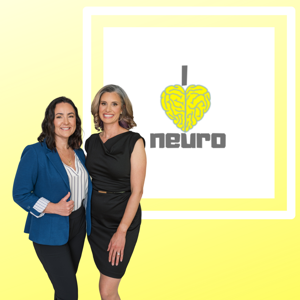


So many clinicians are passionate about ensuring their clients get everything they need to gain the level of independence and quality of life they deserve after diagnosis. The disappointing part is they don't always have access to the expert care they need. That's where Leann Vitale, MS, OTR/L found herself several years ago realizing she had a dream to start her own practice in order to fill the gap. Taking that leap is scary and risky. Fortunately she met the perfect contact and mentor to get her going! In this episode of the I Love Neuro podcast, Leann shares her transformative journey from hospital-based therapy to founding Orange County Occupational and Physical Therapy (OC OT and PT), a specialized neurological rehabilitation practice. Driven by a passion for helping patients with Parkinson's disease and stroke recovery, Leanne took a bold leap of faith, quitting her hospital job and collaborating with Claire at Rogue to create an innovative care model that bridges the gap between individual therapy and ongoing wellness.
Leann's approach is unique in its commitment to comprehensive, patient-centered care. She shares the challenges and thoughtful decisions she made about her 60-minute model of care, accepting insurance and other decisions that felt right to her. Her story is a testament to the power of passion, adaptability, and a genuine commitment to improving neurological rehabilitation, offering inspiration to healthcare professionals looking to make a meaningful difference in patients' lives.
www.TheOCOT.com
@the_ocot
Treating individuals with ataxia is challenging for many reasons. Having some key insights from the literature is just what you need! That's why on this week's episode Erin Gallardo, PT, DPT, NCS interviewed Dr. Jeannie Stephenson, PT, PhD, MS, MCS and Dr. Staci Shearin, PT, PhD, NCS, GCS to discuss their research and clinical experiences in treating ataxia. The speakers recently presented a webinar inside NeuroSpark for members and the takeaways were so good we had to bring them on the podcast to share more! In the episode you'll learn their insights on various types of ataxia, effective therapeutic approaches, and the importance of intensive task-specific training. They'll debunk common misconceptions such as the most effective approach to training and whether or not weighting is a good idea. The answers may surprise you. They also provide practical advice for clinicians on using assistive devices, outcome measures, and external cues to enhance patient treatment and support. This episode is an informative resource for anyone interested in improving mobility and the quality of life for individuals with ataxia.
Want to dive deeper into treating ataxia and get continuing education credits? Good news! We've recently updated the Ataxia Masterclass for PTs and OTs with 3 all NEW modules for a total of 6.25 contact hours, including the webinar mentioned in the episode by Dr. Stephenson and Dr. Shearin! Get it here today.
Are you a neuro clinician working mobile or thinking about starting your side gig? Perhaps you'll want to expand into your own space. day. Perhaps you already are and want to see if you can learn anything new. This episode will break it all down! Erin Gallardo, PT, DPT, NCS has a conversation with Han Nguyen, PT, DPT, NCS about how she built Neubility Rehab from a mobile practice to a brick-and-mortar in St. Petersburg, FL. She shares her top tips for negotiating equipment and co-op space as well as strategies to increase revenue outside of patient care.
Key Insights: - Negotiated equipment and space costs strategically - Focused on creating an accessible, specialized neurological rehabilitation clinic - Expanded beyond traditional PT by hosting community education courses
Critical Business Strategies: - Always negotiate pricing and rates - Maintain an emergency fund for unexpected challenges - Collaborate with local nonprofits and healthcare professionals - Create multiple revenue streams through space rentals and continuing education
The clinic's growth demonstrates the importance of: - Understanding your numbers - Being flexible in business model - Serving a specific community need - Continuously learning and adapting
To see what Han's creating go to www.neubilityrehab.com
Follow them on IG @neubilityrehab
A question many clinicians face is whether or not to go to a residency program. There are pros and cons either way and a LOT to consider. Additionally, with so many residencies available to clinicians there are things you want to look for that will be a good fit for you. Erin Gallardo, PT, DPT, NCS and Claire McLean, PT, DPT, NCS talk with Mari Biers, PT, DPT who is currently completing a neurologic residency at the University of Missouri. This conversation highlights multiple perspectives as Mari is currently in residency, Claire completed a neurologic residency and Erin did not do a residency. Mari highlights the immense value of residency programs for new physical therapists seeking accelerated professional growth and we also touch on the ways that you can grow without doing a residency since it is not the only path to clinical excellence.
Key Takeaways: - Residencies offer intensive mentorship, improving clinical reasoning and confidence - Programs provide comprehensive learning across different healthcare settings - Participants gain deep insights into specialized neurological treatment approaches - Continuous feedback and structured learning help rapidly develop clinical skills
Mari's experience demonstrates that residencies are more than just additional training - they're a pathway to becoming an exceptional clinician. While challenging, these programs provide unparalleled opportunities for professional development, research exposure, and specialized neurological rehabilitation expertise.
For ongoing mentorship and lifelong learning join NeuroSpark! Go to www.joinneurospark.com to learn more.
Instagram: @ptmarib
We've heard from our audience a lot that working with people with dementia can be very challenging for a number of reasons. In this episode Erin Gallardo, PT, DPT, NCS interviewed Dr. Natalie Douglas, a speech-language pathologist and dementia expert on her insights for rehabilitation professionals working with individuals living with dementia. Learn key tools that will help individuals follow through with tasks more independently while breaking down the barriers to application of the tools, practical strategies, do's and don'ts of working with individuals with dementia and how to approach the topic of ongoing maintenance vs when it's time to discharge to wellness.
Upcoming Resource: Dr. Douglas will be teaching a comprehensive dementia care masterclass in NeuroSpark this summer, offering practical case studies and intervention techniques for PTs, OTs and assistants. Go to www.joinneurospark.com to learn more about NeuroSpark.
Professionals can download her free communication training manual to enhance their dementia care approach. Communication strategies download: https://practicalimplementation.org/download-materials/
new bluesky: @natfdouglas.bsky.social
Today's episode compares persistent dizziness with persistent pain. There are patterns and insights from the literature that can help clinicians improve their approach to treating people with dizziness. Erin Gallardo, PT, DPT, NCS interviews Marc Broberg, PT, DPT, NCS on his theories after diving into the literature and treating people with dizziness for 15 plus years. Marc explains how approximately 25% of people with dizziness develop persistent symptoms. He shares the one key factor in determining how well they will recover. He believes successful treatment isn't about eliminating symptoms, but empowering patients to reconnect with their lives and rebuild their sense of self. Clinicians and patients alike can learn that recovery is a collaborative journey, not just a medical intervention.
We all know rehab is not accessible to everyone who needs it after a neurologic injury. There are a number of reasons why, and, fortunately, there are also people looking to solve that problem. On today's show we interviewed Amy Rohe, MS, OTR/L, CSRS, ATP who works for Neurofenix, a company that is transforming neurological rehabilitation with its innovative virtual therapy platform. The primary tool used by the OTs of Neurofenix is the NeuroBall, an FDA-approved device, that offers patients engaging, data-driven occupational therapy from the comfort of their homes.
This model of delivery is really unique and interesting for clinicians and innovators in the healthcare space! The approach addresses critical gaps in traditional rehabilitation by providing accessible, consistent therapy for patients with neurological conditions, particularly stroke survivors. With over 90% patient adherence and plans for expansion, Neurofenix represents the future of technology-driven rehabilitation.
Learn more about Neurofenix at https://www.neurofenix.com/
www.linkedin.com/company/neurofenix
IG @neurofenix
Reach out at: [email protected]
Staying up on the latest evidence in neuro rehab? This interview is for you! Erin Gallardo, PT, DPT, NCS interviewed Dr. Timothy Faw, a neuroscientist and physical therapist about his research path - where he's been and where it's going. Tim discusses the work his labs have done in a few areas including the plasticity of gray matter and myelin and the implications on motor learning and movement in spinal cord injury. He also discusses tactics on eccentric gait training - that are basically the opposite of what we think of as high intensity - and how they are impacting outcomes. More recently his work has led him to study genetic factors in neurologic recovery including the markers for better or worse outcomes and drug trials. And to ensure listeners leave the conversation with action items, he'll provide his takeaways and clinical pearls that you can start incorporating immediately.
Tim emphasizes that rehabilitation is about more than just intensity—it's about creating meaningful, challenging, and novel movement experiences that engage the brain's adaptive capabilities.
Clinicians and students interested in cutting-edge neuro rehab approaches can contact Dr. Faw at [email protected] for more information.
X - @timothy_faw
Faculty Website - https://www.medschool.umaryland.edu/profiles/faw-timothy/
When people live in a rural area it can be very challenging for them to get access to specialty care. What are they missing? What could be different? How can we help? In this episode, Erin Gallardo, PT, DPT, NCS sits down with Jamie Haines, PT, DScPT, NCS to discuss her work on a Parkinson's disease monitoring program in rural Michigan. People with Parkinson's in rural areas face significant barriers to accessing specialized care, with only 9% seeing a movement disorder specialist. Jamie's program involved visiting participants 3 times over a year, providing individualized assessments, recommendations, and education. This hands-on approach helped participants improve their fall risk factors, though self-efficacy was slower to change. She shares insights on why that could be and what can be done. Jamie shares key findings from her project and provides advice to those living in rural areas. This work highlights the critical need to address the disparities in Parkinson's care for those living in underserved communities. Jamie's dedication to finding solutions is inspiring, and her insights can help guide future efforts to improve access and outcomes.
To learn more about how the program got started and other details listen to this episode:
173: Improving access to care in rural areas and ramping up creative dual tasking
https://www.parkinson.org/library/fact-sheets/exercise-recommendations
To get mentorship from Jamie inside NeuroSpark and Parkinson Focus Track visit www.joinneurospark.com today!
Vestibular nerds this one is for you! Even if you're just a regular neuro nerd, you'll love this episode. Erin Gallardo interviews Patrick Esmonde of Vestibular First. Patrick shares the inspiring story behind the creation of Vestibular First and the company's mission to develop affordable, accessible tools to support clinicians in providing better vestibular care.
Since necessity is the mother of invention, Patrick details the process of building the first prototype of Vestibular First goggles in a single night, leveraging his diverse technical skills and material purchased on Amazon. Goggles are essential in vestibular care for a number of reasons, which Patrick discusses as well as how inaccessible they have been until Vestibular First came to be. In addition to having goggles, educational tools that help clinicians explain to patients why they are experiencing dizziness and what is actually going on in their inner ear were lacking. Vestibular First has a strong desire for accuracy and accessibility in their education tools and realistic models so you don't need to use your imagination to understand what is actually going on.
Throughout the conversation, Patrick's passion for the vestibular community shines through. He speaks of the dedication and unique challenges faced by clinicians in this field, and the immense satisfaction of knowing their work is helping patients regain their quality of life. Vestibular First's story is a testament to the power of innovation driven by real-world needs. By prioritizing affordability, ease of use, and educational resources, the company is making a significant impact in the vestibular rehabilitation space, empowering clinicians and improving patient outcomes. You are sure to be inspired!
Learn more about Vestibular First and all of their resources at https://vestibularfirst.com
Follow them on IG @vestibularfirst
Get in touch with Patrick on LinkedIn https://www.linkedin.com/in/patrickesmonde/
174: Mastering the vestibular system with Helena Esmonde, PT, DPT, NCS
From the publisher's feed
195 Listeners
109 Listeners
155 Listeners

111,874 Listeners

7,986 Listeners

46,926 Listeners
54 Listeners
37 Listeners

29,191 Listeners
23 Listeners