
Sign up to save your podcasts
Or

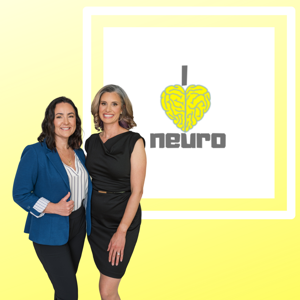


Join this conversation where Erin Gallardo, PT, DPT, NCS dives into Sarah King, PT, DPT's winding career as a mobile practice owner turned online entrepreneur turned Director of Marketing for 5 rehab clinics in TX. Sarah goes way back with NeuroCollaborative to the literal beginnings. We discussed how it came to be and why she decided to step aside when it became official.
Sarah then discusses her journey with Invigorate, her own physical therapy and wellness practice specializing in Parkinson's disease. She describes the challenges of providing care within insurance limitations and the decision to become a mobile, cash-based practice then eventually serving in the online space for people with PD. Sarah openly shares the thought process that ultimately led her to shutting down Invigorate physical therapy and wellness.
Following her intuition Sarah landed in a position at Spero Rehab, a multi-location practice in TX that offers a mix of neuro and orthopedic services. She highlights Spero's key marketing strategies and provides insights to anyone looking to grow their practice with more reliable tactics than word of mouth. Sarah also discusses Spero's partnerships with nonprofits like the Lone Star Paralysis Foundation, which have provided equipment and resources to better serve their neuro patients. She emphasizes the importance of collaboration and connection in the neurotherapy community and what that looks like as well as the key ingredients responsible for the growth of Spero..
Learn more about Spero Rehab at www.sperorehab.com
Connect on IG: @sperorehab @sperorehabcentral @drsarahkingpt @gratefulpt
Episode 226: How to start and scale an outpatient neuro practice with Katie Bouchillon, OTR, CBIST, MCMT
In this episode, host Erin Gallardo, PT, DPT, NCS interviews Dr. W. Geoffrey Wright, a professor and director of the neuro motor sciences program at Temple University. Dr. Wright is also the co-founder and principal scientist at UprightVR, a company dedicated to developing virtual reality-based solutions for assessing and improving balance. While some clinicians may have been lucky enough to have the NeuroCom Balance Master, others have been using simple foam to conduct an "objective" measure of sensory organization. Thanks to VR and specifically UprightVR, sensory organization testing is portable, accurate, and full of data.
Dr. Wright's journey into VR began in the mid-to-late 90s, when his PhD mentors at Brandeis University introduced him to the technology. Despite the prohibitive cost of VR headsets at the time, Dr. Wright recognized its potential for clinical and research applications. Over the years, the affordability and capabilities of VR have significantly improved, with Oculus's affordable headset in 2010 further democratizing the technology.
In addition to his academic research, Dr. Wright has focused on studying conditions such as traumatic brain injury and Parkinson's disease. He explains the two-pronged aspect of his work - understanding the neuro control system and improving outcomes for patients. Upright VR initially focused on reducing fall risk in older adults, but has since expanded to address a wider range of balance disorders, including concussion treatment. The device is designed to be used by physical therapists for pre and post-treatment measurements, providing objective outcomes.
The Upright VR test involves visual vestibular mismatch and sensory reweighting conditions, aiming to identify specific sensory integration problems. Dr. Wright explains the importance of these conditions in assessing balance and the rationale behind the space capsule-like environment.
Beyond assessment, Upright VR offers targeted rehab modules in the form of games designed to address specific deficits, such as vestibular or ocular reflex problems. The device also provides recommendations based on test results to guide clinicians in their treatment plans.
Contact Dr. Wright at: [email protected]
UprightVR: www.uprightvr.com
VeDA
ISVR
Find UprightVR at RehabWeek2025
In today's episode Erin Gallardo, PT, DPT, NCS talks with Annie Tapp, PT, DPT, PhD, NCS to discuss her research on the barriers and facilitators to implementing high-intensity gait training for stroke rehabilitation (and beyond). Months ago Annie was recruiting survey respondents for her PhD dissertation study on high intensity gait training in inpatient rehab. NeuroCollaborative allowed her to email and post her survey to our audience and today's conversation is a follow up to see what she learned.
Annie's research data revealed common facilitators and barriers to implementing high intensity gait training for clinicians. There were some surprises and she shares what they were as well as future research questions. Does it have to only be done with walking? We discussed the core factors that make high intensity training desirable as well as what to do when you don't have the equipment or an appropriate candidate for treadmill training. You'll learn creative ways to implement high intensity training as well as the reason behind it. We also discuss what you'll also need to add in addition to high intensity training because this impairment does not necessarily improve and needs to be addressed separately. Nervous about taking someone with an acute stroke who may have never worked out before into high levels of intensity? We talk about that too!
Feel free to contact Dr. Annie Tapp, PT, DPT, PhD at [email protected]
Articles mentioned in the episode:
Tapp, A., Griswold, D., Dray, D., Landgraff, N., & Learman, K. (2024). High-intensity locomotor training during inpatient rehabilitation improves the discharge ambulation function of patients with stroke. A systematic review with meta-analysis. Topics in stroke rehabilitation, 31(5), 431–445. https://doi.org/10.1080/10749357.2024.2304960
Tapp, A., Dray, D., Griswold, D., Haybarger, R., & Learman, K. (2024). A retrospective analysis of a clinician-initiated high-intensity locomotor training implementation project in an inpatient rehabilitation facility. Physiotherapy theory and practice, 1–10. Advance online publication. https://doi.org/10.1080/09593985.2024.2424354
Tapp, A. (2024). From Evidence to Practice: Efficacy and Implementation of High-intensity Locomotor Training for Stroke Rehabilitation [Doctoral dissertation, Youngstown State University]. OhioLINK Electronic Theses and Dissertations Center. http://rave.ohiolink.edu/etdc/view?acc_num=ysu1733749623360122
On today's show Erin Gallardo, PT, DPT, NCS and Claire McLean, PT, DPT, NCS, recap their experience at the recent APTA's CSM conference and what stood out.
Neuro Collaborative was founded with the mission of helping people start neuro-focused practices and programs in their communities, to increase access to specialized neurological care and services. We grew into providing mentorship and continuing education, and part of the mission continues to be helping people start and sustain practices. We'll explore the challenges of running a neuro-only clinic, including the need for supplementary revenue streams. We'll discuss various solutions to creating a sustainable practice in neuro because it looks very different than an ortho practice.
Be sure to follow us on IG and send us a DM if you have questions about your neuro biz! @neurocollaborative
Listen to our previous episode with Adriaan Louw, Episode 211
Request to join the NeuroBiz Besties free Slack channel
In this episode, hosts Erin Gallardo, PT, DPT, NCS and Claire McLean, PT, DPT, NCS sit down with Michael Cummings, the Director of Education for BlazePod USA. Michael shares his personal connection to neurotherapy through his experiences with family members affected by Alzheimer's and epilepsy.
Michael explains how his background as a strength and conditioning coach led him to discover BlazePod and collaborate with the company. He highlights the seamless integration of BlazePod's "reactive intelligence" platform with his training methods focused on enhancing cognitive abilities with elite athletes.
The discussion delves into the different ways BlazePod goes beyond the fitness world and into function, how to do that and the open ended question of why it matters to increase reaction time in the neuro population. We also address the challenges physical therapists face in adopting new technologies like BlazePod, such as time constraints and lack of creativity in busy schedules.
Looking ahead, the BlazePod team is launching a new "Training Hub" feature to provide easier access to exercises and drills. Currently NeuroCollaborative has a webpage with free activities clinicians can upload to their app and run for free. Find the link to that page below!
Follow Michael @michaelthetrainer // www.michaelthetrainer.com
Find great free exercises to use with your BlazePods here: www.neurocollaborative.com/blazepod
Don't have BlazePod yet? Get a 20% discount with our affiliate code by going here: www.blazepod.com/neurocollaborative
In this episode, neuro business coach Emily Duval Ledger joins Erin Gallardo, PT, DPT, NCS and Claire McLean, PT, DPT, NCS for a discussion about marketing and no-cost strategies. Recently Emily challenged her coaching clients to a "no money marketing quarter" - an exercise to hone their skills at effective, low-cost marketing tactics. The discussion highlighted several important strategies for neuro practices:
Setting Specific Goals: Rather than vague aims like "grow my business," Emily stressed the importance of defining measurable goals, like increasing your client base by a certain number each month. This allows you to track progress and determine marketing ROI.
Nurturing Referral Relationships: Building authentic connections with referral sources, like other healthcare providers, was emphasized as a powerful long-term strategy. Keeping these partners informed and making them feel like heroes for sending you clients is key.
Pricing for Value: Offering packages that deliver the best results for clients, rather than just having multiple price points, was recommended. This ensures you attract the right clients and get paid for the true value you provide.
The discussion provided practical, low-cost tips neuro businesses can implement to effectively market themselves and grow their practices. The key is focusing on strategies that align with your unique clientele and services.
If you have a neuro business and want to join our NeuroBiz Besties free Slack group, fill out this form so we can learn more about you and see if it's a good fit!
Interested in the best habits for you and your clients to improve healthspan not just lifespan? Join as Erin and Claire talk with Dr. Mike Studer PT, DPT, MHS, NCS, CEEAA, CWT, CSST, FAPTA, a renowned physical therapist and author, to discuss his new book "The Brain That Chooses Itself." We asked Mike our burning questions from the concepts in the book to help demystify information around exercise vs physical activity, sleep, nutrition and more.
Some of the questions we addressed were how to provide choice to clients in a way that doesn't overwhelm them, how to understand when the activities we're doing or choices we're making are releasing neurochemicals like dopamine, serotonin, and oxytocin, why Mike says "exercise is medicine" is dead and more!
Get your opportunity to learn more and ask Mike your questions live by registering for a free webinar! Register here: http://www.neurocollaborative.com/studer
Follow Mike on IG @mikestuderdpt
www.mikestuder.com
Get your copy of the Brain That Chooses Itself Here
In this episode, hosts Erin Gallardo and Claire McLean interviewed Russell Meyerowitz, the founder of the Parkinson Wellness Fund, a nonprofit with a mission to help PWP (people with Parkinson's) by providing funds for services and equipment that will make life better right now.
The Parkinson Wellness Fund was born out of Russell's desire to provide immediate relief and support to families affected by Parkinson's, in contrast to the heavy focus on research and finding a "cure" in the other nonprofits in the Parkinson's community. Russell emphasized the need to address the realities of living with Parkinson's today, including the significant financial and emotional toll on people and their loved ones.
The Parkinson Wellness Fund provides grants averaging $350-$400 to cover a wide range of needs, from fitness classes and home modifications to assistive devices. The organization is committed to removing barriers and making their services accessible to all PWP, regardless of their financial situation or location.
Russell shared his perspective on the challenges of the current healthcare system and research landscape around Parkinson's. He questioned the focus on finding a "cure" when the costs of living with Parkinson's are already so high for many families. Instead, he advocated for a greater emphasis on improving quality of life through exercise, nutrition, and accessible support services. Russell shared stories of how the Parkinson Wellness Fund has helped families connect with resources and find hope in the midst of their struggles.
Learn more about the Parkinson's Wellness Fund at www.parkinsonswellnessfund.org - Please support it and share it with anyone who could benefit from a grant!
Follow them in IG @parkinsonswellnessfund
In this episode of the I Love Neuro podcast, host Erin Gallardo interviews speech-language pathologist Jenn Freeburn about her work treating patients with functional neurological disorders (FND). Freeburn, a specialist in acquired motor speech and cognitive communication disorders, provides a fascinating overview of the often overlooked role of speech therapy in this complex condition.
Freeburn explains that 30-50% of patients with functional motor symptoms may also experience speech-related issues, ranging from stuttering and functional dysarthria to changes in prosody and vocal quality. SLPs can also work with patients with functional cognitive disorder, a lesser-known aspect of FND that can involve memory problems, word-finding difficulties, and other cognitive challenges. As well as functional swallowing disorders, which often overlap with vocal symptoms and can lead to significant weight loss and deconditioning.
In terms of treatment, Freeburn emphasizes the importance of a thorough assessment and a patient-centered, collaborative approach. She shares examples of creative techniques, such as using external cues, distractions, and even mimicry, to help patients regain natural speech patterns. Freeburn also highlights the potential for significant improvement, noting that some patients can achieve near-complete recovery of their symptoms.
Throughout the conversation, Freeburn advocates for increased awareness and understanding of the role of speech therapy in FND and a collaborative approach.
Check out the resources shared:
https://pubmed.ncbi.nlm.nih.gov/34210802/ and https://pubmed.ncbi.nlm.nih.gov/37775195/
FND Resources we've gathered
In this episode of the I Love Neuro podcast, host Erin Gallardo sits down with Christina Garrity, PT, DPT, NCS who is currently pursuing her PhD at the University of Cincinnati.
Christina took an unconventional path into her PhD and has gotten a new appreciation for our profession in the process. She provides insights into the time commitment and coursework involved, highlighting the focus on research ethics, study design, and statistical analysis while also being a clinic owner. While Christina's outpatient clinic focuses on vestibular patients, her PhD research focuses on stroke and why she likes this.
In the show we discuss how to be a responsible consumer of research literature because there are things you may not be seeing unless you think more critically. Christina also shares her perspectives on the practical application of clinical practice guidelines and the necessity of individualized care.
Christina is also the lead mentor in the collaborative group VestiBesties. In VestiBesties, she appreciates the ability to provide real-time feedback and guidance to participants, addressing advanced vestibular assessments, concussion interventions, and other complex topics.
Follow Christina in IG @vestibular_neuro_pt
Click here to learn more about VestiBesties
From the publisher's feed
195 Listeners
109 Listeners
155 Listeners

111,874 Listeners

7,986 Listeners

46,926 Listeners
54 Listeners
37 Listeners

29,191 Listeners
23 Listeners