
Sign up to save your podcasts
Or

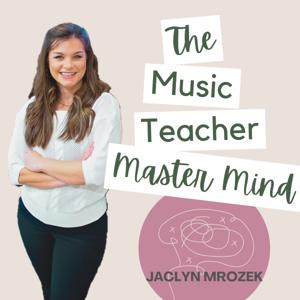

Imposter Syndrome in Piano Teachers
Lately, imposter syndrome feels loud in our industry.
In this episode, I unpack what imposter syndrome actually is, how it connects to burnout, and why it often shows up right after growth in your studio.
If you’ve ever:
• Raised your tuition and then spiraled after one parent questioned it• Compared your recital to someone else’s highlight reel• Felt confident one minute and like a fraud the next• Wondered whether self-doubt means you don’t belong
This conversation is for you.
We explore the research behind the “impostor phenomenon,” first identified in 1978 by Pauline Clance and Suzanne Imes, and discuss how it relates specifically to piano teachers navigating leadership, comparison, perfectionism, and burnout.
You’ll also hear practical reflection questions to ask yourself when you’re deep in the pit, including:
• Is this a skill gap or an identity attack?• Am I discounting measurable evidence of growth?• Am I comparing without context?• Is this incompetence, or am I just exhausted?
Imposter syndrome is not automatically proof that you don’t belong. Sometimes it’s a signal. The key is learning to tell the difference between growth and narrative.
If you’d like to stay in the loop for free teacher meetups, resources, and occasional discounts, make sure you’re on the email list: www.scrappypianoteacher.com
 View all episodes
 By Jaclyn Mrozek
5
1717 ratings
Imposter Syndrome in Piano Teachers
Lately, imposter syndrome feels loud in our industry.
In this episode, I unpack what imposter syndrome actually is, how it connects to burnout, and why it often shows up right after growth in your studio.
If you’ve ever:
• Raised your tuition and then spiraled after one parent questioned it• Compared your recital to someone else’s highlight reel• Felt confident one minute and like a fraud the next• Wondered whether self-doubt means you don’t belong
This conversation is for you.
We explore the research behind the “impostor phenomenon,” first identified in 1978 by Pauline Clance and Suzanne Imes, and discuss how it relates specifically to piano teachers navigating leadership, comparison, perfectionism, and burnout.
You’ll also hear practical reflection questions to ask yourself when you’re deep in the pit, including:
• Is this a skill gap or an identity attack?• Am I discounting measurable evidence of growth?• Am I comparing without context?• Is this incompetence, or am I just exhausted?
Imposter syndrome is not automatically proof that you don’t belong. Sometimes it’s a signal. The key is learning to tell the difference between growth and narrative.
If you’d like to stay in the loop for free teacher meetups, resources, and occasional discounts, make sure you’re on the email list: www.scrappypianoteacher.com

4,591 Listeners

130 Listeners
12,730 Listeners

6,713 Listeners

995 Listeners

39 Listeners

64 Listeners

36,296 Listeners
47 Listeners

29,272 Listeners

20,222 Listeners

8 Listeners

7 Listeners
41 Listeners
0 Listeners