
Sign up to save your podcasts
Or

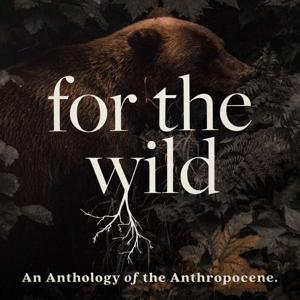

“Learning whale language is about being in right relationship.”
In the first episode of For The Wild’s In the Company of Humpbacks, we hear from Joe Olson and Dr. Fred Sharpe about their approaches to analyzing whale sound. When we desire to understand whales, what more than human impulse are we activating? Immersing the listener in a world of exploration and investigation, this episode leaves us with the spirit of questioning and a hope for deeper relationality in our pursuit of understanding.
With delightful insight from Dr. Fred Sharpe, Rachel Meade, and Joe Olson, this series contains a wealth of knowledge and beauty. We’re so excited to bring you along with us on this magical journey through the more-than-human world.
Learn more and support this work at thrums.org. We gratefully acknowledge the contributions of our partners: Alaska Whale Foundation, Five Fingers Lighthouse, and the Puget Sound Chapter.
*Sounds and images collected under NOAA/NMFS Research Permit 26663.
Behind-the-Scenes Extras
By joining us on Patreon, you can get early access to episodes, reflection prompts, a bonus episode, and behind the scenes content. Patreon membership also gives you access to our zines, archives of extended episodes, and more. Join us at patreon.com/forthewild.
Biographies
Dr. Fred Sharpe has been studying the foraging ecology of humpback whales in SE Alaska since 1987. He received his Ph.D. from Simon Fraser University and is currently collaborating with the Cetacean Institute on the study of the humpback’s aerial sounds. Fred’s interest in conservation biology has led him to follow the whales south to their Hawaiian wintering to document their historical ecology and legacy impacts from commercial whaling. He has been awarded the Fairfield Award for Innovative Marine Mammal Research and the Society for Marine Mammology’s Award for Excellence in Scientific Communication. Fred volunteers with NOAA as a large whale entanglement responder. He is a naturalist in the classical tradition and enjoys botanizing and preserving native oaks grasslands. During his botany undergraduate days (University of Washington) he co-authored and illustrated Wild Plants of the San Juan Islands. After graduation, he continued his work in the archipelago and co-authored and illustrated Birding in the San Juan Islands.
Joe Olson's love of cetaceans began when he was three years old and his grandfather routinely took him to visit Namu the killer whale at the Seattle Marine Aquarium. His concern for the general wellbeing of cetaceans started in fourth grade while writing a report about blue whales being on the verge of extinction. After receiving a degree in Physics and working as a Research Engineer and Research Physicist for several years, Joe started the hydrophone design and manufacturing company named Cetacean Research Technology in 1994. In 1999, Joe founded the Puget Sound Chapter of the American Cetacean Society (ACS) and is currently serving as the chapter president. Since selling Cetacean Research Technology at the end of 2022, Joe has been delighted to direct much more of his energy toward ecosystem protection and restoration issues with ACS and toward interesting cetacean research projects with colleagues and former hydrophone customers. When not volunteering on such projects or attending astrobiology colloquia at the University of Washington, Joe provides underwater and bioacoustics consultation through his company, Cetacean Communication, and he
Support the show
 View all episodes
 By For The Wild

4.8
11551,155 ratings
“Learning whale language is about being in right relationship.”
In the first episode of For The Wild’s In the Company of Humpbacks, we hear from Joe Olson and Dr. Fred Sharpe about their approaches to analyzing whale sound. When we desire to understand whales, what more than human impulse are we activating? Immersing the listener in a world of exploration and investigation, this episode leaves us with the spirit of questioning and a hope for deeper relationality in our pursuit of understanding.
With delightful insight from Dr. Fred Sharpe, Rachel Meade, and Joe Olson, this series contains a wealth of knowledge and beauty. We’re so excited to bring you along with us on this magical journey through the more-than-human world.
Learn more and support this work at thrums.org. We gratefully acknowledge the contributions of our partners: Alaska Whale Foundation, Five Fingers Lighthouse, and the Puget Sound Chapter.
*Sounds and images collected under NOAA/NMFS Research Permit 26663.
Behind-the-Scenes Extras
By joining us on Patreon, you can get early access to episodes, reflection prompts, a bonus episode, and behind the scenes content. Patreon membership also gives you access to our zines, archives of extended episodes, and more. Join us at patreon.com/forthewild.
Biographies
Dr. Fred Sharpe has been studying the foraging ecology of humpback whales in SE Alaska since 1987. He received his Ph.D. from Simon Fraser University and is currently collaborating with the Cetacean Institute on the study of the humpback’s aerial sounds. Fred’s interest in conservation biology has led him to follow the whales south to their Hawaiian wintering to document their historical ecology and legacy impacts from commercial whaling. He has been awarded the Fairfield Award for Innovative Marine Mammal Research and the Society for Marine Mammology’s Award for Excellence in Scientific Communication. Fred volunteers with NOAA as a large whale entanglement responder. He is a naturalist in the classical tradition and enjoys botanizing and preserving native oaks grasslands. During his botany undergraduate days (University of Washington) he co-authored and illustrated Wild Plants of the San Juan Islands. After graduation, he continued his work in the archipelago and co-authored and illustrated Birding in the San Juan Islands.
Joe Olson's love of cetaceans began when he was three years old and his grandfather routinely took him to visit Namu the killer whale at the Seattle Marine Aquarium. His concern for the general wellbeing of cetaceans started in fourth grade while writing a report about blue whales being on the verge of extinction. After receiving a degree in Physics and working as a Research Engineer and Research Physicist for several years, Joe started the hydrophone design and manufacturing company named Cetacean Research Technology in 1994. In 1999, Joe founded the Puget Sound Chapter of the American Cetacean Society (ACS) and is currently serving as the chapter president. Since selling Cetacean Research Technology at the end of 2022, Joe has been delighted to direct much more of his energy toward ecosystem protection and restoration issues with ACS and toward interesting cetacean research projects with colleagues and former hydrophone customers. When not volunteering on such projects or attending astrobiology colloquia at the University of Washington, Joe provides underwater and bioacoustics consultation through his company, Cetacean Communication, and he
Support the show
1,884 Listeners
10,387 Listeners
969 Listeners
1,025 Listeners

2,848 Listeners
2,225 Listeners
1,272 Listeners
507 Listeners

1,665 Listeners
618 Listeners
4,256 Listeners
1,046 Listeners
152 Listeners

3,618 Listeners
116 Listeners