
Sign up to save your podcasts
Or

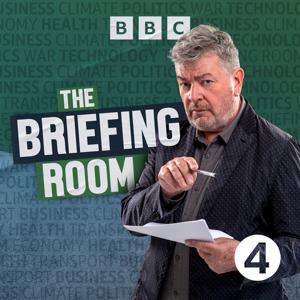

Why did India's prime minister ban the use of the country's most widely used bank notes?
On 8 November, the Indian Prime Minister Narendra Modi made a stunning announcement. As of midnight that day, all 500 and 1000 rupee notes would no longer be legal tender. The announcement came as a shock not only to the Indian public, but also to businesses, banks and some of Mr Modi's closest advisors.
Large queues formed at banks across the country as people tried to exchange their old notes for new ones and businesses came to a grinding halt. Agriculture was one of the sectors that was hardest hit. It was sowing season for India's farmers, many of whom had no means to buy the seeds, so reliant are they on cash transactions.
So what was Modi trying to achieve through this shock and awe tactic? Is this a stroke of economic genius or a highly damaging political move? And did the move have the desired effect?
David Aaronovitch speaks to a panel of experts to find out.
CONTRIBUTORS:
Nilanjan Mukhopadhyay, author of a biography about Narendra Modi, Narendra Modi: The Man, The Times
Ila Patnaik, former economic advisor to the Modi government and a professor at the National Institute of Public Finance and Policy
Douglas Busvine, Reuters bureau chief in New Delhi
Justin Rowlatt, BBC South Asia Correspondent
Producer: Phil Kemp
 View all episodes
 By BBC Radio 4

4.8
5353 ratings
Why did India's prime minister ban the use of the country's most widely used bank notes?
On 8 November, the Indian Prime Minister Narendra Modi made a stunning announcement. As of midnight that day, all 500 and 1000 rupee notes would no longer be legal tender. The announcement came as a shock not only to the Indian public, but also to businesses, banks and some of Mr Modi's closest advisors.
Large queues formed at banks across the country as people tried to exchange their old notes for new ones and businesses came to a grinding halt. Agriculture was one of the sectors that was hardest hit. It was sowing season for India's farmers, many of whom had no means to buy the seeds, so reliant are they on cash transactions.
So what was Modi trying to achieve through this shock and awe tactic? Is this a stroke of economic genius or a highly damaging political move? And did the move have the desired effect?
David Aaronovitch speaks to a panel of experts to find out.
CONTRIBUTORS:
Nilanjan Mukhopadhyay, author of a biography about Narendra Modi, Narendra Modi: The Man, The Times
Ila Patnaik, former economic advisor to the Modi government and a professor at the National Institute of Public Finance and Policy
Douglas Busvine, Reuters bureau chief in New Delhi
Justin Rowlatt, BBC South Asia Correspondent
Producer: Phil Kemp

7,639 Listeners

1,080 Listeners

375 Listeners

876 Listeners

1,046 Listeners

5,520 Listeners

1,799 Listeners

1,763 Listeners

1,920 Listeners
43 Listeners

393 Listeners

61 Listeners

158 Listeners

731 Listeners

140 Listeners
114 Listeners

3,177 Listeners

21 Listeners

720 Listeners
1,002 Listeners

3,336 Listeners

797 Listeners

39 Listeners

45 Listeners