
Sign up to save your podcasts
Or

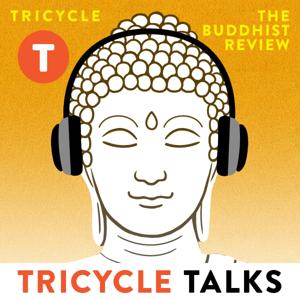

In this episode of Tricycle Talks, Editor and Publisher James Shaheen is joined by three contributors to take a closer look at our Spring 2021 issue. First, James speaks with Zen priest and psychologist Seth Zuiho Segall, whose feature article, “The Best Possible Life,” situates ancient Greek ideals of human flourishing against Buddhist enlightenment. Seth talks about what’s lost—and what’s gained—when practices from one culture find a home in a new one. Next, James and writer Daisy Hernández discuss the Buddhist concept of mudita, or sympathetic joy, and why it matters more than ever to take pleasure in other people’s happiness. Daisy’s article “The Joy of Joy” addresses the initial skepticism she felt about the term—and how that changed as she continued to practice mudita. Finally, the poet Arthur Sze talks with James about his poem “Wang Wei,” his artistic process, selections from his National Book Award-winning collection, Sight Lines, and the relationship between poetry and meditation. Also in this issue: Roshi Pat Enkyo O’Hara’s dharma talk, “Bodhisattvas Have More Fun,” which emphasizes the delight that comes with helping others; what video games can teach us about karma, written by the head writer for the Onion, Mike Gillis; an essay by Buddhist teacher Fred Eppsteiner about the time he spent with Thich Nhat Hanh outside Paris in 1975; and a portfolio of Buryat artist Dashi Namdakov’s eerily fantastical sculptures.
 View all episodes
 By Tricycle: The Buddhist Review

4.6
344344 ratings
In this episode of Tricycle Talks, Editor and Publisher James Shaheen is joined by three contributors to take a closer look at our Spring 2021 issue. First, James speaks with Zen priest and psychologist Seth Zuiho Segall, whose feature article, “The Best Possible Life,” situates ancient Greek ideals of human flourishing against Buddhist enlightenment. Seth talks about what’s lost—and what’s gained—when practices from one culture find a home in a new one. Next, James and writer Daisy Hernández discuss the Buddhist concept of mudita, or sympathetic joy, and why it matters more than ever to take pleasure in other people’s happiness. Daisy’s article “The Joy of Joy” addresses the initial skepticism she felt about the term—and how that changed as she continued to practice mudita. Finally, the poet Arthur Sze talks with James about his poem “Wang Wei,” his artistic process, selections from his National Book Award-winning collection, Sight Lines, and the relationship between poetry and meditation. Also in this issue: Roshi Pat Enkyo O’Hara’s dharma talk, “Bodhisattvas Have More Fun,” which emphasizes the delight that comes with helping others; what video games can teach us about karma, written by the head writer for the Onion, Mike Gillis; an essay by Buddhist teacher Fred Eppsteiner about the time he spent with Thich Nhat Hanh outside Paris in 1975; and a portfolio of Buryat artist Dashi Namdakov’s eerily fantastical sculptures.
10,522 Listeners
845 Listeners

1,876 Listeners
1,470 Listeners
695 Listeners
948 Listeners
10,193 Listeners

1,159 Listeners

12,754 Listeners
2,529 Listeners
1,028 Listeners
510 Listeners

1,665 Listeners

283 Listeners
1,362 Listeners