
Sign up to save your podcasts
Or

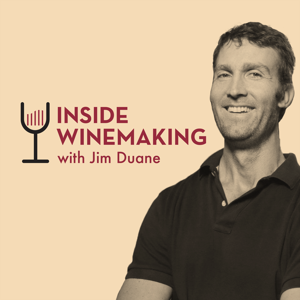


In this episode, I talk with Ry Richards, winemaker at Chappellet on Pritchard Hill, about his circuitous path from selling wine in high school to learning enology on the job and growing into his current leadership role. Ry describes Chappellet's long‑tenured, family‑driven culture, their production team structure, and the importance of process, communication, and harvest "flow state" in managing complex vintages. We dig into recent and challenging Napa vintages (2011, 2013, 2021, 2023, 2025), shatter and low yields in 2026, and how drought, heat, and smoke have reshaped decision‑making. Ry also details Chappellet's estate and sourced vineyards on the Vaca range, their work with Chenin Blanc, Chardonnay, Viognier, and Bordeaux reds, and why Chenin and site‑specific hillside Cabernet remain central to their identity. Along the way we cover yeast strategy, bottling realities, replanting and trellis choices on steep slopes, the unique trademarked status of Pritchard Hill, and why, despite market headwinds, he stays optimistic and rooted in the idea that wine and visiting Chappellet should fundamentally be about joy.
Resources from this Episode
Chappellet Winery
This podcast is sponsored by Wine Compliance Alliance.
Are you concerned about your winery's reporting? Do you worry that it's not being done correctly, or being vulnerable to a TTB audit? Help is here!
The Winery Compliance Training Academy has custom-designed courses created by industry experts with deep backgrounds working at wineries managing production compliance! Our course, The TTB reports all US Wineries are required to file is designed to walk you through the 3 reports all US wineries are required to submit to the TTB. This course is a fit for all winery staff who are responsible for filing reports or label approvals to the TTB.
Check out the Fundamentals of Winemaking Made Easy video course
The Inside Winemaking Podcast on iTunes
Now on Spotify
And Amazon Music
In this episode, Jim sits down with Jillian Johnson DeLeon of Laffort to dig into the practical mechanics of yeast nutrition, starting with the difference between organic (amino-acid based) and inorganic (DAP) nitrogen sources. They walk through how to calculate the Nitrogren needs for a successfule fermentation across a two-addition strategy, timing the first dose within 24 hours of pitch (or at first signs of cap formation for native ferments) to support the yeast's growth phase, and the second closer to mid-fermentation to carry them through to dryness without triggering Hydrogen sulfide production. The conversation covers dosing heuristics like the one-third organic to two-thirds DAP ratio for that second addition, how nitrogen demand varies by yeast strain and biomass production, fermentation temperature's effect on ester versus thiol expression, the risks of both under- and over-dosing nutrients, and the case for early co-inoculation with malolactic bacteria to avoid stuck ferments and reduce spoilage risk. Jillian also shares her own field-tested Brix-to-potential-alcohol conversion figures and closes with an overview of Laffort's broader product lines, from oak alternatives to vineyard applications.
Resources from this Episode
Laffort
This podcast is sponsored by InnoVint.
Wineries of all sizes rely on InnoVint's winery operating system to optimize vineyard tracking, manage wine production processes, automate compliance reporting, track costs seamlessly, and make data-driven decisions.
The best part? The software is intuitive, easy to use, and mobile and offline friendly! And with the highest-rated customer service in the industry, you're guaranteed to have a smooth transition, even right before harvest.
Learn more: innovint.us
Get a demo: innovint.us/request-a-demo/
Join our free winemaking community: innovint.us/join-the-punchdown/
Check out the Fundamentals of Winemaking Made Easy video course
The Inside Winemaking Podcast on iTunes
Now on Spotify
And Amazon Music
In this episode I talk with John "JJ" Julius Naab, assistant winemaker at Matthiasson Wines and founder of Lamitié Wines, about his unconventional path from Chicago brokerage and endurance sports into the wine world. JJ traces his move from finance to Santa Barbara hospitality and DTC sales at Brewer-Clifton and the moment he realized he wanted to make his own wine. We dig into his decision to complete the UC Davis Winemaking Certificate, how that "inch deep, mile wide" technical foundation pairs with on-the-job experience, and what he really learned during his first harvest at Kosta Browne in the middle of COVID and wildfire smoke.
We then dive into JJ's Chardonnay-focused Lamitié project: why he chose to be known for one thing, his focus on low alcohol, high-acid chemistry, and what he looks for in vineyards like Charles Heintz (clone 4, cool sites, marine influence). JJ explains his press strategy ("the juice isn't always worth the squeeze"), fermenting Chardonnay in puncheons on full solids, running relatively warm ferments, and then moving the wine to stainless for a second year to tighten texture and enhance reduction in his efforts towards a Burgundy-inspired style that still reflects California fruit.
Resources from this Episode
L'Amitié Wines
Matthiasson Wines
This podcast is sponsored by Wine Compliance Alliance.
Are you concerned about your winery's reporting? Do you worry that it's not being done correctly, or being vulnerable to a TTB audit? Help is here!
The Winery Compliance Training Academy has custom-designed courses created by industry experts with deep backgrounds working at wineries managing production compliance! Our course, The TTB reports all US Wineries are required to file is designed to walk you through the 3 reports all US wineries are required to submit to the TTB. This course is a fit for all winery staff who are responsible for filing reports or label approvals to the TTB.
Check out the Fundamentals of Winemaking Made Easy video course
The Inside Winemaking Podcast on iTunes
Now on Spotify
And Amazon Music
Jennifer Williams joins Jim to talk about her work as a contract winemaker, leading Arrow & Branch and co-owning Zeitgeist Cellars with her husband, Mark Porembsky. They dig into the design and philosophy of the new Arrow & Branch custom crush facility in Oak Knoll—its flexible tank mix, "white glove" service model, and how it's built to handle challenging vintages and a range of client brands. Jennifer explains the stylistic goals and vineyard sourcing for Zeitgeist, including heritage whites like Chenin Blanc and Trousseau Gris, and a Cabernet Franc program that uses barrel fermentation and moderate maceration to shape tannins. Along the way they get into pick-date decisions and herbaceous character in Cabernet Franc, managing slow malolactic fermentations, the realities of custom crush pricing and client expectations, and how small Napa brands are navigating a tougher wine market through relationships, thoughtful growth, and authentic visitor experiences.
Resources from this Episode
Arrow & Branch
Zeitgeist Cellars
This podcast is sponsored by InnoVint.
Wineries of all sizes rely on InnoVint's winery operating system to optimize vineyard tracking, manage wine production processes, automate compliance reporting, track costs seamlessly, and make data-driven decisions.
The best part? The software is intuitive, easy to use, and mobile and offline friendly! And with the highest-rated customer service in the industry, you're guaranteed to have a smooth transition, even right before harvest.
Learn more: innovint.us
Get a demo: innovint.us/request-a-demo/
Join our free winemaking community: innovint.us/join-the-punchdown/
Check out the Fundamentals of Winemaking Made Easy video course
The Inside Winemaking Podcast on iTunes
Now on Spotify
And Amazon Music
This episode features a conversation with Elias Fernandez, longtime winemaker at Shafer Vineyards in Napa Valley. Fernandez, who was raised by migrant farm workers in the Napa Valley, traces his path from studying enology at UC Davis to joining Shafer in 1984, where he became winemaker in 1994. He discusses the winery's evolution under John and Doug Shafer, its shift toward estate-only vineyards with additions like Wildfoote and Altimeter, and the current portfolio, including Hillside Select, TD-9, the One Point Five, and the Wine Spectator–acclaimed Relentless Syrah. The conversation also covers his hands-on approach to extended maceration, his early and enthusiastic adoption of non-Saccharomyces yeasts and crossflow filtration, and his use of AI-based tools like Tule for vineyard water management. Fernandez closes by reflecting on mentoring his son, now assistant winemaker at Shafer, and on the importance of introducing younger generations to wine.
Resources from this Episode
Shafer Vineyards
In this solo episode of Inside Winemaking, Jim tackles one of the questions he gets most often: how to manage empty barrels. Working through the full lifecycle of a barrel, Jim covers receiving and inspecting new barrels on arrival, keeping them hydrated before harvest (his go-to: shrink-wrap them tight and lock the moisture in), and recovering barrels that have dried out. He walks through swelling and leak-testing before filling, the realities of finding and repairing leaks with spiles, and smart practices for stacking, filling, and leaving proper ullage for young wines still off-gassing CO2.
From there, Jim gets into cleaning and sanitizing — why an immediate rinse matters, where he lands on tartrates, and his candid take on the trade-offs between burning sulfur, SO2 gas, ozone, and steam. He closes with short-, medium-, and long-term storage strategies, how often to recharge sulfur based on cellar conditions, and how to tell when a barrel is truly done. Practical, opinionated, and grounded in real cellar experience, this episode is a field guide for anyone trying to keep their empty barrels healthy between fills.
This podcast is sponsored by InnoVint.
Wineries of all sizes rely on InnoVint's winery operating system to optimize vineyard tracking, manage wine production processes, automate compliance reporting, track costs seamlessly, and make data-driven decisions.
The best part? The software is intuitive, easy to use, and mobile and offline friendly! And with the highest-rated customer service in the industry, you're guaranteed to have a smooth transition, even right before harvest.
Learn more: innovint.us
Get a demo: innovint.us/request-a-demo/
Join our free winemaking community: innovint.us/join-the-punchdown/
Recorded high above the valley floor in Silverado's Stags Leap estate, this episode with winemaker Alison Rodriguez dives into both Napa viticulture and her global winemaking journey. Alison unpacks the 2025 growing season—early bud break, late rains, and the shadow of El Niño—while describing the constant tension between picking early for safety and waiting for full ripeness in a fire-prone era. She explains what it means to farm 325 acres of 100% estate vineyards, how early-season decisions set up harvest success, and how she manages tannin and extraction in small-berry hillside Cabernets, including the tradeoffs of pressing sweet to keep structure in balance.
Alison also shares how a Baton Rouge upbringing and a career in wine sales led her to **Geisenheim** in Germany, European cellar work, and ultimately Napa. She explains the German technique of *Maischestandzeit* for aromatic whites, her evolving approach to Sauvignon Blanc at Silverado (skin contact, neutral barrel ferment, and textural focus), and how she thinks about acid, phenolics, and oak as part of a single matrix. The conversation ranges across Silverado's portfolio—from estate Cabernet blending **Stags Leap and Coombsville**, to Merlot, Cabernet Franc, Malbec, Petit Verdot, Kerner, and old-vine Chardonnay—before closing on the smells of her Louisiana childhood, Napa's collaborative winemaking culture, and why she's still betting on Riesling's long-overdue comeback.
Resources from this Episode
Silverado Vineyards
This podcast is sponsored by InnoVint.
Wineries of all sizes rely on InnoVint's winery operating system to optimize vineyard tracking, manage wine production processes, automate compliance reporting, track costs seamlessly, and make data-driven decisions.
The best part? The software is intuitive, easy to use, and mobile and offline friendly! And with the highest-rated customer service in the industry, you're guaranteed to have a smooth transition, even right before harvest.
Learn more: innovint.us
Get a demo: innovint.us/request-a-demo/
Join our free winemaking community: innovint.us/join-the-punchdown/
Check out the Fundamentals of Winemaking Made Easy video course
This episode features Livermore Valley winemaker and consultant Meredith Sarboraria for a wide-ranging conversation recorded on location in the heart of the appellation. A proud self-described "Livermoron," Meredith traces her path from tasting room work in the late 1990s to earning her Viticulture and Enology degree at Las Positas College and building her consulting business, Barrel Down Wine Services. Along the way, she paints a vivid portrait of Livermore's wine country — from the outsized influence of Wente and Measure D on land preservation, to the region's sandy loam soils, marine-influenced climate, and its newly adopted signature varietals: Cabernet Franc and Sauvignon Blanc. She also shares candid insights into the valley's growing community of female winemakers and the collective they've built to support one another.
The conversation then shifts to winemaking craft, with Meredith diving deep on the challenges of working with high-acid Barbera, her philosophy of balance over manipulation, techniques for punch-downs in macro bins and T-bins, and the smart use of enzymes during fermentation. Jim and Meredith also preview an upcoming Inside Winemaking group trip to Valle de Guadalupe, Baja California — Mexico's oldest New World wine region — where Meredith has traveled three times and serves as the group's guide. She covers everything from crossing the border by shuttle to the region's savory, marine-influenced wines, its world-class restaurants, and the exciting mix of traditional and modern winemaking happening in the valley. The episode closes with Meredith sharing the childhood smells of Livermore that still bring her home.
Resources from this Episode
Barrel Down Wine Services
Inside Winemaking's Feb 2027 Trip to Valle de Guadalupe
This podcast is sponsored by InnoVint.
Wineries of all sizes rely on InnoVint's winery operating system to optimize vineyard tracking, manage wine production processes, automate compliance reporting, track costs seamlessly, and make data-driven decisions.
The best part? The software is intuitive, easy to use, and mobile and offline friendly! And with the highest-rated customer service in the industry, you're guaranteed to have a smooth transition, even right before harvest.
Learn more: innovint.us
Get a demo: innovint.us/request-a-demo/
Join our free winemaking community: innovint.us/join-the-punchdown/
In this episode Jim Duane sits down with Elizabeth Vianna to explore her unconventional path from pre-med student to one of Napa Valley's most respected Cabernet Sauvignon producers. Elizabeth shares how a late discovery of wine in New York City led her to University of California, Davis, and ultimately to a long-term career rooted in estate winemaking in the Stags Leap District. The conversation dives into the evolution of Chimney Rock's vineyard and winemaking philosophy, including its commitment to 100% estate fruit, the use of exclusively free-run wine, and the influence of site diversity on wine style.
The episode also goes deep on practical winemaking decisions, from extended maceration strategies and tannin management to sulfur timing, racking protocols, and blending philosophy. Elizabeth discusses her increasing focus on regenerative farming, vine health, and long-term sustainability in the face of climate change, as well as her approach to working with alternative white varieties like Sauvignon Gris and Fiano. Along the way, she reflects on mentorship, leadership, and the importance of helping the next generation of winemakers develop their own instincts—making this episode both technically insightful and personally grounded.
In this episode, viticulturist Patrick Riggs dives deep into the realities of organic farming in Napa Valley. We unpack what it takes to convert vineyards from conventional to organic, from soil testing and rethinking fertilizer programs to choosing equipment for under‑vine weed control and managing more volatile, season‑driven budgets. Patrick explains how tools and machinery for cultivation have evolved, how he approaches weed control without herbicides, and why organic systems demand a more diagnostic, problem‑solving mindset.
Patrick also details integrated strategies for managing vine mealybug organically—combining year‑round mating disruption, biological controls like parasitic wasps and mealybug destroyers, and very selective use of organic sprays. From there, we explore floor management, soil moisture dynamics, and irrigation strategy in drought years: when to irrigate, how to prioritize limited water, why shaded interior leaves can be "water hogs," and how canopy design and trellis choices are shifting to protect fruit in a hotter, drier future. We close with newer tools like Surround (kaolin clay), spore trapping for mildew risk, updated organic nematode approaches, and even a duck‑powered experiment to clean a reservoir overrun with Azolla.
From the publisher's feed

43,814 Listeners

37,932 Listeners

3,070 Listeners
3,648 Listeners
1,488 Listeners
1,002 Listeners

429 Listeners
40 Listeners

111,829 Listeners

285 Listeners
164 Listeners
374 Listeners
91 Listeners

15,896 Listeners
77 Listeners