
Sign up to save your podcasts
Or



Based on Podcast App listening data
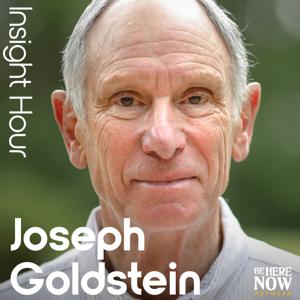
Extricating us from dualist concepts of self and other, Joseph helps us move from the 'ego-center' to the 'zero-center' through opening to love.
This podcast is sponsored by BetterHelp. Click to receive 10% off your first month with your own licensed professional therapist: betterhelp.com/insighthour
“There are so many parts of our experience which we don't like, we don't want to be there. We condemn, we judge, we push away—it can be difficult feelings in the body, difficult emotions, feelings of hatred, rage, unworthiness, loneliness, profound alienation. It can be so many things, so many parts of the mind that are the shadow side. The process of healing, the process of integration, is a willingness to open to all of those sides, to see the shadow in all its manifestation.” – Joseph Goldstein
In this episode, Joseph dives into:
This episode recorded 11/29/1986 at the Insight Meditation Society was originally published on DharmaSeed
See Privacy Policy at https://art19.com/privacy and California Privacy Notice at https://art19.com/privacy#do-not-sell-my-info.
Joseph Goldstein talks about working with and opening to fear as he pinpoints the three types of deeply conditioned fears that keep us from recognizing our own Buddha nature.
“What happens as proceed along this journey of practice is that we come to our edges, we come up to our boundaries of what is acceptable; what is acceptable in terms of physical sensation, what is acceptable in terms of mind states or feelings or emotions. And those are our boundaries at which fears in the mind begin to reveal themselves. Can we go beyond these boundaries? Can we go beyond the edges? Is there a way of working with fear and understanding it so that it is no longer a limitation for us?” – Joseph Goldstein
In this episode, Joseph explores:
“So we learn how to open, we learn to come to our boundaries, our edges, our limitations; we see the fear that may be operating there, and we learn to work with the fear, we include the fear in our practice.” – Joseph Goldstein
This dharma talk from November 11, 1985, was originally published on Dharma Seed.
See Privacy Policy at https://art19.com/privacy and California Privacy Notice at https://art19.com/privacy#do-not-sell-my-info.
Joseph Goldstein explores the relationship of our meditation practice to the establishment of world peace by helping us understand the tendencies of the mind obstructing that peace.
This podcast is sponsored by BetterHelp. Click to receive 10% off your first month with your own licensed professional therapist: betterhelp.com/insighthour
“There is a very powerful effect; it’s not just for ourselves that we practice, it is for ourselves and it is for everyone else, as well. Because as we free our minds from craving and wrong view and conceit, when we reduce this tendency, this attitude of mind to expand and grab and take and exploit, when we can purify our own minds of these tendencies, we establish peace in ourselves, and it becomes a force of peace in the world.” – Joseph Goldstein
In this episode, Joseph explores:
This dharma talk from October 18, 1985, was originally published on Dharma Seed.
See Privacy Policy at https://art19.com/privacy and California Privacy Notice at https://art19.com/privacy#do-not-sell-my-info.
Joseph Goldstein explores the concept of dependent origination – the law of causality and conditioning – so we can understand the process that keeps us bound to the Wheel of Samsara.
“In every moment of noticing, in every moment of being mindful, when there is no ignorance, when there is no delusion, when we are seeing things actually as they are, in that moment, the mind is purified; we are breaking this chain of dependent origination, we are breaking the link of it.” – Joseph Goldstein
In this episode, Joseph explores:
This dharma talk from October 29, 1985, was originally published on Dharma Seed.
See Privacy Policy at https://art19.com/privacy and California Privacy Notice at https://art19.com/privacy#do-not-sell-my-info.
Joseph Goldstein explores wisdom from the Tao and talks about how we can learn to settle back into each moment and establish ourselves in the rhythm of experience.
This podcast is sponsored by BetterHelp. Click to receive 10% off your first month with your own licensed professional therapist: betterhelp.com/insighthour
“When we can settle back and allow the change, allow the process of change to unfold without interfering, without pushing the river, then we establish ourselves in the rhythm of experience. And the rhythm carries us, just as in any activity, in music, in sport, in nature; the rhythm carries the experience when it’s not interfered with. And in that, there’s a grace, there’s a harmony, there’s a balance.” – Joseph Goldstein
In this episode, Joseph explores:
This dharma talk from December 7, 1986, was originally published on Dharma Seed.
See Privacy Policy at https://art19.com/privacy and California Privacy Notice at https://art19.com/privacy#do-not-sell-my-info.
Joseph Goldstein examines what happiness is and how we get it, plus he outlines the very ordered stages of progress that occur on the path of insight and wisdom.
“There’s another kind of happiness, which is higher even than the happiness of concentration, and that’s the happiness of insight, the happiness of wisdom, when we really come to a deep and profound understanding of who we are, of what this life is about.” – Joseph Goldstein
In this episode, Joseph explores:
This dharma talk from October 14, 1982, was originally published on Dharma Seed.
See Privacy Policy at https://art19.com/privacy and California Privacy Notice at https://art19.com/privacy#do-not-sell-my-info.
In this episode, Joseph Goldstein leads a powerful practice around cultivating equanimity and talks about why it’s important not to confuse equanimity with its near enemy, indifference.
This podcast is sponsored by BetterHelp. Click to receive 10% off your first month with your own licensed professional therapist: betterhelp.com/insighthour
“Equanimity is the mind state of impartially, not indifference. So it’s like space which contains everything impartially. And one way of coming to this space of impartiality is understanding that things, in this world, are happening lawfully. They’re not happening by accident. And so the equanimity phrase, and the development of equanimity, is closely tied in with wisdom.” – Joseph Goldstein
In this episode:
“All beings are the heirs of their own karma. Our happiness or unhappiness depends on our actions, not upon our wishes.”
This dharma talk from December 7, 2004, was originally published on Dharma Seed.
See Privacy Policy at https://art19.com/privacy and California Privacy Notice at https://art19.com/privacy#do-not-sell-my-info.
Joseph Goldstein explores the Buddha’s concept of the Five Iddhis, which are the five elements of the teachings we need to bring to completion in order to truly awaken our hearts and minds.
“This Iddhi of psychic power is inferior to the Iddhi of understanding. When the Buddha was asked what the true miracle was, he said the real miracle is the awakening of people’s minds, it’s not the flying through the air or the diving in the earth, it’s the awakening of the mind, the awakening of the heart.” – Joseph Goldstein
In this episode, Joseph shares his insight into:
This dharma talk from October 9, 1989, was originally published on Dharma Seed.
See Privacy Policy at https://art19.com/privacy and California Privacy Notice at https://art19.com/privacy#do-not-sell-my-info.
Joseph Goldstein talks about how the tides of conceiving continually condition our lives and explores the ways we can directly experience the reality of Nibanna, the unconditioned.
This podcast is sponsored by BetterHelp. Click to receive 10% off your first month with your own licensed professional therapist: betterhelp.com/insighthour
“Do we buy in? Do we buy into the content? Do we get lost in this mind-created world of ‘future,’ or can we see it as being as light as a momentary thought, a momentary image? Just like a sound arises. But it takes a great deal of vigilance because these thoughts, these tides of conceiving, are tremendously seductive. You know, we’ve been doing this for years, and perhaps lifetimes. But awareness is very powerful, we can actually free ourselves from this prison.” – Joseph Goldstein
In this episode, Joseph talks about:
This dharma talk from December 5, 1995, was originally published on Dharma Seed.
See Privacy Policy at https://art19.com/privacy and California Privacy Notice at https://art19.com/privacy#do-not-sell-my-info.
Joseph Goldstein covers the basics of metta, which he calls the generosity of the heart, and shares ways we can cultivate deeper feelings of loving-kindness in our practice.
“Metta, as most of you are familiar, is a word from the Pali language, the language of the Buddha’s time, and it means loving-kindness or friendliness. And it refers to that basic quality or that basic feeling of generosity of the heart. It’s an expression of the generous heart that is simply wishing well, simply wishing or expressing goodwill to ourselves and others.” – Joseph Goldstein
In this episode, Joseph shares his insight on:
This dharma talk from February 6, 1999, was originally published on Dharma Seed.
See Privacy Policy at https://art19.com/privacy and California Privacy Notice at https://art19.com/privacy#do-not-sell-my-info.
From the publisher's feed
Joseph Goldstein has been a leading light for the practice of Insight and Loving Kindness meditation since his days in India and Burma where he studied with eminent masters of the tradition. In his…
Ranked by our users in the last 21 days

2,592 Listeners
10,510 Listeners
489 Listeners
2,643 Listeners
362 Listeners
826 Listeners

1,856 Listeners
2,632 Listeners
1,477 Listeners
691 Listeners
12,710 Listeners
2,515 Listeners
1,026 Listeners

798 Listeners
1,372 Listeners