
Sign up to save your podcasts
Or



Based on Podcast App listening data
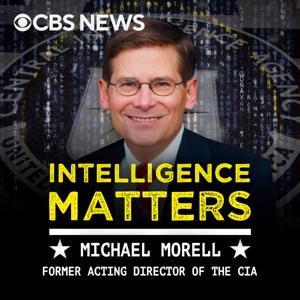
In this episode of Intelligence Matters, host Michael Morell speaks with top infectious disease epidemiologist Dr. Michael Osterholm, who is also director of the Center for Infectious Disease at the University of Minnesota, about the knowns and unknowns, to date, of COVID-19. Dr. Osterholm reviews the latest data on infection and transmission rates, the likelihood of an effective vaccine, and explains what needs to happen before contact tracing can be effective. He and Morell discuss the U.S. policy response, the need for leadership, and what other challenges remain to containing the coronavirus' spread.
In this episode of Intelligence Matters DECLASSIFIED: Spy Stories from the Officers Who Were There, host Michael Morell interviews Martin Petersen, former senior CIA intelligence officer and Asia expert who spent over three decades at the agency. Petersen recounts the agency's early assessments of unrest that led to the 1989 Tiananmen Square protests in China. Morell and Petersen discuss the training CIA analysts receive and Petersen shares the remarks he would make to all entering analyst classes. Intelligence Matters DECLASSIFIED is new series dedicated to featuring first-hand accounts from former intelligence officers.
In this episode of Intelligence Matters, host Michael Morell speaks with James Cunningham, former U.S. Ambassador to Afghanistan, Israel and the United Nations. Morell and Cunningham review the country's efforts at arriving at a peace deal with the Taliban and the Afghan government, and explore why a deal remains elusive. They also examine the obstacles to an Israeli-Palestinian peace deal, China's crackdown on Hong Kong, and Russia's interests in the Middle East. Cunningham offers views on the future of U.S. diplomacy.
In this episode of Intelligence Matters, host Michael Morell speaks with David Shimer, author of Rigged: America, Russia and 100 Years of Covert Electoral Interference. Shimer provides examples of Russian and American electoral interference in countries around the world over nearly a century. He explains how Russia's playbook has been applied repeatedly and in novel ways to influence American democratic processes -- including in 2016. Morell and Shimer discuss ways the U.S. should seek to bolster its defenses against new potential Russian incursions in 2020.
In this episode of Intelligence Matters DECLASSIFIED: Spy Stories from the Officers Who Were There, host Michael Morell interviews Sarah Carlson, former CIA Targeting Analyst and author of "In the Dark of War: A CIA Officer's Inside Account of the U.S. Evacuation from Libya." Carlson recounts the harrowing 2014 decision to remove U.S. personnel from war-torn Libya, which included numerous tense negotiations with local militia leaders and the movement of a multi-vehicle convoy from Tripoli to Tunis -- and, in the end, may have saved over a hundred American lives. Intelligence Matters DECLASSIFIED is new series dedicated to featuring first-hand accounts from former intelligence officers.
In the premiere episode of Intelligence Matters DECLASSIFIED: Spy Stories from the Officers Who Were There, host Michael Morell interviews Toni Hiley, the former curator of the CIA's private museum, located at its headquarters in Langley, Virginia. Hiley takes listeners on a tour of the agency's most important exhibits and artifacts, explaining the historical context and personal stories behind each. Morell and Hiley explore pivotal events and the officers who witnessed them from World War II, the Cold War and the aftermath of 9/11. Intelligence Matters DECLASSIFIED is a new series dedicated to featuring first-hand accounts from former intelligence officers.
In this episode of Intelligence Matters, host Michael Morell speaks with Franklin Foer, journalist and staff writer for The Atlantic, about America's preparedness for potential Russian election interference in 2020. Foer, whose latest piece, "Putin Is Well on his Way to Stealing the Next Election," examined the lingering vulnerabilities in U.S. election systems, explains where weaknesses still exist and how Russian operatives may be altering their tactics ahead of the presidential election. He also discusses the potential effects of widespread civil unrest in the U.S. and global turbulence related to the COVID-19 pandemic, as well as how Putin's own domestic standing may affect his approach.
*PLEASE NOTE: This interview was taped last week, before nationwide protests in response to the death of George Floyd began.*
In this episode of Intelligence Matters, Director of the Cybersecurity and Infrastructure Security Agency (CISA) Chris Krebs speaks with Michael Morell about securing the operations and data of businesses and government agencies as they have adopted teleworking and other protocols amid the COVID-19 pandemic. Krebs also explains how foreign adversaries and hackers have targeted vaccine and treatment research at health care institutions across the country. Morell and Krebs review the preparations being made to protect the 2020 presidential election and discuss the interference campaigns expected from foreign adversaries.
In this episode of Intelligence Matters, host Michael Morell speaks with Laura Rosenberger, Senior Fellow and Director of the Alliance for Securing Democracy at the nonpartisan German Marshall Fund of the United States. Rosenberger details the breadth of foreign interference threats the U.S. faces ahead of the 2020 presidential election from known actors like Russia, China, Iran and others. Morell and Rosenberger assess the preparedness of the U.S. to respond to those threats and the overall resilience of the public in the face of increasingly sophisticated disinformation campaigns. They also examine whether the U.S. should consider responding to those campaigns in kind.
In this episode of Intelligence Matters, host Michael Morell speaks with Karim Sadjadpour, Iran policy analyst and senior fellow at the Carnegie Endowment for International Peace. Morell and Sadjadpour review the effects of the spread of coronavirus within Iran, including the toll it has taken on senior leadership and the unrest it has generated among its populace. Sadjadpour also discusses Iran's behavior regionally and vis a vis the United States following the January killing of General Qassem Soleimani. He tells Morell why the virus outbreak may accelerate Iran's transition to a military dictatorship and why a change in U.S. policy may not prompt a different reaction from Tehran.
From the publisher's feed
Ranked by our users in the last 21 days
2,732 Listeners
1,138 Listeners
189 Listeners
1,529 Listeners
10,743 Listeners
657 Listeners
6,283 Listeners

87,116 Listeners
586 Listeners

111,799 Listeners
2,387 Listeners
20 Listeners
466 Listeners

62 Listeners
1,330 Listeners

256 Listeners
1,675 Listeners

1,856 Listeners
1,940 Listeners

15,702 Listeners

15,882 Listeners
350 Listeners
10,759 Listeners
401 Listeners
266 Listeners