
Sign up to save your podcasts
Or



Based on Podcast App listening data
Ryan Girdusky breaks down the biggest political stories and election results from Florida, including Rep. Cory Mills’ stunning primary defeat, Byron Donalds’ victory in the Republican gubernatorial primary, and the growing strength of Democratic Socialists on the Left.
Ryan examines what the Florida results reveal about the Republican electorate, whether President Donald Trump’s endorsement is losing some of its influence in GOP primaries, and why Republicans could be overlooking critical down-ballot races.
Plus, Ryan dives into new polling from the Michigan Senate race, the political problems facing Abdul El-Sayed, the growing voter backlash against AI data centers, and what it could mean for Republicans in key races across the country.
Then, it’s time for Ask Me Anything, as Ryan answers listener questions about Trump, the economy, the Iran war, the 2026 midterms, the 2028 presidential election, and whether a Democratic takeover of Congress would actually improve Republicans’ chances of winning back voters.
📩 ASK RYAN ANYTHING:
[email protected]
#RyanGirdusky #CoryMills #FloridaPrimary #DonaldTrump #FloridaPolitics #Election2026 #Midterms #Republicans #Politics #Polling
See omnystudio.com/listener for privacy information.
Are Flock cameras keeping Americans safe — or building a massive surveillance network?
On this episode of It’s a Numbers Game, Ryan Girdusky sits down with a top Flock Safety executive, Rahul Sidu for a wide-ranging conversation about the controversial license plate reader technology spreading across the country.
They tackle some of the biggest questions surrounding Flock cameras: Can police use them to track people improperly? How long is vehicle data retained? Can Flock employees access camera data? Does the company sell information to data brokers? What happens when the technology misreads a license plate? And where should Americans draw the line between public safety and personal privacy?
Rahul also responds to concerns about police officers allegedly misusing license plate databases, explains the company's auditing and accountability systems, and addresses claims involving facial recognition, data sharing and cameras remaining in place after local contracts end.
Plus, Ryan weighs in on Sen. Jon Ossoff, his potential presidential ambitions and his controversial comments about Trump aide Natalie Harp. Ryan also answers listener questions about voter turnout, the 2026 midterms, North Carolina's Senate race and whether Democrats can successfully campaign as moderates.
See omnystudio.com/listener for privacy information.
AI data centers are facing growing political backlash—and the fight is spreading deep into Republican territory.
On this episode of It’s a Numbers Game, Ryan Girdusky breaks down the changing politics surrounding AI data centers as Texas Gov. Greg Abbott moves to scrutinize new projects amid concerns over electricity demand, water usage, tax incentives, noise, infrastructure, and the impact on local communities.
Ryan examines why opposition to data centers is growing among Texas voters, why Loudoun County, Virginia—the heart of America's data center industry—is considering additional restrictions, and why Republicans may be rethinking their once-unquestioned support for rapid AI infrastructure expansion.
Then, Ryan turns to one of the most controversial Republican congressional candidates of 2026: Brandon Herrera. After Rep. Tony Gonzales dropped out, Herrera emerged as the GOP candidate in Texas' 23rd Congressional District—but his provocative past as a gun YouTuber is attracting national media scrutiny. Ryan explains how Republicans ended up in this position and what it could mean for control of the House.
Plus, Ryan answers listener questions about Trump, Netanyahu and the Kurds during the Iran conflict, as well as Madonna's refusal to let AI companies train on her music and the larger battle over artists, music catalogs and artificial intelligence.
EMAIL RYAN
See omnystudio.com/listener for privacy information.
On this episode of It’s a Numbers Game, Ryan Girdusky is joined by VoteHub Head of Data Science Zachary Donnini to break down the polling misses shaking up the 2026 election cycle.
Why did progressive and DSA-aligned candidates dramatically underperform expectations in Wisconsin and Michigan? Ryan and Zach examine the surge in primary turnout, the growing divide between highly educated urban progressives and white working-class voters, and whether pollsters are once again struggling to accurately measure the electorate.
They also dig into Black voter turnout, why Democrats are increasingly focused on electability, the limitations facing far-left candidates outside major cities, and what the latest numbers could mean for Republicans trying to hold the House and Senate in November.
Could a small polling error in states like Texas, Ohio, Iowa or Maine determine control of Congress? And are the warning signs from the Rust Belt pointing toward a much different 2026 midterm election than the national polls suggest?
Ryan and Zach break down the numbers—and what both parties should be watching as November approaches.
See omnystudio.com/listener for privacy information.
Is President Trump searching for an off-ramp in the Iran war — and what happens if America continues burning through its military and energy reserves?
On this episode of It’s a Numbers Game, Ryan Girdusky breaks down the growing strategic questions surrounding the Iran conflict, including the depletion of U.S. missile stockpiles, the Strategic Petroleum Reserve, the enormous daily cost of the war, and whether America could still respond effectively if China made a move against Taiwan.
Then, Ryan dives into an extended Ask Me Anything episode covering some of the biggest political questions facing Republicans and Democrats.
Could Republicans build a new “red wall” in Nevada, Arizona, and New Hampshire? How important are independent voters in those battleground states? Could James Talarico make Texas competitive? What does the rise of Democratic Socialists mean for the future of the Democratic Party?
Ryan also weighs in on Republican outreach to Catholic voters, the growing debate over Israel within conservative politics, Abdul El-Sayed and the DSA, Ron DeSantis’ potential path back to national relevance, how modern polling works without landlines, and what went wrong for Andy Ogles in Tennessee.
SUBSCRIBE for more political analysis, polling, demographics, elections, and the numbers shaping American politics.
See omnystudio.com/listener for privacy information.
Meta is facing a massive $567 million ruling in New Mexico as scrutiny intensifies over social media, children’s mental health, online safety, and Big Tech’s responsibility for what happens on its platforms.
Ryan Girdusky breaks down why the Meta case could be only the beginning, with similar lawsuits threatening to create a much larger reckoning for the social media industry. Could mounting legal pressure finally force Congress to act on Big Tech and protections for children?
Then, Ryan turns to the latest jobs report and what the numbers could mean politically heading toward the 2026 midterm elections. Job creation is showing signs of weakness, labor-force participation remains a concern, and inflation is putting pressure on wage gains. Ryan examines which workers are being hit hardest—and why those trends could become a major political problem for Republicans.
Plus, Ryan answers listener questions on H-1B visas and illegal immigration, potential 2028 presidential dark horses, John Thune and Senate strategy, and the political impact of the THC/Delta-8 fight in Texas.
See omnystudio.com/listener for privacy information.
Wisconsin is once again shaping up to be one of the most important battleground states in America, and Republican organizer Logan Sajdowitz joins Ryan to explain what it will take for Republicans to win the governor's race in 2026.
Logan breaks down how Republican campaigns identify and reach voters in a state without party registration, why Wisconsin's rural geography makes organizing more difficult, and how grassroots efforts helped President Trump carry the state in 2024.
The conversation also explores Congressman Tom Tiffany's campaign for governor, the growing influence of the Democratic Socialists of America (DSA), and Democratic candidate Francesca Hong, whose progressive platform has drawn national attention. Logan explains why Republicans believe they've built an organizational advantage heading into one of the country's most closely watched elections.
See omnystudio.com/listener for privacy information.
The controversy surrounding Congressman Max Miller is escalating—and it could have major consequences for Republicans heading into the midterm elections.
In this episode of It's a Numbers Game, Ryan Girdusky breaks down the latest developments in the Max Miller controversy, the political fallout surrounding his divorce and public allegations, and why Republicans are increasingly concerned about holding Ohio's 7th Congressional District.
Ryan also analyzes new polling showing Ken Paxton trailing in the Texas Senate race despite Republicans leading nearly every other statewide contest, examines fresh early voting data from Florida, and discusses troubling developments for Republicans in North Carolina.
EMAIL RYAN
See omnystudio.com/listener for privacy information.
In this episode of It's a Numbers Game, Ryan analyzes Vivek Ramaswamy's appearance before Young Americans for Liberty, explaining why his message failed to connect with younger conservative and libertarian voters. Ryan also examines the latest polling in Ohio and discusses how campaign strategy, messaging, and voter concerns could shape one of the country's biggest gubernatorial races.
Ryan also dives into newly released fertility data, arguing that President Trump's immigration enforcement is already showing measurable demographic effects. He explores declining births among foreign-born populations, stable birth rates among American-born women, and what those trends could mean for the future of the country.
EMAIL RYAN
See omnystudio.com/listener for privacy information.
President Trump's approval ratings are plunging in multiple new national polls, raising major questions about the Republican Party's chances in the 2026 midterm elections.
On this episode of A Numbers Game, Ryan Girdusky breaks down the latest polling showing Trump's approval in the low 30s, why inflation, gas prices, and the Iran conflict are becoming political liabilities, and what it could mean for Republicans heading into November.
Ryan also dives into the explosive allegations surrounding Ohio Congressman Max Miller, explains why he believes voters should wait for the legal process before demanding resignations, and analyzes whether the controversy could actually impact Miller's political future.
See omnystudio.com/listener for privacy information.
From the publisher's feed
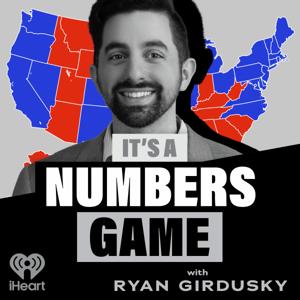
Dive into the world of data with Ryan Girdusky, an acclaimed American political commentator and writer, on "It’s a Numbers Game with Ryan Girdusky." In each episode, Ryan breaks down the most crucial data on politics, economics, and culture, providing you with the insights you need to stay informed and ahead of the curve. Whether you're a data enthusiast or just looking to understand the numbers behind the headlines, Ryan is your go-to source for in-depth analysis and engaging discussions. Listen to new episodes released every Monday and get the facts that matter - subscribe now and never miss an episode!
Join the conversation and follow Ryan for exclusive insights on X.com/RyanGirdusky and Instagram.com/Ryan.James.Girdusky. Listeners of the podcast also receive a free 30-day trial to Ryan’s National Populist Newsletter at natpopnewsletter.com.
Ranked by our users in the last 21 days
3,291 Listeners

464 Listeners
2,247 Listeners

22,667 Listeners

4,839 Listeners
2,817 Listeners

11,796 Listeners
3,082 Listeners

6,203 Listeners
557 Listeners

217 Listeners
1,299 Listeners

1,153 Listeners
1,179 Listeners

503 Listeners