
Sign up to save your podcasts
Or

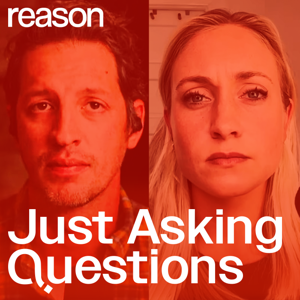


How do we escape stagnation and accelerate progress? What if bubbles are actually good? Just asking questions.
"They promised us flying cars. All we got was one hundred forty characters." Those were the words of Peter Thiel over a decade ago, lamenting technological stagnation. The character limit has since increased, but his point remains the same: Innovation in the software world of "bits" has accelerated, but progress in the material world of "atoms" has been stubbornly slow, at least in his telling.
Economist Tyler Cowen, who popularized the term "Great Stagnation," argued that we picked all the low-hanging fruit in the early-to-mid 20th century thanks to cheap cultivation of unused land, mass education of a previously uneducated population, and revolutions in transportation, energy, and synthetic materials that could since be only marginally improved at increasingly greater expense and effort. The result has been stagnant wage growth when accounting for price inflation and a failure to realize any revolutionary breakthroughs in energy, transportation, or materials science for decades.
But today's guest says there's another underlying reason for the stagnation: a self-defeating cultural and spiritual malaise and pessimism about the future. It manifests itself in the dystopian movies and shows that dominate Hollywood, as well as in the falling prevalence of words associated with progress and the future, and a rise of words associated with caution, worry, and risk found in contemporary literature.
Byrne Hobart is the co-author of Boom: Bubbles and the End of Stagnation, which offers a surprising way out of stagnation: embracing the dynamic and chaotic power of bubbles—investment bubbles, big social bubbles, and filter bubbles. Examples range from big, ambitious public investments like the Apollo missions and the Manhattan Project to the rise of bitcoin.
The post Byrne Hobart: What happened to progress? appeared first on Reason Magazine.
Must we accelerate AI innovation?
You've probably heard of "effective altruism," but how about "effective accelerationism," or e/acc? "You claim to be building an artificial god in the human image. We're building the conduit for the thermodynamic god that created us. We are not the same."
Those are the words of Based Beff Jezos, a pseudonymous X account devoted to spreading the e/acc message far and wide, once described by venture capitalist Marc Andreessen as a "patron saint of techno-optimism" and by its detractors as "unhinged" and "absolutely toxic for the AI discourse."
The man behind Based Beff Jezos was unmasked in Forbes magazine last December as Guillaume Verdon, a Google quantum computing engineer-turned-co-founder of the AI startup Extropic, which has received about $14 million in seed funding to develop a new kind of chip for running AI models.
He joins us today to talk about effective accelerationism, the politics of AI, and what his company is doing to make sure that Artificial General Intelligence (AGI) arrives quickly and remains beyond the control of a single corporation or government.
The post Guillaume Verdon: Should We Have a 'Second Amendment for AI'? appeared first on Reason Magazine.
About 0.5 percent of U.S. adults identify as transgender, according to a 2022 UCLA study. Among 13- to 17-year-olds, the figure has grown to about 1.4 percent. That uptick in the youth might help explain why trans issues are playing a growing role in American politics.
Registered voters told Gallup pollsters that transgender issues ranked among the least important political issues they considered when weighing their presidential vote—just below climate change.
Yet, the Trump campaign spent $65 million running ads in swing states attacking Vice President Kamala Harris' transgender policy stances in the final stretch of the campaign, according to The New York Times. The top Harris super PAC found that one such ad shifted voters who viewed it almost three points towards Trump, resonating particularly well with demographics that swung significantly in his favor.
In a relatively close election, is it possible that this actually was a deciding factor? And how should trans advocates and Democrats adjust their approach to this issue?
Joining us today to talk about it are Brianna Wu and TafTaj. They are two of the co-hosts of the new show Dollcast, a show about transgender issues and politics, aiming to correct what they see as the excesses or errors in both the trans and gender-critical movements. TafTaj is a streamer and commentator. Wu is a programmer, political activist, and commentator, best known for her involvement in Gamergate. She now runs the progressive Rebellion PAC.
The post Brianna Wu and TafTaj: How Have Trans Issues Scrambled Our Politics? appeared first on Reason Magazine.
Was bitcoin the winner of the 2024 election? Just asking questions.
Donald Trump campaigned on a promise to protect bitcoin and the entire crypto economy.
Major endorsements from the industry followed, including from the Winklevoss twins, who each made a $1 million bitcoin donation to a pro-Trump PAC. Coinbase CEO Brian Armstrong called Trump's win the "dawn of a new crypto era." Bitcoin has hit new all-time highs, since the election.
Today's guest has been writing and speaking on these topics for a long time, and was also celebrating after the election, going so far as to call Trump's win a victory in a "spiritual war."
Nic Carter is a writer and general partner at Castle Island Ventures, which invests in crypto-financial infrastructure.
Let's start with crypto and bitcoin before we zoom all the way out to spiritual warfare. Nick begins by telling us why he's optimistic about Trump's second term in regard to making America a better place for people to buy, sell, and hold bitcoin and other crypto assets.
This conversation was recorded on Nov. 20, 2024. Between now and then, some important and relevant news has come to light, especially regarding debanking. There is a new intro to this episode detailing why this matters.
The post Nic Carter: Did Bitcoin Win the Election? appeared first on Reason Magazine.
What does Robert F. Kennedy, Jr. get right and wrong about science, vaccines, and health? Just asking questions.
President-elect Donald Trump announced Robert F. Kennedy, Jr. would be his pick to lead the Department of Health and Human Services, which oversees the Food and Drug Adminstration, National Institutes of Health, Centers for Disease Control, and several other health-related federal agencies. Trump wrote on X that "for too long, Americans have been crushed by the industrial food complex and drug companies who have engaged in deception, misinformation, and disinformation when it comes to Public Health," and that "Kennedy will restore these Agencies to the traditions of Gold Standard Scientific Research, and beacons of Transparency, to end the Chronic Disease epidemic."
So will Kennedy—who has proposed removing fluoride from municipal tap water, and rolling back restrictions on everything from psychedelics to raw milk and ivermectin while banishing food additives and holding vaccine and other pharmaceutical manufacturers to stricter standards—Make America Healthy Again?
This week's guest will help us work through the good, bad, and unknown of RFK Jr.'s agenda. Vinay Prasad is a hematologist oncologist and Professor of Epidemiology and Biostatistics at the University of California, San Francisco. He's the author of several books about drug and medical policy and writes at the Substack Vinay Prasad's Observations and Thoughts.
This conversation took place LIVE on November 26.
The post Vinay Prasad: What Does RFK Jr. Get Right and Wrong? appeared first on Reason Magazine.
Is Trumpism America's new governing ideology? Just asking questions.
Trump won decisively by modern standards, meaning for the first time in several cycles nobody is seriously disputing the results, but did he really win bigly? Does he have a governing mandate?
Today's guest says, not really. Yuval Levin is the director of Social, Cultural, and Constitutional Studies at the American Enterprise Institute and the editor of National Affairs. He co-authored a paper published just before the election called "Politics Without Winners" about the inability of either Democrats or the GOP to build a lasting governing coalition in the 21st century.
He recently published some of his thoughts on the election in The Dispatch under the headline, What Trump's Win Doesn't Mean, writing "The 2024 election was very much of a piece with our 21st-century politics: It was a relatively narrow win owed almost entirely to negative polarization." We dig into that negative polarization, whether Trump was given a "mandate" by voters, and how Edmund Burke vs. Thomas Paine is still a relevant divide in contemporary politics.
The post Yuval Levin: What is Trump's "Mandate"? appeared first on Reason Magazine.
Subscribe to the new Just Asking Questions Youtube channel here!
Donald Trump won the presidential election decisively, taking every single battleground state, and as we discussed last week with Patrick Ruffini, winning over new voters across all sorts of racial, age, and gender demographics. He's, once again, remade the electoral map, with Republicans capturing the Senate and the House.
What should Democrats learn from this loss? Lee Fang is an independent journalist and political commentator who runs a Substack at leefang.com. One of his most recent posts comments on the complete lack of self-reflection coming from many of the highly paid Democratic consultants who seem to have whiffed so badly with the Harris campaign messaging.
The post Lee Fang: Will Democrats Ever Recover From 2024? appeared first on Reason Magazine.
Why did Donald Trump win?
Trump is back. Back again. He's secured the Electoral College majority needed to become America's 47th president and looks on track for a popular vote majority—the first Republican to pull that off in more than 20 years.
A New York Times breakdown shows that across just about every type of county—urban, suburban, older population, younger, white, black, Latino—Trump improved his numbers.
Surprising to many was Trump's large improvement among Latinos of all kinds, despite—or maybe in some cases because of—his hardline immigration stances and insult comic Tony Hinchcliffe calling Puerto Rico a "floating island of garbage" at his Madison Square Garden rally shortly before the election. Yet seven percent more Puerto Rican Americans appear to have voted for Trump this year than in 2020.
One person who is less surprised than many is today's guest, Patrick Ruffini, who wrote a book predicting much of this called Party of the People: Inside the Multiracial Populist Coalition Remaking the GOP. He's a Republican Party strategist, a pollster for Echelon Insights, and writes at The Intersection.
The post Patrick Ruffini: Why Did Trump Win? appeared first on Reason Magazine.
Is this the most important election ever? And who should win? Just asking questions.
Next week, America decides: elect the 78-year-old criminally indicted, twice-impeached ex-president who's pledged to impose a universal tariff of 20 percent and embark on the largest mass deportation in American history; or his opponent, the vice president, swapped in for a malfunctioning Joe Biden, whose first major policy proposal was to cap grocery store prices to fight inflation, and who has trouble explaining how she'd govern any differently than her increasingly unpopular predecessor. It's a close race.
Independents, including libertarians, will likely decide it.
So we've invited three of them on today with three different perspectives to explain their votes. The first is David Stockman. He's the former director of the Office of Budget Management under Ronald Reagan. He served as a U.S. representative, and he says whoever wins we're basically screwed because neither candidate is addressing the most important policy issues facing America today.
Then we'll talk to Dave Smith, a repeat guest on the show, host of the popular Part of the Problem podcast. He says he's reluctantly and probably voting for Trump because of the threat that Kamala Harris—and the political machine that she represents—poses to liberty in America.
And lastly, we'll talk with Jacob Grier, a writer and Reason contributor who says that from a libertarian and small government perspective, the choice is obvious. Donald Trump is an authoritarian threat and Kamala Harris is a far superior choice.
Let's just ask each of them some questions.
The post Dave Smith, David Stockman, and Jacob Grier: Who Is The Lesser Evil? appeared first on Reason Magazine.
What's the agenda of the World Economic Forum? And what was The Great Reset? Just asking questions.
Every year, there's a big gathering of global elites in Davos, Switzerland: world leaders, titans of industry, Hollywood celebrities. It all started in 1971, thanks to Klaus Schwab—a German economist and business professor who launched what was then called the European Economic Forum as a place to discuss best business practices and promote a theory he'd developed called "stakeholder capitalism," the tenets of which Schwab laid out in the original "The Davos Manifesto." It insists that a company's CEO must serve not only shareholders but entire "societies" and "assume the role of a trustee of the material universe for future generations."
While critics have for years lampooned Davos for its brigade of private jets dropping billionaires in an idyllic Swiss mountain town to lecture us about climate change, the WEF and Schwab himself attracted unprecedented attention amid the lockdowns of the COVID-19 pandemic following the July 2020 publication of his ominously titled book The Great Reset. Countless articles, podcasts, and videos theorizing on the real meaning of the Great Reset followed, including one produced by the co-host of this podcast. But you might notice there's another name underneath Schwab's. Thierry Malleret was his co-author on The Great Reset, and again on the follow-up The Great Narrative, and he joins us on the show today.
Malleret is an economist who's worked as an adviser for major investment banks and governments. He conceived of—and planned—the program at Davos for several years before parting ways with Klaus Schwab. And he's also an author, most recently of a very interesting book we're going to discuss at length called Deaths at Davos, a dark satire of what's going on within the WEF.
The post Thierry Malleret: Is the Great Reset Underway? appeared first on Reason Magazine.
From the publisher's feed

970 Listeners

4,315 Listeners

2,265 Listeners
1,512 Listeners
2,881 Listeners
1,005 Listeners
792 Listeners

377 Listeners

738 Listeners

191 Listeners
807 Listeners

3,888 Listeners

8,468 Listeners
59 Listeners
132 Listeners
18 Listeners

1,066 Listeners
215 Listeners