
Sign up to save your podcasts
Or

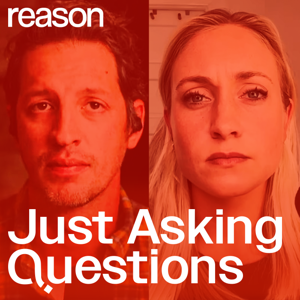


Who, exactly, is Chase Oliver? And what does he really stand for?
Oliver is the Libertarian Party's 2024 presidential nominee, selected after six rounds of voting at a contentious party convention in Washington, D.C., this weekend, which featured speeches from Robert F. Kennedy Jr., Vivek Ramaswamy, and former President Donald Trump, who suggested himself as the nominee to a chorus of boos. Oliver was not the preferred candidate of the Mises Caucus, who remains in control of the Libertarian Party, and several of their higher profile members, such as Dave Smith, have said they will not vote for him, with several accusing him of being too woke, too pro-immigration, and too soft on COVID restrictions. We'll ask him to address all of that today.
Oliver, a 38-year-old sales executive, rose to prominence in the party as the 2022 Libertarian Senate candidate in a highly competitive race in Georgia, where he pulled 2 percent of the vote and forced it into a runoff, which ultimately resulted in the Democratic candidate winning, tipping the balance of the Senate in their favor.
Watch the full conversation on Reason's YouTube channel or the Just Asking Questions podcast feed on Apple, Spotify, or your preferred podcatcher.
Sources referenced in this conversation:
Timestamps:
Photo Credit: Robin Rayne/ZUMAPRESS/Newscom
The post Chase Oliver: What Does the Libertarian Presidential Candidate Really Believe? appeared first on Reason Magazine.
How bad is climate change?
People are freaked out by climate change, especially young people. Scientists for Nature conducted a survey of 10,000 16- to 25-year-olds in 2021 and found that 59 percent of them were extremely worried or very worried about climate change, and large majorities reported that climate change made them feel sad, anxious, and/or afraid. On Earth Day this year, President Joe Biden shared a picture on X (formerly Twitter) of himself standing next to Rep. Alexandria Ocasio-Cortez (D–N.Y.) with the caption, "Young Americans know that the climate crisis is the existential threat of our time. They deserve leaders who believe them."
Today's guest says it's time to stop catastrophizing. Ted Nordhaus is the co-founder and executive director of the environmental nonprofit The Breakthrough Institute. He recently published an essay in The New Atlantis titled "Did Exxon Make it Rain Today?" which argues that while climate change is a real phenomenon affected by human activity, "we're actually safer than ever before." He says a deliberate campaign of fearmongering and exaggeration about the effects of climate change has misled the public and damaged the credibility and effectiveness of the environmentalist movement.
Sources referenced in this conversation:
Timestamps
The post Ted Nordhaus: How Bad Is Climate Change? appeared first on Reason Magazine.
How much do billionaires really pay in taxes?
"Today, the superrich control a greater share of America's wealth than during the Gilded Age of Carnegies and Rockefellers," said Gabriel Zucman in a recent New York Times opinion piece entitled, "It's Time to Tax the Billionaires."
Zucman is an economist at the Paris School of Economics and the University of California, Berkeley, and a frequent collaborator with superstar economist Thomas Piketty, author of the extremely influential book on wealth inequality, Capital in the Twenty-First Century.
But today's guest, Phil Magness—an economic historian, author, and the David J. Theroux Chair in Political Economy at the Independent Institute—says the work of Piketty and his circle of inequality-obsessed colleagues is deeply flawed and sometimes outright deceptive. He points out that billionaires do pay taxes…a lot of taxes. And the inequality literature is riddled with errors and bad statistics.
Watch the full conversation on Reason's YouTube channel or the Just Asking Questions podcast feed on Apple, Spotify, or your preferred podcatcher.
Sources referenced in this conversation:
Timestamps:
The post Phil Magness: Who Really Pays the Most Taxes? appeared first on Reason Magazine.
What should colleges do about pro-Palestinian encampments?
College students across America are camping out to demand their universities divest all investments with Israeli-linked companies that they claim profit from the occupation and oppression of Palestine. It's gone on for weeks, and even administrators at schools known as bastions of progressive activism are finally getting fed up. Harvard's president is threatening "involuntary leave" for protesters. Columbia announced on Monday that it canceled its main commencement ceremony for safety reasons. The University of Southern California has, too.
UCLA called in the cops to clear its encampment, and police have arrested more than 2,100 protesters across all U.S. campuses since April, according to the Associated Press.
Congress has continued to interrogate Ivy League presidents, and a bill to explicitly define antisemitism for civil rights law enforcement purposes just passed the House with overwhelming support last week.
Joining us today to talk about the protests, the backlash, and what it all means for free speech on campus and the wider world is Nico Perrino, executive vice president of the Foundation for Individual Rights and Expression (FIRE), and host of the free speech podcast So to Speak.
Watch the full conversation on Reason's YouTube channel or the Just Asking Questions podcast feed on Apple, Spotify, or your preferred podcatcher.
Sources referenced in this conversation:
Timestamps:
The post Nico Perrino: When Does Protesting Become a Crime? appeared first on Reason Magazine.
Should kids medically transition between genders?
The number of kids diagnosed with gender dysphoria has surged in recent years. In America, diagnoses have almost tripled from about 15,000 to more than 42,000 from 2017 to 2021. In the United Kingdom, the number of minors referred to the national Gender Identity Development Service grew from 51 in 2009 to 1,766 by 2016, leading to yearslong waitlists for care within the government-run health system.
This surge caused England's National Health Service to commission an extensive study of youth gender treatment. That study is known as the Cass Review, and its results dropped on April 10. The review's author, former head of the Royal College of Paediatrics and Child Health Hilary Cass, concluded that modern youth gender dysphoria interventions are informed by "remarkably weak evidence" drawing on studies "exaggerated by people on all sides of the debate to support their viewpoint" and that "we have no good evidence on the long-term outcomes of interventions to manage gender-related distress." The science, it turns out, is not settled—or anywhere close to it.
NHS England opted to stop routine prescriptions of puberty blockers following the review's publication, as have NHS Scotland and the Welsh government. Major American medical groups such as the American Psychiatric Association, American Medical Association, and American Academy of Pediatrics, all of which endorse prescribing puberty blockers for gender-dysphoric kids, have yet to officially respond.
American media coverage of the Cass Review, which could throw the entire youth gender treatment paradigm in this country into question, has been remarkably muted. But today's guest is never muted. Jesse Singal has been covering this topic—and taken a lot of heat for it—for years in the pages of publications such as The Atlantic, The Dispatch, and on his Substack, Singal-Minded.
Watch the full conversation on Reason's YouTube channel or the Just Asking Questions podcast feed on Apple, Spotify, or your preferred podcatcher.
Sources referenced in this conversation:
Sources referenced in Just Ask Us Questions:
Timestamps:
The post Jesse Singal: Should Kids Medically Transition? appeared first on Reason Magazine.
Why has President Franklin Delano Roosevelt's dark side been hidden?
Scholars consistently rank FDR as one of America's greatest presidents. The 2024 Presidential Greatness Project Expert Survey ranked him number two, below Lincoln, and respondents to the Siena College Research Institute studies have ranked him number one in six out of seven survey years.
Perhaps it's understandable that the longest-serving president who saw the country through the Great Depression and a World War II victory would rank so highly. But do presidential scholars exhibit a major blind spot when it comes to the authoritarian aspects of FDR and his New Deal agenda? That's what today's guest argues in his book, The New Deal's War on the Bill of Rights: The Untold Story of FDR's Concentration Camps, Censorship, and Mass Surveillance.
Those civil liberties abuses, and how they permanently changed America and the relationship between citizen and state, are the subject of this episode. The book's author, David Beito, is an American historian and history professor at the University of Alabama and a research fellow at the Independent Institute.
Watch the full conversation on Reason's YouTube channel or the Just Asking Questions podcast feed on Apple, Spotify, or your preferred podcatcher.
Sources referenced in this conversation:
Timestamps:
The post David Beito: Was FDR a Tyrant? appeared first on Reason Magazine.
Is war with Iran coming?
Last Saturday, Iran launched hundreds of armed drones and missiles to attack Israel in retaliation for an airstrike on an Iranian consulate in Syria that killed seven members of the Islamic Revolutionary Guard, including a general. Israel and the U.S. report that they intercepted most of the drones, and the sole known casualty was a 7-year-old girl critically injured by falling missile shrapnel. Israel has not retaliated…yet.
In the wake of all that, today's guest had something to say about the way some American activists loudly defended the Islamic Republic of Iran after staying conspicuously silent during protests against the regime and crackdowns that began almost two years ago.
That was Elica Le Bon, a first-generation Iranian immigrant born in the U.K. and currently living in Los Angeles, where she practices law and runs several large social media accounts that bring attention to the plight of the Iranian people. On the latest episode of Just Asking Questions, she talked to Reason's Zach Weissmueller and Liz Wolfe about the Iranian attack, the state of the protest movement and how social media has affected it, and her recent televised exchange with Dave Smith.
Watch the full conversation on Reason's YouTube channel or the Just Asking Questions podcast feed on Apple, Spotify, or your preferred podcatcher.
Sources referenced in this conversation:
The post Elica Le Bon: Is War with Iran Coming? appeared first on Reason Magazine.
At least 40 U.S. colleges still require a COVID vaccine, according to nocollegemandates.com, an initiative that tracks and opposes the mandates.
Martin Kulldorff, a professor of medicine and biostatistician who lost his job at Harvard for refusing the vaccine even though he'd already survived a COVID infection, says such mandates are "unscientific" and "unethical." Harvard has since dropped the mandate, but Kulldorff likely won't be getting his job there back anytime soon because the Harvard-affiliated hospital that employs medical school faculty still requires a COVID vaccine.
Kulldorff, who created one of the earliest disease outbreak surveillance software systems, was also booted from the Centers for Disease Control and Prevention's (CDC) COVID-19 vaccine safety commission and regularly de-boosted on Twitter and YouTube for his views. Former National Institutes of Health Director Francis Collins labeled him and his co-authors of the Great Barrington Declaration "fringe epidemiologists" and demanded a "quick and devastating…takedown" of their call to end lockdowns in favor of a "focused protection" strategy.
Kulldorff joined Reason's Zach Weissmueller and Liz Wolfe on the latest episode of Just Asking Questions to talk about his ordeal at Harvard, his retrospective on the pandemic and the cultural and governmental response to it, and his involvement in the ongoing Supreme Court case Murthy v. Missouri, in which plaintiffs argue that federal agencies violated the First Amendment by pressuring social media companies to take down certain content about COVID-19.
Watch the full conversation on Reason's YouTube channel or on the Just Asking Questions podcast feed on Apple, Spotify, or your preferred podcatcher.
Sources referenced in this conversation:
Timestamps:
0:00 - Forty colleges still require COVID vaccines
The post Why Did Harvard Fire Martin Kulldorff? appeared first on Reason Magazine.
"I discovered something remarkably similar to an alien co-intelligence," wrote Ethan Mollick in his new book Co-Intelligence: Living and Working with AI, describing the "sleepless nights" he experienced upon first encountering ChatGPT 3.5 in November 2022.
Mollick, a professor at the Wharton School of the University of Pennsylvania and author of the One Useful Thing Substack, has studied, taught, and written about the effects of artificial intelligence on work and education for years. He joined Reason's Zach Weissmueller and Liz Wolfe on the latest episode of Just Asking Questions to discuss the ways in which large language models like ChatGPT and Google Gemini are already transforming the workplace, the classroom, artistic production, and the truth-seeking process itself.
In this episode, they discuss why you should treat your chatbot like a person even though it's not, how AI is "decomposing" jobs, what tools like OpenAI's Sora mean for the future of filmmaking, how to protect one's identity in the age of deepfakes, The New York Times' copyright lawsuit against OpenAI, the prospects for AI "doomsday," and whether regulation of AI is necessary or even possible.
Watch the full conversation on Reason's YouTube channel or on the Just Asking Questions podcast feed on Apple, Spotify, or your preferred podcatcher.
Timecodes:
0:00- Creating a digital clone of yourself
Sources referenced in this conversation:
2. New York Times lawsuit against OpenAI
3. New York Times reporter Kevin Roose's conversation with Microsoft's AI
4. "Air Head," a short film by shy kids created with OpenAI's Sora
The post Ethan Mollick: How Will AI Change Us? appeared first on Reason Magazine.
Immigration ranks as the second-most important issue among registered U.S. voters and the top issue for Republican voters, according to a Marist Poll/PBS NewsHour/NPR poll released last month. Perhaps that's because of the 3.2 million border encounters documented by Border Patrol in 2023—a new record high that's so far being outpaced this year.
Texas Gov. Greg Abbott, who continues to erect razor wire fencing at the border despite a Supreme Court ruling prohibiting Texas from stopping federal agents from cutting through the barriers, has likely also heightened the salience of the issue for Republican voters. Even politicians in blue cities like New York are calling the influx a problem, with Mayor Eric Adams saying that the arrival of 110,000 asylum seekers over a year and a half would "destroy New York City" as shelters become overwhelmed.
What do libertarians, traditionally in favor of permissive immigration laws, have to say about this? The truth is, there's a divide. Today's episode of Just Asking Questions features two thinkers on either side of that divide laying out what they each believe is the ideal immigration policy.
Libertarian podcaster and comedian Dave Smith said on the Liberty Lockdown show last month that "all of our troops should come home and be stationed around our borders." He continued saying that "if you believe in open borders right now, under current circumstances, you're an insane person, and you're as bad as a communist."
That sparked a social media firestorm, which included exchanges between Smith and today's other guest, Chris Freiman, a professor at the John Chambers College of Business and Economics at West Virginia University and author of several notable papers about the ethics of immigration.
Watch the full conversation on Reason's YouTube channel or on the Just Asking Questions podcast feed on Apple, Spotify, or your preferred podcatcher.
Sources referenced in this conversation:
The post Dave Smith vs. Chris Freiman: What's the Ideal Immigration Policy? appeared first on Reason Magazine.
From the publisher's feed

971 Listeners

4,273 Listeners

2,279 Listeners

1,514 Listeners

2,889 Listeners

976 Listeners
795 Listeners

374 Listeners

737 Listeners

194 Listeners

612 Listeners

3,838 Listeners

8,432 Listeners
59 Listeners
132 Listeners

17 Listeners

1,065 Listeners
212 Listeners