
Sign up to save your podcasts
Or



Send us Fan Mail
Uncovering Secrets: A Tale of Homicide, Dogs, and the Unexpected
Episode Spotlight from Kohroner Chronicles with Dr. Roland Kohr
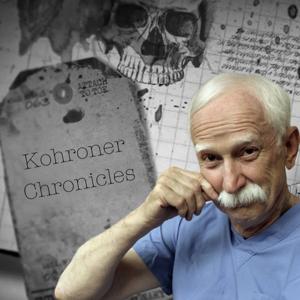
Welcome to Kohroner Chronicles, the podcast where Dr. Roland Kohr, forensic pathologist, delves into the intriguing and often perplexing world of forensic science. In today’s episode, Dr. Kohr recounts a case from his time in Terre Haute that took an unusual turn, blending the tragic, the bizarre, and the unexpectedly humorous.
The story begins on a Sunday afternoon in a residential area near railroad tracks. A dog, seemingly on a mission, had been digging and unearthed something grim: human remains. A passerby stumbled upon the scene and quickly alerted the police. Upon their arrival, authorities contacted Dr. Kohr to oversee the excavation.
The victim, a young woman who had been reported missing weeks earlier, was found buried near a fallen tree, just 50 feet from a well-traveled street. Despite the proximity to a public area, the grave was haphazardly concealed. As the body was uncovered, one detail stood out: part of her upper extremity was missing.
Identification was possible thanks to a unique, unfinished tattoo. A friend of the victim provided a photo of the tattoo’s progress, which matched perfectly. Investigators confirmed that the victim’s significant other, known for a tumultuous relationship with her and threats to her life, was responsible for her murder.
What followed, however, was a twist no one expected.
Send us Fan Mail
Behind the Curtain: Preparing for the Courtroom with Dr. Roland KohrWelcome to another episode of Kohroner Chronicles with Dr. Roland Kohr, a forensic pathologist. In today’s story, Dr. Kohr delves into the complexities of preparing a homicide case for trial—emphasizing how thorough preparation and an understanding of basic medical principles are crucial not only to solving a crime but to securing justice in the courtroom.
The Case of the Innocent Victim
The case in question involved the tragic death of a five-year-old boy at the hands of his mother, a harrowing scenario that shocked even seasoned professionals like Dr. Kohr. The mother, a known drug user with a criminal record, drowned her son while under the influence of methamphetamine, an act as grotesque as it was heartbreaking.
“When it’s a child,” Dr. Kohr reflects, “you take it personally. You’re dealing with someone completely innocent, and it brings a certain righteous indignation to the case.” The boy’s remains were recovered from a shallow pond, and the case was referred to Dr. Kohr for autopsy.
One of the challenges Dr. Kohr highlights is that diagnosing drowning isn’t as straightforward as people might think. “There’s no magic test for drowning,” he explains. “It’s a diagnosis of exclusion. Water in the lungs isn’t proof positive—someone could be shot and dumped in water, and their lungs might contain water. Conversely, I’ve seen drowning victims with relatively dry lungs due to the body’s absorption of the water through the alveolar membranes.”
Send us Fan Mail
The Tragedy on the Tracks: Unraveling the Case of an Unfortunate Accident
Dr. Roland Kohr, a seasoned forensic pathologist, brings decades of experience to his gripping podcast Kohroner Chronicles, where he shares the complexities of life, death, and everything in between. In this episode, Dr. Kohr revisits a case from Vigo County, Indiana, a haunting incident involving a tragic death on the railroad tracks near Terre Haute. Despite clear evidence pointing to an accident, the victim’s family remained steadfast in their belief that foul play was involved. This case demonstrates how the non-homicide cases can sometimes be more challenging than solving outright murders.
The Scene: A Journey Across the Wabash River
The victim was a man in his mid-30s from West Terre Haute, a community across the Wabash River known for its economic struggles compared to its eastern neighbor. On the night in question, he embarked on an evening of modest revelry, armed with $40 in his pocket. Witnesses later reported seeing him visit a local bar, consume a few drinks, and purchase marijuana before beginning his walk back home.
As a figure well-known to local law enforcement, the man likely wanted to avoid attracting attention. Instead of crossing back via the U.S. 40 bridge—near both City Hall and the Sheriff’s Department—he opted for a quieter, riskier route: a nearby railroad trestle. This decision would prove fatal.
Send us Fan Mail
Welcome to another gripping episode of Kohroner Chronicles with Dr. Roland Kohr, where the line between science and mystery often blurs. In this episode, we delve into a fascinating case that demonstrates how initial appearances can be deceiving and how the meticulous application of forensic science can reveal the unexpected.
Dr. Kohr opens by emphasizing a fact often overlooked in the sensationalized portrayals of forensic work: homicides account for only about five percent of a forensic pathologist’s practice. Yet, it is often with other cases that initially seem to be homicides can turn out to be something entirely different that challenges the skills and expertise of forensic professionals.
One such case unfolded, involving a homeless man whose death initially appeared to be the result of foul play. The story began on a pleasant spring morning when the man, who had been residing at a local homeless shelter, volunteered to sort bricks at a nearby building demolition site to earn some pocket money. After starting to feel unwell, he decided to return to the shelter, taking an alleyway route. He was later discovered unresponsive by a teenager on a dirt bike, whose suspicious actions—failing to assist and instead alerting others before riding away—added an air of mystery.
Send us Fan Mail
A Legacy of Justice: Dr. Roland Kohr's Unorthodox Career
Dr. Roland Kohr, a distinguished coroner with decades of experience spanning 13 counties in Indiana and Illinois, has seen more than his share of unusual cases. Though typically called to testify for the prosecution, his expertise has been sought in both civil and criminal cases, including cold cases requiring fresh perspectives. One such case involved Earl Taylor, a man whose actions would haunt two generations of Terre Haute residents.
The Death of Earl's Second Wife: A Midnight Drive Turned Deadly
In 1987, Earl Taylor claimed his wife couldn’t sleep one night. His solution? A late-night drive, supposedly to help her relax. After waking a babysitter and dropping off their two young children, the couple embarked on a drive that would end in tragedy.
According to Earl, a raccoon darted across the road, causing his wife to swerve their Pontiac Fiero into a pond. Earl allegedly escaped but was unable to free his wife. He ran to a nearby condominium complex for help, conveniently knocking on the door of their church minister. By the time first responders arrived, his wife had drowned.
The story unraveled quickly. Investigators found several troubling details:
Send us Fan Mail
Mystery Deepens in Small-Town Death: Drunken Fall or Homicide?
In a case that shook a small Illinois town to its core, a death initially ruled as an accidental fall may have been a calculated act of violence. The victim, a man locals affectionately knew as “Charlie,” was found lifeless in a concrete culvert just blocks from his favorite bar. What appeared to be a tragic misstep quickly escalated into a suspected homicide, thanks to forensic expertise and the meticulous work of Dr. Roland Kohr, a well-known forensic pathologist.
The Initial Discovery
Charlie, a habitual bar patron, was discovered early one morning, his body crumpled in a culvert behind the bar where he spent most evenings. To onlookers, the scene suggested a straightforward conclusion: Charlie, intoxicated as usual, had fallen and struck his head. Local authorities, familiar with Charlie’s history of heavy drinking, were quick to chalk it up to misfortune.
The county coroner, while not a physician, was seasoned in his role and decided to proceed with an autopsy out of caution. The task fell to the hospital pathologist, who identified brain hemorrhaging and bruising consistent with head trauma. However, something about the injuries raised enough questions for her to seek a second opinion.
Send us Fan Mail
Local Forensic Pathologist Shares Disturbing Case Files
Dr. Roland M. Kohr, a seasoned forensic pathologist and host of the podcast Kohroner Chronicles, recently shared a shocking account from his career that illustrates the often grim and revolting reality of crime scenes. Unlike the pristine, organized settings depicted in television dramas, real crime scenes frequently offer a far more chaotic and repulsive picture.
One case stood out in particular for Dr. Kohr due to its extreme nature. The call originated from concerned neighbors requesting a wellness check after noticing the immaculate lawn of their reclusive neighbor had gone untrimmed for nearly a week—a stark departure from his usual twice-weekly mowing routine. This observation led police to a shocking discovery.
A Disturbing Scene
Officers arrived at the modest home within city limits and knocked on the front door. When no one answered, they circled the property and peered through a window, spotting the homeowner lying face down on the sun porch floor. After forcing entry into the home, they were immediately confronted by an overwhelming stench and an infestation of cockroaches, prompting an unusual sight: officers standing outside with their pant legs tucked into their socks.
“When I arrived, it was clear this wasn’t your typical crime scene,” Dr. Kohr recounted. “The officers explained the precaution of tucking their pants, which made sense as soon as I stepped inside.”
The home was in complete disarray. The living room floor was buried under knee-high piles of magazines, books, food wrappers, and miscellaneous debris. A narrow path, just wide enough for one person, snaked through the mess. The air was stifling, filled with a rancid combination of rot and neglect.
Send us Fan Mail
Forensic Pathology Unveils the Truth Behind Two Gripping Homicide Cases
In two separate cases, forensic analysis played a pivotal role in unraveling deceptive stories crafted by suspects, ultimately leading to justice. Forensic evidence tore apart alibis in each case and painted a grim picture of what transpired. Here’s how Forensic Pathologist Dr. Roland Kohr used his expertise to bring the truth to light.
The “Impossible Reach” Case: A Shotgun Alibi Shattered
In the first case, a suspect claimed he was trying to wrestle a shotgun away from his partner in an attempt to prevent her from harming herself. According to his account, as he struggled to disarm her, the weapon inadvertently discharged, causing a fatal wound to her chest. But forensic evidence and an autopsy told a starkly different story.
The Science Behind Shotgun Spread
Forensic pathologists found telltale signs that discredited the suspect’s story. The shotgun was loaded with birdshot, which disperses in a cone-shaped pattern when discharged. This spread created a pattern referred to in forensic pathology as a defect with “satellite wounds,” which appeared on the victim’s chest several inches apart. This dispersion indicated the weapon was fired from a distance of several feet away, rather than pressed against the skin, as the suspect’s account implied.
“In forensics, we look closely at wound patterns. The further away a shotgun is fired from, the wider the spread of pellets,” Forensic Pathologist Dr. Roland Kohr explained.
From the publisher's feed
Unveiling Stories from the Shadows of Medicine and Mystery

17,254 Listeners

34,371 Listeners

4,183 Listeners
3,889 Listeners

2,900 Listeners

6,962 Listeners

1,249 Listeners

910 Listeners

1,001 Listeners

127 Listeners

8,217 Listeners

2,153 Listeners
1,326 Listeners

29,069 Listeners

1,880 Listeners