
Sign up to save your podcasts
Or

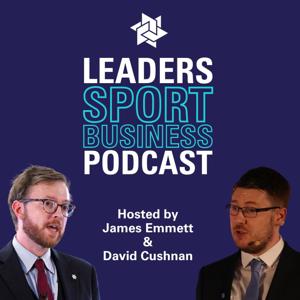


Netflix has acquired the exclusive broadcast rights in Spain to the 2030 men's Fifa World Cup, a move which underlines its live sports ambition and marks a first foray into football in Europe.
James Emmett and David Cushnan are back in the studio after a frantic Leaders Week London to examine the streaming giant's latest move, and reflect on Netflix's VP of Non-fiction Series & Sports Brando Riegg's appearance on stage at Stamford Bridge.
Elsewhere, Rwanda has signed a 10-year agreement with F1 to host a Grand Prix from the "early 2030s". It's a return to Africa for the sport, and a major move in the country's economic and tourism vision - but it's controversial, too.
And as the world continues to debate Manchester City's historic misdemeanors and the various geopolitical and diplomatic ramifications, is there an appropriate punishment that can also provide an entertaining - and possibly commercially helpful - new storyline for English football?
-----
Leaders Club is the fastest-growing membership for mid-career sports professionals – designed to help you step up, stand out and accelerate your career. To find out more about the membership visit: leadersclub.com
Simon Crownshaw is Microsoft’s international factotum: Worldwide Director for Media & Entertainment, CTO, and AI evangelist, he is also the key to the sports and entertainment marketing arsenal at Microsoft.
He joins James Emmett to discuss how artificial intelligence is transforming the sports industry, from content creation and production workflows to fan engagement and the future of media itself.
Simon's career has taken him from Disney, Pixar and Industrial Light & Magic to Microsoft, where he now helps shape the company's work with organisations including the Premier League, the NFL and Formula One. He’s one of only a handful of execs at the technology giant who has the company’s corporate blessing to speak publicly.
The conversation explores the rise of AI-native generations, the shift towards voice-first interaction, and Simon's belief that we're on the cusp of an entirely new medium that could redefine how fans consume, experience and participate in sport.
The curtain has fallen on Leaders Week London at Stamford Bridge, and James Emmett and David Cushnan are joined by an all-star lineup to reflect on the major themes of the Summit.
Next League Founder and CEO Dave Nugent, Trippant Founder and CEO Tom Scott and Abe Madkour, Publisher and Executive Editor of Sports Business Journal share their highlights.
They include the latest from on and off stage on NBA Europe, as EMEA Managing Director George Aivazoglu provided a status update; Europe's venue boom and the commercial implications of it; the continuing rise of premium experiences; and the various leadership styles on display.
You'll also hear snippets from the stage on Thursday, including NBC Olympics and Paralympics President Molly Solomon; Richard Atkinson, Acting CEO at Wimbledon; NASCAR EVP and Chief Brand Officer Tim Clark; and Reddit Co-Founder and Chelsea FC Women Owner Alexis Ohanian.
As the dust settles on the first day of the Summit at Stamford Bridge, James Emmett and David Cushnan gather their thoughts - and those of guests Shivs Thevarr, VP of Global Partnerships at the Milwaukee Bucks; Francois Westcombe, MD of Ticketmaster Sport EMEA; and Steve Gera, Former President, Grand Slam Track.
They reflect on some of the big themes to emerge across the stages and on the floor, including the leadership lessons coming out of LIV Golf CEO Scott O'Neil's morning session; Louise Young, F1's Chief Race Promotion Officer, on turning races into cultural and entertainment events; Kroenke Sports & Entertainment President Kevin Demoff on the shared performance cultures that can develop through multi-club ownership; and Francesca Bodie, President of Venezia FC, on the power of destination marketing, as she oversees a shiny new stadium for Venice.
Two of the PIF’s most senior sports insiders, Mohamed Alsayyad and Faisal Al Sabah, join the Leaders Worth Knowing podcast this week to unpack the latest iteration of the Saudi Public Investment Fund’s strategy for sports and entertainment.
Mohamed Alsayyad is Head of Marketing, Corporate Brand & Strategic Advisory at the PIF. He’s been with the organisation for over 10 years and has seen sport develop in importance across three different eras – and three distinct strategies. He now runs sports sponsorship activity.
Faisal Alsabah is his relatively recently installed colleague. He looks after MENA Sports Investments for the PIF, and spent time earlier in his career at McKinsey and the NFL in New York.
Mohamed and Faisal sat down to record this episode after a private media briefing in New York in September, where they were visiting the US Open in their capacity as major tennis stakeholders. The PIF is a sponsor of both the WTA and ATP and has an ATP 1000 tournament license it intends to use with a new event in the Kingdom next year.
The conversations explores the objectives of the PIF’s current sports strategy – clarifying the importance of the sector in the wake of this year’s release of a refreshed overall PIF strategy for 2026 to 2030.
This is the first episode in a new series of ‘Addressing critical needs’, a Leaders Worth Knowing show produced in partnership with the PIF.
The first series took a three-part view of the PIF’s sports sponsorship strategy and featured episodes with Alanoud Althonayan, Head of Events and Sponsorship at the PIF, Eno Polo, the CEO of the ATP, and WTA Ventures CEO Marina Storti.
Aki Mandhar, CEO of Chelsea Women, is the first guest in a new series, from Leaders and research agency GWI, exploring demographics, attitudes and priorities amongst fans of women’s sport.
GWI’s Director of Research Services Peter Kent joins David Cushnan, to frame up the conversations through GWI’s extensive data on the topic.
In this episode, Mandhar explains how Chelsea think about, segment and then serve its fans, on and off the field; how the club is creating distinct event experiences for different kick-off times; why and how it has launched an extensive package of maternity and fertility support for players; and how clubs like Chelsea can maximise the momentum next year’s Women’s World Cup will generate.
She also tackles the sceptics of women’s football and its business model, and shares the skillsets you might need to work with her, at this point in the commercial development of women’s football.
----
Leaders Week London takes place next week at Stamford Bridge, home of Chelsea FC and Chelsea Women. It’s where global sport does business. The Summit is next Tuesday and Wednesday (7th and 8th October) - head to leadersinsport.com/leadersweek to secure your pass.
Sportswear brand On last week confirmed the worst secret in the industry, when it announced Kylian Mbappé as the marquee signing for its new football division.
In luring the France and Real Madrid superstar away from Nike, On has thrust itself into mainstream conversation for the first time in its relatively short history. James Emmett and David Cushnan are in the studio to chart the rise of On, and analyse its lofty ambitions to take on Nike, Adidas, Under Armour and the other brands operating in an increasingly competitive space.
Elsewhere, the Asian Games are underway in Aichi-Nagoya - featuring as many athletes as competed at Paris 2024 - and it's an example of a huge sports event that simply doesn't make a mark across much of the rest of the world - which other events and sports fall into that category?
Leaders Week London is a fortnight away and it's your last chance to secure at Stamford Bridge for the largest and most senior gathering in the sports business. Visit leadersweeklondon.com to secure your pass for Wednesday 7th and Thursday 8th October.
How is AI changing the way sports organisations create content, engage fans and unlock new commercial opportunities?
It's a question we get into in this episode of Scroll Stoppers, a mini series from Leaders and Ten Toes exploring how to make an impact with digital content.
From AI-generated athletes and digital twins to personalised fan experiences and million-strong virtual fan communities, this conversation explores how sport is grappling with its biggest technological shift in decades, and where the line between innovation and authenticity should be drawn.
Scott Gutterman, former SVP of Digital & Broadcast Technologies at the PGA Tour and now Chief Digital Officer at Next League, joins series co-hosts, Ben Weisfeld, Founder & CEO of Ten Toes and Leaders Senior Content Manager Henry Breckenridge, to unpack how leading rights holders are using AI to scale content, the balance between efficiency and creativity, the opportunities and risks around athlete likeness and digital twins, and where the next frontier of AI-powered fan experiences might take us.
Adam Silver met the press in New York on Tuesday, delivering a much-anticipated, but brief, status report on NBA Europe. James Emmett and David Cushnan, back in London, examine his comments, as the NBA's ambitious project - the talk of the industry on this side of the Atlantic at least - inches forward, and assess where it might leave Euroleague, which for the moment is moving forward with its own franchise expansion plan.
Elsewhere, they reflect on a series of recent conversations and experiences in the sports hospitality space, and consider how sports organisations should be seeking to balance ultra-premium, high-end offerings with a renewed focus on general admission ticket packaging.
And there's just time to remark on the other big topics of the week: Nairobi nabbing the World Athletics Championships in 2029 from London; Madrid's first F1 event at the Madring; and the innovations brought to life by World Athletics at the first Ultimate Championships in Budapest.
----
Leaders Week London is three weeks away. It’s where global sport does business, so you’ll be in great company. To secure your pass for Stamford Bridge, on Wednesday 7th and Thursday 8th October, visit leadersinsport.com/leadersweek
Richard Thompson wears several hats - Chair of M&C Saatchi Sport and Entertainment and the England & Wales Cricket Board among them - but it’s his role chairing hospitality giant Levy UK & Ireland, parent of Lyvera, that’s the focus of this conversation with David Cushnan.
Thompson casts his eye over the trends influencing the sector right now, and those he’s anticipating, as he reflects on what makes an impactful and memorable guest offering at various pricepoints.
He also considers hospitality as a business tool and assesses how that’s changing for agencies, executives and talent; Lyvera’s positioning as a disruptor in the space as it looks to forge deeper business partnerships with rights holders like the Jockey Club; and the importance of smaller touches, such as invitations and cars.
This episode follows our recent conversations with Lyvera CEO Charlie Buck and The iLUKA Collective CEO Felicity Shankhar - iLUKA joined Lyvera, the Levy-owned sports hospitality group in February.
-----
Leaders Week London is three weeks away. It’s where global sport does business, so you’ll be in great company. To secure your pass for Stamford Bridge on Wednesday 7th and Thursday 8th October, visit leadersinsport.com/leadersweek.
From the publisher's feed

198 Listeners
129 Listeners

121 Listeners

314 Listeners

18 Listeners

380 Listeners
489 Listeners
565 Listeners
6 Listeners

177 Listeners

34 Listeners
108 Listeners

192 Listeners
1 Listeners

99 Listeners