
Sign up to save your podcasts
Or



Collaboration is key to success. Creating a collaborative learning environment can help build a stronger team, foster innovation, and increase productivity.
Collaborative learning is an approach that emphasizes the importance of teamwork, communication, and shared learning experiences. It involves working with others to achieve a common goal, sharing knowledge and resources, and providing feedback to help each other grow and improve.
Collaborative learning can take many forms, including group discussions, team projects, and peer-to-peer mentoring.
It is a valuable method for building a stronger team because it encourages members to work together, learn from each other's strengths and weaknesses, and develop a shared sense of purpose.
To build a collaborative learning environment, it is essential to establish clear communication channels, set goals, and provide opportunities for continuous learning.
Before you start using an e-learning platform to train your team, you need to set clear learning objectives. Identify the skills and knowledge that you want your team to develop, and design a training program that aligns with these objectives.
Forums and chat rooms are powerful tools for building a collaborative team because they provide opportunities for team members to connect and share their knowledge and skills. They enable team members to ask questions, share ideas, and provide feedback in real-time.
Video coaching is a powerful tool for building a collaborative team because it provides opportunities for team members to learn from each other's strengths and weaknesses. It involves recording team members' interactions and providing feedback on their performance.
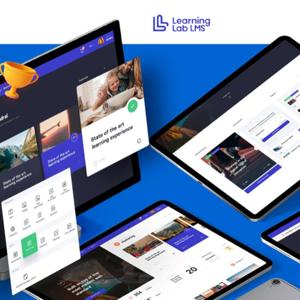
The Learning Lab LMS is a powerful tool for building a collaborative team because it provides a platform for team members to connect and share their knowledge and skills. It includes features such as online courses, assessments, and social learning tools. Learning Lab LMS is a valuable tool for building a collaborative team because it provides opportunities for team members to learn at their own pace, collaborate with others, and share their knowledge and skills.
Subject matter expertise is crucial to the development of an eLearning course.
Subject matter experts bring a wealth of knowledge and experience to the table, which can help to ensure that the course content is accurate, up-to-date, and relevant to learners.
One of the biggest advantages of partnering with subject matter experts is the ability to create courses that are tailored to the needs of the target audience.
Another benefit of working with subject matter experts is the ability to incorporate real-world examples and case studies into the course content.
It is important to develop the course outline and defining the learning objectives. This involves breaking down the course content into manageable modules or units, and identifying the key concepts and skills that learners should be able to master by the end of the course.
With the course outline and learning objectives in place, it's time to start creating the eLearning content with the subject matter expert. This involves developing the course materials, which may include : Videos, Audios, Scenarios, Forum and Chat
Interactive videos and illustrations.
When creating eLearning content, it's important to keep the needs and preferences of the target audience in mind. Use clear and concise language, and break up the content into manageable and interactive chunks.
It's also important to work closely with the subject matter expert to ensure that the course design is aligned with the learning objectives and overall goals of the course.
Once the eLearning course has been developed and designed, it's important to review and revise it with the subject matter expert. This involves testing the course to ensure that it is functioning properly, and incorporating any feedback or suggestions from the subject matter expert or other stakeholders.
Now the courses is live and it is time to measure its success and gather feedback from subject matter experts and learners. This involves analyzing the course completion rates, learner satisfaction, and other metrics, and using this information to make improvements and adjustments to the course as needed.
Partnering with subject matter experts can be a valuable strategy for creating engaging and effective eLearning courses.
To create and design beautiful interactive and multimedia eLearning course The Learning Lab LMS is the right choice. Its powerful Authoring Tool unleash your creativity!
Accessibility and inclusivity are two key factors that must be considered when designing eLearning courses.
The goal is to ensure that the course content and delivery methods are accessible to all learners, regardless of their abilities, backgrounds, or learning styles.
Accessibility refers to the design of eLearning courses that can be accessed by all learners, regardless of their abilities.
On the other hand, inclusivity goes beyond just accessibility. It involves designing eLearning courses that cater to the unique needs and learning styles of all learners, regardless of their backgrounds or abilities.
Best Practices for Designing eLearning Courses for Diverse Learners
It's important to keep the course content short by adopting Nano Learning and rich with audios and videos.
Clear and concise language, contrasted graphics, and video coaching will all help to improve accessibility and inclusivity.
It's also important to use a variety of delivery methods, such as large text, audio, and video, to cater to different learning styles.
Offer also Forum, chat, video coaching and video assessment, for this you need a innovative powerful authoring tool and a fully customisable eLearning platform!
Audio-based learning and video-based learning will be an effective way to create inclusive eLearning courses.
Learners who prefer audio-based learning can benefit from podcasts, audio lectures, and audio books.
Video-based learning can also be effective, especially when combined with closed captions and transcripts.
The Learning Lab LMS is a learning management system that is designed to create inclusive eLearning courses.
The LMS includes features such as adaptive learning technologies, video audio and interactive assessments, and customizable course content.
Peer-to-peer learning refers to a collaborative approach where learners learn from each other, sharing their knowledge and experiences on an Learning Management System.
This model offers a more personalized and engaging learning experience, where students can actively participate and take ownership of their education.
In this digital age, with access to a wealth of information at our fingertips, peer-to-peer learning makes perfect sense. It allows learners to learn by experimentation, discussion, exchange, empiricism, dialogue... via webinars, videos, workshops, forums and chats.
This approach has shown to improve critical thinking skills, increase motivation, and overall enhance the learning experience.
Peer-to-peer learning improves critical thinking skills. Students must use their own knowledge and experiences to help their peers, which requires them to think critically about the subject matter.
This approach also increases motivation, as students are more engaged in the learning process. When students take ownership of their education, they are more invested in their own success.
One of the most popular forms of peer-to-peer learning is through online forums and chats.
The Learning Lab LMS allow students to connect with each other, share their ideas, and ask questions.
Forums and chats can be moderated by teachers or students, depending on the learning objectives.
Social learning is a term used to describe the process of learning from others. Peer-to-peer learning is a form of social learning, where students learn from each other by sharing their knowledge and experiences.
The benefit of social learning is that it allows students to learn from a variety of perspectives, rather than just the teacher. Additionally, social learning can take place at any time, making it a flexible approach to education.
The Learning Lab LMS is an online learning platform that supports peer-to-peer learning.
Our Learning Management System provides learners with a variety of tools and resources to facilitate peer-to-peer learning, such as online forums, group projects, and peer tutoring, video-based learning, audio learning and much more.
Peer-to-peer learning is quickly becoming the future of education. This collaborative approach allows learners to learn from each other, sharing their knowledge and experiences.
Peer-to-peer learning offers many benefits over traditional education, including a more personalized and engaging learning experience, improved critical thinking skills, and increased motivation.
The Learning Lab LMS is an online learning platform that supports peer-to-peer learning, providing learners and teachers with the necessary tools and resources to facilitate this collaborative approach to education.
From the publisher's feed