
Sign up to save your podcasts
Or



With the dizzying pace of technological development, particularly in the field of artificial intelligence (AI), it's interesting to speculate and wonder about developments in the short and long term.
But technology aside, we will always be teaching humans. So, bearing in mind that we are social individuals with a defined and known learning mechanism, here are a few thoughts on the eLearning of tomorrow, how it will evolve and how Learning Management Systems should evolve!
Let’s start with the obvious Artificial Intelligence (AI) and Machine Learning
AI can enhance the capabilities of an LMS by enabling adaptive learning, intelligent content recommendations, automated grading, and personalized learning pathways.
But I need to underline the importance of social learning and forums in online training. It is important to trigger discussion, work group, virtual class room and all social learning activities. So let’s not forget to we are human after all!
Microlearning, which involves delivering content in small, focused units, is gaining popularity. Future LMS platforms should focus on delivering concise and easily digestible modules that can be consumed on-demand, enabling learners to acquire knowledge in bite-sized chunks.
The future LMS is likely to emphasize social learning and collaboration, allowing learners to interact, collaborate, and share knowledge within the platform. Integration with social media platforms and the inclusion of social features, such as discussion forums, chat, and peer review capabilities, can foster collaborative learning experiences.
Advanced analytics capabilities will play a significant role in the future of LMS. Learning analytics will provide actionable insights into learner behavior, progress, and engagement patterns, enabling educators to identify areas of improvement and personalize the learning experience further.
Future LMS platforms are likely to support seamless integration with various educational tools and systems. This includes integration with video conferencing platforms, cloud storage services, content repositories, learning analytics tools, and learning experience platforms, enabling a more holistic and integrated learning ecosystem.
Implementing adaptive learning technologies can cater to diverse learners by dynamically adjusting the content and difficulty level based on each student's performance, progress, and learning style.
The LMS should foster collaboration and interaction among learners and instructors. Features like discussion forums, chat functionality, and group projects can facilitate peer-to-peer learning, knowledge sharing, and support.
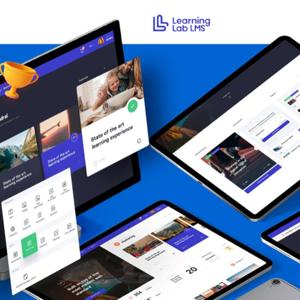
The Learning Lab LMS is a forward-looking and innovative platform that reimagines the future of learning. Through its adaptive and personalized approach, it empowers learners to unlock their full potential, while equipping educators with the tools they need to deliver impactful and transformative education. With The Learning Lab LMS, the future of learning is here and now.
Making eLearning more memorable is an important goal to enhance learning outcomes and engage learners effectively.
Use storytelling: Incorporate narratives and real-life scenarios into your eLearning content. Storytelling helps create an emotional connection with learners, making the content more relatable and memorable.
Include interactive elements: Engage learners through interactive elements like quizzes, drag-and-drop exercises, simulations, and branching scenarios. Interactivity promotes active learning, keeps learners engaged, and improves information retention.
Visualize information: Use visual aids such as images, infographics, videos, and diagrams to present information. Visuals enhance understanding, stimulate visual memory, and make complex concepts easier to grasp and recall.
Break content into digestible chunks: Organize the eLearning content into smaller, manageable modules or sections. Breaking down information helps learners process and retain the content more effectively. Use headings, subheadings, bullet points, and summaries to highlight key points.
Incorporate multimedia elements: Combine various media formats, such as audio, video, animations, video or audio assessment, video quizzes and interactive slides, to cater to different learning preferences. Multimedia elements provide multisensory experiences, which can enhance memory and engagement.
Provide spaced repetition: Space out learning activities and review sessions over time to reinforce information retention. Spaced repetition helps learners consolidate knowledge by revisiting and reinforcing previously learned material at strategic intervals.
Foster learner engagement and peer to peer Learning: Encourage active participation and engagement by incorporating discussion forums & char, virtual collaboration tools, and gamification elements like leaderboards, badges, or rewards. Engaged learners are more likely to remember and apply what they have learned.
Offer real-world applications: Connect the eLearning content to real-world scenarios, examples, or case studies. Demonstrating practical applications helps learners see the relevance of the material, making it more memorable and motivating them to apply their knowledge.
Provide opportunities for reflection: Include reflection activities or prompts that encourage learners to think critically and apply the learned concepts to their own experiences. Reflection promotes deeper understanding and improves long-term memory retention.
Assess and provide feedback: Regularly assess learners' understanding through quizzes, assessments, or assignments. Provide timely and constructive feedback to reinforce learning, correct misconceptions, and enhance retention.
Remember that each learner is unique, so it's important to consider their diverse needs, learning preferences, and prior knowledge when designing eLearning experiences. By employing these strategies, you can create memorable eLearning courses that foster engagement, retention, and application of knowledge.
Your e-learning course should reflect your brand and be visually appealing to your learners. This helps to create a sense of consistency and trust, which can help to increase engagement and retention.
Brand helps to create a professional look and feel that will make your learners take your course seriously.
One of the most common mistakes in e-learning is using long blocks of text. This can be overwhelming. Instead, it's important to use a variety of learning methods, including audio-based learning.
Avoid long courses, with Nanolearning and microlearning , Learners can access and complete the material on their own schedule.
Don’t forget to adopt Video-based learning. Videos is use to explain complex concepts, demonstrate procedures, and provide real-world examples.
Do not miss Social learning. It refers to the process of learning through social interaction, while forums provide an elearning platform for learners to discuss and share ideas.
One common mistake in assessment is not use methods, such as case studies, simulations, and project-based assessments, video assessment will provide a more comprehensive understanding of learner performance.
If you're looking for a Learning Management System to create and deliver premium e-learning content with the powerful Authoting Tool, the LEARNING LAB LMS is a great creative option.
This innovative e-learning platform provides a range of features, including course creation tools, multimedia support, video first solution, learning path, custom layout and forum and chat.
The LEARNING LAB LMS is The Ultimate solution for creative people!
Video-based Learning Platform
Video-based learning is the future of education, and more and more organizations are turning to video-based learning to engage their audience.
With engaging features like video coaching, video assessment and video quizzes the learners experience new and innovative training material.
Blended Learning
Blended eLearning is the combination of on site and computer-based learning that offers the best of both worlds. It provides an immersive learning experience that combines the benefits of traditional classroom teaching with the power of modern technology-based instruction.
Forum and Chat
The best way to foster a culture of learning and development in the workplace is to adopt social learning.
Discussions, exchanges, teamwork are key to develop continuous training in organisations.
By implementing forum and chat sessions, companies can create a space where employees can openly share their knowledge and help each other learn.
Interactive lessons
Learners can be encouraged to click, drag, move, play and answer, to gain a more in-depth knowledge and understanding.
These activities also give them an opportunity to experience the content and better remember it. Emotion is key to information retention!
Learner Generated content or peer teaching
Learner generated content is an excellent way to make lessons more job related and enjoyable.
By encouraging learners to share their knowledge and ideas, they can become active participants in the learning process, which can make the lessons more job related.
Adopt Design Thinking
Design Thinking is an innovative and powerful creative process. It combines five interconnected states: empathise, define, ideate, prototype and test!
These five stages invite diverse and complementary skills: the learner, the expert, the instructional designer, the creative person, the project manager. Each stage enriches the other.
Project-based learning
Project-based learning is most effective when it is anchored to reality and to practical cases from the company. The employee can identify with and apply the instructions more easily.
Employees are also pro-active and learn through experimentation. Project-based learning increases the understanding of job aids and promotes the retention of information.
Inquiry-based learning
Active learning is an approach to teaching and learning that focuses on student participation and encourages inquiry-based learning.
It starts with a list of questions, problems or scenarios to engage them in the learning process.
Active learning develops problem-solving and critical thinking skills, explore real-world issues, and learn how to apply their knowledge in different contexts.
Learning is an essential part of onboarding, continuous training and one of the most important keys to career development.
There are strategies available that can help maximize the learning experience and make the process easier, the information memorable and more engaging.
Performance measurement is an important factor in maximizing learning.
By setting performance goals and measuring progress towards those goals, learners can gain insight into their own learning process and determine what strategies are working.
By giving and receiving feedback, learners can gain insight into their own performance, identify areas of improvement, and monitor progress over time. However, feedback is only effective if it is done in an open and honest way.
This can be done by encouraging open dialogue between learners and instructors in an appropriate and respectful manner.
Setting achievable goals is another important factor in maximizing learning. Goals can help learners to stay focused and motivated, and they provide a sense of direction and purpose.
When setting goals, it is important to make sure that they are achievable and realistic.
Additionally, it is important to set short-term and long-term goals, and to break down complex tasks into smaller, more manageable ones.
Social learning is an effective way to maximize learning. By engaging in conversations and discussions with other colleagues, learners can have insights into different perspectives and gain a deeper understanding of the material.
Additionally, social learning provides an opportunity for collaboration that can help learners to develop problem-solving skills and think outside the box.
By using videos, learners can gain a better understanding of the material and can gain insight into how experts approach different concepts.
Additionally, videos can help learners to stay engaged and can provide visual cues and demonstrations that can help to reinforce the material.
Blended learning is another effective way to maximize learning. This approach combines traditional classroom learning with online learning, allowing learners to customize their own learning experiences.
The Learning Lab LMS is a creative e-learning platform that provides learners with the tools they need to maximize their learning experience.
With our elearning platform, learners can access a variety of learning tools and resources, such as video quizzes and interactive activities.
By applying these strategies, such as setting achievable goals, breaking down complex tasks into smaller ones, and finding the best learning environment, learners can unlock their full potential and maximize their learning experience.
Additionally, by utilizing tools such as performance measurement, feedback, social learning, forums and chats, video learning aids, blended learning, and the Learning Lab LMS, learners can gain deeper understanding and better retention of the material.
With these strategies, learners can become more engaged in the learning process and achieve their goals.
Blended Learning, Video-based learning, scenario-based learning... have become essential terminology and techniques in the retail industry.
An effective e-learning retail training program will not only increase your sales performance but also support your staff, strengthens your brand message and increase the product knowledge.
E-learning is a powerful solution that will help businesses of all sizes stay on top of the latest developments in the retail industry.
By providing employees with access to online training programs, businesses can ensure that their team is always up-to-date with product knowledge, best sales technics, brand values and customer experience.
Before you can design an effective e-learning retail training program, it's important to understand the expectations and needs of your retail team.
This involves identifying the specific skills and knowledge as well as the learning culture you wish to develop within your company.
One of the keys to designing an effective e-learning retail training program is to create engaging and interactive e-learning content.
This involves using a variety of different types of media such as videos to deliver your training materials, as well as incorporating interactive elements such as quizzes, assessments, and simulations.
Blended learning is a training approach that combines both traditional classroom-based training and e-learning.
By combining these two approaches, businesses can provide their employees with a more comprehensive and effective training program.
One effective way to utilize blended learning techniques is to use e-learning as a pre-work activity.
Video-based learning is a powerful technic that can help businesses create engaging and effective e-learning retail training programs.
By incorporating video-based learning into your program, you can provide your employees with a more immersive and engaging learning experience.
Scenario-based learning is a powerful method that can help employees understand how the concepts they are learning apply to real-world situations.
One effective way to implement scenario-based learning is to use case studies that present employees with real-life scenarios and ask them to apply their knowledge to solve the problems presented.
it's important to remember that an effective e-learning retail training program is not a one-time event. In order to ensure that the program continues to deliver real results, businesses must be willing to continuously improve and update the program over time.
The Learning Lab LMS is the ultimate solution for creative people.
Sales enablement is the process of providing sales teams with the resources, tools, and information they need to be more effective in their jobs.
Designing an effective sales training program requires careful planning and consideration of the specific needs of your sales team. Here are some general steps to follow.
Define your sales objectives: Start by defining your sales objectives and the skills and knowledge your sales team needs to achieve them.
Assess your sales team’s current skills: Conduct a skills assessment to identify areas where your sales team may need additional training. Adopt video assessment!
Set training goals: Based on the results of your skills assessment, set specific training goals for your sales team. These goals should be aligned with your sales objectives.
Develop a training program that includes a combination of methods, such as classroom training, online modules, video training and coaching sessions. Be sure to include opportunities for feedback.
Measure the results of your training program to determine its effectiveness. Use metrics such as sales performance, customer feedback, and employee satisfaction.
Continuously improve: Based on the results of your training program, identify areas for improvement and make adjustments.
By following these steps, you can design an effective sales training program that helps your sales team achieve their objectives and drive business growth.
The Learning Lab is a elearning platform that can provide numerous benefits for sale training like Video-based learning, video quiz, social learning, learning path, live session, online workshop and much more…
The Learning Lab LMS is the ultimate solution for Sale Enablement!
Maximizing knowledge retention is crucial in eLearning as it ensures that learners not only grasp new concepts but also retain them over time.
When designing eLearning courses, it's important to prioritize long-term knowledge retention.
Regular assessments and feedback also reinforce learning. Additionally, techniques such as gamification, spaced repetition, and social learning can enhance knowledge retention.
People learn in different ways, but generally, there are three main learning styles: visual, auditory, and discussion.
Visual learners learn best through images, diagrams, and videos. Auditory learners learn best through hearing information through lectures, podcasts, or discussions.
Personalized learning can be a powerful method for improving knowledge retention in eLearning.
This can be done by conducting audience research to understand their expectations, challenges, interests, learning styles, and preferences.
Interactive learning activities are a great way to promote better retention and engagement among learners. Here are some examples of interactive learning activities that can be used in various learning environments:
Quizzes and assessments, Group discussions, Role-playing, Gamification, Interactive multimedia.
By incorporating these interactive learning activities into their courses, educators can promote better retention and engagement among learners.
Incorporating social media and forums into eLearning courses is an effective way to promote better retention among learners.
By creating an online community where learners can engage with each other and the course material, you can encourage active participation and collaboration.
Prioritizing knowledge for retention in eLearning requires a multifaceted approach that engages learners emotionally, creates a sense of community, incorporates gamification elements, and encourages reflection and sharing. By doing so, learners are more likely to remember the material and apply it successfully in the future.
Nanolearning is a method of learning that involves breaking down information into small, easily digestible pieces. These pieces can take the form of text, images, videos, or audio, and are typically no longer than one or two minutes in length. The idea behind nanolearning is that by consuming small pieces of information consistently over time, you can build up your knowledge and skills in a more efficient and effective way.
One of the biggest benefits of nanolearning is that it allows you to learn more in less time. By breaking down information into small chunks, you can absorb it more easily and retain it for longer.
Nanolearning is often used interchangeably with microlearning, but there is a subtle difference between the two. While both involve breaking down information into small, easily digestible pieces, microlearning typically refers to slightly longer pieces of content, usually between 5 and 15 minutes in length. Nanolearning, on the other hand, refers to even shorter pieces of content, often no longer than two minutes.
Creating effective nanolearning content requires a different. Here are some tips for creating effective nanolearning content:
Keep it short: you need to distill your information down to its most essential elements and present it in a clear and concise way.
Make it interactive: To keep learners engaged, incorporate interactive elements with hotspot, interactive videos and activities.
Use multimedia: By using a variety of multimedia elements, you can help to keep learners engaged and appeal to different learning styles.
If you're interested in incorporating nanolearning into your learning strategy, here are some best practices to keep in mind:
Set clear learning objectives, Use a variety of content types, Make it accessible, Measure effectiveness and adopt Video NanoLearning!
If you're interested in incorporating nanolearning into your learning strategy, consider using The Learning Lab LMS.
With The Learning Lab LMS, you can create beautifully design engaging nanolearning content!
The Learning Lab LMS is the ultimate solution for creative people.
Online training videos offer a more engaging and interactive learning experience. Video-based learning is an effective way to deliver information because it combines both visual and auditory elements. This means that learners are more likely to retain the information presented in a video compared to reading a textbook or attending a lecture.
Additionally, online training videos can be paused, rewound, and revisited as many times as needed, allowing learners to learn at their own pace.
According to research, people are more likely to remember information presented in a video format compared to other forms of media. This is because videos engage multiple senses and create an emotional connection with the viewer.
To create effective online training videos, it's important to keep the following in mind:
Keep your videos short and to the point. Attention spans are short, so it's important to keep your videos concise and focused on the key points.
Use visuals and animations to enhance the learning experience. Visuals can help to reinforce key concepts and make the content more engaging.
Incorporate storytelling to create an emotional connection with the viewer. Stories can help to make the content more relatable and memorable.
To keep learners engaged and ensure they retain the information presented in your video, it's important to make your video interactive. Here are some ways you can do this:
Incorporate quizzes and assessments throughout the video. This can help to reinforce key concepts and ensure learners are retaining the information presented.
Use branching scenarios to create a more personalized learning experience. Branching scenarios allow learners to make choices and see the consequences of those choices.
While online training videos are effective on their own, they can be even more powerful when combined with virtual classroom and video coaching.
Virtual classrooms allow learners to participate in live training sessions from anywhere in the world.
Video coaching, on the other hand, allows learners to receive personalized feedback and guidance on their progress.
Choosing the Right Video First E-learning Platform.
When it comes to creating effective online training videos, choosing the right video-first e-learning platform is crucial.
The Learning Lab LMS is an all-in-one video first e-learning platform that allows trainers to create and deliver engaging and interactive video-based training courses.
Here are some features of Learning Lab:
• Interactive video quizzes
• Video assessments
• Branching scenarios
• Gamification tools
• Virtual classroom and video coaching
• Analytics and reporting
Online training videos are the future of eLearning. They offer a cost-effective and scalable way to deliver information and skills to learners in an engaging and accessible format.
if you're looking to take your eLearning to the next level, consider incorporating online training videos into your training program.
The ultimate eLearning Platform for Creative People
From the publisher's feed