
Sign up to save your podcasts
Or

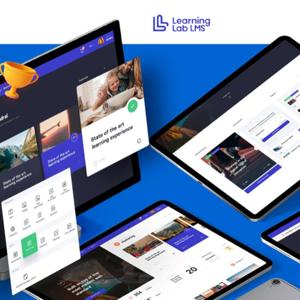


We are proud to introduce our cutting-edge eLearning Platform tailored for creative agencies and eLearning providers.
With our revolutionary tool, customisation, design and branding reach unprecedented levels, down to the finest details – all achieved without the need for coding expertise.
Our LMS is a haven for creative teams, empowering them to shape entire projects, from the initial solution layout to the finer intricacies of individual courses.
Harness the capabilities of coding without needing to write a single line!
Experience the future of eLearning creation with our ground-breaking LMS.
Our eLearning Platform empowers eLearning creative teams to effortlessly build, brand, and design immersive eLearning environments and courses, all without requiring a single line of code.
Unleash limitless creativity. Craft designs beyond templates.
Empower your creative endeavours with our LMS and its advanced authoring tool, capable of fashioning eLearning templates tailored precisely to your clients' brands.
Within this framework, your creative team holds the reins, able to refresh and customize the template gallery or even construct entirely original templates.
Because Brand Matters
In crafting The Learning Lab LMS, we have focused and work for who recognize the paramount importance of branding squarely in mind.
Our e-learning platform serves as a dynamic solution that seamlessly blends creativity with learning, ensuring that every interaction is not just informative but also reflects the essence of your brand.
Authoring Tool to Free your Creativity.
Our authoring tool stands as an unparalleled resource, enabling your creative team to do far more than just brand and design. With its comprehensive capabilities, you can seamlessly design captivating animations, record dynamic content, and engineer engaging interactions.
Brainstorm with Us
Embracing flexibility, we eagerly welcome feedback and ideas from all quarters.
Be it your clients' specific requests or innovative concepts from your creative team, our agile technical experts are primed to transform these ideas into reality.
We are committed to rapid and responsive action, fostering a collaborative partnership where growth is a shared journey.
With the Learning Lab LMS you will Immerse your learners and communities in a world where design, branding, and aesthetics converge to create an environment that mirrors the opulence of luxury retail itself.
As the luxury retail landscape evolves, so must our methods of learning, and thus our LMS stands as the ultimate testament to the need for innovation and creativity, ensuring every learner enjoys a premium and optimum educational journey like no other.
Benefits of Branding and Design.
In Luxury Retail industry, the significance of branding extends far beyond physical products, it resonates deeply within every facet of the business, including the realm of education.
A seamless alignment between the brand's essence and the eLearning platform is not merely an aesthetic pursuit; it's an imperative.
Every detail within the client's Learning Management System must serve as a faithful reflection of the company's brand identity.
This meticulous attention to branding is more than a visual exercise; it's a profound engagement strategy.
Zero code: Craft, Establish Brand, and Develop.
The Learning Lab LMS empowers you to effortlessly infuse your distinctive touch into every facet of your LMS and course design, all without the need for a single line of code.
From the layout that defines the structure to the fonts that convey your message, from images that resonate with your audience to colours that evoke emotions—every element of your eLearning experience is at your creative fingertips.
Say goodbye to technical complexities and embrace a world where your creativity takes center stage, resulting in a flawlessly branded eLearning venture that leaves a lasting impact.
Elevating Luxury Retail Through the Potency of Video-Based Learning
In Luxury Retail, the integration of captivating and instructive videos heralds a transformative era of learning. These stunning visual narratives hold the potential to immerse learners in the brand's universe like never before.
Behind every elegant timepiece lies a complex fusion of engineering prowess and aesthetic finesse. To navigate this realm of intricate mechanisms and design, a well-crafted training program is essential.
Adopt video-based Learning
Through animations, visual aids, descriptive narrations, 3D representations, and voice-overs, video stands as your accomplice in crafting learning experiences that are both indelible and approachable..
Add Activities and interactions.
By integrating activities such as virtual simulations, hands-on exercises, and interactive diagrams, learners can delve into the unique features and mechanisms of timepieces in a dynamic and engaging manner.
Mentoring and Collaboration
Successful watchmakers often credit their mentors for their growth.
Don't hesitate to interview your experts or film technical conversations with those who hold the knowledge and history of your brand.
Benefits of Social and Peer to Peer Learning
Through discussion forums, virtual workshops, and collaborative projects, participants can explore intricate watch mechanisms, analyze design intricacies, and collectively unravel industry trends.
Adopt Blended Learning
The amalgamation of online modules, interactive webinars, and offline workshops facilitates a comprehensive exploration of watch mechanisms and design intricacies.
Embrace Nano and Microlearning for the Watch Industry
By deconstructing intricate watchmaking concepts into bite-sized, focused modules, nano and microlearning strategies cater to the shorter attention spans inherent to the subject matter. These succinct educational morsels not only offer immediate value but also allow learners to swiftly and effectively grasp key horological insights.
Designing an engaging learning experience that inspires learners involves a combination of thoughtful planning, effective instructional design, and the incorporation of various engaging elements.
People don’t read online: Use Audios for eLearning
By utilizing audios, eLearning designers can engage learners through a dynamic auditory experience that not only conveys information effectively but also taps into the emotive and storytelling aspects of human communication.
Focus on the end information: layout matters
The layout plays a pivotal role in establishing a clear sense of hierarchy and priority within the content.
Adopt Nano and microlearning
Information overload is a common challenge in eLearning, where learners are bombarded with extensive content that can lead to cognitive overwhelm and reduced retention. However, the adoption of nano and microlearning strategies has revolutionized the learning landscape.
Adopt Interactive video Training to engage the learners
Embracing interactive video training brings a
remarkable surge in learner engagement, profoundly enhancing both memorization
and comprehension of the completed course material.
Video Quiz Learning
A video quiz is an interactive assessment that seamlessly integrates video content with quiz questions, creating an engaging learning experience.
Benefices of chat and forums
Chats, discussions, and forums stimulate critical thinking and enable the exchange of diverse perspectives, fostering a deeper understanding of the course material.
Offer documents to download or consult
Suggesting supplementary documents for download or consultation is an invaluable practice with far-reaching benefits.
Visualize information with infographies and premium illustration.
The incorporation of eLearning visual aids like infographics and premium illustrations is imperative.
Finally underline the learning objectives.
Highlighting learning objectives in a course is an essential navigational tool that sets a clear path for both learners and instructors. By explicitly outlining what learners are set to gain from the course, learning objectives provide a roadmap for their educational journey.
In an era defined by technological innovation, the future of healthcare education is being reshaped by the emergence of eLearning platforms. Our platform is at the forefront of this revolution, transforming the landscape of medical training in unprecedented ways.
One of the key features that sets our platform apart is its adaptability to the busy schedules of healthcare practitioners. Video and audio-based learning approaches deliver video quizzes, interactive videos and video assessment ensuring that medical professionals can efficiently access valuable information and deliver engaging content.
Collaboration and knowledge-sharing lie at the heart of our platform's success. Healthcare professionals can engage in peer-to-peer discussions, participate in virtual rounds, and share real-world cases.
Video-based Learning for healthcare education
One of the most impactful features of eLearning platforms in healthcare education is video-based learning but also audio-based Learning. Videos have the unique ability to convey complex medical concepts in a visually engaging and easily understandable manner.
Medical students can access lecture videos, surgical demonstrations, and case studies, allowing them to observe and learn from real-life scenarios.
This visual learning experience enhances comprehension and retention, as students can visualize the concepts being taught
The Learning Lab LMS Offers:
· Video assessment
· Video quiz
· Interactive video
· Screen recording
· Live session
Adopt Peer to Peer Learning for healthcare education
Peer-to-peer learning is a valuable approach in healthcare education, and eLearning platforms facilitate this collaborative learning environment. Through discussion forums, virtual classrooms, and social learning features, students can interact with their peers, share knowledge, and discuss medical cases and scenarios.
Peer-to-peer learning encourages active participation, critical thinking, and problem-solving skills. By engaging in discussions and learning from the experiences of their peers, students gain a deeper understanding of medical concepts and develop important interpersonal and communication skills.
Blended Learning for healthcare education
Blended learning, the combination of online and in-person instruction, is another effective approach in healthcare education that eLearning platforms facilitate. This hybrid model allows for a balance between the flexibility and convenience of online learning and the practical hands-on experience of in-person training. For example, medical students can access lecture materials online, allowing them to learn at their own pace and review concepts as needed.
Social Learning and Chat & Forum
Our eLearning platform incorporates social learning features, such as chat and forums, to promote collaboration and knowledge sharing among healthcare professionals.
These features allow students to interact with their peers and instructors, ask questions, share insights, and engage in discussions related to medical topics. The chat and forum functionalities create a sense of community and provide a platform for students to seek guidance and support from their peers and instructors.
The transformative impact of eLearning in healthcare education
In conclusion, eLearning platforms are revolutionizing the field of healthcare education, offering a wide range of benefits for both students and professionals. These platforms provide flexible and personalized learning experiences, allowing students to access knowledge and resources anytime and anywhere.
The use of multimedia elements, such as videos and interactive modules, enhances engagement and understanding of complex medical concepts.
Collaboration and peer-to-peer learning foster a sense of community and support among healthcare professionals. Blended learning combines the advantages of online and in-person instruction, creating a well-rounded learning experience. Social learning features promote knowledge sharing and collaboration.
Video assessments provide a comprehensive evaluation of student competency. By following best practices and fostering collaboration, eLearning platforms can be seamlessly integrated into medical training programs, ensuring that healthcare professionals are equipped with the knowledge and skills needed to provide the best possible care. The future of healthcare education is here, and it is time to unlock its full potential through eLearning.
Here is our comprehensive guide on designing a training program for healthcare and medical professionals. In the very dynamic field of healthcare, it is crucial to ensure that professionals are equipped with the latest knowledge and skills to deliver high-quality care.
Always star with a global Assessment
Begin by conducting a thorough needs assessment to identify gaps in skills, knowledge, and competencies among your healthcare staff. This can involve surveys, interviews, interview, group discussions and analysis of performance data to pinpoint specific areas that require improvement.
You need to understand the needs and expectations of your audiences.
Define Clear Objectives
Define clear and measurable learning objectives for each aspect of the training program. Objectives should be aligned with the organization's goals, patient care standards, and regulatory requirements. Adopt nano and micro learning to structure your training plans.
Adopt Video and audio-based learning for Healthcare and Medical Professionals
Video and audio-based learning methods leverage the power of visual and auditory stimuli to enhance the learning process, allowing medical practitioners to absorb complex concepts, procedures, and case studies more effectively. Through detailed video demonstrations, medical professionals can witness real-time surgeries, diagnostic techniques, and patient interactions, gaining valuable insights that transcend traditional textbook learning.
Invest in premium design and branding eLearning courses
By prioritizing top-notch design elements and cohesive branding, eLearning courses become more visually appealing and engaging, fostering a positive learning experience for participants. The incorporation of well-crafted graphics, intuitive user interfaces, and interactive multimedia not only enhances the aesthetics but also facilitates better comprehension and retention of the course material. A strong and consistent branding approach creates a sense of professionalism, credibility, and trust among learners, reflecting the course's value and quality. This investment not only attracts more enrollments but also establishes a lasting connection between learners and the educational institution or platform.
Adopt social and peer to peer learning for Healthcare and Medical Professionals.
By facilitating collaborative exchanges and discussions, this method enables practitioners to tap into a collective pool of knowledge, experience, and diverse perspectives. Professionals can share real-world insights, discuss challenging cases, and collectively problem-solve, fostering a dynamic learning environment. This approach not only enhances clinical skills but also promotes continuous learning, critical thinking, and empathy.
Adopt social and peer to peer learning for Healthcare and Medical Professionals.
This approach leverages collaboration and knowledge-sharing among peers, allowing professionals to exchange experiences, insights, and best practices. Through online platforms and interactive discussions, practitioners can delve into real-world cases, debate treatment strategies, and gain diverse perspectives. This method not only fosters a culture of continuous learning but also nurtures critical thinking and problem-solving skills.
Adopt Micro and Nano Learning for Healthcare and Medical Professionals.
The realm of medical education is evolving with the adoption of micro and nano learning, offering healthcare professionals bite-sized access to critical knowledge. Micro learning delivers focused information in concise formats, such as short videos or summaries, enabling quick updates between patient care. Nano learning takes brevity a step further, providing essential tips and insights in mere seconds through formats like text messages or flashcards.
Blended learning, which combines online and in-person instruction is efficient educational settings. Here are some best practices to consider when implementing blended learning:
Design engaging online content to be also used offline.
Create compelling and interactive online materials that integrate multimedia components like videos, interactive quizzes, and simulations. Employ diverse teaching techniques to cater to various learning styles and foster active participation.
Extend this online approach to offline sessions as well. Additionally, utilize a Learning Management System (LMS) in the classroom to provide support and guide students towards the e-learning platform for further engagement.
Foster active online discussions.
Promote active engagement and collaboration by facilitating both online and offline discussions. Encourage critical thinking and deeper involvement by presenting thought-provoking questions, enabling peer-to-peer interactions, and offering timely feedback. Implement social learning principles not only within the e-learning platform but also in the classroom setting.
Balance online and in-person activities.
Establish an optimal equilibrium between online and in-person activities, aligning them with the learning objectives and content at hand.
Continuously evaluate and adapt.
Regularly assess the effectiveness of the blended learning approach through feedback from students, instructors, and other stakeholders. Use data analytics and student performance metrics to identify areas for improvement and make necessary adjustments to optimize the learning experience.
Remember that successful implementation of blended learning requires careful planning, ongoing communication, and a willingness to adapt and refine the approach based on student feedback and outcomes.
To support you in this mission the Learning Lab LMS offers you the write features like: Learning Path, Blended Learning, Forums, audio and video-based Learning… and much more
Video-based learning is the perfect and most powerful medium for software training.
This method offers a host of benefits that make it highly effective in helping learners grasp complex software concepts and functionalities.
One key advantage of video-based learning is that it allows learners to visualize the software in action.
Visual Demonstrations
When it comes to learning how to use different features, tools, and functions of a software, nothing beats the effectiveness of watching a video tutorial.
Videos are especially valuable in the context of software training. They allow learners to see the software in action, giving them a practical understanding of how it should be used.
Multi-Sensory Learning
By incorporating both visual and auditory elements, video training engages multiple senses and creates a more immersive learning experience.
This approach has been shown to enhance learning retention and comprehension, as learners can see and hear the instructions simultaneously.
As a result, they are able to better understand and retain the information being presented. Overall, video-based learning is a valuable tool that effectively combines visual and auditory elements to enhance the learning experience.
Flexible Learning
Videos provide flexibility, allowing learners to access the training material at their convenience. They can pause, rewind, or re-watch specific sections, catering to individual learning preferences and needs. Learners can also access videos from various devices, such as computers, tablets, or smartphones.
Engaging and Interactive
Video-based learning can be made interactive by incorporating quizzes, knowledge checks, or annotations within the videos. This interactivity promotes engagement, reinforces learning, and allows learners to actively participate in the training process.
Video-based learning offers a dynamic and effective approach to software training courses, enabling learners to acquire practical skills and knowledge in an engaging and accessible manner.
Designing a software training course involves several steps to ensure its effectiveness and relevance to the learners.
Whether it's a new Platform or Software Application, employees and clients need to be fully trained to ensure optimal performance.
But designing a training course that engages, educates, and motivates learners can be a daunting task. That's where this ultimate guide comes in. We'll take you through the steps needed to create a killer software training course that maximizes engagement and retention.
Identify the Target Audience
Determine the audience for your training course. Consider their skill level, job roles, and any specific requirements they may have. This will help you tailor the course content to their needs.
Define Learning Objectives
Clearly articulate the desired outcomes of the training course. What skills or knowledge do you want participants to gain by the end of the course? Ensure that the objectives are specific, measurable, achievable, relevant, and time-bound (SMART).
Plan Course Structure and Modules
Break down the training course into logical modules or units. Each module should cover a specific topic or skill. Determine the order of modules based on logical progression, building upon previously covered concepts.
Adopt Video-based Learning
Video is a particularly suitable tool for teaching the use of software. A video combines voice and visual to demonstrate processes and workflows.
It is a practical way of immersing the learner in concrete, useful cases.
Video-based learning has revolutionized the way we acquire knowledge. It is one of the most engaging and effective ways of learning that stimulates learners' interest and captivates their attention.
The power of videos lies in their ability to convey information visually. Videos use a variety of visual aids such as animations, graphics, and diagrams to illustrate points.
Promote Social and Peer to Peer Learning
Social learning has emerged as a revolutionary concept that has given rise to peer-to-peer learning. Peer-to-peer facilitates learning by experimentation, discussion, exchange, empiricism, dialogue, and more through webinars, videos, workshops, forums, and chats. This method has proven to be highly beneficial for software Trainings as it improves the learnwers critical thinking skills, enhances motivation levels, and overall improves the software learning experience.
Peer-to-peer learning is a great way to improve critical thinking skills needed in IT.
Incorporate Real-World Examples
Use real-world examples and scenarios relevant to the software being taught. This will help learners understand how to apply the concepts in practical situations.
Consider Multimedia and Interactive Elements
Utilize multimedia elements like videos, animations, and interactive simulations to enhance the learning experience. Visual aids can make complex concepts easier to grasp and keep learners engaged.
Design Assessments
Create assessments, such as quizzes or practical assignments, to evaluate learners' understanding and progress. Assessments should align with the learning objectives and provide valuable feedback to participants.
Consider Different Delivery Methods: Blended Learning
Decide on the delivery method for the training course. It can be conducted in-person, online, or through a blended approach. Consider the logistical requirements and the preferences of the target audience.
Adopt Scenario and Storytelling
Utilizing scenario-based learning and storytelling effectively engages our imagination, emotions, and cognitive processes, resulting in enhanced retention of information.
In the context of software training, scenarios and stories possess the remarkable ability to captivate our attention and maintain it.
By presenting information within the framework of relatable real-life situations, scenarios and stories offer learners a context through which they can grasp and connect with the material more easily.
Remember to continuously assess and update the training course based on feedback and changing software requirements. This iterative approach will help ensure that your course remains relevant and valuable to learners over time.
Mobile learning, also known as m-learning, has become increasingly with the widespread use of smartphones and tablets. Learners now have the ability to access educational resources and engage in interactive learning activities anytime and anywhere. This convenience has revolutionized the way education is delivered and has opened up new opportunities for learners of all ages.
One of the key advantages of mobile learning is its flexibility. Learners are no longer confined to a traditional classroom setting or limited by a fixed schedule. With mobile devices, they have the freedom to learn at their own pace and in their own time. This flexibility is particularly beneficial for working professionals or individuals with busy schedules who may struggle to find time for traditional classroom-based learning.
Mobile Learning and Video-based Learning
By incorporating video-based learning into mobile learning, the educational experience becomes even more engaging and interactive.
Video-based learning involves the use of videos as a primary medium for delivering educational content. These videos can range from instructional videos, lectures, presentations, demonstrations, and simulations. The visual and auditory elements of videos make it easier for learners to understand and retain information. Videos also have the ability to convey complex concepts in a simplified manner, making it suitable for learners of all ages and backgrounds.
When combined with mobile learning, video-based learning becomes even more accessible and convenient. Mobile devices such as smartphones and tablets have become ubiquitous in today's society. By utilizing these devices, learners can easily access educational videos on the go. Whether it is during a commute, a break, or while waiting in line, learners can make productive use of their time by watching educational videos. This flexibility allows individuals to fit learning into their busy schedules and promotes continuous learning.
Multimedia Learning
Multimedia learning involves the use of various media elements such as videos, visuals, audio, and text to enhance the learning experience. Videos, in particular, are a powerful tool as they seamlessly integrate these multimedia elements. With the advancement of technology, mobile devices have become a popular platform for multimedia learning. This enables learners to have access to a wide range of educational videos that cater to different learning styles.
Audio-based Learning for Mobile Learning
Audio-based learning for mobile devices is a valuable tool that can effectively enhance education in today's fast-paced world. With the increasing prevalence of mobile devices, such as smartphones and tablets, audio-based learning provides a convenient and accessible platform for students to engage with educational content on the go.
By utilizing audio
content as the primary medium for delivering educational material, students can
listen to lectures, podcasts, and audiobooks at their own
convenience, allowing them to learn anytime and anywhere. This approach
empowers students to make the most of their time, whether it be during their
daily commute, while exercising, or even while completing household chores.
For auditory
learners, audio-based learning provides an alternative
approach that suits their individual preferences. By delivering educational
material in audio format, students can absorb information through listening,
which can enhance their understanding and retention of the content.
This approach
also allows for greater engagement and active learning, as students can
actively listen and participate in discussions or activities related to the
audio content.
From the publisher's feed