
Sign up to save your podcasts
Or

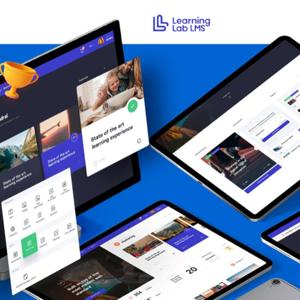


The future of eLearning is shaped by emerging trends and technologies that enhance the learning experience, increase accessibility, and provide personalized and interactive learning environments. Here are some key trends and technologies that are likely to shape the future of eLearning:
Artificial Intelligence (AI)
Today at the Learning Lab LMS we are very interested in the possibility of creating a series of questions from a video. Optimising and merging human and machine effort for optimum results!
AI is being increasingly integrated into eLearning systems to provide adaptive learning experiences.
Audi and Video-based Learning
The use of audio and video in eLearning has revolutionized the way we acquire knowledge and skills.
Audio and video-based learning offers a dynamic and interactive approach to education. By incorporating visuals and sound, learners are able to engage with the content on a deeper level. This form of learning stimulates multiple senses, making it easier for information to be retained and understood.
One of the main advantages of audio and video-based learning is its ability to cater to different learning styles. Some learners may be visual learners, while others may be auditory learners. By incorporating both audio and video elements into the learning process, instructors can effectively engage with all types of learners. Audio can be used to provide explanations, discussions, or even storytelling, while videos can be used for demonstrations, simulations, or presentations. By providing a variety of learning materials, learners are given the opportunity to engage with the content in a way that suits their individual preferences.
Peer to Peer Learning
Peer-to-peer learning, also known as social learning, is a powerful approach to education that promotes collaboration and knowledge-sharing among learners.
This method involves learners learning from each other by sharing their knowledge and experiences through various platforms such as forums and chats on Learning Management Systems (LMS) like the Learning Lab LMS.
By engaging in peer-to-peer learning, students not only gain a deeper understanding of the subject matter but also develop critical thinking skills. One of the key benefits of peer-to-peer learning is its ability to improve critical thinking skills among students. When learners are tasked with helping their peers, they are required to think critically about the subject matter in order to provide accurate and meaningful insights.
Fully customizable LMS
Having a fully customisable Learning Management System (LMS) is crucial for any organization or educational institution. Just like a website, the design and branding of an LMS matter significantly in creating an engaging and impactful learning experience.
With a fully customisable LMS, users have the freedom to design their platform and content in every detail, from the layout to the font, colours, and images. This level of customisation allows for an optimum learning experience that aligns with the organization's branding and visual identity.
One of the key benefits of a fully customisable LMS is the ability to create a seamless user experience. By designing the platform in a way that reflects the organization's brand, learners feel more connected and engaged with the content. Consistency in design elements such as logos, colors, and fonts helps to reinforce the organization's identity and makes the learning environment feel more familiar and trustworthy.
Microlearning
Microlearning involves delivering content in small, bite-sized modules that are easy to consume and digest. This trend is gaining popularity due to its effectiveness in providing just-in-time learning and catering to learners' short attention spans. Microlearning modules can be accessed on various devices, making them suitable for mobile learning.
Mobile Learning
Mobile devices are increasingly becoming the primary means of accessing eLearning content. Mobile learning, or mLearning, enables learners to access educational materials anytime, anywhere. It leverages the features of mobile devices, such as push notifications, location-based learning, and mobile apps, to deliver personalized and on-the-go learning experiences.
Personalization and Learning Path
Personalized learning experiences cater to the individual needs and preferences of learners. With the help of data analytics, AI, and adaptive learning algorithms, eLearning platforms can deliver customized content, assessments, and recommendations based on learners' abilities, learning styles, and goals.
These trends and technologies are continuously evolving and will shape the future of eLearning by providing engaging, personalized, and accessible learning experiences for learners across various domains and demographics.
Video or audio assessment, podcasts, webinars, discussion groups, video quizzes or interactive videos, language teaching has never been so engaging and memorable!
But creating effective language eLearning courses requires careful planning and consideration of various factors.
Let's take advantage of new technologies right from the start: video quizzes, interactive video, audio-based learning, video and audio assessment, interactive and animated slides, drop and grab, click and turn and much more. The aim is to make the learning experience enjoyable, memorable and effective for rapid and optimum progress!
To Teach Languages, video and audio-based learning has become increasingly prevalent in the digital age, revolutionizing the way we acquire knowledge and skills. By harnessing the power of visuals and sounds, this approach engages multiple senses, enhancing the learning experience and improving words and rules retention.
Videos offer a dynamic medium to teach a language. They can incorporate faces, animations and clear instructions making teaching more tangible, memorable, and accessible.
Audio-based learning, on the other hand, focuses on the power of sound. Podcasts, audiobooks, and lectures provide a flexible and portable means of acquiring knowledge.
Reading and understanding are two very different things from practising a language. It is vital to organise numerous live sessions to practise the language.
The Learning Lab LMS, for example, offers a range of functions such as virtual classroom, digital live event, forum and chats.
Encouraging peer-to-peer learning is a powerful strategy that promotes collaboration, active engagement, and deeper understanding among learners.
Offer supplementary resources like grammar, adapted stories, reference guides, vocabulary lists and audios.
Recommend authentic resources like books, movies, and online content for learners to explore beyond the course.
The SaaS industry needs a powerful, intuitive, and flexible training tool or LMS to support the training needs of staff and customers.
With the Learning Lab LMS’s Learning Path feature, software trainers and administrators can effortlessly design tailored and well-structured learning journeys for their learners.
Our platform enables also users to personalize the learning experience by customizing the learning journeys according to their specific needs and preferences.
The Saas industry thrives on visual appeal, making it imperative to have an LMS that embraces multimedia as a primary training tool. In particular, incorporating video and audio elements seamlessly into training, including video assessments, is crucial.
With our solution, you can record your video directly onto the platform and even record your screen to present your interface and functions! You can also use the screen recording as an exercise during a set-up or manipulation!
The Learning Lab LMS introduces a powerful and innovative authoring tool, The Slide Builder, which offers a wide range of features to streamline the content creation process for engaging and interactive retail training materials.
With Slide Builder, you can effortlessly manage every aspect of content development, including storyboarding, page layout, design, animation, translation, and much more
In Technical Training like in SaaS Industry, there exists a significant difference between understanding and practical application. The Learning Lab LMS recognizes this need and offers a suite of features, including virtual classrooms, digital live events, forums, and chats, to encourage peer-to-peer learning.
Encouraging peer-to-peer learning is a powerful strategy that goes beyond traditional teaching methods. It promotes collaboration, active engagement, and a deeper understanding among Learners.
The Learning Lab LMS includes discussion forums and chat features, enabling learners to engage in asynchronous communication. These platforms allow students to ask questions, share resources, and exchange ideas with their peers. Such interactions promote critical thinking, problem-solving, and the exploration of different perspectives, enhancing overall language proficiency.
Designing effective eLearning courses involves understanding how people learn and process information.
Cognitive principles can guide the creation of more effective eLearning content:
Cognitive Load Theory:
People's working memory is limited, so instructional design should avoid overloading it. To minimize cognitive load, information should be presented in a structured, organized manner. Complex tasks should be broken down into manageable parts : nano of Micro Learning.
Dual Coding Theory:
This principle suggests that people learn better when information is presented in both visual and verbal formats. This doesn't mean simply adding text to images, but rather using both modalities to reinforce and complement each other.
Multimedia Principle:
People learn more deeply from words and pictures or better videos than from words alone. Using multimedia (audio, visual, video and textual content) can enhance learning by catering to different learning styles and providing multiple representations of the information. It is difficult to learn online so any text should be transformed onto audio files.
Spacing Effect:
Information is better remembered if exposure to it is distributed over a long time span rather than being concentrated in a short time. In eLearning design, this could mean spreading learning modules over several days or weeks rather than condensing them into a single intensive session.
Feedback and Reinforcement:
Prompt and specific feedback is essential to learning. It helps learners correct their misconceptions, reinforce their knowledge, and motivate them to continue learning.
Personalization Principle:
Learners are more likely to engage with material if it is personalized and relevant to them. This could involve using their name, referring to their past experiences, or presenting content that is applicable to their own lives or goals.
Gamification has emerged as a powerful method to unlock success in eLearning. By incorporating game elements and mechanics into your courses, you can take your learners on an immersive journey that enhances their motivation, involvement, and knowledge retention.
Developing effective strategies for gamifying eLearning courses involves combining instructional design principles with game mechanics to enhance learner engagement and motivation.
Gamification is the integration of game elements and mechanics in non-game contexts to increase user engagement, motivation, and enjoyment. In the context of eLearning, it involves transforming traditional courses into interactive and immersive experiences that mimic the elements of games. By introducing elements such as points, levels, leaderboards, badges, and challenges, eLearning courses become more engaging, stimulating, and enjoyable for learners. Gamification taps into the intrinsic human desire for achievement, competition, and rewards, making it an effective approach to enhance learning outcomes. By infusing eLearning with game-like experiences, learners are more likely to stay motivated, actively participate, and retain knowledge in a fun and interactive way.
Steps to help you create gamified eLearning experiences.
Start by identifying the specific learning outcomes you want to achieve through your eLearning course.
Consider the characteristics, preferences, and motivations of your target audience.
Determine the game mechanics and elements you want to incorporate into your eLearning course.
Design challenging activities that require learners to apply their knowledge or skills.
Feedback is crucial in gamified eLearning. Offer real-time feedback to learners on their progress, performance, and decisions.
Leverage the power of social interactions to enhance engagement and motivation.
Implement adaptive elements that tailor the course content and challenges based on learners' performance or preferences.
Weave narratives or scenarios into your eLearning course to create immersive and engaging experiences.
Continuously assess the effectiveness of your gamified eLearning course. Collect learner feedback, track engagement metrics, and evaluate learning outcomes.
Remember that effective gamification should strike a balance between entertainment and learning, ensuring that the game mechanics support and enhance the learning experience rather than overshadowing it.
The world of education is one of manipulation, discussion and, of course, exchange. Audios, podcasts, webinars and videos are therefore perfectly suited to presenting and animating complex concepts.
A Learning Management System should always offers the following functionalities: Live video recording, Interactive video, Screen recording, Audio live and upload, Live virtual classroom, Video Quiz
Live video recording enables professors to record lectures or discussions, making them accessible to students who may have missed the live session.
Interactive videos allow students to actively engage with the content by answering questions or participating in activities embedded within the video.
Screen recording is particularly useful for demonstrating software or processes, providing students with a visual guide.
The ability to have audio live and upload options allows for the integration of audio content into courses.
By incorporating audio and video-based learning into university education, institutions can enhance the learning experience, promote active participation, and facilitate understanding of complex concepts.
The use of various multimedia tools not only caters to different learning styles but also creates an engaging and interactive environment for students.
Video-based eLearning platforms provide students with a more engaging and interactive learning experience. Videos allow for visual demonstrations, real-world examples, and dynamic content that can effectively convey complex concepts. This enhances student understanding and retention of information.
Video platforms often incorporate interactive elements such as discussion forums, live chats, and online communities. These features facilitate collaboration among students and between students and instructors. Students can engage in discussions, ask questions, and share their perspectives, fostering a sense of community and enhancing the learning process.
Video-first eLearning platforms are transforming universities by enhancing the learning experience, increasing accessibility, promoting collaboration, reducing costs, expanding global reach, and enabling data-driven insights. These platforms are reshaping traditional educational models and opening up new possibilities for teaching and learning.
The retail industry is managed by a complex science that merges sales, marketing and branding with the art of communication.
Also Designing engaging content for the retail industry requires a combination of creativity, strategy, and understanding of your target audience.
It all starts with a thorough understanding of your customers and targets!
Understand who your target customers are, their demographics, preferences, and needs. Tailor your content to resonate with their interests and desires.
It's vital to immerse the learner in a familiar environment and real-life issues!
People connect with stories. Craft narratives that captivate your audience and evoke emotions.
Visual content is essential in the retail industry. Invest in professional product photography, create eye-catching graphics, and use audios and videos to showcase your offerings. High-quality designs help grab attention and enhance the overall user experience.
We must always remain concrete and think job aids and remain rooted in the reality of the learner's mission. And diversify the formats of the answers: audios, videos, webinars, lessons, activities, etc.
Create content that provides value to your audience beyond just promoting your products. Share tips, tutorials, guides, and industry insights related to your offerings. This positions your brand as an expert and encourages customers to engage with your content.
Your learners must never remain passive. It's important to create a variety of activities: click, grab, turn, interactive video, questions within the lesson, video assessment, forums, one to one and group discussions and much more.
Audio and video-based learning is rapidly becoming the future of eLearning due to its unparalleled ability to engage learners and deliver information in a dynamic and immersive manner.
Audio and video content allows for a multi-sensory experience that captivates learners and facilitates better retention of knowledge.
Actively seek learners feedback, suggestions, and reviews. Engage with your audience by responding to comments and messages promptly. Show that you value their opinions and actively incorporate their feedback into your business decisions.
The science of sales is complex and evolves in a competitive sector.
It is now vital for major retailers to equip themselves with the best e-learning platform to deliver the retail training they need.
An LMS for Retail Training must meet a number of challenges.
The Learning Management System must be video and audio first, social learning and scenario-based. And, of course, it can be fully customised to reflect your company's strong brand.
A Learning Management System (LMS) is a valuable tool for providing training and development in the retail industry. It enables retailers to deliver consistent and efficient training programs to their employees, ensuring they have the necessary knowledge and skills to excel in their roles.
Here are the Learning Lab LMS functions for delivering comprehensive and engaging retail training to your employees.
A fully customisable LMS
Sales is about brand and image. Your employees need to be immersed in your brand's history, adopting its culture, vocabulary, spirit and essence.
The Learning Lab LMS lets you customise the look and feel of your LMS down to the smallest, most subtle details: the logo, of course, but also the colours, images, icons, layout, structure and much more!
Our designers and engineers have come up with a solution that adapts to your requirements without limitation, and they'll be happy to listen to you to meet all your challenges.
A Powerful and creative Authoring Tool
Our Slide Builder authoring tool has been created to manage everything from storyboarding, page layout, design, animation, translation and much more with a single click.
The Learning Lab LMS offers a powerful and creative authoring tool, which can be a valuable asset for creating engaging and interactive training content in the retail industry.
The authoring tool allows instructional designers and subject matter experts to create and design training content directly within the LMS.
It provides a user-friendly interface with drag-and-drop functionality, making it easy to create various types of content, such as presentations, videos, quizzes, and simulations.
The authoring tool enables the inclusion of interactive elements in training modules, such as interactive scenarios, branching scenarios, drag-and-drop activities, and gamified elements.
Our creative LMS supports multimedia integration, allowing trainers to incorporate or record directly on the platform audio, and video elements into their training modules.
Video and Audio First LMS
The retail industry is a highly visual industry. It requires an LMS that not only supports multimedia as a teaching tool but also offers exercises where video and audio are strongly integrated, such as video assessment.
The learner can record a video presentation directly on the platform and the instructor can give positive or constructive feedback on the timeline.
The Learning Lab LMS is a platform that prioritizes the use of video and audio content for delivering training and educational materials. We recognise the power of multimedia elements in engaging learners and enhancing the effectiveness of training programs.
Our Features:
Video or audio assessment
Video quiz
Interactive video
Live video
Live recording face or screen
Audio Content Integration
Live stream
Video-based Learning
Transcripts and closed captions
Video content management
LMS with Forum and Chat
During onboarding session or product knowledge training Peer to Peer Learning has proved its effectiveness. Your community needs to take ownership of the project and feel that they are being listened to and connected with their colleagues.
The forums and discussions are also rich in information for the coaches. They can find out what salespeople need and expect, and provide answers to their questions.
With a forum as a place to express yourself, your sales staff can learn from older staff who have more experience and practical stories from the field to share.
Peer to peer Learning also help to develop the ongoing training culture.
LMS with Learning Path
Our learning path feature will allow your trainers and administrators to create structured and personalized learning journeys for your learners.
A learning path is a sequence of courses, modules, or learning activities that learners follow to achieve specific learning objectives.
The Learning Lab LMS’ Learning Parth allow to:
Customized the learning journeys
Be goal-oriented
Create sequences and prerequisite learning
Design Competency-based Assessments
LMS with Blended Learning
With our solution you can easily manage your online courses in perfect coordination with your classroom courses.
Blended learning capabilities combines online learning with traditional face-to-face or instructor-led training methods, providing a comprehensive and flexible learning experience.
Select the location and dates, present the session programme!
Each screen is clear, intuitive and beautifully designed.
On-site or online you smoothly manage your training sessions.
The Learning Lab, your ultimate elearning platform
Many retail employees work
on the sales floor or in various locations. Therefore, it is essential to
choose an LMS that is mobile-friendly and accessible from smartphones or
tablets. This allows employees to access training materials at any time, from
any location, enhancing flexibility and convenience.
The Learning Lab LMS is a
versatile Learning Management System that allows learners to access course
content and participate in learning activities both on the web and on mobile
devices. The Learning Lab LMS is mobile-responsive, meaning that the user
interface and content are optimized for mobile devices, ensuring a seamless
experience for learners accessing the platform from their smartphones or
tablets.
The Learning Lab LMS is a
powerful and flexible platform that enables learners to engage with course
content both on the web and on mobile, making it a great choice for
organizations looking to deliver high-quality, accessible learning experiences
to their learners.
Your e-learning course should reflect your brand and be visually appealing to your learners. This helps to create a sense of consistency and trust, which can help to increase engagement and retention.
Brand helps to create a professional look and feel that will make your learners take your course seriously.
One of the most common mistakes in e-learning is using long blocks of text. This can be overwhelming. Instead, it's important to use a variety of learning methods, including audio-based learning.
Avoid long courses, with Nanolearning and microlearning , Learners can access and complete the material on their own schedule.
Don’t forget to adopt Video-based learning. Videos is use to explain complex concepts, demonstrate procedures, and provide real-world examples.
Do not miss Social learning. It refers to the process of learning through social interaction, while forums provide an elearning platform for learners to discuss and share ideas.
One common mistake in assessment is not use methods, such as case studies, simulations, and project-based assessments, video assessment will provide a more comprehensive understanding of learner performance.
If you're looking for a Learning Management System to create and deliver premium e-learning content with the powerful Authoting Tool, the LEARNING LAB LMS is a great creative option.
This innovative e-learning platform provides a range of features, including course creation tools, multimedia support, video first solution, learning path, custom layout and forum and chat.
The LEARNING LAB LMS is The Ultimate solution for creative people!
Video or audio assessment, podcasts, webinars, discussion groups, video quizzes or interactive videos, language teaching has never been so engaging and memorable!
But creating effective language eLearning courses requires careful planning and consideration of various factors.
Identify target audience
Let's start by getting to know the profiles of our learners, their expectations and their needs. Are they learning to make themselves understood during the holidays, to prepare for an exam or to be operational in a professional environment?
Understand the characteristics and needs of your target learners. Consider their language proficiency level, prior knowledge, cultural background, and preferred learning styles. Adapting your course to suit their specific needs will enhance engagement and effectiveness.
Define learning objectives
It makes no sense to start this adventure without knowing the destination. From the outset, each course or module should have its objectives clearly identified. It's even a good idea to highlight what you're going to learn during the course.
So we need to clearly outline the specific goals and outcomes you want to achieve with your language eLearning course. Determine whether the focus is on grammar, fluency, or a combination of both. This will guide your course design and content selection.
Select engaging instructional methods
Let's take advantage of new technologies right from the start: video quizzes, interactive video, audio-based learning, video and audio assessment, interactive and animated slides, drop and grab, click and turn and much more. The aim is to make the learning experience enjoyable, memorable and effective for rapid and optimum progress!
Choose instructional methods that align with the course objectives and target audience. Combine a variety of approaches, such as video lectures, interactive exercises, quizzes, reading assignments, and speaking practice. Incorporating multimedia elements can increase learner engagement and comprehension.
Create structured lessons
It's about creating a method that's yours and representative of your brand, but also to offer a logic that's understood by the learner. Learning requires emotion and repetition in a system where the learner feels confident and at ease.
Learning a language is a long journey that takes several years, and the journey must be comfortable and enjoyable. You need to design a premium adventure!
Focus on video and audio base-learning
To Teach Languages, video and audio-based learning has become increasingly prevalent in the digital age, revolutionizing the way we acquire knowledge and skills. By harnessing the power of visuals and sounds, this approach engages multiple senses, enhancing the learning experience and improving words and rules retention.
Videos offer a dynamic medium to teach a language. They can incorporate faces, animations and clear instructions making teaching more tangible, memorable, and accessible.
Audio-based learning, on the other hand, focuses on the power of sound. Podcasts, audiobooks, and lectures provide a flexible and portable means of acquiring knowledge.
Encourage Peer to Peer Learning
Reading and understanding are two very different things from practising a language. It is vital to organise numerous live sessions to practise the language.
The Learning Lab LMS, for example, offers a range of functions such as virtual classroom, digital live event, forum and chats.
Encouraging peer-to-peer learning is a powerful strategy that promotes collaboration, active engagement, and deeper understanding among learners. By fostering an environment where students learn from and with each other, the benefits extend beyond the acquisition of knowledge. Again Practicing the langue is key!
Provide additional resources
Offer supplementary resources like grammar, adapted stories, reference guides, vocabulary lists and audios.
Recommend authentic resources like books, movies, and online content for learners to explore beyond the course.
From the publisher's feed