
Sign up to save your podcasts
Or

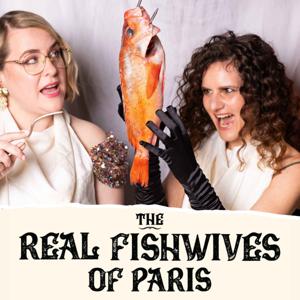

In this episode of Fishwives of Paris, Emily and Caroline unpack the real story of Marie-Antoine Carême, the ambitious pastry chef who rose to cook for diplomats, emperors, and tsars, and helped shape modern French cuisine.
Beyond the dramatized version, Carême was a master of image and storytelling, even spreading myths about his own life. While he was not a spy, he was deeply connected to power, using food as a tool to impress and influence Europe’s elite.
We explore how Carême’s work helped define French cuisine as we know it today, from early sauce classification to his belief that pastry was a form of architecture. He played a role in shaping iconic desserts like the croquembouche, eclairs, and the modern Charlotte, and helped elevate pastry into an art form built on structure, precision, and spectacle.
The episode also looks at his more modern ideas, including seasonality, balance, and a shift away from heavy spices toward fresh herbs, as well as his role in defining the image of the professional chef, including the creation of the chef’s hat.
In this episode:
Codifying French cuisine
Elevating pastry
Iconic pastries
Chef identity and kitchens
Modern food philosophy
Luxury and ingredients
Dining and presentation
Watch full episodes in 4k on Youtube
Follow us on Instagram, TikTok, Facebook, and join our Facebook group.
Hosted on Acast. See acast.com/privacy for more information.
 View all episodes
 By Caroline Fazeli & Emily Monaco
5
1313 ratings
In this episode of Fishwives of Paris, Emily and Caroline unpack the real story of Marie-Antoine Carême, the ambitious pastry chef who rose to cook for diplomats, emperors, and tsars, and helped shape modern French cuisine.
Beyond the dramatized version, Carême was a master of image and storytelling, even spreading myths about his own life. While he was not a spy, he was deeply connected to power, using food as a tool to impress and influence Europe’s elite.
We explore how Carême’s work helped define French cuisine as we know it today, from early sauce classification to his belief that pastry was a form of architecture. He played a role in shaping iconic desserts like the croquembouche, eclairs, and the modern Charlotte, and helped elevate pastry into an art form built on structure, precision, and spectacle.
The episode also looks at his more modern ideas, including seasonality, balance, and a shift away from heavy spices toward fresh herbs, as well as his role in defining the image of the professional chef, including the creation of the chef’s hat.
In this episode:
Codifying French cuisine
Elevating pastry
Iconic pastries
Chef identity and kitchens
Modern food philosophy
Luxury and ingredients
Dining and presentation
Watch full episodes in 4k on Youtube
Follow us on Instagram, TikTok, Facebook, and join our Facebook group.
Hosted on Acast. See acast.com/privacy for more information.

38,430 Listeners

2,537 Listeners

2,509 Listeners
1,107 Listeners

577 Listeners
346 Listeners

3,021 Listeners

1,469 Listeners
229 Listeners

734 Listeners
307 Listeners

303 Listeners

4,294 Listeners

66 Listeners

633 Listeners