
Sign up to save your podcasts
Or

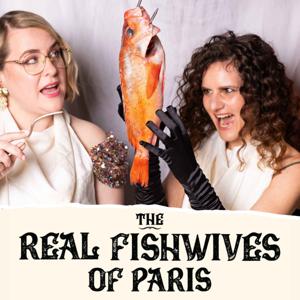


Catherine de Medici gets credit for nearly every French culinary innovation, from macarons to the fork.
This episode brings in Florence based food and wine expert Coral Sisk to test those legends one by one. Caroline and Emily trace the real origins of macarons, gelato, choux pastry, duck a l'orange, and table manners, and separate what Catherine de Medici likely brought from Italy from what French pastry chefs invented centuries later.
Podcast Show Notes
In this episode:
• Why a French food podcast is covering a Florentine noblewoman
• The myth that macarons came from Catherine de Medici's Italian court
• The chicken farmer legend behind the invention of Florentine gelato
• How gelato actually reached Paris a century later, via Sicilian immigrant Francesco Procopio dei Coltelli
• The invented pastry chef behind the cream puff legend
• Why the choux pastry technique still points to a real origin roughly 200 years later
• Duck a l'orange and its roots in Persian, Arab, and Florentine cooking
• The artichoke banquet story and the fat shaming Catherine faced as queen
• Why Catherine is remembered as either a villain or a visionary, depending on who is telling the story
• The fork myth, and how table manners, not objects, may be her real legacy
Key Takeaways
• Le macaron as a Parisian sandwich cookie was invented in Paris in the 19th century, not by Catherine de Medici.
• Gelato reached Paris around a century after Catherine arrived in France, brought by Sicilian immigrant Francesco Procopio dei Coltelli.
• The French recipe for pate a choux does not appear until roughly 200 years after Catherine's arrival.
• The pastry chef character often named Pappalini, Pantanelli, or Pastarelli was likely invented by 19th century Lyonnais pastry chef Pierre Lacan.
• Duck a l'orange with a gastrique sauce was first published in a French recipe book in 1930.
• Forks existed in France before Catherine, but a fork per diner was not yet standard practice.
• Food historian Barbara Wheaton found no 16th century record of the entourage of cooks Catherine reportedly brought with her.
• Catherine was widely criticized and fat shamed during her lifetime, long before the culinary legends took shape after her death.
ABOUT CORAL SISK
Coral Sisk is an Italian food expert, food writer, sommelier, and culinary tour guide based in Florence.
Coral’s Blog
https://thecuriousappetite.com/
Coral’s Tours
https://curiousappetitetravel.com/
Ernesto Drinks, Coral’s low ABV Negroni
https://www.instagram.com/ernesto.drinks/
• • • • • • • • • •
ABOUT THE HOSTS
Caroline Fazeli
Caroline is a French food and wine expert, WSET Diploma holder, former chef, and founder of Lyon Wine Tastings. She has spent nearly a decade helping visitors discover French food, wine, and culture.
Instagram:
https://www.instagram.com/winedinecaroline
• • • • • • • • • •
Emily Monaco
Emily is a culinary journalist, author, and longtime Paris resident whose work focuses on French food culture, history, and tradition.
Instagram:
https://www.instagram.com/emily_in_france
Substack:
https://emilyinfrance.substack.com/
• • • • • • • • • •
ABOUT FISHWIVES OF PARIS
Fishwives of Paris is a podcast about French food, wine, history, and gastronomy. Every episode uncovers the stories, myths, and surprising truths behind the foods and drinks that define France.
This Episode was filmed in Paris, Lyon, and Florence.
Visit Caroline at Lyon Wine Tastings:
https://www.lyonwinetastings.com
Follow Fishwives of Paris:
https://www.instagram.com/fishwivesofparis
Cancoillotte is gloopy, smelly, difficult to pronounce (CON-KWAH-YOWT), and suddenly all over French TikTok.
The centuries-old cheese from Franche-Comté has been reinvented as a low-fat, high-protein fitness food, becoming France’s unlikely answer to America’s cottage-cheese obsession. But its rise reveals something much bigger, the way French attitudes toward food may be changing.
Caroline and Emily trace cancoillotte from its origins as a way to use leftover skim milk through wartime industrialization, French spelling fame and its current TikTok explosion. Along the way, they ask what happens when a food culture traditionally built around pleasure, moderation and terroir begins talking about protein, fat and macros.
Podcast Show NotesCancoillotte has spent centuries as a deeply regional specialty of Franche-Comté. In 2026, it suddenly became a national fitness trend.
Its unusual nutritional profile helps explain the appeal: cancoillotte contains relatively little fat compared with many cheeses, although the episode questions the viral framing of it as an exceptionally high-protein food. Much of the difference comes down to something decidedly less glamorous: water.
The story also stretches much further back. Cancoillotte developed from metton, a skim-milk cheese that could be melted with water or milk, butter and flavorings. Industrial packaging later made it transportable, including for French soldiers during World War I.
Then came an especially French brush with fame: cancoillotte became notorious as one of the hardest words featured in France’s televised Dictée Nationale.
Its current explosion was not entirely accidental. Cancoillotte had already been promoted within sports communities for years before a major TikTok moment in April 2026 accelerated the trend. French media followed, and Carrefour reported April sales jumping 13–16%.
The result is a distinctly modern French contradiction: the nutritional language may look increasingly American, but the food being embraced remains hyper-local, protected and rooted in terroir.
Key TakeawaysMayonnaise is the world's most popular sauce, but nobody agrees on who invented it.
This episode traces the history of mayonnaise from a Spanish port battle to a Paris pharmacist's ointment. Caroline and Emily examine the competing French origin stories, the codification of the sauce by Antonin Careme's critics, and how mustard, eggs, and oil became the modern formula loved and hated worldwide.
Podcast Show Notes
In this episode:
• The legend of the Duke of Richelieu inventing mayonnaise at Port Mahon in 1756
• Competing 18th and 19th century spellings, bayonnaise, mahonnaise, and mayonnaise
• The Duke of Mayenne's 16th century version and its unfortunate ending
• Antonin Careme's attempt to codify the correct spelling and origin
• Culinary historian Pierre Leclercq's theory that Paris perfected the sauce
• Andre Viard's early recipes, including a mayonnaise made with veal brains
• Why French cuisine names dishes after their texture, and English rarely does
• How to make mayonnaise from scratch with egg yolk, mustard, and oil
• French idioms built around mayonnaise, including "faire monter la mayonnaise"
• Global mayonnaise culture, from Japanese Kewpie mayo to wartime chocolate cake
Key Takeaways
• Mayonnaise's true origin is disputed between French and Spanish claims.
• The Duke of Richelieu legend places the sauce's invention at Port Mahon in 1756.
• Andre Viard's cookbook contains the earliest known recipe resembling mayonnaise, thickened with egg.
• Antonin Careme argued the sauce should be called "magonnaise," from the French verb "manier."
• Culinary historian Pierre Leclercq traces mayonnaise's roots to medieval pharmacists' egg and oil ointments.
• Traditional American mayonnaise contains no mustard, while French mayonnaise almost always does.
• Japan's Kewpie mayonnaise originated in 1925 after a Ministry of Agriculture intern encountered mayo in the UK.
• Homemade mayonnaise is made by whisking egg yolk with mustard while slowly adding oil.
Record heat and historic drought are forcing France's most protected cheeses to break their own rules.
Caroline and Emily unpack how the AOP charters for Comté, Beaufort, and Abondance have been temporarily loosened after historic drought hit the Alps and Jura. They explain what changes when cows eat grain and hay instead of mountain grass, why terroir shapes the flavor, and what happened to producers like Salers, who could not adapt in time.
Podcast Show Notes
In this episode:
• France's record-breaking heat waves and wildfires in summer 2026
• The INAO's historic dryness declaration for the Alps and Jura
• Temporary charter changes for Abondance, Beaufort, and Comté cheese
• How terroir shapes the flavor of mountain cheese
• The three jobs behind every wheel of Comté, farmer, cheesemaker, and ager
• Why Abondance is so tightly tied to its valley and cattle breed
• Beaufort's three tiers and the disappearing Bleu de Termignon
• Why Salers producers switched to cheaper Cantal cheese this year
• The UNESCO-protected transhumance tradition and its uncertain future
• A parallel case in Châteauneuf-du-Pape and possible reform of French irrigation rules
Key Takeaways
• July 2026 was the hottest month on record in France, with more than 90,000 hectares of forest and vegetation burned since spring.
• The INAO declared historic dryness in the Alps and Jura on August 10, 2026.
• Abondance, Beaufort, and Comté are AOP cheeses whose charters normally require a set percentage of local grazing.
• Abondance's summer grazing requirement temporarily dropped from 50 percent to 15 percent of local grassland, and outside hay is now allowed.
• Beaufort's local feed requirement dropped from about 70 percent to 50 percent, with grain now permitted as a supplement.
• Comté's rules changed the least of the three, allowing green corn feed from outside the AOP zone through the end of October.
• Salers cheese producers in the Auvergne could not modify their charter in time and switched to making cheaper Cantal instead.
• Transhumance, the tradition of moving herds up to summer pastures, was named UNESCO Intangible Cultural Heritage in 2023.
French people rarely bake elaborate pastries at home, and Versaille-based pastry chef Molly Wilkinson says that is by design.
Caroline and Emily talk with Wilkinson, an American pastry chef trained at Le Cordon Bleu, about why French home bakers stick to simple recipes like mousse au chocolat and yogurt cake while buying croissants and tarts from professionals. They compare that mindset to the American love of ambitious home baking projects, from layer cakes to laminated dough.
Macarons may be one of France’s most recognizable culinary exports, but their history is much messier than the pastel boxes suggest.
In this episode, Caroline and Emily dig into the Italian origins of the macaron and the role Catherine de’ Medici supposedly played in bringing almond cookies to the French court. They explore the roughly 40 regional versions still found around France, including macarons that look nothing like the famous Parisian sandwich cookie.
Then it’s on to Paris and Ladurée, where the macaron evolved into the polished luxury pastry tourists recognize today. Caroline breaks down exactly why macarons are so technically difficult to make, from meringue and macaronage to achieving the elusive “foot.”
Finally, they taste their way through macarons from Pierre Hermé, Lautrec, and Picard. The biggest shock isn’t a rare flavor or an expensive Parisian creation: it’s just how good the frozen supermarket macarons are.
ishwives of Paris is back for Season 2—and this time, we’re going weekly.
Starting September 1, Caroline and Emily will be bringing you a new episode every week. Some will be our full studio productions, some will be more casual webcam episodes, and we’ll be welcoming more guests into the Fishwives universe.
We also want to hear from you. We’ll be sharing listener stories and questions on the show—and yes, we’re introducing corrections, because occasionally even Fishwives get things wrong.
Have a story we need to hear? A question about French food or wine? Think we got something wrong?
Email us at [email protected].
Fishwives of Paris Season 2 begins September 1, with new episodes every week.
Duralex is the little tempered glass found everywhere from French school cafeterias to Parisian bistros—and once you start looking at its history, it becomes a surprisingly revealing story about modern France.
After decades of globalization, disastrous ownership and repeated financial crises, Duralex’s own employees stepped in to save the company, transforming it into a worker cooperative and investing their own money. Now soaring energy costs have put the French icon in danger again.
Caroline and Emily unpack why France cares so deeply about an inexpensive water glass—and somehow end up discussing Stanley Cups, the American obsession with hydration, French distrust of ice, cafeteria lunches, James Bond and the secret childhood game hidden on the bottom of every Duralex glass.
Duralex was officially launched in 1945, but its origins stretch back to a Loire Valley vinegar maker who needed bottles. Its tempered glass eventually became synonymous with French cafés, schools and institutional dining.
In this episode:
Season 2 is almost here, and we're making some big changes.
In this bonus episode, we explain why we're moving to weekly episodes, introducing new formats, becoming more responsive to food news, inviting more guests, and building a closer relationship with our listeners.
We also look back at our first year, share some behind-the-scenes stories—including filming the entire season while Caroline was pregnant—and explain the mission behind everything we do at Fishwives of Paris.
In this episode:
Email us at [email protected]
Provençal rosé is one of the world's most recognizable wines, but its rise was anything but inevitable.
This episode explores how rosé evolved from a low-status byproduct into a global luxury phenomenon. Caroline and Emily trace the history of pink wine from Antiquity to modern Provence, uncover the innovations that created today's pale rosé style, and examine how branding, celebrity culture, and lifestyle marketing transformed an inexpensive regional wine into an international success story.
In this episode:
From the publisher's feed
Ranked by our users in the last 21 days

38,012 Listeners
2,526 Listeners

2,509 Listeners
1,111 Listeners

576 Listeners
347 Listeners

3,011 Listeners
1,510 Listeners
228 Listeners

743 Listeners
303 Listeners
286 Listeners

4,204 Listeners
70 Listeners
632 Listeners