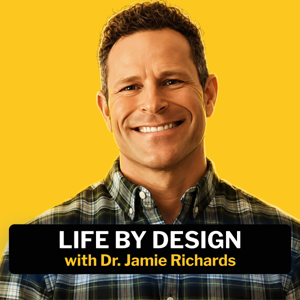
Life By Design with Dr. Jamie Richards

Life By Design with Dr. Jamie Richards

Download on the App Store

Life By Design with Dr. Jamie Richards episodes

  • #373 Fish Oil For Major Depressive Disorder?
    The subcommittee of the International Society for Nutritional Psychiatry Research organized an expert panel, conducted a literature review and a Delphi process to develop a consensus-based practice guideline for clinical use of polyunsaturated fatty acids in Major Depressive Disorder. This systematic review of the published literature emphasized randomized controlled trials, systematic reviews, and meta-analyses. As it currently stands, treatment for major depressive disorder is only mildly successful with many adverse and unpredictable effects. The goal of the panel was to create guidelines that would help create patient outcomes that are more tolerable and efficacious. What We Covered
    • Several lines of evidence have suggested the efficacy of n–3 PUFAs as a preventive and treatment strategy in major depressive disorder, from epidemiological and case-controlled studies to randomized-controlled trials and meta-analyses.
    • According to the currently available randomized controlled trials, the starting dose should be at least 1 g of net EPA in a pure EPA form or in an EPA/DHA combination (ratio higher than 2).
    • The panel also reached a unanimous consensus on the recommendation of EPA/DHA ratio of ≥2: 1 to be crucial to polyunsaturated fatty acids antidepressant effects.
    • The length of time to see these effects and the duration of the studies.
    • The risk of theoretical adverse effects of excessive bleeding did not exist, and current evidence suggests that under concurrent usage of anti-platelet or anticoagulant agents, doses up to 4 g of polyunsaturated fatty acids daily are not associated with an increased risk of major bleeding.
    • The authors encourage the consideration of polyunsaturated fatty acids for pregnant women and children with mood disorders since the current guidelines are not recommended for either with major depressive disorder.
    13 min
  • #372 Is There A Link Between Posture & High Blood Pressure?
    The Asian Spine Journal published something so seemingly unrelated that It needed discussion. The study used 655 participants (262 men and 393 women; mean age, 72.9 years; range, 50–92 years) and it's purpose was to investigate a possible relationship between sagittal posture and blood pressure. Full spine and pelvic x-rays were taken, and thoracic kyphosis, lumbar lordosis, pelvic tilt, sacral slope, pelvic incidence, and the sagittal vertical axis (SVA) were measured. The analysis was done using image-analysis software. The results showed that the Sagittal Vertical Axis significantly shifted forward (almost double the amount) in those people with high blood pressure. In English, this means that people with high blood pressure tend to be more forward with their posture, which is significant because the more forward your posture is shifted, the higher your chance of becoming disabled. What We Covered
    • Why you should care about this, the significance of this study and the potential relationship.
    • The important difference between posture and structure.
    • What could chronic high blood pressure be a sign of?
    • What the possible relationship is between poor posture and high blood pressure.
    • The link between insulin resistance, atherosclerosis, cardiovascular disease, musculoskeletal health and tissue microcirculation.
    • Understanding the importance and implications of Global Sagittal Alignment.
    • Tangible actions and steps you can do to ensure healthier cardiovascular and spinal health.
    • The relationship between all parts of your body.
    12 min
  • #371 Dealing With The Guilt Trip
    Logical fallacies stink! In a 2020 world full or irrationality, logical fallacies, untruths, and just downright lies are being used left, right, centre and being passed off as the truth and logic. The problem is that logical fallacies, because of how common they are, can be a challenge to recognize and interpret. This is especially true in the heat of battle, or during an uncomfortable conversation with someone when the stakes are high. Some logical fallacies are even techniques that can be favourably employed by crafty and manipulative people looking to generate a certain response or emotion from his victims. The purpose of this episode is to help you identify and defuse one particularly sneaky logical fallacy - the argument from intimidation - from your life. The argument from intimidation is literally everywhere, a prevalent recent example is the Chris Kresser, James Wilks debate on the Joe Rogan Podcast, where Wilks used it against an unsuspecting and unprepared Chris Kresser. What We Covered
    • The definition of the Argument From Intimidation and all of the ways its modern users push it on us.
    • How to recognize if someone is using this technique against you.
    • How to not be affected by this logical fallacy.
    • The psychological mechanisms this technique uses and to begin to bulletproof yourself.
    13 min
  • #370 3 Reasons Resolutions Break
    Happy New Year from all of us at Life By Design! May 2020 be the best year you and your loved ones have ever had. At Life By Design, we love New Year's resolutions. Truth be told, we love anything that makes you better, more successful and, happier...New Year's Resolutions hold that potential. There is one problem... We have a really tough time sticking to them. When we look at the data, we see that the vast majority of people not only can't keep their New Year's Resolutions, they can't keep them for more than a week after committing to them. Even more painful (and incorrect) are the reasons you tell yourself you can't keep them: "I lack will power," "I'm lazy," "I'm a procrastinator," or worse. It might be true, you could be those things, but in our experience in dealing with patients and coaching clients, most people are not. In our experience, most people are not broken, lazy, stupid, etc... They lack the understanding of how to properly set goals, execute a plan and, lack an understanding of how motivation works. The cultural image of sacrifice comes to mind. Typically when see (or read or listen to) someone striving for their goals or desires we see the portrayal of someone struggling against all the odds while doing what they hate to get what they want. This might make for great drama, but it is not what realistic goal achievement is all about. What We Covered
    • How goal setting works and how many goals you should be realistically setting.
    • The real personality trait that prevents you from succeeding, hint, it's not willpower.
    • Understanding motivation and where true inspiration comes from.
    15 min
  • #369 How To Make Your Kids Successful
    If you have children, you likely have goals and desires as a parent. You want your children to grow up to be honest, hard-working, independent, happy adults who know how to think and provide for themselves. At least, that's what we want for our kids. Before beginning on any journey, you have to know where you want to finish. Parenting, in our opinion, has to be one of the most challenging and rewarding adventures of life - but in order to help guide your decisions as a parent, you need to know where you want to take your children. There is the desire... now the question becomes, how do we reverse engineer that goal into everyday tangible and realistic steps so that we have something to do every day? Well, that's what we are going to be talking about on today's podcast as we review the Inc. article "Science Says the Most Successful Kids Have Parents Who Do These 9 Things." Here's What We Cover
    • Is it a good idea to tell children they can be anything they want or, should we be more realistic?
    • A simple step to implement as much as possible that's been linked to decreasing the potential for substance abuse.
    • What about technology? Should they have it or is it better to avoid it?
    • Is it better for mom to stay home or are kids with working moms better off?
    • Should kids do chores or should they focus on just being kids?
    • One thing that every parent should be doing as much as possible.
    • Why it could be important to encourage them to travel and see different things.
    • One of the most important and challenging things to do as a parent.
    19 min
  • #368 Making 2020 Your Best Year

    "The path to success is to take massive, determined actions." -Tony Robbins

    The two keywords in that sentence are determined and actions.

    Determined can have two meanings and, I like both of them in this context.

    The first meaning of determined is 'achieving the desired outcome' and the second, 'that you've given some consideration as to what outcome you are working towards'.

    Simply put, in order to succeed, you need a plan and you need to act with determination. I know it sounds easy and, intellectually it is, it gets much harder when trying to apply this to real life.

    The time to start thinking about next year is now, not January 1st!

    There is nothing easy about thinking long term about your life and few of us are truly blessed with a seemingly natural ability to look long term... the rest of us have to think long and hard about what it is we want for ourselves and our time on this planet.

    The purpose of today's podcast is to help set you up for having the best year of your life not by chance, but by conscious purpose.

    What I Covered

    • The five categories needed for this process to be successful for you. The five are interchangeable to some respect but, they are also hierarchical in natural meaning, you simply just can't pass go and collect your money unless you have it (at least) somewhat figured out. You will be stuck at that point.
    • Tips on how to improve on those categories if you're stuck on any one of them.
    • Discussion and examples of each branch in your life by design, connecting how they all apply in the greater context.
    19 min
  • #367 Mind Your Waistline This Holiday Season
    Well, it's almost here. To quote the lyric, "the most wonderful time of the year." I've always loved Christmas, and now, ever since having kids, I love Christmas and the whole holiday season even more. More fun than getting gifts yourself, is watching how excited your kids get when they open up their presents. Not to mention the parties, get-togethers, traditions and crazy holiday stuff that happens to add to all of the lasting memories and good times. On the flip side, and this is totally by personal choice, I dislike the holidays because it's the one time of the year when my eating and nutrition can completely spiral out of control. There are so many treats and things I love to eat (and I don't often say no) that it can be hard to get back on track. Now, trust me when I say, I've had plenty of experience letting my diet slide and trouble getting it back on track. The purpose of this podcast is to discuss the strategies I've found helpful in keeping things on track when the holiday season rolls around. What I Covered
    • The most important thing you can do period. It doesn't involve willpower or some super strength, just a regular pencil and paper you have lying around.
    • How adding a certain kind of food will benefit you. Crazy to think, but eating more of this will help keep you on track.
    • Focusing on these few things will ensure that you fall entirely off track.
    • Doing this one thing will help protect your mindset from yourself.
    15 min
  • #366 Allergies, C-Sections and Prenatal Diet

    New research presented at the American College of Allergy, Asthma and Immunology linked an increased risk of your child developing allergies if they were born via cesarean section.

    Studies also presented showing how mom eats while pregnant and what she feeds her child during infancy have an impact on the risk of the child developing allergies.

    The first study looked at the medical charts of 158,422 children and identified children with 0,1,2,3, or 4 allergic conditions identified as food allergies, eczema, asthma, and hay fever. Then the method of delivery was compared with the number of allergies recorded. The results showed that vaginal delivery was associated with a reduced rate of allergies as well as exclusive and supplemental breastfeeding.

    The second study looked at 1315 women and recorded their diet during pregnancy. The study found mothers with 'poor dietary diversity' along with a maternal history of allergic disease were more likely to develop eczema or food allergy. Thirty-three percent of the children of those same mothers were likely to become diagnosed with food allergies or eczema by age two.

    This Is What We Covered

    • A review of the studies along with their possible shortcomings and how these can affect expecting moms and young children.
    • A discussion as to why we are possibly seeing these trends, and what to do about them as a parent.
    • The importance of diet and the role of human development over time and how this affects our general health.
    12 min
  • #365 How Do You Know It's True?
    Meat is bad for you; the world is going to collapse in 11 years, LDL cholesterol is harmful; chiropractic can cure XYZ, etc. How do you know if any of the above statements are true, or if they are outright lies? The answer should be reason and the scientific method, unfortunately, in today's modern culture, the answer is the public consensus. You've heard the statement "a million Frenchmen can't be wrong" well, yes, they can be. Just because a million people are saying something or think a certain thing doesn't make it right or true. More importantly, how did our culture degrade to such a low level of thinking, judgment and deliberation? Life By Design is not a political podcast, and the purpose will not be to dissect the above arguments in detail - even though the ones related to health we discuss frequently. We are hoping, by applying the correct methods to reality, you will reach logical conclusions on your own. The purpose of this particular podcast is to give you the tools to think for yourself — something our modern educational system has done an excellent job of eliminating or dare we say destroying on purpose. The central issue is independent thought and how to apply your own mind to the world in order to find the truth. If you want to get fancy about it, it's the branch of philosophy called epistemology. What we covered:
    • Truth - is it even possible? How do we know what's true? How can we discover it? Can we even discover it? Is truth just a myth, or does it actually exist?
    • Why you should care about this and how this is vital for you living your best life.
    • How to help your children learn to think and reason independently from other's opinions.
    • The main issue with consensus thinking.
    15 min

About Life By Design with Dr. Jamie Richards

From the publisher's feed

Most people make health too complicated. What they actually need is a Boring Health Habits System™ — clarity, design, and consistency, not more willpower. Dr. Jamie Richards has spent 25 years…

More shows like Life By Design with Dr. Jamie Richards

That Paleo Show by The Wellness Couch

That Paleo Show

20 Listeners

Up For A Chat by The Wellness Couch

Up For A Chat

13 Listeners

Nourishing the Mother by Bridget Wood & Julie Tenner

Nourishing the Mother

23 Listeners

Wellness Women Radio by The Wellness Couch

Wellness Women Radio

25 Listeners

The Hormone Mastery Method with Steph Lowe by Steph Lowe

The Hormone Mastery Method with Steph Lowe

38 Listeners

100 Not Out by Marcus Pearce, Damian Kristof

100 Not Out

3 Listeners

The Healthy Shift Worker by The Wellness Couch

The Healthy Shift Worker

4 Listeners

Straight Talking Natural Health by Jules Galloway

Straight Talking Natural Health

7 Listeners

Self Love Podcast by The Wellness Couch

Self Love Podcast

11 Listeners