
Sign up to save your podcasts
Or

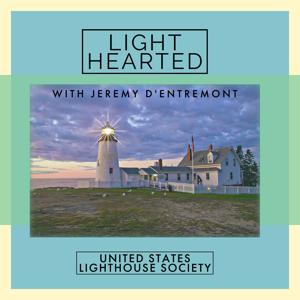


The growing limestone trade in Midcoast Maine led to the establishment of a light station at Owl’s Head, at the entrance to Rockland Harbor, in 1825. A tall lighthouse wasn’t necessary because of the height of the promontory. The light is exactly 100 feet above sea level. The present 30-foot brick lighthouse tower replaced the original one in 1852.
The station was automated in 1989 and the last Coast Guard keeper was removed. In December 2007, the lighthouse tower was licensed to the American Lighthouse Foundation (ALF). Then, in late 2012, it was announced that the keeper’s house had also been licensed to the American Lighthouse Foundation and that it would serve as the organization’s headquarters.
Bob Trapani, Jr., has served as the executive director of the American Lighthouse Foundation since 2005. As associate director of the American Lighthouse Foundation, Ann Trapani is involved in many aspects of the organization’s operation. Bob and Ann’s son Dominic, at the age of 23, has already established himself as one of the top photographers of the Maine coast.
In this interview, Ann, Dominic, and Bob discuss the special experience of working at Owls Head Lighthouse in all kinds of weather conditions, the photographic beauty of the Penobscot Bay region, and the day to day operation of the interpretive center and gift shop at the light station.
Photographer Mike Leonard lives in Yarmouth, Maine. His work is frequently seen in books, magazines, and on television, including the Weather Channel. His photos have also been seen on the National Geographic Wild program. He enjoys shooting landscapes and seascapes, including lighthouses, as well as nighttime scenes.
Mike offers workshops on digital photography, which you can read about on his website at phototourismbymike.com. He leads a Photoshop User Group in Portland, Maine. He’s also provided instruction aboard lighthouse photo cruises and other special cruises around New England.
This is Mike’s third time on Light Hearted. In this conversation with host Jeremy D’Entremont, Mike discusses five factors that make great photos, including some details about photographing lighthouses.
Photo Tourism by Mike on Facebook
Paradise Island in the Bahamas was formerly known as Hog Island. With an area of about 685 acres, it’s located just offshore from the city of Nassau. The island was bought by the A&P supermarket heir Huntington Hartford in 1959, and the name was changed from Hog Island to Paradise Island. The island was heavily developed and is best known today for the Atlantis Paradise Island Resort.
A lighthouse was built on Hog Island in 1817. The 68-foot-tall white brick tower with a red lantern stands at the island’s western tip. It was the first lighthouse constructed in the Bahamas. It was built prior to the formation of the Imperial Lighthouse Service, the agency that was responsible for the navigational aids in the colonies of the British Empire. The lighthouse been abandoned since the 1980s and has fallen into disrepair.
After eight years of waiting, Toby Smith of the Paradise Island Lighthouse and Beach Company was offered and accepted a lease of Crown Land in 2020. He aims to restore the lighthouse and to create a sustainable, low-impact beach club on the site, and to make the site accessible to all. Meanwhile, Royal Caribbean Cruise Line is claiming the same land, with plans for a large beach club. An organization called Save the Bays objects to Royal Caribbean Cruise Line’s large-scale plan because of the damage they believe it would cause to the fragile environment.
In this interview, Toby Smith discusses his plans and the current status of the legal fight over the land on Paradise Island. Jeff Gales co-hosts.
Tiny Cockspur Island is located at the mouth of the south channel of Georgia’s Savannah River. An unlighted day beacon tower built on the island in the 1830s, later converted into a lighthouse in the late 1840s, was destroyed by a hurricane in 1854. The 46-foot-tall lighthouse that still stands today was built in 1856 on the old foundation. The tower is made of Savannah Grey brick.
When Confederate forces at Fort Pulaski fell to the Union in the Civil War, Cockspur Lighthouse stood directly in the line of fire for 30 hours. Amazingly, the lighthouse suffered no damage. Except for the Civil War years, the lighthouse operated continuously until 1909 when it was discontinued because of decreased maritime traffic in the south channel.
The lighthouse today is part of the Fort Pulaski National Monument. Friends of Cockspur Lighthouse was established to work with the National Park Service for the preservation of the lighthouse. Major work was carried out this past summer, including the stabilization of the brick masonry and the replacement of doors and windows.
Joel Cadoff is the Chief of Interpretation and Visitor Services Public Information Officer at Fort Pulaski National Monument. His specialties are historical interpretation, the Civil War and Seacoast Defense History, and the National Park Service Historic Weapons Safety Program.
The Flying Santa is a tradition that dates back to 1929, serving to express gratitude to lighthouse keepers, Coast Guard personnel, and their families through Yuletide visits by plane or helicopter. The tradition was started by Captain William Wincapaw, a pioneering Maine aviator. To show his appreciation for the people at the lighthouses in Midcoast Maine, he loaded up his seaplane with packages containing newspapers, magazines, and other gifts, and he dropped them at the lighthouses on Christmas Day.
The flights got such a positive reaction that Wincapaw expanded them to more of the Maine coast and the other New England states.
The popular maritime historian Edward Rowe Snow became involved in 1936, and he kept the tradition going through 1980. From 1981 to 1997, the flights were carried out by the Hull Lifesaving Museum in Massachusetts. A new nonprofit organization, Friends of Flying Santa, was created in 1997.
Today, Santa travels by helicopter in the weeks leading up to Christmas to stops from northern Maine to Long Island, New York, bringing holiday cheer to more than 1000 children of Coast Guard families.
This episode of Light Hearted, hosted by Jeremy D’Entremont and Cindy Johnson, looks back at 92 years of the Flying Santa using audio clips of Edward Rowe Snow and his wife and daughter, Brian Tague of Friends of Flying Santa, lighthouse keepers and family members, and more.
Hilton Head Island, or simply Hilton Head, is a barrier island about 20 miles northeast of Savannah, Georgia, and 95 miles southwest of Charleston, South Carolina. The island features 12 miles of beaches and is a popular vacation destination. It’s also a golf mecca with 33 courses on the island.
The Harbour Town Lighthouse at the Sea Pines Resort on Hilton Head was funded by Charles Fraser. designed by architect Kenneth DeMay, and constructed by the Whalley Construction Company of Savannah. Completed in 1970, the 90-foot-tall octagonal tower has distinctive red and white bands and a white light that flashes every 25 seconds.
There’s a museum in the interior, with gift shops at the bottom and top of the tower. Because it’s seen by millions as the backdrop for the final hole of the Harbour Town Golf Links, the lighthouse has become a widely recognized landmark and a symbol for the Sea Pines Plantation and Hilton Head as a whole. The lighthouse is a tourist destination for Hilton Head, with about 250,000 visitors yearly.
There are three guests in this episode. Nadia Wagner is the general manager and modern-day keeper of the lighthouse. Greg MacDonnell is a teaching golf professional and also a local historian who has given tours at Harbour Town. And Mark King is the president of Club Group, the company that manages the Sea Pine Resort.
This episode is co-hosted by Judianne Point, a volunteer at Pomham Rocks Lighthouse in Rhode Island, and the latest developments at Pomham Rocks are discussed — including the return of an historic Fresnel lens.
St. Simons is part of a cluster of barrier islands located off the southeastern Georgia coast. The original lighthouse on St. Simons was a 75-foot-tall tower that was built in 1810. When Confederate troops retreated from the area in 1861, they blew up the lighthouse so it wouldn’t serve as an aid to navigation for Union warships. The 104-foot-tall brick tower that stands today was built between 1868 and 1872.
In 2004, ownership of the lighthouse was transferred to the Coastal Georgia Historical Society. Today, visitors can climb the lighthouse and visit the museum in the keeper’s house to learn the fascinating history of Coastal Georgia through rare artifacts, historical photographs, and interactive exhibits. Sandy White is the education director for the Coastal Georgia Historical Society and its museums.
Tybee island is a barrier island and coastal community east of Savannah, Georgia, a short distance south of the border with South Carolina. An unlighted day beacon was established on Tybee Island in 1736, and there’s been an active lighthouse since 1791. After the light’s automation in 1987, the Tybee Island Historical Society spent 12 years working toward a restoration of the lighthouse tower.
Sarah Jones is the executive director of the Tybee Island Historical Society. William Rawlings is the author of Lighthouses of the Georgia Coast, published earlier this year.
The Isles of Shoals are a cluster of nine islands located several miles off the seacoast of New Hampshire and southern Maine. A lighthouse on White Island — the southernmost of the island group — went into service in early 1821. It was a stone tower, later encased with wood and shingled. A new 58-foot brick lighthouse tower was built on White Island in 1859, and the new tower was fitted with a second-order Fresnel lens.
In 1993, White Island became the property of the State of New Hampshire. Over the years that followed, the lighthouse tower developed major cracks in its exterior, mostly on the northeast side that bears the brunt of storms. The good news is that Sue Reynolds, a seventh-grade science teacher at the North Hampton School on the New Hampshire seacoast, started a nonprofit organization called the Lighthouse Kids to save the lighthouse. The effort led to a 2005 restoration.
There are four guests in this episode. Sue Reynolds was a public school educator for 40 years and for more than 20 years was the captain of the tour boat Uncle Oscar. She was also the founder of the Lighthouse Kids. Nancy Frye Bergeron is a longtime resident of the New Hampshire Seacoast who serves on the board of directors of the Lighthouse Kids, and she’s also an author. Ed Latta was a Coast Guard light keeper on White Island in the early 1980s. And Kyla Cunningham, formerly Kyla Briggs, was a Lighthouse Kid circa 2002 and 2003.
Listen to the podcast with this player:
Martha’s Vineyard, Massachusetts, is the third-largest island on the East Coast of the United States, with a land area of about 96 square miles. Five lighthouses were established on the island, beginning with Gay Head Light in 1799.
The Martha’s Vineyard Museum was originally incorporated in the 1920s as the Dukes County Historical Society. In 1932, the Society purchased the Thomas Cooke House in Edgartown to serve as its permanent headquarters. As the collection grew, the museum expanded in the years that followed. A small tower was built on the museum grounds to display the 1854 Fresnel lens from Gay Head Lighthouse.
Realizing the need for more and better collection storage space, improved access, and additional space for exhibitions and public programming, the Museum purchased the former 1895 Marine Hospital in Vineyard Haven in 2011. The museum opened in its new location in 2019. The museum’s “Flashes of Brilliance” exhibit chronicles the history of lighthouses and navigation around the Island. Set in the middle of the exhibit and spanning two floors like a suspended jewel is the magnificent first-order Fresnel Lens from Gay Head Lighthouse. The guest in this episode, Bonnie Stacy, is the chief curator of the Martha’s Vineyard Museum.
Listen to the podcast with this player:
Stannard Rock Lighthouse in Michigan was nicknamed by its keepers “the loneliest place in the world.” Coast Guard keepers called it “Stranded Rock.” Located about 24 miles from the nearest shore on Lake Superior, it’s the most isolated light station in the United States. The construction of the lighthouse took 240,000 tons of rock and iron, and took five years to complete. With a rotating second-order Fresnel lens, the light began service on the Fourth of July in 1882.
The light was automated in 1962. In 2015, ownership was transferred to the Superior Watershed Partnership, an award-winning Great Lakes nonprofit organization. The lighthouse now serves as a climate research station.
Carl Lindquist is the founder and executive director of the Superior Watershed Partnership.
Frederick Stonehouse is the author of more than thirty books including the best-selling The Wreck of the Edmund Fitzgerald. He’s also been a consultant for both the U.S. National Park Service and Parks Canada.
Listen to the podcast with this player:
From the publisher's feed

23,733 Listeners
26,160 Listeners

1,565 Listeners

4,760 Listeners

111,865 Listeners
1,344 Listeners

896 Listeners

295 Listeners
3,418 Listeners
18,046 Listeners
18,952 Listeners
10,823 Listeners

1,171 Listeners