
Sign up to save your podcasts
Or

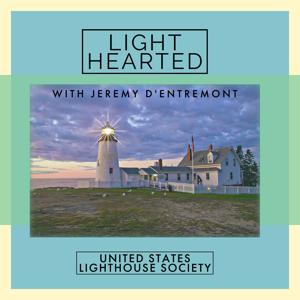


Port Clyde, one of the villages that comprise the town of St. George in Midcoast Maine, became a busy port in the 1800s with granite quarries, tide mills for sawing timber, shipbuilding facilities, and fish canning businesses. To help mariners entering the harbor or passing to the west into Muscongus Bay, Congress appropriated funds for a light station at Marshall Point in 1831 and a rubblestone lighthouse tower was completed in the following year.
The 31-foot brick and granite lighthouse that stands today was built in 1857. The original 1832 keeper’s house stood until 1895, when it was destroyed by a fire caused by lightning. The Colonial Revival keeper’s house built after the fire still stands. The light was automated in 1971, and the house was boarded up in 1980.
Several years later, the St. George Historical Society undertook the restoration of the house. A committee raised money and the restoration was completed in 1990. The first floor now houses the Marshall Point Lighthouse Museum, with exhibits on local history as well as life at the light station. Nat Lyon is the director and curator of the Marshall Point Lighthouse and Museum.
Ron Kolek is the founder and lead investigator of the New England Ghost Project. His exploits have been documented in many newspaper, television, radio, and magazine articles. Ron is the host of the popular Ghost Chronicles Radio series. He’s a well-known lecturer and he’s taught Paranormal CSI at Northern Essex Community College.
Ron has conducted paranormal investigations at several lighthouses, including Goat Island and Wood Island in Maine, Portsmouth Harbor in New Hampshire, Rose Island in Rhode Island, Borden Flats in Massachusetts, and New London Ledge in Connecticut. Light Hearted host Jeremy D’Entremont has taken part in most of these investigations, and all of them are discussed in this interview.
Ron has also co-authored three books on the paranormal with Maureen Wood and has contributed to many others. After doing paranormal investigations at lighthouses, Ron became involved in lighthouse preservation. He’s served as chair of Friends of Portsmouth Harbor Lighthouses in New Hampshire and he’s currently on the organization’s leadership committee. Ron lives in Dracut, Massachusetts, with his wife and Janet.
Listen with this player:
Debbie Mueller is an award-winning oil painter whose light-filled, bold, and contemporary paintings have rapidly gained prominence in the community of New England artists since she began to paint in 2016. Debbie’s work is available through the Mast Cove Gallery in Kennebunkport, Maine; Kennedy Gallery in Portsmouth, New Hampshire; and the Cortile Gallery in Provincetown, Massachusetts.
Debbie’s solo show “Beacon” at the Kennedy Gallery in Portsmouth, New Hampshire, will feature original oil paintings of more than 20 different New England lighthouses. Twenty percent of the proceeds from the show will be donated to the American Lighthouse Foundation, an organization that works to preserve 16 lighthouses in New England. The show will be at the gallery November 5 to November 30.
Also in this episode is part 3 of a three-part interview with Irish lighthouse keeper Gerald Butler. His career at lighthouses spanned from 1969 to 1990 and it included stays at some of Ireland’s most iconic lighthouses — Bull Rock and Fastnet Rock among them. Gerald was co-author, with Patricia Ahern, of the book The Lightkeeper: A Memoir, which was published in 2012. Today Gerald is the Attendant Keeper at Galley Head lighthouse, and he frequently lectures on Irish lighthouses.
In part three of the interview Gerald talks about the lighthouses where he worked in the last part of his career, about a commemoration of the Fastnet disaster that was discussed in part two of the interview, and about his post-lighthouse-keeping career.
Listen to the podcast with this player:
This is part two of a three-part interview with the Irish lighthouse keeper and author Gerald Butler. Gerald is the co-author of the classic book The Lightkeeper: A Memoir. A third generation lighthouse keeper on both sides, Gerald Butler went to work for the Commissioners of Irish Lights in 1969. He spent most of his career as an assistant keeper on the Bull Rock, Fastnet Rock, Old Head of Kinsale, and Mizen Head lighthouses.
A new short documentary film has been produced about Gerald Butler’s career as a lighthouse keeper. The film, called The Last Lightkeeper, was directed by Niamh Hayes. It was selected for the International Filmmaker Festival in New York last May.
In part two of the interview, much of the focus is on the iconic Fastnet Lighthouse, especially the story of what happened in 1979 when Gerald was a keeper there during one of the worst disasters in the history of yacht racing. Part three of the interview with Gerald Butler will be posted on Thursday, October 28.
Gerald Butler, a third-generation lighthouse keeper on both sides of his family, joined the Commissioners of Irish Lights in 1969. He spent most of his light-keeping career as an assistant keeper on Bull Rock, Fastnet Rock, the Old Head of Kinsale, and Mizen Head lighthouses. During his 21 years of service he also served on 17 other lighthouses.
Gerald was born in 1950 in southwestern Ireland. He was an identical twin and one of 15 siblings. When he was two years old, Gerald’s family moved to the Galley Head Lighthouse, where his mother’s father was the principal keeper and his father was an assistant keeper. Later, his mother was for a time the only female lighthouse keeper in Ireland.
Gerald was co-author, with Patricia Ahern, of the book The Lightkeeper: A Memoir, which was published in 2012. John Gore Grimes of the Commissioners of Irish Lights called the book “extraordinary… a fascinating history of a lightkeeper and his family… a wonderful record of a unique piece of social history.”
This is part one of a three-part interview. Part two will be posted on October 26, and part three will be posted on October 28. In part one we hear about Gerald’s childhood experiences at the lighthouses and about his training as a keeper, and also about the lighthouses where he began his career.
The Elizabeth Islands are a chain of small islands that extend about 16 miles to the southwest from the southern coast of Cape Cod, Massachusetts. There are seven major islands in the chain. Naushon Island is the largest at 7.4 square miles. Tarpaulin Cove, on the east side of the island, was a place where seamen traveling through Vineyard Sound often stopped for a meal or a night’s stay at a tavern run for many years by Zaccheus Lumbert. Lumbert erected an early navigational light on the island in 1759.
In 1817, the federal government established a light station at Tarpaulin Cove with a rubblestone tower showing a fixed white light 71 feet above mean high water. A new 38-foot-tall brick tower was built in 1891. After the light was automated in 1941, the keeper’s house and outbuildings fell into disrepair and were torn down in 1962. The lighthouse tower at Tarpaulin Cove is now maintained by the Cuttyhunk Historical Society. The Society was launched in 1978 and operates the Museum of the Elizabeth Islands on Cuttyhunk, the westernmost of the Elizabeth Islands.
Also discussed in this episode is the lost lighthouse of Cuttyhunk, which was established in 1823. Paul Elias is a longtime summer resident and a trustee of Naushon Island.
He’s also a former board member of the Cuttyhunk Historical Society and the “point person” for Tarpaulin Cove Lighthouse.
Cape Otway Lighthouse — in southern Victoria, Australia, about 50 miles southwest of Melbourne — is nicknamed the “Beacon of Hope.”
For thousands of immigrants in the 1800s, Cape Otway was the first sight of land after leaving Europe, Asia, and North America. It’s the oldest surviving lighthouse on the Australian mainland and it’s also considered the most significant.
Built in 1848, the lighthouse stands on a high cliff at the western entrance to Bass Strait between Australia and Tasmania. Frequent shipwrecks in the area with hundreds of lives lost led to the establishment of the lighthouse.
In 1891, the original system of 21 whale oil lamps and parabolic reflectors was replaced by a first-order Fresnel lens manufactured by Chance Brothers in England.
Today, overnight accommodations are available in the head keeper’s cottage. Alex Parry is the operations coordinator for Cape Otway Light Station.
Sarah MacHugh co-hosts this episode.
Funds were appropriated for a lighthouse at the entrance to Sandusky Bay on Lake Erie in 1819, and the limestone tower went into service in 1822. It was originally known as the Sandusky Light; the name Marblehead came into use later. The tower was raised 15 feet to its present height of 65 feet in 1898 and the light was automated in 1958. The Ohio Department of Natural Resources now owns the lighthouse tower, while the Coast Guard continues to maintain the active navigational light.
The lighthouse is now part of nine-acre Marblehead Lighthouse State Park. The Marblehead Lighthouse Historical Society operates a museum in the old keeper’s house, with exhibits on the history of the lighthouse and the local area. Visitors can climb to the top of the lighthouse for spectacular views of Lake Erie and its islands.
Above left: The reconstructed lifesaving station. Above right: The keeper’s house. Courtesy of the Marblehead Lighthouse Historical Society.
A replica of an 1876 lifesaving station was completed on the park grounds in 2016, and a renovation of the lighthouse tower was completed last year. The annual Lakeside-Marblehead Lighthouse Festival is coming up on October 9, and Marblehead Light Station is celebrating its 200th anniversary next year. Dennis Kennedy is the president of the Marblehead Lighthouse Historical Society.
Use this player to listen to the podcast:
Stingray Point Lighthouse in Virginia, built in 1858, marked a dangerous shoal at the mouth of the Rappahannock River. In 1861, six enslaved men used the lighthouse – which was abandoned during the Civil War — as a safe house while waiting to catch a Union ship that would allow them to escape slavery. Bessida Cauthorne White is an activist, genealogist, and retired attorney, as well as the co-founder and president of the Middle Peninsula African American Genealogical and Historical Society. This past July 17th there was a standing room only crowd at the Deltaville (VA) Community Center for the dedication by the Society of an historical marker commemorating the 1861 incident involving Stingray Point.
Donald S. Murray was born and raised in Ness in the Isle of Lewis in Scotland. He’s written 14 books and published countless essays, columns, short stories, and poems in a variety of publications. His writing, both of fiction and non-fiction, has received widespread critical acclaim and numerous literary awards.
In his new book, For the Safety of All, Donald explores Scotland’s lighthouses through history, storytelling, and the voices of the lightkeepers. After 30 years as an English teacher, Donald became a full-time writer in 2012. He now lives and works in Shetland.
Andy Robinson is a junior at Palo Alto High School in California, and he’s a co-chair for the Teen Advisory Council of the Palo Alto History Museum, where he helped create a historical time capsule of his city. Andy has also been a volunteer for the U.S. Lighthouse Society’s passport program, helping to update information on stamp locations and events. He’s written histories for a series of collectible passport stamps to commemorate lost lighthouses.
Andy is also a writer and editor for Verde, a student-run magazine for Palo Alto High School. He’s now in the process of starting a California chapter of the U.S. Lighthouse Society, which will be called the California Lighthouse Society.
A website has been established for the chapter: www.calighthousesociety.org
Joining host Jeremy D’Entremont for this interview is U.S. Lighthouse Society Executive Director Jeff Gales.
J. Dennis Robinson is a popular columnist, lecturer, and public historian living in Portsmouth on the New Hampshire Seacoast. He’s the author of a dozen books on topics ranging from Jesse James, child labor exploitation, the Strawbery Banke Museum in Portsmouth, archaeology at the Isles of Shoals off the New Hampshire coast, and the infamous 1873 Smuttynose Island ax murders.
He’s also written about 3000 published articles on a variety of history topics, including the local lighthouses. His latest book is a mystery novel called Point of Graves. He discusses his new book in this interview, as well the iconic importance of the region’s lighthouses.
Shalana Millard co-hosts.
Listen to the podcast with this player:
From the publisher's feed

23,733 Listeners
26,160 Listeners

1,565 Listeners
4,760 Listeners

111,865 Listeners
1,344 Listeners

896 Listeners

295 Listeners
3,418 Listeners
18,046 Listeners
18,952 Listeners
10,823 Listeners

1,171 Listeners