
Sign up to save your podcasts
Or

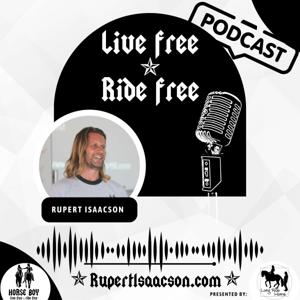
By Rupert Isaacson

5
1010 ratings


The podcast currently has 65 episodes available.
The most played episodes among Podcast App listeners.
✨ "You do it by offering before you ask, connection before direction." – Jenifer Zeligs ✨ "Look with appreciation. Look with delight. Look with interest. Look with curiosity." – Jenifer Zeligs Jenifer Zeligs has spent her life reading animals of every kind, from cheetahs and wolves to sea lions and horses. She started at the National Zoo at nine years old, mentored by exotic animal trainer Casey Cover, and went on to a career that helped shape modern liberty horse training. She is also the person that legendary horse trainer David Lichman credits with the "come bearing gifts" philosophy that underpins his own work. The conversation ranges across the two foundational techniques of animal training, why prevention beats correction in a crisis, and the true story of training sea lions to film humpback whales in the open ocean. Jenifer and Rupert also explore how a childhood horse allergy set her on this path, why individual variation matters more than breed or species, and how her practice as a Buddhist has shaped the way she teaches fearlessness and calm to horses. A wide-ranging, generous conversation between two people who have spent decades thinking about what animals need from us. FREE Helios Harmony Intro Course: https://longridehome.com/onoutpout All Books Mentioned: https://longridehome.com/books What You'll Learn in This Episode 00:04:23 – How a childhood horse allergy led Jenifer into a lifelong career as an animal behaviorist 00:10:18 – The two foundational techniques of bridging (reward markers) and targeting that changed how she trains any species 00:14:13 – The "come bearing gifts" principle: offering trust before ever asking for anything in return 00:35:42 – What actually makes you a safe space for an animal, and what makes you unsafe 00:41:31 – Systematic desensitization, and why announcing your intentions changes everything 00:52:15 – The difference between behavioral and environmental enrichment, and why horses are missing out 00:56:00 – Why consistency matters for communication but variety matters for motivation 01:09:19 – The extraordinary story of training sea lions to film whales in the open ocean 01:28:00 – "Contra freeloading," and why animals (and humans) are wired to want to work for things 02:08:24 – Teaching a horse to find calm through a simple "head down" cue Memorable Moments from the Episode 00:14:43 – Jenifer describes conditioning trust with cheetahs, mountain lions, and wolves through patient, positive interactions from behind a safety barrier 01:14:43 – A sea lion caught between orcas and open water swims 20 miles home, then leaps into the boat exhausted 01:40:18 – Jenifer's reminder that the best trainers "don't get into the crash" in the first place 02:10:00 – The story of the notoriously aggressive horse David Litchman connected her with, and how a new paradigm transformed him 02:15:00 – Rupert traces the story of the Buddha's own horse, Kantaka, and its place in Buddhist legend Guest Contact & Links animaltraining.us Books: Animal Training 101: The Complete and Practical Guide to the Art and Science of Behavior Modification https://amzn.to/3UA43YZ Mindful Partners: The Zen Art and Science of Working with Animals https://amzn.to/4xM2KVw About Jenifer Zeligs Jenifer Zeligs is an animal behaviorist, psychologist, and author who has spent decades working with species ranging from horses and dogs to cheetahs, wolves, and sea lions. She began her training career at the National Zoo at nine years old, mentored by exotic animal trainer Casey Cover, and later became a foundational influence on liberty horse trainer David Lichman, who credits her "come bearing gifts" philosophy as central to his own approach. She is the author of Animal Training 101 and Mindful Partners: The Zen Art and Science of Working with Animals, and teaches online courses at animaltraining.us. Now based in Oxford, England, she brings together decades of hands-on behavioral science with a practicing Buddhist's approach to trust, safety, and fearlessness. See All of Rupert's Programs and Shows: Website: https://rupertisaacson.com Follow Us: Long Ride Home Website: https://longridehome.com Facebook: https://facebook.com/longridehome.lrh Instagram: https://instagram.com/longridehome_lrh YouTube: https://youtube.com/@longridehome New Trails Learning Systems Website: https://ntls.co Facebook: https://facebook.com/horseboyworld Instagram: https://instagram.com/horseboyworld YouTube: https://youtube.com/newtrailslearningsystems Affiliate Disclosure: Links to books and products may include affiliate tracking. We may earn a commission if you make a purchase, at no extra cost to you. Thank you for supporting the show.

✨ "Dressage should be for the horse — the horse should not be for dressage." – Mark Russell, quoted by Patrick King ✨ "Speed is the enemy of balance." – Patrick King Patrick King is a classical dressage trainer based in Lexington, Virginia, who came up through Western horsemanship — 4-H as a kid, an apprenticeship with legendary colt-starter Ray Hunt, then mentorship from the late Mark Russell before he found his way, like Rupert, to Luis Valença and the Portuguese school. He's since studied with Charles de Kunffy and Bettina Drummond, earned bronze and silver dressage medals, and now teaches through his online Academy for Classical Horsemanship and clinics from his farm. He and Rupert trace how diagonal balance actually works and why the word "driving aids" gets lost in translation from the German, why competition pressure changes how horses and riders move, and how Western pleasure and saddle seat drifted from practical function into pure fashion. Patrick also walks through his simplest test for good training — could the horse explain to its paddock mates what you just asked of it — and why he stops mid-exercise to wait for a full diaphragmatic breath before asking a horse to go forward. It's a wide-ranging, technically rich conversation between two horsemen who share a mentor but arrived from opposite directions — and it's only part one. They run out of time before finishing, so a follow-up conversation is coming. FREE Helios Harmony Intro Course: https://longridehome.com/onoutpout All Books Mentioned: https://longridehome.com/books What You'll Learn in This Episode 00:01:50 – A shared mentor, Luis Valença, connects two very different paths into classical horsemanship 00:04:21 – Patrick's apprenticeship with Western horseman Ray Hunt and learning to "get to the mind through the feet" 00:08:29 – Mentor Mark Russell's insight that the feet are an extension of the spine 00:19:49 – The real difference between submission and relaxation in horse training 00:34:28 – Mark Russell's guiding principle that dressage should serve the horse, not the other way around 00:45:00 – Training the test versus testing the training, and how competition pressure changes the ride 01:23:06 – Diagonalization explained: how horses balance on diagonal leg pairs, and what that means for every transition 01:31:18 – Luis Valença's "position, balance, execute," and why "prepare, don't repair" beats fixing a movement mid-stride 01:36:36 – The "driving aids" mistranslation from German, and the physical, mental, and emotional dimensions of the half halt 01:54:37 – Why "is my horse breathing?" might be the most overlooked question in training Memorable Moments from the Episode 00:13:44 – Patrick's story of an abusively trained Western pleasure horse that once cornered him in a stall as a teenager 00:27:38 – Rupert's breakdown of dopamine, serotonin, endorphins, and oxytocin, and why riding this way feels so good 01:06:52 – The surprising history of dressage as a European import tied to wealth and status 02:01:00 – Two hours fly by, and Rupert and Patrick agree on the spot to record a part two Guest Contact & Links https://pkhorsemanship.com https://academyforclassicalhorsemanship.com About Patrick King Patrick King is a classical dressage trainer based near the Blue Ridge Mountains in Lexington, Virginia. He grew up riding a wide range of breeds in Western Pennsylvania, apprenticed with Western horseman Ray Hunt, and was later mentored by the late Mark Russell before training with Luis Valença in Portugal and riding as a guest student at Spain's Royal School. He teaches a busy clinic schedule, competes occasionally — earning bronze and silver dressage medals with encouragement from Charles de Kunffy — and runs an online Academy for Classical Horsemanship with monthly live lectures. His approach blends the Western horsemanship principle of "getting to the mind through the feet" with classical dressage biomechanics, with a particular focus on balance, breath, and treating the horse as an active participant in training. Website: pkhorsemanship.com. 🐎 Want to go deeper? Join the Long Ride Home membership — weekly live sessions, exclusive content, and a community of riders seeking real connection with their horses. 👉 https://longridehome.com — just $24.95/month See All of Rupert's Programs and Shows: Website: https://rupertisaacson.com Follow Us: Long Ride Home Website: https://longridehome.com Facebook: https://facebook.com/longridehome.lrh Instagram: https://instagram.com/longridehome_lrh YouTube: https://youtube.com/@longridehome New Trails Learning Systems Website: https://ntls.co Facebook: https://facebook.com/horseboyworld Instagram: https://instagram.com/horseboyworld YouTube: https://youtube.com/newtrailslearningsystems Affiliate Disclosure: Links to books and products may include affiliate tracking. We may earn a commission if you make a purchase, at no extra cost to you. Thank you for supporting the show. academyforclassicalhorsemanship.com
✨ "I think love is just not blocking out your connectedness to anything else." – Warwick Schiller ✨ "The same action with a different intention has a different energetic signature." – Warwick Schiller Warwick Schiller joins Rupert Isaacson for a wide-ranging conversation on altered states of consciousness in horsemanship, a subject the two first began exploring together on Warwick's own podcast. Rupert opens with the story of his son Rowan's healing ceremony with Kuku Yalanji shamans in Australia's Daintree Rainforest, and the two trace the theme from there into what "consent" and so-called horse slapping actually look like through a horse's nervous system. From there the conversation moves through the deep history of horse worship, from the goddess Epona and Xenophon's writings to Roman cavalry rituals and Mongolian shamanism, and lands on a central idea both men keep circling back to: that intention itself changes the energy, or as Warwick puts it, the "energetic signature," of any action, whether that's patting a horse, backing one up, or riding into battle. A wide-ranging, unhurried conversation that moves from hardware stores and rodeo bulls to henbane, King Arthur, and a closing reading from the Hadith. What You'll Learn in This Episode 00:00:36 – Rupert opens the episode by introducing the theme of altered states of consciousness in horsemanship 00:05:24 – Rupert recounts his son Rowan's healing ceremony with Kuku Yalanji shamans in the Daintree Rainforest 00:11:03 – Warwick unpacks consent, "horse slapping," and what it means to actually be present with a horse 00:24:13 – Why Warwick loses all sense of time while running clinics, and what that says about altered states 00:38:38 – A journey through the ancient history of horse worship, from Epona and Xenophon to Roman cavalry and Mongolian shamanism 00:44:49 – What it might look like to bring ritual and reverence back into everyday training 01:09:20 – Warwick on his real job as a teacher: "busting" people's long-held truths 01:27:00 – The henbane story, and how intention changes the "energetic signature" of an action 01:41:00 – How a Horse Boy fox hunt became a bloodless, inclusive tradition for kids with special needs and refugee children 01:51:24 – Ancient horse divination rituals from the Baltic to Rajasthan, and the Hadith reading that closes the episode Memorable Moments from the Episode 00:56:21 – Warwick's story about trying to buy "starter cord" from a bemused hardware store clerk 01:01:14 – Rupert admits he prays before every clinic or talk, weaving together Christian and Germanic horse-god iconography 01:28:56 – The Elizabeth Gilbert and Raya story: the same purse-saving gesture, told twice, with two very different meanings behind it 01:57:15 – Warwick closes with a line from the Hadith that, as he puts it, ties the whole conversation together 01:59:24 – Rupert describes something "coming out of the cliff" and speaking to him during a retreat in Sweden Warwick Schiller https://warwickschiller.com Journey On Podcast Warwick's own podcast, referenced throughout the conversation as the place he and Rupert first began discussing these ideas See All of Rupert's Programs and Shows: Website: https://rupertisaacson.com Follow Us: Long Ride Home Website: https://longridehome.com Facebook: https://facebook.com/longridehome.lrh Instagram: https://instagram.com/longridehome_lrh YouTube: https://youtube.com/@longridehome New Trails Learning Systems Website: https://ntls.co Facebook: https://facebook.com/horseboyworld Instagram: https://instagram.com/horseboyworld YouTube: https://youtube.com/newtrailslearningsystems Affiliate Disclosure: Links to books and products may include affiliate tracking. We may earn a commission if you make a purchase, at no extra cost to you. Thank you for supporting the show.
✨ "Everyone knows that the conqueror writes his story." – Louis Hook ✨ "I stood up. I told my son, 'That's not true.' And from there, I started a research path." – Louis Hook Louis Hook is a founding member of the Compton Cowboys, the decades-old therapeutic riding program based in Compton, Los Angeles, and previously featured on Rupert's Equine Assisted World podcast. He carries an MIT PhD program background and a Harvard Business School education, and for the last several years has redirected that analytical training toward an independent research project: documenting the African cavalry traditions written out of mainstream history. The catalyst was watching the film The Woman King and being stunned to see a Black cavalry on screen — a moment that sent him down a research path he is still on today. Rupert brings his own family history into the conversation, including a 19th-century surcoat, chain mail, and sword taken from a Mahdist cavalryman at the Battle of Omdurman by his ancestor, George Spotswood Sparks. Together they trace the arc of African equestrian power — the Moors' 800-year hold on southern Spain, Mansa Musa's cavalry-protected gold empire in Mali, the Kanem-Bornu Empire and Sokoto Caliphate, and the horse cultures of the Sahel that, as Rupert notes, never went away and still produce true Barb horses in Senegal today. From there the conversation moves to the American side of the story — the "brain drain" model of slavery that targeted skilled horsemen, blacksmiths, and rice farmers, and the land-grant gated-horse tradition of East Texas that Rupert witnessed firsthand. A wide-ranging, deeply researched conversation. FREE Helios Harmony Intro Course: https://longridehome.com/onoutpout What You'll Learn in This Episode 00:01:44 – Rupert's family connection to African horse cultures, sparked by a 19th-century surcoat and chain mail taken from a Mahdist cavalryman 00:07:23 – How watching The Woman King sent Louis on a research journey into Africa's erased cavalry history 00:11:19 – The Moors' 800-year conquest of southern Spain and their overlooked African identity 00:23:00 – Mansa Musa's cavalry-protected gold empire, and Louis's case that he ranks among history's five greatest men 00:35:19 – Why true Barb horses survive today only in Senegal 00:37:43 – How the Catholic Church whitewashed Christian imagery and helped embed a racial hierarchy 00:53:29 – The "brain drain" model of slavery — how expert horsemen, blacksmiths, and rice farmers were targeted and bought at a premium 00:58:00 – The land-grant horse culture of East Texas, where freed slave families built a gated-horse tradition still alive today 01:13:29 – Louis and Rupert trace the likely African roots of dressage rising star Nashon Cook 01:30:04 – The "horses to heal, horses to harm" philosophy — how the same training system can wound or heal Memorable Moments from the Episode 00:04:02 – Rupert describes the surcoat, chain mail, and sword hanging on his family's wall, taken from a Mahdist cavalryman by his ancestor 00:09:36 – Louis recounts standing up in the theater during The Woman King and telling his son, "That's not true" 01:00:13 – Rupert recalls roughly 200 Black riders on gated horses passing his Texas home, beer trucks blasting hip-hop 01:19:43 – Louis describes the emotional experience of visiting "The Last Bath," the Ghanaian site where enslaved people were bathed before auction 01:34:38 – Louis walks through using AI to fact-check erased history, using the Benjamin Franklin slavery example Guest Contact & Links Louis Hook's book, Black in the Saddle: From African Cavalries to Modern Cowboys https://amzn.to/4htcuPf Louis is a founding member of the Compton Cowboys, the Compton, Los Angeles-based therapeutic riding program also featured on Rupert's Equine Assisted World podcast. https://educatedhoodrat.com About Louis Hook Louis Hook is a founding member of the Compton Cowboys, a therapeutic riding program serving Compton, Los Angeles for several decades. He brings an MIT PhD program background and a Harvard Business School education to his independent research into the African cavalry cultures erased from mainstream history. He is the author of Black in the Saddle: From African Cavalries to Modern Cowboys, with a second volume in progress tracing his own ancestral roots to Sierra Leone and Burkina Faso. See All of Rupert's Programs and Shows: Follow Us: Long Ride Home Website: https://longridehome.com Facebook: https://facebook.com/longridehome.lrh Instagram: https://instagram.com/longridehome_lrh YouTube: https://youtube.com/@longridehome New Trails Learning Systems Website: https://ntls.co Facebook: https://facebook.com/horseboyworld Instagram: https://instagram.com/horseboyworld YouTube: https://youtube.com/newtrailslearningsystems Affiliate Disclosure: Links to books and products may include affiliate tracking. We may earn a commission if you make a purchase, at no extra cost to you. Thank you for supporting the show.
In this deeply honest and wide‑ranging episode of Live Free Ride Free, Rupert Isaacson speaks with family therapist and author Amanda Atkins about what it truly means to parent a high‑needs child — and how parents survive, adapt, and rediscover joy along the way. Amanda shares the personal story behind her book How to Handle More Than You Can Handle, written from lived experience as the mother of Asher, a teenager with Prader‑Willi Syndrome. Together, Rupert and Amanda explore overwhelm, grief, resilience, humor, identity, marriage, community, and the long‑term realities of parenting children with disabilities. The conversation moves fluidly between personal reflection and practical insight — from navigating cortisol burnout and therapy overload, to the importance of nature, play, humor, and following the child’s passions. This episode also looks ahead to adulthood, community living, relationships, and what it means to build sustainable structures for life beyond childhood. ✨ “You’re allowed to be more than just a caretaker.” – Amanda Atkins ✨ “Joy isn’t optional. It’s how we survive.” – Rupert Isaacson ❤️ Support the Podcast on Patreon https://patreon.com/longridehome 🔍 What You’ll Learn in This Episode:Why overwhelm and isolation are so common for parents of special‑needs children — and why talking honestly about it matters ([00:01:06])How grief, identity loss, and resilience intersect in parenting high‑needs children ([00:05:13])Amanda’s path from therapist‑in‑training to caregiver advocate — and why she focuses on parents, not prescriptions ([00:06:02])What Prader‑Willi Syndrome looks like in daily life, including food obsession, routine, and nervous‑system regulation ([00:03:11], [00:20:36])Why humor — especially toilet humor — can restore dignity, bonding, and regulation ([00:16:36])The neuroscience of cortisol overload, burnout, and why “doing less” can sometimes heal more ([01:07:45]–[01:11:21])How following a child’s passionate interests supports development, confidence, and joy ([01:13:29])Why community and informal support networks matter more than formal services alone ([00:55:06], [01:22:22])Navigating adolescence, friendships, dating, and independence for neurodivergent teens ([01:18:53]–[01:24:36])How parents can reclaim joy, meaning, and a sense of self beyond caregiving ([00:51:01], [01:33:48])🎤 Memorable Moments from the Episode:Amanda describes the emotional impact of being handed a diagnosis at 26 — and the pressure to be a “special‑needs warrior” ([00:04:00])A candid conversation about marriage, cortisol poisoning, and why most special‑needs couples burn out ([01:05:38]–[01:10:05])Asher’s first homecoming date — and how community quietly held the moment ([01:22:22])Rupert explains theory of mind through teasing — and why joking is a developmental milestone ([00:27:26])Amanda reads a powerful passage from her book on identity, meaning, and self‑compassion ([01:33:48])📚 Books, Projects & Resources Mentioned: Amanda Griffith Atkins: https://www.amandagriffithatkins.com/ https://www.instagram.com/amanda.griffith.atkins/ How to Handle More Than You Can Handle – Amanda Atkins: https://amzn.to/3LjgWSH ning Systems Camp Hill Communities (historical model for residential care) Square Peg Foundation (California) https://squarepegfoundation.org 🌍 See All of Rupert’s Programs and Shows: Website: https://rupertisaacson.com 📲 Follow Us: Long Ride Home Website: https://longridehome.com Facebook: https://facebook.com/longridehome.lrh Instagram: https://instagram.com/longridehome_lrh YouTube: https://youtube.com/@longridehome New Trails Learning Systems Website: https://ntls.co Facebook: https://facebook.com/horseboyworld Instagram: https://instagram.com/horseboyworld YouTube: https://youtube.com/newtrailslearningsystems 📊 Affiliate Disclosure: Links to books and products may include affiliate tracking. We may earn a commission if you make a purchase, at no extra cost to you. Thank you for supporting the show.
The podcast currently has 65 episodes available.
1,857 Listeners

633 Listeners
31,734 Listeners

349 Listeners
444 Listeners
114 Listeners
13 Listeners
19 Listeners
904 Listeners
37 Listeners
16 Listeners
92 Listeners
11 Listeners
50 Listeners
8,809 Listeners