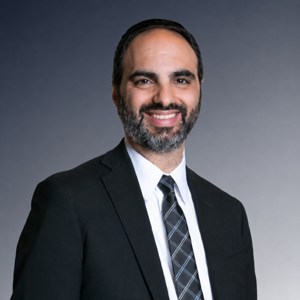
Living Emunah

Living Emunah

By Ashear, Rabbi DavidReligion & SpiritualityJudaism
Download on the App Store
  • Favorites

    27

    Followers

  • Typical duration

    6 min

    per episode

Based on Podcast App listening data

Living Emunah episodes

  • Our Only Boss
    Part of the glory of emunah is that a person is able to feel accomplished in every circumstance that he finds himself in. If the person does his best to perform in any given circumstance with the knowledge that Hashem put him there for a reason and he acts in the way that he thinks Hashem wants him to act, then he will be doing avodat Hashem in every circumstance in life. Even what appears to be the most mundane chores are in reality just more ways for us to serve Hashem, and if we view them like that we will always feel accomplished. The mefarshim tell us, when the Jewish people were working with back breaking labor in Mitzrayim , the angels in Shamayim were in agony that the children of Avraham, Yitzchak and Yaakov had to suffer like that. However, after they left Mitzrayim with all the wealth of Egypt, the angels were in such joy. The Gemara says that the money that the Jewish people received was their payment for all the work that they did over the 210 years. Then Hashem commanded them to make a Mishkan in which His Presence would dwell. The cost of the materials necessary for Mishkan were astronomical, but the Jewish people were easily able to afford it because of the money they got in Mitzrayim . When it was finally complete, they saw the Aron and the Keruvim and all the other utensils and they marveled at their beauty saying, “It was worth the effort of every brick we had to produce in Mitzrayim to merit the construction of this Mishkan .” If Hashem would have told them in advance, before they went to Mitzrayim , that all the work they would do would enable them to be able to build a house for Him in which He would permanently dwell with them, it would have been a completely different experience. They would have felt that they were putting forth self-sacrifice in the service of Hashem every day and they would have done it with joy. Every brick that they had to lay would have been viewed upon as another tool in their service of Hashem and that would have given them so much chizuk . In reality, that is what was happening, but for reasons that only Hashem knows He did not inform them of that. Based on this, Rabbi Menashe Reizman gave a new explanation for the words in the Haggadah: עבדים היינו לפרעה במצרים ויוציאנו משם – we appeared to be slaves to Pharaoh in Egypt and Hashem took us out of that false premise, He revealed to the people that they were really working for Him all those years and He showed them all of the other tikkunim and accomplishments that they made by experiencing that bondage. This is the way it always is. Wherever we are, we are working for Hashem. He is our only boss. And in every situation we find ourselves in, there is an avodat Hashem to be done. Our job is to go through our experiences with emunah, recognizing that they were planned for us by Hashem and to always think, How would Hashem want me to act now? If we do this, we will always feel accomplished and we will earn unimaginable rewards for serving Hashem all day long, every single minute of our lives.
    5 min
  • The Seder Night
    The Mishnah Berura writes at the end of siman 218 in Ohr HaChaim , in the name of the Acharonim , that if a person had some type of miracle performed for him, he should set aside money according to his means and give it to Torah scholars and say, “May it be the will of Hashem that this takes the place of the Korban Toda that I owe.” It is also proper for the person to do something on behalf of the community and every year, on the anniversary of the miracle, he should privately thank Hashem and then, with joy, relate the miracle to others. The Mishnah Berura writes elsewhere that if he makes a seudah to celebrate the miracle and say words of thanks and praise to Hashem, it's considered a seudat mitzvah . None of this is obligatory. It's a suggestion of how Hashem would want a person to express his gratitude to Him. Tonight at the Seder, Hashem told us exactly what He wants us to do to give Him hakarat hatov for the wonders and miracles that He performed for us in taking us out of Mitzrayim . He wants us to spend this night telling over everything that He did then. He wants us to feel so much gratitude that the praises are freely flowing from our mouths. The Zohar HaKadosh writes about this night, that if a person is truly happy to say over the Sipur Yetziat Mitzrayim , he will be invited to rejoice with the Shechina HaKedosha in Olam HaBa . Someone who is happy doing this mitzvah is considered a person who is happy with Hashem and merits that Hashem personally comes to help him. Hashem takes so much delight in hearing us relate this story. So many mitzvot that we have are all just a zecher l’Yetziyat Mitzrayim . Tonight we have the mitzvah of actually being מספר יציאת מצרים . Hashem gets so excited, kavayachol. It says that He gathers all of the angels together and He tells them, go listen to the words that His children are saying about Him. The Zohar mentions the word joy over and over in just a few lines. All of the segulot come to a person if he does this mitzvah with joy. We should feel as if there are angels surrounding our tables who were sent to listen to every word we say. They were sent by Hashem who is taking so much delight in everything we say. When the angels hear about our praises, they go back up to Hashem and thank and praise Him for the miracles He did for us. And this gives Hashem, kavayachol , so much strength. The Pirkeh d’Rebbi Eliezer writes that the night of the Seder was sanctified by Hashem during the six days of Creation. It was on this night that Yitzhak Avinu called to Esav to give him the berachot . He said, “My son, on this night the entire Jewish world will say Hallel. The storehouses of blessing are open. Prepare for me the food that I like so that I can bless you on this holy night.” Then Rivka called to Yaakov and she said to him, “Tonight the storehouses of blessing are open. The angels in heaven are singing to Hashem on this night. Hashem is going to redeem His children in the future from slavery. Go prepare tasty foods for your father so that he could bless you.” The night of the Seder is compared to Yom Kippur. There is so much joy in Heaven, especially when we say the story of Yetziat Mitzrayim with joy. It's a night of miracles. The Mishnah says, after we pour the second cup of wine, “ כאן הבן שואל ” - here is where the child is supposed to ask. The Bet Aharon said, besides for the simple meaning here of a child asking his father the Ma Nishtanah , it is also hinting to us, the children of Hashem, that we have an opportune time to ask from our Father as well. Let us utilize it to ask our Father on this night to redeem us and bring an end to this long galut . May we be zocheh to fulfill all of the mitzvot of the night the way Hashem wants us to and bring so much joy to the heavens and arouse our Father to bring the Geulah Shelema . Amen. Chag kasher v'sameach .
    6 min
  • In One Moment
    We say in the Haggadah that if Hashem did not take us out of Mitzrayim, we would still have been slaves to Pharaoh there. The mefarshim ask: didn't Hashem promise Abraham that He would redeem his children from Mitzrayim after 400 years? So even if we did not leave early at 210 years, Hashem would still have had to redeem us eventually. So how could we say that we would still be slaves there even until today? The Beit HaLevi answers based on the words of the Arizal, who said that if the Jewish people would have remained in Mitzrayim any longer than they did, they would have sunk into the fiftieth level of tumah. At that point, they would have lost their connection to the holy Avot and would no longer be considered the zaro(seed) of Abraham, similar to Esav and Yishmael. In that state, indeed, they would never have been redeemed. Rav Leib Chasman writes that we see from here the awesome power of a moment in time. Instead of being stuck in Mitzrayim on the fiftieth level of tumah, Hashem rushed the Jewish people out of there at the last moment. They then became elevated to be the Am Hashem for all eternity and to receive the Torah at Har Sinai. How quickly things can change in just a single moment. When a person is going through a hard time and it seems like things will never change, he must strengthen his hope and belief that Hashem can change everything in a moment. A man related that he was working in an office with little potential for growth. There were days when he would sit for hours upon hours with nothing to do. His boss kept telling him things were going to change, but they never did. He had no choice but to send his resume to other companies. He was told about a great job opportunity at a wholesale company and quickly sent his resume there. They called him shortly afterward, saying it looked like the position was already being filled. He found himself once again stuck in a job with little potential, and there were not many good options available. One day, he said to himself, "I am exactly where Hashem wants me to be, and therefore I have to do whatever work I have with joy." As he was waiting for instructions from his boss that day, he called a hotline and listened to a few clips on emunah. He became so encouraged. He walked down the hallway of that office building feeling so happy. At that moment, he received a call saying that the other job was available and that they wanted him. It was an amazing offer with a very high salary. He became so strengthened, seeing the hand of Hashem pulling him out of a job he was not happy with to a job that was perfect for him. All it took was one moment. A young woman shared that this past year she began reading a book on emunah to give her strength while going through shidduchim. Recently, she realized she was getting close to the end of the book and was dating a boy very seriously. She was thinking to herself how nice it would be if she could finish the book right as she got engaged. But a couple of days later, they both realized they were not for each other, and it ended. It was obviously very disappointing for her. She then pictured herself having to start the book all over again once she finished, needing the strength to continue on. However, Hashem, in His infinite kindness, sent her the boy that was meant for her literally the next day. Baruch Hashem, they had a very smooth and quick dating experience, and she finished the book just as she got engaged to him. She thought there would be no way for that to happen, as she was nearing the end of the book with nothing to look forward to. And then, all of a sudden, in one moment, Hashem sent her the greatest yeshuah, and she celebrated her engagement shortly afterward. So much can happen in one moment of time. We must never underestimate the ability of Hashem to give us the most glorious salvations in the blink of an eye.
    6 min
  • Yearning for the Geulah
    Part of our responsibility in bringing the Geulah Shalema is to yearn for it, to believe that it could happen at any moment, especially now in Nisan, the month of Geulah. In Mitzrayim, they were redeemed even though they were still worshipping idols, almost on the forty-ninth level of tum'ah. In Sefer Shoftim, Perek ו׳, it says that at one point in history, the Jewish people were being persecuted by the Midyanim for seven years because of their bad deeds, yet even while they were still involved in worshipping avodah zarah, they cried out to Hashem for help, and Hashem redeemed them in a miraculous way. We must believe today that no matter what level the people are on, the moment Hashem decides to bring the Geulah, it will come. The Midrash on the words "מְדַלֵּג עַל הֶהָרִים מְקַפֵּץ עַל הַגְּבָעוֹת " says that in Mitzrayim, because Hashem desired to redeem His people, He broke the rules and redeemed them early, even though they were not on the level to be redeemed. When an angel of Hashem appeared to Gidon to tell him he was chosen to save the Jewish people from the Midyanim, he was commanded to take a bull that his father fattened for avodah zarah for seven years and offer that to Hashem. Even though generally it is forbidden to bring such an animal as a korban, Hashem made an exception, breaking the rules because He desired His people. Although the Jews were still worshipping the sheep in Mitzrayim, He told them to bring that as a korban to Him, once again breaking the rules because ahavah mekalkellet et hashurah—love causes one to act beyond the normal course.The same is true regarding Hashem's love for us. When the Jewish people were redeemed from Mitzrayim, it was obvious that Hashem was doing it. When Hashem told Gidon to wage battle against the Midyanim, He told him to take only three hundred people, in order that they would not glorify themselves, thinking they achieved the victory. Part of Geulah is us understanding that Hashem is the One bringing it. As Rabbi Menashe Reizman pointed out, a person does not have to be a great mekubal to see how Hashem has been controlling events over the past few years. On October 7th, He showed us that we have no power on our own to defend ourselves. And after that, He has given us extraordinary siyata diShmaya to overcome our enemies. Recently, He has brought America to act on our behalf and fight our battle for us. We must understand—we are completely in the hands of Hashem. He does not need missiles or warplanes to wage war, but He chooses to act through the derech ha'teva. It is apparent from the words of the Ramchal that our final redemption will come through derech ha'teva. Mashiach may not necessarily raise his staff and block missiles from Iran, but rather, when the Megillah is written about our times, it will say "that in such and such a year, Hashem put it in the minds of wise men to create a system called the Iron Dome that would knock down the missiles of our enemies. And Hashem made wondrous miracles, knocking down all those missiles and protecting His people." We are witnessing today miraculous salvations—a full month of ballistic missiles being fired, each one that could, lo alenu, be catastrophic—and our people are still rejoicing in their preparations for Pesach, still living everyday life, feeling protected, learning Torah, and praying stronger than ever. We hope in the coming days to see the ultimate yeshuah and celebrate the Geulah Shalema. Amen.
    5 min
  • Parashat Tzav: Shabbat Hagadol
    This week is Parashat Tzav as well as Shabbat HaGadol . On Shabbat HaGadol , the final Shabbat that the Jewish People were in Mitzrayim , Hashem commanded them to begin the process of offering the Korban Pesach . Why did Hashem command the Jews to take the sheep for the korban four days before they were going to offer it? The Midrash answers, the time of the Geula had arrived but the Jews did not have the merits to be redeemed so Hashem gave them an additional commandment regarding the korban to help them. Look how precious a mitzvah is! Even the preparation of the Korban Pesach was able to give the Jews the merit to be redeemed. The parshiot we are reading now are discussing the korbanot . The pasuk says when a Jew brought a korban, it was considered a ריח ניחוח לה' – it brought up a pleasing aroma to Hashem. What did Hashem love so much about a korban ? Perhaps we can explain from a question asked by the Acharonim : Why is it that the construction of the Mishkan did not override Shabbat while the offering of korbanot did? Seemingly, the building of a home for the Shechina to dwell in should be more important than offering sacrifices there. Rabbi Menashe Reizman quoted the sefer Nachat Yaakov who answered that the construction of the Mishkan was primarily done by Hashem. It was not humanly possible for a person to put it up, as the pasuk says הוקם המשכן. Many of the vessels as well were made by Hashem. The Menorah, for example, Hashem told Moshe to throw it into a fire and the Menorah came out. All the embroidery was miraculously made. Regarding the construction of the Second Beit HaMikdash, there were enormous stones, some 30 feet tall. How was it possible for a person to lift them so high upon a wall. The Yerushalmi says, when the people made the effort, Hashem miraculously lifted those stones for them. So therefore, since the Mishkan and the Beit HaMikdash were made by Hashem, although it was very important to Him, that did not override Shabbat. The korbanot , however, were performed exclusively by us. All of the difficult tasks involved in bringing a korban were done by the sweat of the people and Hashem loved their deeds so much. He loves when we put toil in to fulfill a mitzvah. That is what is so precious to Him and that even overrides Shabbat. Although today we cannot put in the same efforts of offering an actual korban , there's still a lot that we can do. The Midrash at the beginning of this week's parasha brings a mashal about a king who was traveling through the desert and his good friend came there to give him a basket of figs and a barrel of wine. The king told him, "You have honored me greatly by coming all the way here to give these thing to me." The friend replied, "My master, the King, this is just a small token of the honor that I want to give you. When you come back to your palace, you'll see there how much honor I'm really going to give you." That's the mashal. The nimshal is Hashem tells us, "זאת תורת העולה – You have honored Me by bringing a korban olah ." And we tell Hashem, "This is just a small token of the honor that we're capable of bringing You. When You come back to Your palace, there we're going to give You the real honor." This Midrash is obviously talking about today's time when we can't offer a real korban . So what temporary honor are we giving Hashem? Learning about the korbanot , drawing lessons from the korbanot . That in it of itself is so precious to Hashem and He considers it like we are honoring Him. But we tell Hashem, "Soon, when You bring back the Beit HaMikdash, there we're going to truly honor You, the way we're supposed to." As for today, we're still learning the lessons of korbanot , we're seeing how precious the nitty gritty involvement of a Jew in a mitzvah is to Hashem. We hope that just like Shabbat HaGadol was the last Shabbat for the Jews in Mitzrayim , so too it will be our last Shabbat in this long exile. B'ezrat Hashem, we should see the rebuilding of the Beit HaMikdash and be able to bring Hashem true glory inside of it. Shabbat Shalom.
    6 min
  • The Night of Emunah
    The Sefer HaBatim writes regarding the mitzvah of Sippur Yetziat Mitzrayim on the night of the Seder, that in this mitzvah, number 150, we are commanded to speak about how Hashem took us out of Mitzrayim in order to strengthen our emunah in the hashgachah of Hashem upon us and in the wonders that He performs. This means that one of the primary messages we are meant to internalize on the night of the Seder is that Hashem runs the world and everything that takes place within it. On the night of the Seder, there is a special segulah for emunah that we can take with us for the rest of the year. The same divrei Torah that a person can say at any time during the year carries even greater value on the night of the Seder, when the matzah and maror are placed before us. It is certainly important to strengthen ourselves all year long in emunah in Hashem's hashgachah, but on the night of the Seder, we are able to receive the ultimate strength in it. It becomes so clear how much Hashem is involved in even the smallest details of our lives. Michael Cohen, the head of the Mitzvah Man organization, related that he received a phone call asking if he could help a woman who was living in a small apartment with three young children. She did not have a washer and dryer, and three times a week she had to take her children to a laundromat and wait there for an hour or two until the laundry was done. She needed a special washer-dryer unit that would fit into her small apartment. It was called a gas top-loaded dryer. The caller asked Michael if he happened to know anyone who had such a machine available for donation. He replied that he had never even heard of such a thing and did not know anyone who would have one. The very next day, he received an email from someone who owned an appliance store in the neighborhood that was going out of business. The man wrote that the only item left in the entire store was a gas top-loaded dryer, and he was wondering if Michael knew anyone who might need it. Michael could not believe what he was reading. Within a day, the machine was installed in the woman's apartment, and she had tears of joy as she thanked everyone involved, knowing she would no longer have to struggle to do her laundry. The hashgachah of Hashem is truly remarkable. Another woman related that she had received hand-me-down dining room chairs a couple of years earlier. One day, as she walked past them, she thought to herself that they could really use an update. She did not mention this thought to anyone. Three days later, someone texted her a picture of a set of gently used dining room chairs, asking if she would like them. She felt as if she had received a gift directly from Hashem, Who alone knows a person's thoughts and desires. Another woman said that she later realized she had not given proper kavod to a certain Rosh Yeshivah. Every time she thought about it, she felt a deep discomfort. After several months, she began praying to Hashem to give her an opportunity to ask forgiveness. Shortly afterward, she was with her sister, who asked her for a favor. Her sister had an important meeting that she could not reschedule, but at the same time she had a phone meeting with someone else who was supposed to help her with a certain matter. She asked her to answer the call on her behalf. Astonishingly, the call came in from that very Rosh Yeshivah from whom she had been hoping to ask forgiveness. She immediately took the opportunity and apologized. How could such a thing happen? How does a random woman get the chance to speak directly to a Rosh Yeshivah at just the right moment? The answer is clear — the hashgachah of Hashem is everywhere. The more we look for it, the more we will see it.
    5 min
  • Never Rejected by Hashem
    Yesterday we spoke about the feeling of rejection when it comes to relationships between people. Unfortunately, there are those who feel rejected by Hashem as well. They have been praying and improving for years, yet they have not seen the results they were hoping for. They begin to wonder if Hashem truly appreciates their efforts, and some even entertain thoughts of stopping. There are those who have already stopped praying altogether, thinking that Hashem is not interested in their tefillot. If they would only know how much they are accomplishing with their tefillot and good deeds, and how much Hashem cherishes everything they do, they would be running to continue. Not being answered is not an indication that Hashem does not love their tefillot — it is just the opposite. Sarah Imenu was not answered for decades, and Chazal teach that Hashem delayed because He desired her prayers so much. When Kayin felt rejected by Hashem, he committed a terrible aveirah. Yet Hashem Himself told him, " למה חרה לך ולמה נפלו פניך… אם תיטיב שאת " — why are you upset? I am not rejecting you. All you need to do is improve. Hashem never rejects anyone. At one point, a heavenly voice was heard regarding Elisha Acher, saying that everyone is welcome back except him. Acher had committed extremely grave sins. Yet the Reshit Chochmah writes that even that heavenly voice did not mean that Hashem did not want him back. In the end, he was accepted in the upper worlds, even without doing teshuvah — and certainly had he done teshuvah, he would have been accepted even more so. That heavenly voice was a test. He was meant to respond, "No — I still want to come back." As Chazal teach, כֹּל מַה שֶׁיֹּאמַר לְךָ בַּעַל הַבַּיִת עֲשֵׂה, חוּץ מִצֵּא , whatever the Baal HaBayit tells us to do, we must follow — except if he tells us to leave, then we do not go. Hashem is the ultimate Baal HaBayit, and even when it appears as if He is pushing us away, it is only a test. Hashem desires every Jew to be close to Him. His love for us is beyond comprehension. We may not understand His ways, but we know with certainty that He always wants us. If we would understand even a fraction of how much He desires our avodah, we would serve Him with far greater enthusiasm. Rabbi Ephraim Wachsman told a story about a man we will call Reuven, who hired a well-known singer to perform at his daughter's wedding. A few weeks later, another man, Yehuda, called that same singer to ask if he was available for his daughter's wedding — which happened to be scheduled for the very same night. The singer declined. Yehuda wanted this singer very badly and asked for Reuven's number. He called Reuven and offered to pay for another singer if he would be willing to give up his booking. Reuven politely declined. Yehuda then offered to pay part of the wedding expenses. Again, Reuven declined. Eventually, Yehuda even offered to pay for the entire wedding — and still, Reuven refused. Yehuda was astonished and asked him to explain. Reuven answered that when his father had been ill, his mother cared for him tirelessly, day and night. The entire family felt tremendous gratitude toward her. When she heard the name of this singer, she remarked how meaningful it would be if he could perform at the wedding. "For me," Reuven said, "having this singer at the wedding is kibbud em. There is no amount of money that would make me give that up." The singer later said that when he performed at that wedding, he sang with more heart and enthusiasm than ever before, because he understood how much they wanted him and what they were willing to give up for him to be there. When a person feels wanted, his performance is on an entirely different level. If we would only realize how much Hashem wants our avodah, we would serve Him with that same excitement. Hashem never rejects anyone — it may appear that way sometimes. In truth, He is waiting to see that even without the results we hope for, we continue striving to come closer. And when we do, our reward becomes infinitely greater, allowing us to merit closeness to Hashem for all eternity.
    6 min
  • The Pain of Rejection
    As I was speaking to different people about the various issues they were going through, it struck me that all of them, deep down, were suffering from the same kind of pain. One person was struggling with shidduchim, another was having difficulty finding a job, another was dealing with family issues, and the list goes on. Yet beneath all these different situations, there was one common thread — the pain of feeling rejected or excluded. The hurt of feeling unwanted was just as painful as not being married or not having an income. In fact, studies have shown that the same regions of the brain that become active when a person experiences physical pain also become active when someone experiences social rejection. Even a brief moment of rejection can sting — for example, when a phone call is declined or when someone passes by without acknowledging us. All the more so when friends gather and one person is not invited, when teams are formed and one individual is left out, or when a party is planned and someone is not included on the guest list. All of these experiences can cause deep emotional pain. The Gemara tells us that Rachel, the daughter of Kalba Savua, wanted to marry Akiva the shepherd because she recognized his great qualities, even though at that time he was unlearned. Tosafot ask that there is another Gemara in which Rabbi Akiva says about himself that before he became learned, he wanted to bite Torah scholars like a donkey bites — which seems to indicate that he did not have good character. Rabbeinu Tam answers that in truth he did possess good character, but he became angry at the Torah scholars because he felt that, since he was an am ha'aretz, they were distancing themselves from him. In other words, he felt rejected by them. In general, when a person feels rejected, it causes him pain, and naturally a person tends to dislike someone who causes him pain. People have a deep need to feel wanted, accepted, and included, and when that need is not fulfilled, it creates real suffering. How is a person supposed to deal with this pain? Fortunately, we know that every amount of pain a person experiences is precisely calculated and given by Hashem for his benefit. The Chovot HaLevavot teaches us that people are not truly capable of hurting us; they are merely messengers of Hashem. When a person experiences rejection, he should not think that there is something inherently wrong with him. Rather, he should believe that Hashem determined that he needed to be excluded at that moment for his own good. When someone is rejected in shidduchim, it is because those individuals are not the ones Hashem intended for him or her. When someone is turned down for a job, it is because Hashem knows that position is not good for him. It is true that a person does not necessarily need to experience rejection in order to get married or find employment, but if he does go through it, it is because that experience is necessary for his growth and benefit. The Reshit Chochmah writes that when it comes to kaparah, emotional pain can accomplish even more than physical pain, and if a person is embarrassed, it can erase countless sins. We do not fully understand all the benefits of suffering, especially emotional suffering, but when we trust that Hashem knows what is best for us, it becomes easier to bear. Moreover, when a person feels rejected, instead of remaining stuck in the pain, he should channel those feelings into heartfelt tefillah to Hashem. Leah Imenu felt tremendous pain when Yaakov chose Rachel over her. What did she do with that pain? She turned to Hashem and cried out for children and blessing. As a result, she merited to have six of the twelve shevatim. She became the mother of the bechor, the mother of the kohanim and levi'im, the mother of the kings, and the mother of Mashiach Tzidkeinu. Feeling excluded or rejected may be very painful, but we must remember that it is always for our ultimate good, and if we respond correctly, we can gain immeasurably from it.

    6 min
  • Salvations in an Instant
    The salvations of Hashem can always come in an instant. Our belief and hope in Hashem's ability to help us is a very important part of our service to Him. It never matters if it looks like we can or cannot be helped, and it never matters how long we have already waited. Hashem can always bring salvations in the simplest ways. A woman related that after twenty-one weeks of pregnancy, her doctor suddenly told her that she was at high risk of giving birth too early for the baby to survive. She reached out to Jewish organizations for help in finding a specialist, but they were unable to find anyone for her. The community organized a tehillim group on her behalf, and a couple of weeks later her doctor transferred her to a hospital closer to her home, which he believed had a better team of doctors to handle her specific issue. Once she was admitted, the first doctor she saw told her that she was in the middle of conducting a research study on the very condition she had. She explained that this woman was a perfect candidate to try a procedure that had never been done this late in pregnancy. No other hospital in the country would have offered her this procedure. Baruch Hashem, it was performed successfully, and the baby was born perfectly healthy after a full nine months and two days. The hospital, which was literally a five-minute drive from her house, was the one that Hashem brought her to in order to save her baby. A man related that he had a tenant living in his basement for five years. The first three years were good, but then one day the tenant became angry with them and stopped paying rent. For the last two years, they suffered a great deal of aggravation from him. He turned the basement into a disaster; it became completely unrecognizable. It was an illegal apartment, and since the tenant knew that in the laws of New York they often side with tenants, he took full advantage of the situation. On one occasion, he even called the police and had their twenty-year-old son arrested, claiming that he had scratched him — which was completely fabricated. The hot water tank was accessible only through the basement, and out of spite he repeatedly shut it off. The police told the family they were not allowed to enter because he was living there. This past year, from after Yom Kippur until after Sukkot, they had no hot water at all and had to go to neighbors to use their shower. No one was able to help them with this. All the lawyers they contacted said that the tenant had the upper hand and that they would have to comply with whatever he demanded. Recently, this man decided to strengthen his belief in Hashem's power to help him. He worked on his emunah, bitachon, and tefillah. The tenant, wanting to aggravate them even more, called HPD to complain that he was not getting hot water. The next day, inspectors came down to check the property, and when they saw that it was illegal, they told the tenant he had to vacate within two weeks. They posted a notice and left, but he tore it down. Two weeks later, they returned with the police and the Red Cross. It took three hours to remove him because he resisted, but in the end they succeeded in getting him out. Everyone told the man they had never heard of HPD removing a tenant like that. Here, Hashem used the tenant himself to bring about their salvation and remove him. Another man related that he had been without an income for a couple of years, and with a large family his situation had become very difficult. He had sent out his résumé to over twenty companies and received little to no response. Recently, he accepted upon himself to add a significant amount of hours to his Torah study. After that, the salvation came quickly. The very next day, he ran into a friend who had no connections at all in the business world. He was a rabbi in a yeshivah and certainly did not seem like a useful resource for finding a job. But the man said to himself, Hashem is the One who gives me parnassah — it does not matter whom I ask. He told this rabbi that he was looking for a job. The rabbi replied that he knew of a company that was desperately looking for someone, and he made the connection. Within a week, the man had the job. Salvation can always come in any form. It is up to us to believe it and to feel it in our hearts.
    6 min
  • Parashat Vayikra: Offer the Greatest Korban
    The pasuk says in this week's parasha Vayikra , אדם כי יקריב מכם קרבן לה' מן הבהמה מן הבקר ומן הצאן" תקריבו את קרבנכם– when a man brings a korban from amongst you to Hashem, it should come from animals, either cattle or flock." The mefarshim are bothered by the placement of the word מכם – from you. Seemingly, it should have said "אדם מכם כי יקריב קרבן – a person from amongst you who brings a korban ." One explanation given is that Hashem is telling us, when we give a korban, He doesn't just want an animal, rather אדם כי יקריב מכם קרבן – He wants us to sacrifice of ourselves as well. How so? מן הבהמה – we need to go against our animalistic natures. מן הבקר – refers to the animals who are bold, we need to go against our bold nature when it comes to avodat Hashem. And מן הצאן refers to animals who are bashful, we need to go against our bashful nature when it comes to avodat Hashem. For example, if someone has the opportunity to help the masses but he feels, "Who am I? It's not my place." That is when he needs to go against his bashful nature and say, "I'm doing the will of Hashem and this is what it calls for me to do." And if someone was wronged or shamed, and he could easily get back at that person who inflicted the harm, that is when he needs to sacrifice his brazen nature and instead act humbly, like Hashem wants, and keep quiet. Although we are not able to physically bring korbanot today in the Beit HaMikdash, we could offer korbanot of ourselves all the time by overcoming our nature to do the will of Hashem. If someone has been praying for something for a long time, and instead of his situation improving, it only got worse, his inclination will tell him, "Why bother? Prayer is not helping anyway." At that moment, he has an opportunity to offer a korban to Hashem and say to himself, " Tefila is what Hashem wants from me. Although I don't feel like doing it, I'm going to go against my inclination and I'm going to continue praying with all of my heart." If someone has been trying to get married for years without success, his inclination will tell him, "There's no point in continuing to try, nothing's working anyway." At that moment, he can offer a korban to Hashem and say, "It's the will of Hashem for me to get married, and therefore I'm never going to stop trying. If someone was having trouble conceiving and then, after a long difficult process, when she was about to give birth to a child, lo alenu , she lost it. Her inclination might tell her, "How can I ever go through that again? I have a few children already and Hashem is making it so hard for me to have more. I might as well just stop. Why do I need all this extra pain for nothing?" At that moment, she can go against her inclination and offer a korban to Hashem and say, "I was trying to do Hashem's will by bringing more children into the world. I know Hashem will reward me for every bit of pain that I went through in trying to do His will. Results are not in my control, but efforts are. Hashem always determines what's best for me. And therefore, I'm going to continue trying to do His will, no matter how difficult it is." Each person, in his or her own circumstances, can offer the greatest korbanot to Hashem all of the time. Shabbat Shalom.
    5 min

About Living Emunah

From the publisher's feed

A Daily ethical teaching by Rabbi David Ashear

Best of Living Emunah

Ranked by our users in the last 21 days

More shows like Living Emunah

The Rabbi Sacks Legacy by Rabbi Lord Jonathan Sacks

The Rabbi Sacks Legacy

555 Listeners

The Israel Guys by The Israel Guys

The Israel Guys

308 Listeners

Jewish Stories to Inspire: Motivational & Spiritual Stories Based on the Torah's Ethics, Values and Wisdom by Stories to Inspire

Jewish Stories to Inspire: Motivational & Spiritual Stories Based on the Torah's Ethics, Values and Wisdom

186 Listeners

Living with Emunah by Rabbi Efrem Goldberg

Living with Emunah

110 Listeners

Meaningful People by Meaningful Minute

Meaningful People

1,987 Listeners

From the Inside Out: With Rivkah Krinsky and Eda Schottenstein by Rivkah and Eda

From the Inside Out: With Rivkah Krinsky and Eda Schottenstein

263 Listeners

The Q & A with Rabbi Breitowitz Podcast by Rabbi Dr Yitzchak Breitowitz

The Q & A with Rabbi Breitowitz Podcast

234 Listeners

Call Me Back - with Dan Senor by Ark Media

Call Me Back - with Dan Senor

3,197 Listeners

The Times of Israel Daily Briefing by The Times of Israel

The Times of Israel Daily Briefing

1,067 Listeners

Kosher Money by Living Lchaim

Kosher Money

821 Listeners

History for the Curious - The Jewish History Podcast by JLE

History for the Curious - The Jewish History Podcast

232 Listeners

Gedale Fenster - Podcast by Gedale Fenster - Podcast

Gedale Fenster - Podcast

399 Listeners

Honestly with Bari Weiss by The Free Press

Honestly with Bari Weiss

8,471 Listeners

Inspiration for the Nation with Yaakov Langer by Living Lchaim

Inspiration for the Nation with Yaakov Langer

1,120 Listeners

Stories Of Hope With Tzipora Grodko by Meaningful Minute

Stories Of Hope With Tzipora Grodko

324 Listeners