
Sign up to save your podcasts
Or

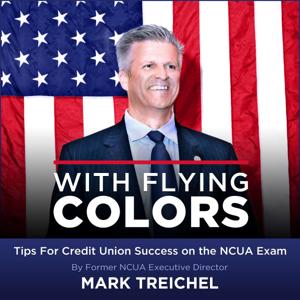

Mark Treichel sits down with Steve Farrar and Todd Miller to break down Letters of Understanding and Agreement—NCUA's formal enforcement tool that requires board-level commitment. With over 100 combined years of NCUA experience, including Steve's authorship of NCUA's enforcement manual, this episode delivers insider perspective on what LUAs mean for credit unions, how boards should approach them, and critical mistakes to avoid.
Key Topics Covered
What triggers an LUA: Understanding when NCUA escalates from informal actions to formal enforcement, and why most credit unions receiving LUAs are classified as troubled.
Published vs. unpublished: The distinction that creates reputation risk, how industry publications find published LUAs, and which state regulators require publication.
Board accountability: Why voting no or abstaining doesn't protect individual directors, and what fiduciary responsibility means when your credit union signs an LUA.
Negotiation before signing: How to approach discussions with your examiner or problem case officer, ensuring timeframes are realistic and commitments are achievable.
Root causes vs. comprehensive lists: Why LUAs should focus on fundamental problems, and what to do when you're facing a lengthy document with dozens of items.
Satisfying an LUA: The two-part test NCUA applies—completing actions AND achieving intended results—and why there's no built-in expiration date.
Notable Quotes
"The LUAs only addressed mainly what we would refer to as the root causes of the problem." — Steve Farrar
"The language in published LUAs is very draconian and very one-sided. It's intended to be serious." — Todd Miller
"If you abstain or vote no, and the board agrees to sign, you're still subject to that agreement. It was a board decision." — Mark Treichel
About the Guests
Steve Farrar spent 30+ years at NCUA, including 15 years as a problem case officer and 15 years in the central office where he authored NCUA's enforcement manual and worked on corporate resolution and risk-based capital regulations.
Todd Miller served nearly 35 years at NCUA as an examiner, problem case officer, regional capital market specialist, and Director of Special Actions supervising problem case officers and capital market specialists.
Resources
Credit Union Exam Solutions: marktreichel.com
Related Episode: Documents of Resolution and Examiner Findings
 View all episodes
 By Mark Treichel's Credit Union Exam Solutions
5
1414 ratings
Mark Treichel sits down with Steve Farrar and Todd Miller to break down Letters of Understanding and Agreement—NCUA's formal enforcement tool that requires board-level commitment. With over 100 combined years of NCUA experience, including Steve's authorship of NCUA's enforcement manual, this episode delivers insider perspective on what LUAs mean for credit unions, how boards should approach them, and critical mistakes to avoid.
Key Topics Covered
What triggers an LUA: Understanding when NCUA escalates from informal actions to formal enforcement, and why most credit unions receiving LUAs are classified as troubled.
Published vs. unpublished: The distinction that creates reputation risk, how industry publications find published LUAs, and which state regulators require publication.
Board accountability: Why voting no or abstaining doesn't protect individual directors, and what fiduciary responsibility means when your credit union signs an LUA.
Negotiation before signing: How to approach discussions with your examiner or problem case officer, ensuring timeframes are realistic and commitments are achievable.
Root causes vs. comprehensive lists: Why LUAs should focus on fundamental problems, and what to do when you're facing a lengthy document with dozens of items.
Satisfying an LUA: The two-part test NCUA applies—completing actions AND achieving intended results—and why there's no built-in expiration date.
Notable Quotes
"The LUAs only addressed mainly what we would refer to as the root causes of the problem." — Steve Farrar
"The language in published LUAs is very draconian and very one-sided. It's intended to be serious." — Todd Miller
"If you abstain or vote no, and the board agrees to sign, you're still subject to that agreement. It was a board decision." — Mark Treichel
About the Guests
Steve Farrar spent 30+ years at NCUA, including 15 years as a problem case officer and 15 years in the central office where he authored NCUA's enforcement manual and worked on corporate resolution and risk-based capital regulations.
Todd Miller served nearly 35 years at NCUA as an examiner, problem case officer, regional capital market specialist, and Director of Special Actions supervising problem case officers and capital market specialists.
Resources
Credit Union Exam Solutions: marktreichel.com
Related Episode: Documents of Resolution and Examiner Findings

32,249 Listeners

8,791 Listeners

16,080 Listeners

153,882 Listeners
9,765 Listeners
87,966 Listeners

9,562 Listeners

3,110 Listeners
2,451 Listeners

59,522 Listeners
40,892 Listeners

1,144 Listeners

20 Listeners
0 Listeners
155 Listeners