
Sign up to save your podcasts
Or

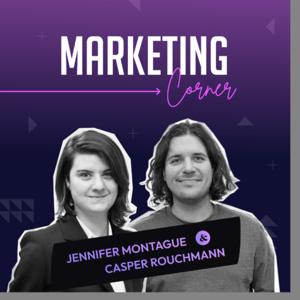


In their careers, Jen and Casper have looked under the hoods of plenty of companies. And after a while, some patterns start to emerge...
In this episode, they share the yellow, orange, and red flags that signal a marketing function might have some serious challenges.
Some of the warning signs covered include:
When the ICP really means “I Can Pay” and nothing more
When the data foundation is shaky, fragmented, or political
When marketing operates as a reactive service desk for sales instead of a strategic partner
When leadership cracks are starting to show
When "shiny object syndrome" is used to try and fix misalignment
When expectations are high but ownership is low
This is an honest look at the signals that tells Casper and Jen whether theyre stepping into a marketing challenge — or an organizational one.
In this episode, we take on one of the most misunderstood workplace trends right now: quiet quitting.
Is it really disengagement?
Or just healthy boundary-setting?
Is that necessarily a bad thing?
Or are we missing something deeper?
We challenge the mainstream definition and offer a sharper one.
We also introduce a related but very different concept: quiet cracking.
If you lead a team, manage people, or have ever felt stretched at work, this conversation may change how you think about disengagement, burnout, and accountability.
Listen in and decide where you stand.
In this episode, we unpack a major shift in B2B software discovery.
G2 is acquiring Capterra, Software Advice, and GetApp, bringing four of the biggest review platforms under one owner.
We cover:
Available wherever you listen to podcasts
Let's get into hypotheticals
Let me hear your budget talk, your budget talk
In this episode, we ask a hypothetical, yet revealing question:
If you had to shift 20% of your marketing budget tomorrow, where would it come from and where would it go?
Let’s get hypothetical, hypothetical.
We cover:
Why “low-intent” spend is getting far more budget than it deserves
Where experimentation should really live (and why most teams dont 'protect it)
Why content, AI search visibility, and brand building deserve more money — even when they’re hard to measure
Why optimising for MQLs is still one of marketing’s favourite self-inflicted wounds
Lets challenge some sacred cows to focus on how buyers buy - not what looks good in a dashboard.
In this episode, we ask a deceptively simple question:
If you could reallocate 20% of your marketing budget tomorrow, where would you put it and what would you take it from?
We cover:
Why paid search and “low-intent” spend is eating far more budget than it deserves
Where experimentation should really live (and why most teams never protect it)
Why content, AI search visibility, and brand building deserve more budget — even when they’re hard to measure
Why optimizing for MQLs is still one of marketing’s favorite own goals
Time to focus on how buyers actually buy — and not what looks good in a dashboard.
In this episode, Casper and Jen debrief on the first-ever Growthforia — a sold-out B2B SaaS marketing conference launched from scratch in Copenhagen.
Casper shares the real story behind the event:
Why they built it (and what was missing in the market)
How they sold 120+ tickets without a legacy brand
What worked, what flopped, and what they'd never do again
The not-so-glamorous reality of organizing a first-time event
Lessons on community building, brand exposure, and ROI for agency-led events
You’ll hear honest reflections on everything from technical mishaps to slide disasters, surprising channel performance (spoiler: email wins again), and why networking needs to be more than just wine at the end.
If you’re a marketer thinking about running your own event—or just curious about what goes on behind the scenes—this one’s for you.
Practical, unfiltered, and packed with takeaways.
In part two of our deep-dive with Liam Bartholomew from Cognism, we go beyond theory and unpack how brand and demand gen can (and must) work together — especially in high-growth environments.
We explore:
Why most teams get the sequence wrong: building the brand after capturing leads
How Cognism structures brand ownership across content, product marketing and leadership
The difference between scaling broad awareness and going deep with the right audience
Why treating SEO and LinkedIn as brand—not performance—channels is now critical
How to use a content engine and messaging hierarchy to stay aligned and avoid “random acts of content”
Measurement frameworks that tie content and demand back to revenue impact
Liam also shares hard-earned lessons from Cognism’s journey from 50 to 500 people, and why brand reach without relevance is a fast track to burnout and missed goals.
This one is a must-listen for any startup marketer trying to turn theory into execution — and make brand actually drive pipeline.
Check out the ungated Demand Gen Playbook from Cognism for more.
We’re joined by Liam Bartholomew, VP of Brand & Customer Marketing at Cognism, to break down one of the biggest shifts happening in B2B marketing right now: the move from traditional lead generation to true demand generation.
Cognism didn’t just tweak their funnel. They fundamentally rethought how marketing drives growth.
In this episode, Liam shares the real story behind that transition: what triggered it, how they proved it internally, and what had to change across content, paid media, and sales alignment to make it work.
We talk about:
• Why cheap leads and high volume were holding growth back
• The data that exposed the flaws in a lead-gen-first model
• What actually happens when you ungate content
• How demand gen changes the role of content, video, and distribution
• How to keep sales onside while reducing “leads”
• Why intent matters more than engagement
• The fear, risk, and internal pushback no one talks about
Liam also shares practical advice for marketers who believe in demand gen, but are stuck in lead-driven organisations, including how to start building momentum before making the big switch.
Learn more about Cognism's Demand Gen playbook course here
Follow Liam on LinkedIn
We're back with Chief Advisor at PRCEPTION, Dennis Bylov Dalgaard, to unpack one of the most misunderstood parts of modern leadership: how founders and executives should communicate publicly - without blowing themselves up in the process.
From technical founders who hate being on camera, to charismatic CEOs who say the wrong thing at the worst possible time, to the PR disasters that happen when “authenticity” goes unfiltered - this episode goes deep into the real dynamics of executive visibility.
We explore:
• Founder vs. brand: who should actually be the spokesperson?
• Why charisma is an asset… until it isn’t
• The difference between “authentic” and “unfiltered”
• How to build a leadership persona that feels natural, not fake
• Why journalists want raw honesty but brands need guardrails
• How social media fits into modern executive communication (X vs. LinkedIn vs. everything else)
• Why the best founders are exceptional simplifiers
Dennis also shares his #1 communication skill every founder should learn... Tune in to hear it!
This episode is a masterclass in leadership communication, stakeholder management, and the art of showing up as your “authentic self”… without self-sabotage.
In this episode, we sit down with Chief Advisor at PRCEPTION, Dennis Dalgaard, to talk about how AI is changing PR.
We dig into:
- Why traditional earned media still matters (and what even is it?)
- What “AI relations” means for your comms strategy
- How LLMs are reshaping how stories spread online
- Why most startups get PR wrong and how to fix it
If you’re still thinking of PR as nothing more than press releases and media lists, this one’s for you!
Connect with Dennis on LinkedIn
Find out more about PRCEPTION
From the publisher's feed

2 Listeners