
Sign up to save your podcasts
Or

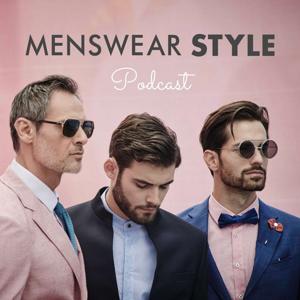


In this episode of the Menswear Style Podcast, we speak with Mathias Jensen, Creative Director at Les Deux, the Danish menswear brand that has built its identity around the meeting point between Scandinavian minimalism, nostalgic streetwear and classic preppy style.
Founded in Copenhagen in 2011, Les Deux was born from the unlikely friendship of two founders from dramatically different backgrounds — one from a privileged Danish upbringing and the other a refugee from Congo with French roots. That contrast became the foundation for the brand itself: “Les Deux” meaning “the two”, representing duality, different perspectives and the idea that very different people can share the same ambition.
Mathias, who joined the company in 2012, has been closely involved in its evolution ever since. He explains how that original idea of duality continues to influence everything from the clothes and imagery to the way Les Deux thinks about community, creativity and storytelling.
We take a deep dive into the brand’s visual identity and the huge amount of work that goes into creating its campaigns and digital presence. With photography, video, graphic design, e-commerce and visual merchandising largely handled in-house, Mathias reveals how Les Deux builds immersive worlds around its collections rather than simply displaying products.
That approach is particularly evident in the brand’s latest “The Neighborhood” collection, inspired by New York City. Mathias explains why New York has become a second home for the team and how the city provided the setting for a collection built around a fictional persona inspired by Robin Williams — imagining him as a sophisticated Wall Street banker moving between the office, Madison Square Garden and the streets of Manhattan.
We discuss how Les Deux approaches design through contrast and juxtaposition, combining tailoring with denim, workwear, sportswear and preppy staples. Mathias also explains why the brand believes menswear is often less about individual garments and more about how those pieces are combined and styled together.
The conversation explores the delicate balance between staying current and remaining timeless. Rather than chasing every trend, Les Deux looks at cultural shifts, trend forecasting and other brands before selectively incorporating new influences while maintaining the familiar aesthetic its customers already recognise.
Community is another major part of the Les Deux story. Mathias explains how the brand's early success depended on friends and supporters helping out when the company was still a tiny team with almost no resources — and why that experience created a lasting commitment to giving back and supporting others through partnerships, projects and financial assistance.
We also look at Les Deux’s international ambitions, from its established presence across Scandinavia and Europe to the rapidly growing US market and the brand’s plans to push further into the UK.
A fascinating conversation about Scandinavian menswear, creative direction, storytelling, community, New York, the art of combining classic and contemporary influences, and how Les Deux has managed to keep evolving without losing sight of what made the brand distinctive in the first place.
www.menswearstyle.co.uk
In this episode of the Menswear Style Podcast, we speak with Adam White-Johnson, founder and CEO of Beard Gang Members, the men’s grooming brand built around helping men grow, maintain and properly care for their beards.
Adam’s journey began with a problem of his own. While trying to grow his beard, he struggled to find products that felt relevant to him and, more importantly, products that actually delivered results. After becoming increasingly frustrated with the quality and positioning of products available on the high street, he decided to create his own.
That personal experience became the foundation for Beard Gang Members.
We discuss why Adam believes the beard-care industry is still in its infancy, despite the growing popularity of beards, and why so many men give up during the early stages because they experience dryness, irritation and itching. Adam explains that the problem often isn't the beard itself, but the neglected skin underneath it.
The conversation explores the formulation process behind the brand, including Adam’s use of hemp seed oil as a key ingredient and his extensive trial-and-error approach to creating products capable of tackling thick, coarse and dry facial hair.
Starting with a single beard oil and comb, Beard Gang Members has since expanded into a broader grooming system including multiple beard oils, beard wash and shampoos, balms and other essentials. Adam explains how the products are designed to work together and why maintaining a regular grooming routine can make the difference between successfully growing a beard and eventually reaching for the razor.
We also talk about the challenges of building a business around hemp-derived ingredients, including the misconceptions surrounding hemp and the practical difficulties Adam encountered with social media advertising, payment processing and other aspects of running an e-commerce brand.
Adam shares the story behind Beard Gang Members’ distinctive branding too. From designing the packaging himself to creating the logo from a photograph of his own profile, he explains how keeping the visual identity simple, clean and recognisable became an important part of the brand.
As the face of Beard Gang Members, Adam has also deliberately made himself the brand’s primary ambassador. He discusses why being front and centre has allowed him to create content himself, build trust with customers and grow an audience organically without relying entirely on expensive influencers or celebrity endorsements.
The episode also looks at the cultural side of beard grooming — why beards have become increasingly mainstream, how social media has influenced perceptions of facial hair, and why Adam believes men need to start thinking about beard care as an everyday grooming routine rather than something they only consider when problems appear.
Finally, Adam reveals his latest innovation: a compact, portable beard mist designed to take beard grooming beyond the bathroom and into everyday life. Small enough to carry in a pocket, the product is part of his wider mission to make beard maintenance as normal and convenient for men as other forms of personal grooming.
A lively conversation about entrepreneurship, men’s grooming, beard culture, product development, hemp-based ingredients and the growing movement encouraging men to take better care of themselves.
www.menswearstyle.co.uk
In this episode of the Menswear Style Podcast, we speak with Billy Sims-Hilditch and Rory Bennett, co-founders of Sims Wear, the British menswear brand built around a simple idea: make clothing properly, make it last, and move away from the endless cycle of seasonal fast fashion.
Sims Wear began three years ago after Billy, frustrated by a £200 cashmere jumper that fell apart within a year, started investigating what actually makes a genuinely good piece of knitwear. His research led him to three essential ingredients: excellent raw fibres, a first-rate yarn spinner and a skilled manufacturer capable of bringing the two together.
That initial search for a better jumper became the foundation for Sims Wear.
Billy explains how he set out to create high-quality clothing without the traditional luxury-brand mark-up, focusing instead on craftsmanship, materials and longevity. The brand’s ambition is to create pieces that can be worn for years rather than replaced every season — garments designed to become part of a wardrobe rather than simply part of a trend cycle.
Rory joined the business after spending almost three years working as a stockbroker, bringing a complementary set of skills around finance, operations and strategy. Having met Billy at university and already being close friends, the pair explain why their contrasting strengths have made such a natural partnership and how their relationship helps them navigate the challenges of running a young fashion business.
A major focus of the conversation is Sims Wear’s commitment to British manufacturing. Billy takes us behind the scenes of the production process, from yarn spun by Todd & Duncan in Kinross to knitwear produced in Scotland and shirts made by a long-established manufacturer. We explore why sourcing and manufacturing in Britain remains so important to the brand, despite the additional cost and complexity.
The discussion gets particularly detailed when it comes to knitwear. Billy explains why Sims Wear uses seamless knitting technology to create garments with fewer opportunities for weak points and manufacturing failures, after his original jumper’s construction problems helped inspire the company in the first place.
We also explore the challenges of producing high-quality shirting in Britain, from developing the right patterns and fits through repeated sampling and wash testing to finding the right manufacturing partner without pushing the final retail price beyond what customers will pay.
With Sims Wear’s first physical store now open on Quebec Street in Marylebone, the founders explain why they chose the area, how a supportive landlord helped make the move possible and why the short-term retail commitment allows them to gather real-world data before making bigger expansion decisions.
The conversation also touches on the realities of running an independent clothing brand, the importance of finding the right balance between product quality and price, and why the founders believe customers should be able to feel the difference when they put a genuinely well-made garment on.
We also hear about the thinking behind Sims Wear’s understated aesthetic and its wider mission to simplify the modern wardrobe by moving away from seasonality and towards timeless pieces that remain relevant year after year.
A thoughtful conversation about British manufacturing, quality knitwear, entrepreneurship, friendship, independent retail and the belief that buying fewer, better clothes can be better for both the customer and the planet.
www.menswearstyle.co.uk
In this episode of the Menswear Style Podcast, we speak with Evren Özkan, co-founder of Mallet London, the progressive British footwear and lifestyle brand that has carved out a distinctive position between premium streetwear and accessible luxury.
Founded around a decade ago, Mallet London was built around a simple idea: create well-designed, high-quality footwear with a strong urban identity, while offering consumers an alternative to the increasingly expensive world of luxury sneakers.
Evren’s route into the business began with the family manufacturing company, where he spent the first years of his career learning the industry from the ground up. After leaving school at 16, he joined his father’s business and initially spent long days unloading lorries before moving into the offices and eventually relocating to Turkey, where much of the manufacturing operation was based.
That experience proved invaluable. Working directly with factories, materials and garment construction gave Evren a practical understanding of how products are made, while a subsequent role in international sales saw him take the company from having virtually no overseas business to generating around £20 million in international sales.
We explore how those experiences ultimately provided the foundation for Mallet London. Evren explains how he transferred his manufacturing and commercial knowledge into footwear, finding factories willing to work with a new brand and producing an initial collection of just 40–50 pairs.
The brand launched at a particularly interesting moment for footwear, as the premium sneaker market was beginning to take shape. Evren explains how Mallet positioned itself between high-end luxury brands and sportswear giants such as Nike and adidas, offering a more accessible price point without compromising on design or quality.
We also discuss the importance of understanding different international markets. Evren shares lessons from his time working across Europe, the US and Asia, and why colours, prints and silhouettes that perform well in one country can behave very differently in another.
The conversation looks closely at Mallet’s design language too. Many of the brand’s styles take their names from areas of North and East London, reflecting the founders’ roots, while the collection continues to evolve through a combination of urban influences, premium materials and increasingly sophisticated silhouettes.
Collaboration has become another major part of the Mallet story. Evren discusses partnerships with brands including Transport for London, Reebok and Smiley, explaining how the company assesses potential collaborations and why each partnership needs to make sense for both audiences rather than simply generating attention.
We also hear about Mallet’s expansion beyond sneakers. With a growing clothing range and a newly launched formal footwear collection featuring Chelsea boots, penny loafers and monk shoes, the brand is beginning to position itself as an accessible-luxury lifestyle label rather than purely a sneaker company.
Evren explains the thinking behind that move and why he believes there is room for more innovation in formal footwear, particularly at a price point between traditional luxury and the mass market.
The conversation also touches on Mallet’s international growth, Evren’s life between London and Dubai, and why the Middle East has become such an important market for the brand, with a growing presence across Dubai, Saudi Arabia, Kuwait and Bahrain.
And, naturally, the interview takes an unexpected turn into James Bond territory, with the pair discussing whether Mallet’s distinctive new formal shoe hardware could one day become the perfect home for some suitably Bond-inspired technology.
A fascinating conversation about entrepreneurship, manufacturing, international expansion, footwear design, collaboration and the evolution of Mallet London from a small collection of sneakers into a rapidly growing global brand.
www.menswearstyle.co.uk
In this episode of the Menswear Style Podcast, we speak with Jonathan Bordell, co-founder of The Helicon Watch Company, the independent British watch brand combining decades of industry experience with limited production, accessible pricing and a distinctly personal approach to watchmaking.
Helicon is unusual in being a husband-and-wife operation. Jonathan and his wife Danielle each bring around 20 years of experience in the watch industry, with Jonathan specialising in sales and marketing and Danielle coming from a design background that began with creating movie posters.
After years spent consulting for other watch companies, the pair decided to take everything they had learned about design, manufacturing, components and the international watch market and create something of their own.
The result is Helicon: a proudly independent microbrand built around producing one project at a time in strictly limited numbers. Rather than releasing the same watch repeatedly in different colours, Jonathan explains why Helicon prefers to complete a collection and move on to something entirely new.
We discuss the philosophy behind the watches and why Jonathan sees them as something closer to clothing than simply an instrument for telling the time. Like a favourite jacket, shirt or pair of jeans, a watch becomes part of how someone expresses themselves — something that should look good, feel good and develop a personal connection with its owner.
Jonathan takes us into the technical side of Helicon too, from sapphire crystals and scratch-resistant ceramic bezel inserts to 316L marine-grade stainless steel cases, 200-metre water resistance and custom brass movement holders designed to provide additional protection from magnetism and shock.
Exclusivity is another important part of the proposition. Helicon produces just 50 examples of each colour, giving customers the opportunity to own something genuinely unusual without entering the price territory traditionally associated with highly limited watches.
We also explore the advantages that come from Jonathan and Danielle's extensive industry experience. With a global network of specialist manufacturers and craftspeople built over two decades, Helicon can draw on expertise normally associated with much larger watch companies. That includes working with individual specialists such as Amy, the craftsperson responsible for hand-painting Helicon's dials, whose background includes restoring vintage Rolex dials.
The conversation gets into the realities of running a microbrand as well, including managing specialist suppliers, planning collections years in advance and remaining nimble enough to incorporate new materials, technologies and manufacturing techniques as they become available.
We also discuss the changing culture surrounding watch collecting. Jonathan explains why the community has become younger, more diverse and increasingly open to independent brands, while women in particular are challenging traditional assumptions about watch sizing and how different styles should be worn.
Naturally, James Bond makes an appearance too, as we explore the enduring relationship between watches and cinema, the appeal of a well-worn watch with a story behind it, and why collectors increasingly want different watches for different moods and occasions rather than remaining loyal to a single marque.
Finally, Jonathan discusses the growing strength of the British watchmaking community, Helicon’s plans for international events in the US and Asia, and why meeting collectors face-to-face remains one of the most important parts of building an independent watch company.
A fascinating conversation about watches, craftsmanship, design, collecting and the appeal of discovering a small independent brand with a story worth telling.
www.menswearstyle.co.uk
In this episode of the Menswear Style Podcast, we speak with Miguel Soares, founder of Portuguese menswear brand BYMS, whose journey into fashion began after an injury brought his dream of becoming a professional footballer to an unexpected end.
Miguel signed his first professional football contract with Vitória Sport Clube at just 18, but a serious knee injury followed by two surgeries in less than six months forced him to reconsider his future. During what became a particularly difficult period, he turned to another lifelong passion: fashion.
Fashion was already part of Miguel’s world. His grandfather runs a small textile company in Guimarães, Portugal, and Miguel had grown up around fabrics, production and the people working within the business from a young age. The collision of those two worlds — football and fashion — ultimately led to the creation of BYMS.
Miguel talks openly about the mental challenge of losing a career he had worked towards since childhood, and how building a clothing brand gave him a renewed sense of purpose during a difficult period.
We explore how BYMS began, from Miguel sitting down with his mother and developing a business plan to taking responsibility for almost every aspect of the company himself. Without formal training in fashion design or business, he learned by doing — designing the collections, contacting manufacturers, managing shipping and developing the brand from the ground up.
The result is a contemporary menswear label focused primarily on casual-smart clothing, combining minimalist and elegant designs with more relaxed pieces. The collection can move from hoodies and casualwear to double-breasted blazers, reflecting Miguel’s belief that a modern wardrobe does not have to fit into a single category.
We also discuss one of the biggest lessons Miguel learned as a young brand founder: stock can quickly become a problem. He explains why he regrets ordering too heavily in the early days and why emerging brands should resist the temptation to assume that selling online is easy.
Instead, Miguel believes that honesty, transparency and a genuine relationship with customers are crucial to building a sustainable business.
That philosophy became particularly powerful through TikTok, where Miguel began documenting his personal journey, showing behind-the-scenes footage from manufacturers and sharing the realities of building BYMS. What started as a slightly uncomfortable experience for a self-confessed introvert developed into one of the brand’s most important marketing channels.
Rather than simply advertising finished garments, Miguel invited customers into the process. Followers began commenting on designs, colours, production and marketing, effectively becoming part of the brand’s development and helping create a small but highly engaged community around BYMS.
We also discuss the influence of football on Miguel’s creative identity, including his admiration for Cristiano Ronaldo and how the sport continues to inform the personality and inspiration behind the brand.
A personal and honest conversation about resilience, football, fashion, entrepreneurship, manufacturing, social media and the importance of finding purpose when life takes an unexpected turn.
www.menswearstyle.co.uk
In this episode of the Menswear Style Podcast, we welcome back Peter Jüriado, Creative Director and Head of Design at Stenströms, to catch up on one of Sweden’s best-known shirt specialists and explore how the 125-year-old brand continues to evolve.
Peter has spent three decades at Stenströms, although his route into fashion was anything but conventional. Originally trained as an electrical engineer, he joined the company initially in sales before spending years learning the business from the factory floor and absorbing the knowledge of an experienced mentor who had himself worked at Stenströms for more than four decades.
Around 15 years ago, Peter took responsibility for the collection and has since played a central role in developing the brand from a traditional shirt manufacturer into what he describes as a broader “shirt concept”, incorporating knitwear, jersey shirts and other complementary pieces alongside its core shirting.
We discuss the extraordinary history of Stenströms, a company that dates back 125 years, and how its long-standing commitment to shirtmaking continues to influence the brand today.
Peter explains what separates Stenströms from both lower-priced mass-market shirts and the increasingly expensive world of Italian mills, handmade shirts and luxury tailoring. His philosophy is centred on producing premium shirts with excellent fabrics, strong European manufacturing and a level of comfort that makes them practical enough to wear every day.
That everyday philosophy is particularly important to Stenströms’ design approach. Rather than creating rigid formal shirts that feel disconnected from modern life, Peter describes the brand’s preference for softer construction, comfortable interlinings and a slightly more relaxed character — a shirt that can sit comfortably between formal and casual dressing.
We also explore how the menswear landscape has changed since Peter joined the company, including the decline of traditional office dress, the rise of knitwear and T-shirts, and the continuing demand for formal shirts despite the shift towards more relaxed workplaces.
The conversation also takes us behind the scenes of Stenströms’ manufacturing. While production is no longer based in Sweden, the company has operated its own factory in Estonia for many years, where samples, key production work and other important stages of the manufacturing process are handled.
Peter also explains why Stenströms continues to place significant importance on its independent retail partners. Rather than trying to replicate the entire made-to-measure experience online, the brand works with retailers who can advise customers, take measurements and create customised shirts using different fabrics, buttons, collars, cuffs and other details.
We get into exactly how the made-to-measure process works, from starting with a Stenströms fit through to producing a single personalised shirt in the factory — including the ability to accommodate some genuinely unconventional requests.
Finally, Peter reveals details of Stenströms’ anniversary collaboration with Danish stylist and creative figure Matthias, a limited-edition capsule created as part of the company’s 125th anniversary celebrations. The collection brings together shirts, knitwear, ties, scarves, a suede jacket and other pieces, combining Stenströms’ heritage with a more contemporary and personal approach to styling.
A fascinating conversation about Scandinavian shirting, craftsmanship, heritage, modern menswear, made-to-measure clothing and how a 125-year-old company continues to find new ways to stay relevant.
www.menswearstyle.co.uk
In this episode of the Menswear Style Podcast, we speak with Will Verona, founder of PURIFIED, the London-based footwear brand attempting to rethink the entire lifecycle of a shoe by creating footwear made entirely without plastic.
Will’s journey into shoemaking began in Italy, where he spent six months studying the technical side of footwear — learning pattern making, construction, shoe lasts and the practical skills needed to turn designs into finished shoes. He subsequently spent five years working as a footwear designer, developing a fascination with traditional shoe constructions that have increasingly disappeared from modern manufacturing.
That experience eventually led to PURIFIED.
The concept was sparked in part by Will’s experiences working in Sri Lanka, where he regularly passed a vast landfill site known locally as “Trash Mountain”. Seeing the scale of the waste prompted him to question the footwear industry’s approach to end-of-life products and whether shoes really need to be made from materials that can remain in the environment for generations.
PURIFIED’s answer is to reject plastics, synthetic materials and petroleum-based glues altogether, instead creating footwear from natural materials designed to return to the earth at the end of their useful life.
Will explains why he believes the industry has become so dependent on synthetic components and why creating a genuinely plastic-free shoe is considerably more challenging than simply replacing a few materials. We discuss the limitations of many supposedly “sustainable” alternatives, including recycled plastics and plant-based materials backed with synthetic components, and why Will believes true circularity requires going back to natural materials that can safely re-enter natural systems.
The development process took four years, with Will ultimately moving beyond conventional footwear suppliers and working with scientists and next-generation material companies. He explains why footwear presents a much greater technical challenge than products such as bags or wallets, particularly because shoes need to withstand constant movement, impact and exposure to the elements.
We also explore the influence of traditional shoemaking on PURIFIED’s construction methods and why Will believes the industry has lost some of the craftsmanship and technical knowledge that existed before modern synthetic materials became ubiquitous.
The conversation looks at PURIFIED’s first product, a versatile trainer designed to move between everyday settings — from the beach to the office — while maintaining the brand's core commitment to natural materials and minimal environmental impact.
Will also discusses the realities of bringing such a radical concept to market, including prototyping, material testing, manufacturing in Portugal and the financial support he received from his family and their long-standing involvement in the footwear industry.
We examine why the biggest footwear brands face such a difficult challenge in moving towards genuinely circular production, and whether smaller independent companies have an advantage because they can rethink their infrastructure from scratch rather than attempting to retrofit enormous existing supply chains.
There’s also plenty of discussion about the future of footwear, from PURIFIED’s potential expansion into more formal and casual styles to Will’s admiration for Nike’s pioneering “Considered” range from the 1990s, which experimented with modular construction, natural materials and designs that could be dismantled.
A fascinating conversation about shoemaking, sustainability, traditional craftsmanship, materials science and the urgent need to rethink what happens to our footwear once we stop wearing it.
www.menswearstyle.co.uk
In this episode of the Menswear Style Podcast, we speak with Giuliano Dore, co-founder of Get Groomed, the London-based mobile barbering platform bringing professional grooming directly to customers’ homes, offices, hotels, events and more.
Founded in 2017 by Giuliano and his wife, Sabrina Vijay Kumar, Get Groomed was born from a frustrating personal experience. Living in Shoreditch and working long hours, Giuliano struggled to find a barber who understood exactly what he wanted. After one particularly poor haircut left him waiting months for his hair to grow back, he decided to take matters into his own hands.
The solution was simple: find excellent barbers, vet them properly and bring them to the customer.
We explore how that initial idea developed into a technology-driven mobile grooming business. Giuliano explains how customers can select their location and service through the Get Groomed platform, with the system then matching them with suitable local barbers based on availability, skill set, hairstyle and hair type.
The company’s proprietary matching and geolocation technology is a major part of its proposition, and Giuliano explains how the system has evolved to manage everything from booking notifications and barber profiles to matching the right professional with the right customer.
We also discuss the surprisingly complex challenge of building a network of trusted barbers. Get Groomed has developed a rigorous vetting process involving qualification checks, references and skills assessment, ensuring that customers receive the quality of service they would expect from a premium traditional barbershop — without having to leave home.
Giuliano shares some of the early days too, when the company was still recruiting its first barbers and interviews were taking place in his Shoreditch flat. What began with a small group of professionals has since developed into a much broader network covering London and expanding into other parts of the UK.
Convenience is at the heart of the business, but Giuliano explains why Get Groomed also aims to challenge the perception that mobile grooming is an expensive luxury reserved for celebrities and wealthy clients. The company’s ambition is to make high-quality professional barbering available to anyone who values their time, regardless of where they live.
The conversation explores the changing nature of modern grooming, from longer working hours and busy lifestyles to the growing demand for personalised services and the desire to receive a more considered consultation rather than a rushed haircut.
We also look at the business opportunity outside London. While major cities such as Manchester are an obvious focus for expansion, Giuliano explains why smaller towns and underserved areas could be equally important, particularly locations where customers may have limited access to quality barbers or specialists for particular hair types.
The corporate and events market is another major opportunity, with Get Groomed providing services for businesses, weddings, festivals and other occasions where bringing professional barbers directly to a location can transform the experience.
And the future could become even more technology-focused, with Giuliano revealing plans to introduce AI into the platform to further improve the customer experience and make the barber-to-customer matching process even more intelligent.
A fascinating conversation about entrepreneurship, technology, barbering, customer service and the future of men's grooming — and how an awful haircut in Shoreditch ultimately led to a business determined to put a professional barber wherever you need one.
www.menswearstyle.co.uk
In this episode of the Menswear Style Podcast, we speak with Manel Garcia Prats, co-founder of OHNE PROJECT, the Spanish footwear brand challenging the conventional shape of the modern trainer with its stylish take on barefoot design.
The idea for OHNE PROJECT began when Manel and his partner were researching footwear for their young children. Learning about shoes designed to respect the natural shape and biomechanics of developing feet led them to a bigger question: if this approach is considered beneficial for children, why do adults so often spend their lives forcing their feet into narrow, rigid shoes?
That question ultimately became the foundation for OHNE PROJECT.
Manel explains the philosophy behind the brand, including the belief that shoes should be designed around the natural shape of the foot rather than forcing the foot to conform to the shape of the shoe. OHNE PROJECT’s first model, the Project 080, combines the core characteristics of barefoot footwear with a design inspired by iconic 1980s sneakers.
We explore what makes a barefoot shoe different, from its wide toe box and zero-drop construction to its thin, lightweight and highly flexible sole. Manel demonstrates just how flexible the shoes are, explaining why allowing the foot to move naturally can help it perform more like it would when walking barefoot.
The conversation also gets into the wider implications of conventional footwear, including the way narrow toe boxes and elevated heels can alter how we distribute weight through our feet and potentially affect the alignment and movement of other parts of the body.
Manel is careful to stress that he isn't a medical professional and that individual needs can vary, but he explains the basic philosophy behind barefoot footwear and why OHNE PROJECT believes people should allow their feet to function as naturally as possible.
We also discuss the important concept of transitioning gradually into barefoot footwear. After years of wearing rigid shoes, the muscles in the feet may need time to adapt to greater movement and load — making the transition itself an important part of the process.
For Manel, however, the biggest obstacle facing barefoot footwear isn't necessarily the concept. It's the way many barefoot shoes look.
As a former sneaker collector and someone who studied footwear design, he saw a clear opportunity to create a shoe that delivers the functional benefits of barefoot construction without immediately looking like one. The result is a retro-inspired trainer that could comfortably sit alongside conventional sneakers in someone's wardrobe.
We delve into Manel's background in engineering, footwear design and sneaker culture, as well as the challenges of developing OHNE PROJECT in Spain. The shoes are manufactured near Elche, one of the country's major footwear-producing regions, allowing Manel to remain closely involved with the production process while maintaining a strong connection to local manufacturing.
The conversation also touches on the realities of building a small footwear brand, including the additional costs of manufacturing in Europe, international shipping, returns, customs and finding a price point that works for customers in markets such as the UK and US.
Finally, Manel explains the audience OHNE PROJECT is trying to reach: both existing barefoot enthusiasts who want something more stylish and people who understand the potential benefits of barefoot footwear but have previously been put off by the aesthetic.
A fascinating conversation about footwear design, biomechanics, sneaker culture, Spanish manufacturing and the growing movement towards allowing our feet to move the way nature intended.
www.menswearstyle.co.uk
From the publisher's feed
The Menswear Style Podcast is a leading men’s fashion and menswear podcast exploring men’s style, clothing, grooming, lifestyle and the business behind some of the world’s most exciting fashion…
108 Listeners

43 Listeners

260 Listeners

435 Listeners

576 Listeners

8,393 Listeners

53 Listeners

282 Listeners

1,978 Listeners

718 Listeners

47 Listeners

3,008 Listeners

92 Listeners
241 Listeners

262 Listeners