
Sign up to save your podcasts
Or

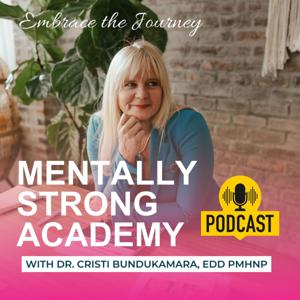


Dr. B here in my series on grief. Today's topic is on anticipatory grief, this happens the first time I experienced anticipatory grief was when my grandmother, who was a big part of raising me my closest relationship at the time was diagnosed with cancer and then the treatment wasn't working and there was this progression and the anticipatory grief of her passing and I know that a lot of people go into grief in this way, right? Maybe your family members on Hospice. Maybe they were diagnosed with a terminal condition.
I feel like I have been living in anticipatory grief since 2008 when I Reggie, my husband and my daughter were diagnosed with DRPLA. And as you're watching my videos, you'll know that I lost Reggie in 2016 from complications of DRPLA.
And then my daughter, my daughter is now 21, but she is probably cognitively, maybe 10 years old. She is now at the beginning of having difficulty walking and there's this continual reminder that her brain is slowly dying. DRPLA causes atrophy in the brain, atrophy is death, cell death and it's a very slow progression. Reggie was considered a quick progression. He was diagnosed at age 9 and he passed away at 17. He began having symptoms at like four or five years old, so that would be considered a rapid progression of DRPLA. My husband did not begin showing signs until he was about 45. He's now 52.
You know this year really hit me hard. This is the 5-year anniversary of Reggie’s death and I'm really looking at Miah and I'm realizing that I'm protecting my heart. Like I'm not loving her the way I was loving Reggie. Reggie was so sick when he was young that a lot of my attention and time was on Reggie. And then after Reggie passed, it's almost like I'm scared to shift that time to Miah because I'm going to lose her too. And I'm likely going to lose my husband. I like to say likely because you know anything is possible and I'm trying to think positive.
That anticipatory grief is real, and you know, learning how to live in joy in that, it is very difficult because you almost want to grieve their loss before they're gone.
That’s taking away something that you could have something precious in this present moment.
And so I've been wrestling with this and I've been like trying to figure out how I can open up my heart, and I do things like yoga and Tai Chi, and there's like these techniques about opening your heart, but the one that's really sticking with me when it comes to anticipatory grief is this technique in Tai chi where you take your past and you visualize your past in your hand and my past has grief, right? I mean, I fought and fought and fought for Reggie and you still passed. And then you put your future in the other hand, in images and I say I'm going to lose Miah. It doesn't matter how much I fight, I'm going to lose her.
And you take those two things and you bring them together and for me I'm bringing them together in prayer, but also in trying to be present.
Miah has really good days. She is a happy girl. Everybody loves her. She's so sweet. Her heart is so sweet. I am practicing living in the present and that's all we can do in anticipatory grief.
Don't spend too much time in controlled grief, if you are doing a lot of anticipatory grief in the present. You're taking away from the present because that's your pain of the future even if it's very likely and we should always hope that there's a chance that it doesn't happen, right?
But you can be realistic but be present in the moment and not spend too much energy in that anticipatory grief because that's the pain of your future. You already have the pain of your past, and sometimes there's pain in the present, but let's try to stay in the present and find those gratitude's of the beautiful moments that you have. And not spend too much time in anticipatory grief.
Because you will feel that pain later.
You are Mentally STRONG.
www.mentallystrong.com<
Today I want to focus on guilt around grief, you know I hear this a lot when people are talking about grief and you'll notice I'm grabbing this, these are Reggie’s ashes that I wear with me and you know, there's sometimes guilt, shame, anger around a grief and this is why it's so important when we're teaching the Mentally STRONG Method is that we help you to separate these things.
I'm going to tell you about guilt today. The guilt of “could I have done something different? What did I do wrong? Could I have changed the outcome of that day?”
The day that Reggie passed I can honestly say as a nurse that his death that day was my fault. This is where it is so important to separate these things. In the grief and the decisions and the choices, it's OK to acknowledge something that you did wrong, but if I would have just sat and ruminated on what I'm about to tell you for the last five years. I would probably be suicidal, honestly. So, we have to make a choice. The ways of how we organize these things in our brain and what we do with them.
The night Reggie passed away he wasn't breathing well. Every time I go to the hospital, they never are able to do anything for him. He has really bad days and really good days and so I just thought it's a bad day. I didn't know that something bigger was going on. I typically have really good assessment skills. Like when somebody is not breathing right, that is always an emergency. What the heck was I thinking? I didn't call 911 until his saturations were going down and I couldn't get them back up. When the paramedics walked into Reggie's room, they knew that he was slipping fast. They immediately began CPR. I couldn't believe it. I was so wrong. I walked away, and I started praying. The paramedic asked me to call it, asked me to tell them to stop doing CPR on my own child. I couldn't do it.
I tell you that because each of you may have a story that someone else can't convince you, and you can't convince yourself that it was the right decision. It's OK to acknowledge a mistake that caused a tragedy. You also need to forgive yourself. It's OK to feel guilty, but you can't stay there. You cannot stay there.
Maybe I would have taken him to the ER, and he would have died at the hospital. I can't say what would have happened if I would have made the the better decision.
So, acknowledge if you did make a mistake. Forgive yourself. And allow yourself to grieve the loss.
When we talk about the Mentally STRONG Method: Think, Organize, Choose. You can think about that, analyze where you went wrong, you've got to organize it. Put the grief in the right box. Put behaviors and choices in the right box. We are never going to do everything right.
You've got to let go of the emotional baggage, that weight that is on you in order to move forward.
So, grief and guilt.
Try to separate them.
The grief, you have to feel that pain.
The guilt, you have to forgive yourself and this is why:
I truly believe in empowering everyone to be able to confidently say “I am Mentally STRONG.”
__
Dr. Cristi Bundukamara, Ed.D, PMHNP-BC --- A Psychiatric Mental Health Nurse Practitioner and a Doctor of Healthcare Education has experienced unimaginable trials that have caused many feelings such as depression, anxiety, anger, & overwhelming stress.
However, she has developed a new pathway to becoming Mentally Strong & Choosing to be Happy. With purpose, Dr. B has developed the phases that were refined within the Mentally STRONG Method that she created and wants to share with you.
https://www.facebook.com/Mentallystronginc
https://www.mentallystrong.com
mentally_strong_
@MentallySTRONG4
https://www.youtube.com/c/drbmentallystrong
https://www.linkedin.com/company/mentallystrong
Our behaviors and choices play a big part in our mental strength. In this, the last video in a series of 6 on the Mentally STRONG Method, Dr. B discusses how behaviors and choices impact you and how to organize and control them.
Dr. Cristi Bundukamara, Ed.D, PMHNP-BC --- A Psychiatric Mental Health Nurse Practitioner and a Doctor of Healthcare Education has experienced unimaginable trials that have caused many feelings such as depression, anxiety, anger, & overwhelming stress.
However, she has developed a new pathway to becoming Mentally Strong & Choosing to be Happy. With purpose, Dr. B has developed the phases that were refined within the Mentally STRONG Method that she created and wants to share with you.
Everyone experiences anxiety to some degree, and a low level of anxiety can be helpful in keeping us productive. It's when the anxiety is overwhelming that we need to get it under control. You do have the power to control your anxiety. In this 5th video of 6 in the series on The Mentally STRONG Method, Dr. B discusses anxiety, how it impacts you, and how you can organize your brain.
Dr. Cristi Bundukamara, Ed.D, PMHNP-BC --- A Psychiatric Mental Health Nurse Practitioner and a Doctor of Healthcare Education has experienced unimaginable trials that have caused many feelings such as depression, anxiety, anger, & overwhelming stress.
However, she has developed a new pathway to becoming Mentally Strong & Choosing to be Happy. With purpose, Dr. B has developed the phases that were refined within the Mentally STRONG Method that she created and wants to share with you.
Everyone experiences negative thought. This is the 4th video in a series on the Mentally STRONG Method. Learn about negative thoughts, how they impact you and how you can organize them.
Dr. Cristi Bundukamara, Ed.D, PMHNP-BC --- A Psychiatric Mental Health Nurse Practitioner and a Doctor of Healthcare Education has experienced unimaginable trials that have caused many feelings such as depression, anxiety, anger, & overwhelming stress.
However, she has developed a new pathway to becoming Mentally Strong & Choosing to be Happy. With purpose, Dr. B has developed the phases that were refined within the Mentally STRONG Method that she created and wants to share with you.
This is the 3rd in a series of 6 podcasts about the Mentally STRONG Method. Learn about trauma, what it is, how it impacts you and how you can organize your brain! Think, organize, choose.
Dr. Cristi Bundukamara, Ed.D, PMHNP-BC --- A Psychiatric Mental Health Nurse Practitioner and a Doctor of Healthcare Education has experienced unimaginable trials that have caused many feelings such as depression, anxiety, anger, & overwhelming stress.
However, she has developed a new pathway to becoming Mentally Strong & Choosing to be Happy. With purpose, Dr. B has developed the phases that were refined within the Mentally STRONG Method that she created and wants to share with you.
Grief is one of the ten categories in The Mentally STRONG Method. Learn more about grief, what it is and how to organize it in your brain.
Dr. Cristi Bundukamara, Ed.D, PMHNP-BC --- A Psychiatric Mental Health Nurse Practitioner and a Doctor of Healthcare Education has experienced unimaginable trials that have caused many feelings such as depression, anxiety, anger, & overwhelming stress.
However, she has developed a new pathway to becoming Mentally Strong & Choosing to be Happy. With purpose, Dr. B has developed the phases that were refined within the Mentally STRONG Method that she created and wants to share with you.
This is the first podcast in a series of 6 on The Mentally STRONG Method, I will be working with you through the categories, and what they mean for your life! Today I am talking about core connections and triggers.
Dr. Cristi Bundukamara, Ed.D, PMHNP-BC --- A Psychiatric Mental Health Nurse Practitioner and a Doctor of Healthcare Education has experienced unimaginable trials that have caused many feelings such as depression, anxiety, anger, & overwhelming stress.
However, she has developed a new pathway to becoming Mentally Strong & Choosing to be Happy. With purpose, Dr. B has developed the phases that were refined within the Mentally STRONG Method that she created and wants to share with you.
In this podcast I discuss the importance of making time for your mental health! It impacts all the areas of your life, if you are struggling, take time to work on you.
Dr. Cristi Bundukamara, Ed.D, PMHNP-BC --- A Psychiatric Mental Health Nurse Practitioner and a Doctor of Healthcare Education has experienced unimaginable trials that have caused many feelings such as depression, anxiety, anger, & overwhelming stress.
However, she has developed a new pathway to becoming Mentally Strong & Choosing to be Happy. With purpose, Dr. B has developed the phases that were refined within the Mentally STRONG Method that she created and wants to share with you.
Everyone feels overwhelmed at some point in their lives, what matter is how we react to that feeling! Join me as I discuss how you can learn to think, organize and choose using The Mentally STRONG Method.
Dr. Cristi Bundukamara, Ed.D, PMHNP-BC --- A Psychiatric Mental Health Nurse Practitioner and a Doctor of Healthcare Education has experienced unimaginable trials that have caused many feelings such as depression, anxiety, anger, & overwhelming stress.
However, she has developed a new pathway to becoming Mentally Strong & Choosing to be Happy. With purpose, Dr. B has developed the phases that were refined within the Mentally STRONG Method that she created and wants to share with you.
From the publisher's feed
About Dr. B
Dr. Cristi Bundukamara, Ed.D., PMHNP has been a psychiatric nurse practitioner since 2000, gaining extensive experience over the last several decades. Her medical…