
Sign up to save your podcasts
Or

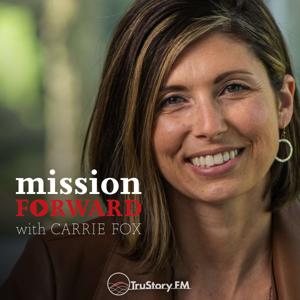


Shilpi Chhotray is the co-founder and executive director of People over Plastic. This week, she joins Carrie to share a story of waste colonization, social divides, and the work her team is doing to lift the intersectional stories of environmental racism.
People over Plastic is something truly special. On one level, it is a platform, the only multicultural media platform of its kind, publishing stories by BIPOC for BIPOC, uplifting environmental justice stories of the people who are living them in a way that is nuanced, sensitive, and in-depth.
But they have also developed expertise in events, creating safe spaces for frontline leaders to share their lived experiences in an unfiltered context. These storytelling salons are like nothing we've ever seen: creative, powerful, and made so much more potent in the vulnerability and courage that comes when facing the truths of shared narratives aloud, in public, and raw.
We are deeply impressed by what Shilpi and her team are doing at People over Plastic and we couldn't imagine this season of Mission Forward without her. And make sure to subscribe to the People over Plastic podcast to hear Shilpi in action!
Our great thanks to Shilpi Chhotray for joining us this week.
"If you can't see it, you can't feel it. And if you can't feel it, you won't be inspired to take action.”
So says our guest this week, Lisa Cron. Lisa is a story coach, a teacher, a speaker, a former literary agent, and the author of many books, including "Wired for Story," "Story Genius," and most recently "Story or Die: how to use brain science to engage, persuade, and change minds in business and in life.”
Her decades in publishing, exploring the universe that exists in the craft of putting words to story, has illuminated so much more brightly the value of the stories that exist between each of us as complex human organisms. "All stories are actually about the cost of human connection," she says. "In order to connect with someone else, you have to be vulnerable.”
We are communicators. We hold as truth that our power to craft a story is directly connected to our power to bring about change. If you've ever been moved to change something in your own life after watching a movie, or episode of your favorite show, or even a podcast, then you'll understand just how important Lisa's craft is to our own industry, and our own craft as communicators in mastering the power of story
Our great thanks to Lisa for joining us this week on Mission Forward.
Jennifer Brandel is a serial entrepreneur and innovator who works between industries to address how to design better systems for listening, responding, and evolving with their stakeholders. She is a co-founder of Hearken, which she’ll talk about extensively today, but she’s also behind Zebra's Unite, Civic Exchange Chicago, Democracy SOS and WBEZ Chicago's Curious City.
Now that we have her bona fides out of the way, here’s the real reason Jennifer is special to us: there are so few people able to clearly create an environment that makes the complicated approachable, and the messiest of problems solvable. Even the problems we face today, problems many believe to be impossible.
“We're coming to a moment in which many more people are recognizing that collaborations and the interdependencies of sectors, of organizations, even departments within a company need to be in better and closer communication with one another. And the more we divide and silo ourselves and separate the work, it's at our peril. We're missing insights. We're missing opportunities to leverage one another's work. We’re being less efficient. All of these things translate into the workplace of making our lives harder and also making us keep doing things the same way over and over again, rather than evolving at the speed at which we could be.”
How does she approach these intractable problems at Hearken? Curiously. She’s an enthusiastic observer with inexhaustible energy to face hard things and try to make them better. If you’ve never heard of Jennifer or her work, we’re thrilled and honored to be able to present her worldview to you on this show. Thank you to Jennifer for joining us on the show this week.
So much of the success of any of our DEI work is rooted in our ability to communicate vision through metaphor. It is, after all, a metaphor that connects to emotion, to our human ability to find empathy and build affinity between us. Vision, often, starts with a metaphor built with the heart in mind.
On this season of the show, we are talking about the role of storytelling in social change. And today’s guest has a natural gift for uplifting powerful and personal stories of impact from some of the nation’s most effective charities to build a more trusted charitable sector.
Art Taylor is president and CEO of the Better Business Bureau’s Wise Giving Alliance. As head of the Alliance, he oversees the organization’s work, which includes setting standards, evaluating charities in relation to those standards, publishing the Wise Giving Guide, and promoting charity accountability, plus a whole lot more. Art led the Wise Giving Alliance to introduce the accredited charity seal, a symbol of trustworthiness used by national and local charities that adhere to the Better Business Bureau standards for charity accountability, and it’s estimated that more than a billion impressions of that charity seal exist in the public domain. This is the bellwether that indicates to donors whether an organization is trustworthy.
At the foundation of all this success, however, is Art’s vision of success. This is the story — the metaphor — that touches us, too. “America is a very competitive place. And there are always ten chairs and 15 people. But I believe that we can take those ten chairs, and if 15 people get together, we can rework those chairs and make a bench, a place for us all to be able to sit down. And that’s how we have to view the world. We keep viewing the world as a zero-sum game. It’s not. There’s always more that we can produce if we work together.”
This is a conversation not about building bridges between communities but building a bench and offering those with opposing views the opportunity to sit together on it in the greater spirit of charity, impact, and trust. We thank Art Taylor for joining us on this show this week.
In flying, the takeoff and the landing are critical to success. Everything in between is coasting. It matters in the sky, and it matters in our speech. In this week’s Finding the Words, Carrie Fox explores how landing the plane helps her, and the Mission Partners team, when it counts.
This is week 4, in the second year, of the Finding The Words column, a series published every Wednesday that delivers a dose of communication insights direct to your inbox. If you like what you read, we hope you’ll subscribe to ensure you receive this each week.
Tyler Meier is the director of the University of Arizona Poetry Center and the co-editor of Dear Vaccine: A Global Vaccine Poem, a project that invited anyone to share experiences of the pandemic and vaccination through poetry.
What business poetry, you might ask? Because poetry, as Tyler says it, is marching away at the atomic level of our communication.
“Our lives are shaped by the language around us and the language that we choose to use. As beings based in language, poetry, I think, is the opportunity to teach us each day new ways of thinking about the language that we use to describe the things that matter greatly to us, the challenges that vex us enormously. We know that the future is one that we're going to share, regardless of what connects us or keeps us separate from each other. And we know that language is something that forms us and that gives us the sort of power to think in new ways about the challenges that we share.”
Dear Vaccine is an outgrowth of the Global Vaccine Project launched in March 2021 by the University of Arizona and Kent State University. In sum, it features selections from over 2,000 poetry submissions from all fifty states and more than 150 countries. And while the project features incredible global voices speaking to the pandemic, it serves the dual purpose of uniting us, filling in the holes that form through the haze of memory, a reminder that pandemic history is our history, and that if we can come through that, then we can come through anything together.
Our great thanks to Tyler Meier for joining us on the show this week. Pick up your own copy of the book and learn more about the project at GlobalVaccinePoem.com.
On Monday, March 6, Silicon Valley Bank (SVB) tweeted that it was “proud to be on Forbes’ annual ranking of America’s Best Banks.” Three days later, that very same bank was at the center of the largest U.S. bank failure since the global financial crisis. This week, Carrie Fox dissects the communications troubles at the center.
This post is part of the Finding The Words column, a series published every Wednesday that delivers a dose of communication insights direct to your inbox. If you like what you read, we hope you’ll subscribe to ensure you receive this each week.
George Jones is the CEO of Washington, DC-based Bread for the City, which supports people living with low incomes to develop their power to determine the future of their own communities. They provide food, clothing, medical care, and legal and social services to reduce the burden of poverty. And in working to solve some of the cities most pressing challenges, George Jones is one of the very best.
That’s what you get when you discover your calling at 12-years-old, as George did, realizing early on that his journey was one rooted in justice and equity. Today, he lives at the intersection of race, racism, and poverty, and through Bread for the City and his work as an evangelist for equity he carries his believe that DC can be not just an antiracist city, but a beloved city of peace and equity.
Today, George sits down with Carrie to talk about the root causes that exist around poverty, homelessness, and food insecurity in DC, but we hope you learn, too, that missions can come from anywhere, at any age, and his is a model and inspiration for us all. Our great thanks to George Jones for his wisdom this week.
Whether we’re planning a road trip or a change of course in our organization’s strategy, the clearer the roadmap, the better the outcome.
This is week 3, in the second year, of the Finding The Words column, a series published every Wednesday that delivers a dose of communication insights direct to your inbox. If you like what you read, we hope you’ll subscribe to ensure you receive this each week.
Our guest today is focused on objectives.
We get it. We're all focused on objectives. Why should this episode be any different? Here's the trick: much of our advocacy and change efforts are centered in who we are. That's at the core of so much of our diversity and equity work, after all. Today, we ask what happens when we focus our advocacy, our engagement, and our public speaking on what we want, augmenting the message of who we are?
Buzz Mauro is the founder and co-director of the Theater Lab School of the Dramatic Arts in Washington, DC and a Helen Hayes Award nominee. He's also the founder of Center Stage Communications, a consulting firm specializing in the application of acting techniques to the business world. He's the author of three books on applied acting and he's a composer and lyricist who counts among his many works, Alex in Wonderland: A Gender Journey Down the Rabbit Hole.You can find Buzz on his podcast, Public Speaking the Actor's Way.
Approaching the larger questions of advocacy and change from an actor's perspective offers insights into the method and craft of engaging emotion. As you'll hear this week, Buzz is as much about engaging minds as he is about engaging hearts, and we're thrilled he's agreed to share some of his wisdom with us on the show.
From the publisher's feed

441 Listeners

8 Listeners

21 Listeners

37 Listeners

38 Listeners

12 Listeners

100 Listeners

4 Listeners
2 Listeners

8 Listeners

0 Listeners

69 Listeners

6 Listeners

0 Listeners

5 Listeners

8 Listeners

0 Listeners

0 Listeners
2 Listeners