
Sign up to save your podcasts
Or

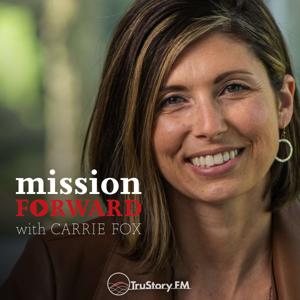


Welcome to this 50th episode of the Mission Forward Podcast! It's been a true joy sharing these conversations with you all on the power of communcations, this field we love so much.
Our guest this week is Kerry-Ann Hamilton, a communications strategist with decades of experience in media relations, cause communications, and crisis management. She serves as principal consultant at KAH Communications where she brings her experience to bear for nonprofits and cause-related organizations and, for us, her work is a shining example of the balance of ideals, values, goals, and mission.
In fact, we want to amplify this statement — which you'll hear when you listen to the show — because we've been repeating it like a mantra all week. When asked why she started her own firm, she replied, "I was excited to work at scale with organizations and bold change-makers who want to create the world they want, and are restless about the world we have."
We create the world we want because we're restless about the world we have.
Kerry-Ann's experience in nonprofit communication is extensive, and you'll hear how easily she's able to disabuse us of our misunderstandings about the work and power of the nonprofit in the hands of the passionate and engaged leader.
She shares her own inspirations this week: Atlas of the Heart by Brené Brown and The Trusted Advisor by David H. Maister.
You can learn more about Kerry-Ann Hamilton and the work her team is doing at KAH Consulting. We're honored to amplify her experience and expertise on the show this week!
"Joy can be a matter of life and death."
So says our guest this week, Justin Pasquierello. You could say his career started as a child, in a townhouse, meeting a team of paramedics on his stairs. His birth mother had a reaction to her medication. That was the last night he had lived with her, and the night that set him off on his career working in nonprofits on behalf of children.
We first met Justin Pasquierello when he was serving as executive director of Children's HealthWatch working with leaders around the country to improve children's health in America. From there, he's moved to East Boston Social Centers, taking the reins as Executive Director serving not just the diverse residents of East Boston, but the powerful legacy of 104 years the organization has served its community.
And Justin has done it all with joy.
"Joy lives in community," he says. "It is literally contagious, and so we can most effectively pursue our own happiness, and that of our society, together. Recognizing when all give, all gain, we can collectively make the world a better place by pursuing what matters most for joy: long and strong relationships, purpose, physical fitness, meditation, and fun."
He is a relentless and visionary thinker, working tirelessly to make the world a more peaceful, joyful, and sustainable place. We're honored to have Justin with us today to talk a bit about his work, his love, and some of our past work together.
Learn more about the work of East Boston Social Centers, and if you haven't had the opportunity, make sure to watch his TEDx Talk, "Why Joy is Not a Solo Sport", today.
When we started this season, we told you we would be talking to a mix of our favorite leaders in our field who are facing our challenges and barriers to moving their missions forward. This week on the show, we're talking to someone we can only rightly characterize as a leader of leaders.
C.Marie Taylor is a role model and mentor to us, a leader herself with a distinguished CV as executive director of respected non-profits. In 2018, she started her own consulting practice, Equity Through Action, leveraging her skills as a leader and communicator to build her own team dedicated to helping clients transform their environments into safe, inclusive, and people-focused spaces.
Anyone in agency space will know: accomplishing anything near that sort of goal requires a leader unafraid to speak truth — sometimes uncomfortable truth — to entrenched power. And that is not just C.Marie's great gift, it is her passion.
This week, we'll be specifically tackling the challenges of entrenched power in non-profit boards and offer solutions toward resolving conflict, overcoming obstacles, and generating action. We're thrilled that C.Marie has so generously given of her time and expertise to join us for this conversation.
How do you define power in your brand’s social media? In this climate of mis- and disinformation, navigating a brand's path across the internet means facing difficult conversations head-on. How do you forge ahead, craft an image and perspective that is authentic to the culture of your team, and place it online in a way that aligns with your values?
Our guest this week is Anthony Shop. Anthony is co-founder and Chief Strategy officer of Social Driver, an agency dedicated to building brand image online for their clients. He's also Chairman of the National Digital Roundtable, a DC-based group whose mission is to educate and inform professionals about the technology, trends, and tactics that are transforming how society interacts with the world around them. In short, Anthony Shop knows of what he speaks on this subject.
This is a conversation about trends, but not the trends defining what we're wearing or listening to. We're talking about the choices brands are making as they choose how to show up online, to live their values on digital channels, navigating the heated rhetoric that dominated so many spaces this election year. Are brands stepping back, or digging deeper into their social strategies?
Anthony's answer may surprise you. It all starts with people. "If CNN calls, you can't send your logo, you have to send a person! More companies are embracing using their people," he says. "Social media policies used to be about what not to do. Now, companies are helping leaders to build their presence," as individuals.
Agencies are carrying heavy baggage right now. Shaking free of white-dominant norms and toxicity can go a long way toward allowing more individuals the freedom to share new ideas for their clients, but our field has a long way to go. Taking Social Driver as an example gives us a light, a model that Anthony and team have created together of an intentional culture built on values and partnership inside the agency and beyond it. We're so grateful Anthony is here to teach us today.
Links & Notes
Welcome to this first episode of season five of the Mission Forward podcast. We come together this week in the spirit of love, with a provocative conversation on the love we have in our work, shared with one of our favorite people.
May Medallada Robinson is a communications and marketing consultant and she has spent her career at the intersection of communications and equity. She is a professor at Towson University, a Senior Strategist here at Mission Partners, and she is a deeply involved and engaged member of the community.
Let's set the stage with May's purpose: "to use communication, education, and multiracial experience to bridge gaps and increase empathy, humanity, and love in the world."
Notice any words in there that you might not find on the standard comms CV? We did, too. And those words are at the heart of why May starts the season with us this Valentine's day week.
We ask each other — and each of you — what does it mean to show love in the work we do, the work of our agencies, and for those who come after us in our field? What does it mean to employ our love of this work toward love of one another in such a way that nurtures those around us, that lifts those beneath us, and heals divides rather than creates them?
We are navigating challenging seas together as we help our clients to tell their stories and educate our communities through our words, our pictures, and our campaigns. If there are better ways to operate that contribute to a more inclusive and multiracial society, we're lucky to have May with us to share her experiences toward that end through her own love of the field, with lessons we may use to lift all our boats together.
Way back in season one, we introduced you to Natalie S. Burke, founder of Common Health Action. This week, we want to amplify that conversation.
Natalie has a way of incisively approaching the most challenging questions that fuel her advocacy. She is a leader in an incisive, aware, and focused journey toward equity, diversity, and inclusion. But it is a disruptive journey, and wherever we’re going, we have to reckon with a central question: how does racism harm us all?
We reference this episode often around Mission Partners with our clients and colleagues, and given how relevant it remains in today's world, and just how precise Natalie is in her approach to the work ahead for all of us, we thought you might appreciate hearing it with fresh ears, too. Natalie’s efforts to create what she calls “constructive discomfort” go a long way toward helping us all adapt to the pain that can come through learning and change. When we can face our discomfort in trust, we all win through transformation.
New for 2022
You will find all past episodes and new opportunities to become founding members of Mission Forward, along with early access to future shows at missionforward.us. You can also find us sharing highlights and some cool behind-the-scenes content from shows over on Twitter @missionfwdshow.
Links & Notes
We're just a few weeks out from releasing our first episodes of season five of Mission Forward. Until then, we're continuing our tour of past guests in an effort to elevate a few of our favorite conversations to welcome new listeners the best way we know how. This week we bring you Ed Young and Liz Neely in our 2018 conversation live on the Mission Forward stage.
Ed and Liz are two of the smartest and sharpest minds in science, communications, and EDS reporting on COVID earned him a Pulitzer Prize for explanatory journalism in 2021. Back in 2018, Ed had just written a story in The Atlantic titled, "I Spent Two Years Trying to Fix the Gender Imbalance in My Stories Here’s What I’ve Learned, and Why I Did It." The lessons he and Liz articulate in this conversation continue to be relevant as we continue to crest this pandemic wave. We hope you enjoy this conversation and learn as much from it as we did.
Since starting the Mission Forward conversation series in 2014, we’ve had the opportunity to interview some amazing folks: Pulitzer Prize-winning writers, MacArthur Genius grantees, media entrepreneurs, and philanthropists. One of our favorite conversations to date has been with Ed Yong and Liz Neeley. It took place in 2018, shortly after Ed wrote a story in the Atlantic titled: “I Spent Two Years Trying to Fix the Gender Imbalance in My Stories Here’s What I’ve Learned, and Why I Did It.”
As an acclaimed author and science writer, Ed was a big deal then, but he’s had quite a run these last few years. This past September, his story on the COVID-19 pandemic, “How Did it Come to This?” took the cover spot of The Atlantic magazine, and since that time, he’s published several other articles on COVID 19 including his most recent: “America Is About to Choose How Bad the Pandemic Will Get.”
Given how much we value Ed Yong — and how straightforward he can make even the most complex science story — we decided to resurface this great conversation from a few years back, about building equity and breaking bias in storytelling.
In that 2018 story about gender imbalance in his reporting, Ed found that only 24 percent of his last 23 articles quoted sources that were women. And of those stories, 35 percent featured no female voices at all. As Ed shared in his article:
“I knew that I care about equality, so I deluded myself into thinking that I wasn’t part of the problem. I assumed that my passive concern would be enough. Passive concern never is.”Yong’s heartbreakingly honest revelation, and several others like it, spurred our desire to dig in on ways that writers, marketers, and communications directors can build equity and break bias in their storytelling, and his story has stuck with us for many years.
But it wasn’t just Ed who we spoke with back **in 2018. We were joined by his partner, the brilliant Liz Neeley, founder and principal of Liminal Creations, where she focuses her time and talent on science communication. Liz served as Executive Director of The Story Collider through August of this year, shepherding real and deeply personal stories of science and living through on-stage events and their eponymous (and extraordinarily popular) podcast. Together, they had a lot to say on the topic of equity in storytelling.
Liz Neeley and Ed Yong are extraordinary people and exceptional journalists and communicators. We love this conversation and we’re sure that you will, too.
Links & Notes
In honor of Martin Luther King Day, we want to highlight one of our favorite conversations and past episodes featuring Dr. Robert Kelly of Loyola University Maryland. He shares how putting the students at the center of every decision he makes and rising to meet the hunger that these students have for connection is what drives the charge for him, the faculty at the University, parents, and other engaged adults to create a culture celebrating reconciliation, curiosity, joy, and hope.
This is a conversation about responsibility; taking responsibility for crafting the future for those in our care. Rob shares how he is helping Loyola to build according to their mission: pressing forward on issues of culture, climate, race, and inclusion in the face of obstacles of our own creation.
Listen now wherever you get your podcasts, subscribe, leave us a review and share the podcast with family and friends. We'll back in February with new conversations and episodes to help you keep moving your mission forward.
From the publisher's feed

441 Listeners
8 Listeners

21 Listeners

37 Listeners

38 Listeners

12 Listeners

100 Listeners

4 Listeners
2 Listeners

8 Listeners

0 Listeners

69 Listeners

6 Listeners

0 Listeners

5 Listeners

8 Listeners

0 Listeners

0 Listeners
2 Listeners