
Sign up to save your podcasts
Or

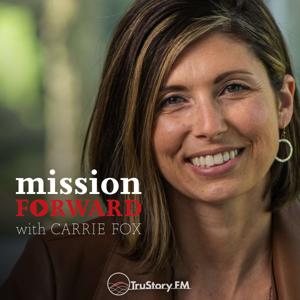


Design “is an art form that allows us to tell stories,” says Tim Hykes. “These stories allow us to connect with each other and allow us to see the other side.” It is with that spirit that Tim performs his craft as a UX designer at WorldWide Technology and visual scientist. Tim joins us this week to help us unravel how design can be a tool for justice and equity.
Want to know how serious Tim is about his work? Look no further than his conference, Design+Diversity, where Tim and team bring together professionals across industries to push the boundaries of design and communication toward change with a keen strategic eye on social justice, equity, and inclusion. As a matter of disclosure, Mission Partners was an Industry Sponsor of the conference in 2021.
As you’ll hear Tim say of the conference, “this is a safe space. This is the area. This is the place where you ask all those questions, because the best thing that could ever happen to you, is you could be corrected.” At a time when so many organizations are looking out for tools and strategies to sell, to engage, to communicate to their assorted publics, there is no better resource than Tim Hykes to demonstrate the power of bringing communicators together to for good.
We are honored to have a bit of his time on Mission Forward this week.
Our guest today is someone who is actively rethinking, rewriting, and redefining the status quo media landscape. Ashton Lattimore is Editor-in-Chief at Prism, an independent, nonprofit newsroom led by journalists of color, and as she says, “Prism was founded because mainstream media wasn’t reflecting enough of the truth—and it wasn’t bringing us closer to our vision of collective liberation and justice.”
Through in-depth and thought-provoking journalism, Prism reflects the lived experiences of people most impacted by injustice. Journalists tell stories from the ground up at Prism: to disrupt harmful narratives, and to inform movements for justice. Prism launched in August of 2020 and has quickly provided an important lens through which to report on issues such as electoral justice, racial justice, economic justice, gender justice, climate justice, and more—all through an essential and intersectional lens of racial justice
Prism is, as you’ll hear her describe it, a newsroom with a point of view, but one with a keen eye on the center of the story: the subject with the most at stake. And in a media ecosystem in which stake is too often defined by wealth and power, re-defining the concept in terms of justice and equity is a refreshing turn.
Lattimore is a former lawyer and accomplished writer and editor. She’s also a Maynard Institute Fellow whose work focuses on this intersection of race, culture, and law. We thrilled to have her on the show this week.
That’s the voice of Nimra Haroon, senior strategist at Mission Partners and a partner in the production of the Mission Forward podcast. Nimra brings a set of foundational insights that help us to set up the key themes we’ll be talking about this season. She’ll be back with us at the end of the season to reflect on what we learned.
Here’s what we’re looking forward to exploring this season:
There is so much good conversation ahead, and it’s clear in this first episode that we’re just getting started. Join us next week as we sit down with Ashton Lattimore, editor in chief of Prism, an independent, nonprofit news outlet led by journalists of color who together are challenging the way we get our news and the perspectives in which it’s told.
**Just a few more weeks! **
Season four of Mission Forward is right around the corner and we can't wait to share the slate of guests we have on deck. This season, every conversation is designed to help you learn the tools to be a communicator for change. But, since we're a few weeks out from releasing this new season, we wanted to share a bonus episode with you today featuring an awesome communicator in his own right, Timothy Hykes.
Carrie joined Tim on his show, Unconference by Design + Diversity, earlier this year we loved hearing these two talking about the power of communication. Tim graciously agreed to allow us to re-post this episode for you, our Mission Forward community. And rest assured, we will absolutely have him back on to keep this conversation going later in the season. Make sure to head over to Tim's show and subscribe for more great conversations just like this one, and learn more about the Design+Diversity event!
When we set out to produce season three of Mission Forward, we wanted to document this season of what we called perspective-shifting conversations. We wanted to touch on faith. We wanted to touch on media. We wanted to touch on the economy and the role of philanthropy in building back from a period of such damage from the impact of COVID-19. Right now, we're seeing members of our own communities acting out, engaging in behaviors that are disheartening, partly as a manifestation of what we have all had to sacrifice to the pandemic, partly in fearful anxiety of sacrifices yet to come.
And yet, through it all, we leave this season in a spirit of optimism. It's the same optimism that comes from having conquered a hard thing, having wrestled with difficult ideas and made it to the other side. We have we have explored such difficult ideas this season and we are buoyed with the energy our guests bring to their own efforts for change.
This week, we share a review of lessons learned from each of these guests as reflected by hosts Carrie Fox and Natalie S. Burke. If you haven't had the opportunity to listen to these conversations in full, we encourage you to do so, and to share with your communities broadly.
Our deepest thanks to Natalie Burke for her participation this season, leveraging her experience as a leader in public health to guide and frame our discussions in this space. She is a tireless advocate and we are exceptionally lucky to be in her orbit. Please click through to learn more about her and the work of CommonHealth ACTION — this is an organization worth knowing.
To all, thank you for subscribing, downloading, listening, and sharing this show. It is our great honor to produce it and to play even a small part in your podcast universe and we'll be back next season for more Mission Forward.
We've talked at some length this season about the role of the media — all kinds of media — in fostering hate and division, and the massive opportunity that exists in our communication spaces to lift one another, to repair, to rebuild. Our guest this week is someone whose steeped in a major movement to rewrite media's story in our society.
Alicia Bell is director of Media 2070. What started as a research essay detailing the role that media has played in anti-Black racism and harm has grown into a growing consortium of media makers and activists, collectively working toward media reparations. What does Media 2070 say about themselves?
This work is an effort to radically transform who has the capital to tell their own stories by 2070 — 50 years from today. This work is an idea, welcoming critique and feedback. It is liberation work within a lineage of civil-rights activism, racial-justice organizing and calls for reparations. This work makes visible the ways in which the media have taken part in and supported state violence and harm against Black people.Anti-Blackness is a global issue and we will never build the critical mass to transform our culture if we don’t marshal the political and cultural resources required to address it in our media, first. Alicia and her team are not just talking and writing about the need for reparations, they're actively working on that change. They partnered with more than twenty lawmakers to call on the FCC to examine how media-related policies have harmed black communities and other people of color. They’ve created tools for newsrooms and journalists to assess their own cultural norms, and pledge to build more radically inclusive practices. They’ve presented the need for culture change in a way media itself never could have done.
Alicia is at the heart of this reckoning, one designed to move newsrooms to a place that can care for and support all people in the community and finally address the issue of anti-Blackness that has been present in our media for hundreds of years.
We can't wait to introduce you to this powerful force standing up for the future of a free and just press, Alicia Bell of Media 2070.
Links & Notes
According to this week's guest, "the word community has been co-opted to something that is a lie." While we might have a shared convention of community, when we use the word, our differences begin to rise to the surface. Our language is littered with words like this — family, culture, and yes, community — words that require us to stop, reflect, and ask: "when you use these words, to whom are you referring?"
We're talking about Mia Birdsong: pathfinder, community curator, and storyteller, who steadily engages the leadership and wisdom of people experiencing injustice to chart new visions of American life. You may have seen her TED Talk ('The Story We Tell About Poverty Isn't True'), or read her book (How We Show Up: Reclaiming Family, Friendship, and Community), or listened to her podcast (More than Enough), but if you haven't, you will surely want to after listening to this week's conversation. She has an extraordinary gift for leveraging the brilliance of everyday people so that our collective gifts reach larger spheres of influence, cultural and political change, and create well-being for everyone.
We take on the concept of community, and the challenges and lack of clarity in the words we use. We talk about how a culture of self-reliance and a system of oppression have become hurdles for forming community. We talk about the differences between independence and interdependence. We talk about the dangers of whiteness in society, and why now, more than ever, we need a new white culture to prevail.
As much as this is a dialogue about the disparity between bodies, it is also a celebration of potential. The pandemic has done much to pull back the veil on the inherent lack that exists in communities adjacent to privilege. As Mia says, while there is a pull to revert to whatever we experienced as "normal" before the pandemic, we have an opportunity and an obligation to one another to test our understanding of our language of community, of family, of culture, of friendship, all in an effort to balance the scales long tilted against color and poverty.
Our thanks to Mia Birdsong for her courage, her activism, and her time to share with us this week.
Links & Notes
From the publisher's feed

441 Listeners
8 Listeners
21 Listeners

37 Listeners

38 Listeners

12 Listeners

100 Listeners

4 Listeners
2 Listeners

8 Listeners

0 Listeners

69 Listeners

6 Listeners

0 Listeners

5 Listeners

8 Listeners

0 Listeners

0 Listeners
2 Listeners