
Sign up to save your podcasts
Or

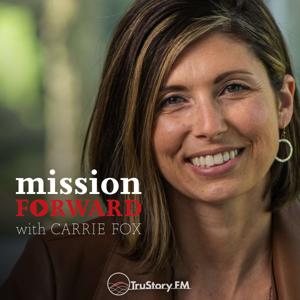


Our digital universe was intended to close divides between time and space, to allow us to communicate more clearly and more often. But there is a situation in this digital universe that actually limits our ability to connect. External forces make us question what is true and false. We are at the mercy of algorithms created to shape our opinions and actions online.
Our guest this week has done extensive work on these issues and is here to help us understand the landscape, and the implications of our actions. Andre Banks is the founder and CEO of A/B Partners. Andre works at the top of his field on political communications and digital organizing and serves as the current chair of the board at Color Of Change.
This season, we continue to dig in to all the ways that we come together as a society. But we can’t speak authentically about people in connection to one another without talking about the role that social media plays in how we come to understand one another, and how we push each other apart in the process. Our conversation today takes on the role that mis- and dis-information plays in activism online and in the media, and how it is weaponized to further disenfranchise marginalized communities.
For many, we are inseparable from our digital connections. What role do those connections play in our physical and mental well-being? And how do we build a space for authentic, constructive dialog in the face of external forces? We are grateful for Andre this week, for sharing such extensive experience and giving us all a foundation for our own work as we reclaim and grow our digital universe.
Links & Notes
"COVID-19 is not just a medical issue. It is also a social justice, economic, and political issue. That makes it hard to figure out how best to share information about it, especially since messages come from a range of communicators—including elected officials, journalists, scientists, physicians, and community leaders—and are delivered to diverse audiences."
Such is the foundational position in a recent piece published in Fast Company. Our guests this week, authors Todd Newman and Emily Howell (together with Dominique Broussard), present their insights into the messengers and their messages that constellate to keep us unhealthy.
This is a conversation about trust, and it brings with it some extraordinarily difficult questions. Does the public understand the role of public health? Has our model of health broken its promise of healthy communities across racial and economic boundaries? Has the media lived up to its obligation to truth in a public health crisis?
Objectively, the answer has to be a resounding no to these and so many more. Which opens to the door to our conversation this week in which we examine the opportunities before us to build trust, to cement community, to broaden the reach of our most critical messages, and to do so clearly. As Natalie so aptly says, "to engage in the production of the public's health is actually a patriotic act." So how do we make it clear that public health truly matters to private lives?
Our deep thanks to Todd and Emily for joining us this week. Please visit the link below to read the original article. Thank you for listening, and for sharing with your communities, too.
Links & Notes
"We believe that philanthropy shouldn't be about barriers and bottlenecks." So says the About page of JustFund, the grant platform transforming giving. But removing bottlenecks is just one way that Just Fund is changing the game. Getting resources to organizations truly doing front line work involves challenging entrenched ideologies and engaging leadership often marginalized in philanthropy: people of color. And so it is a group of funders and organizers of color who founded the organization, those who know best how to poke at philanthropy's power problem.
And leading the charge is our guest today: Iara Peng, founder and CEO of JustFund.
JustFund brings a new approach to philanthropic grant-making and challenges existing systems in what she calls, "an intervention into the antiquated systems that grant makers have inherited."
Instead, JustFund offers a trust-based, values-aligned approach that can fuel the movement for social and racial equity and they've done it in a very short time. The platform is already being used by more than three thousand organizations and is coming up on its first major milestone: moving $100 million in grants from funders to organizers.
It's easy to call out what is not working about philanthropy. It's another to build a tool from scratch to address the collective opportunity to transform philanthropy. That's what JustFund is all about, and that's why we can think of no better guest to talk about this big idea, and how leveling the philanthropic playing field is not only better for people regularly marginalized in the conversation, but for all of us.
Links & Notes
"Journalist interested in what works and why." So reads the Twitter bio of this week's guest, Tina Rosenberg. She is a Pulitzer Prize-winning journalist, in fact. She is a co-writer of the New York Times Fixes column which, according to the masthead, "examines solutions to social problems and why they work," and she is a co-founder and VP for Innovation at Solutions Journalism Network.
It is through this last initiative that she thoroughly shares her passion for rigorous reporting, educating future journalists, and reclaiming the news as an agent of public good.
"America is actually not that polarized," says Rosenberg. "We think we're a lot more polarized than we are because the media just shows the extremes on both sides. And I think that's had a big effect on turning what should be a straightforward public health issue into a political issue."
How heavily should the media shoulder the responsibility of the erosion of trust in journalism itself as an industry of fact and truth? How significant is the block toward our efforts to heal?
Tina has taken broad steps to change perception of the public in her field. She joins us this week to share her work, and to help us better understand how we can follow in her footsteps in building a healthy foundation of trust in journalism's future.
Links & Notes
Linda Villarosa is a brilliant storyteller. In addition to her work as a journalist, author, editor, and educator, she's a New York Times Magazine contributing writer where she covers race, inequality and health. You may have come across her 2018 cover story for the magazine titled 'Why America's Black mothers and babies are in a life or death crisis,' which was nominated for a national magazine award.
It was that article that first prompted us to reach out with Linda to participate in a Mission Forward. She returns to us today because of a story she recently published called 'Black Lives are Shorter in Chicago: My family's history shows why.' Reading that story, a very personal account of her own family's journey through Chicago transports the reader through time, while reinforcing some of the most essential public health issues of our time.
As you'll hear in this episode, this country has turned an important corner on the fight against COVID, a fight to return some semblance of life as we once knew it, with an approach of equality. But we do not suffer, nor do we heal equally. This is a fight which must be waged equitably, acknowledging the decidedly unequal contributions to our collective suffering shouldered by Black and Brown people in this country.
Linda Villarosa is uniquely experienced to help Carrie Fox and Natalie S. Burke navigate this conversation, confronting just how far our public health system has to go on issues of equity and inclusivity.
“It was an experience that we could never have imagined…”
That's been a consistent refrain in and around our country since the early days of this COVID-19 pandemic. "I could never have imagined living through COVID.” “I could never have imagined the number of lives that would be lost.” “I could never have imagined the toll this pandemic would take on Black lives."
And yet, the writing was on the wall. As our world has become increasingly global, the spread of disease has become more likely, and the effects were bound to hit the most under-resourced communities the hardest. Add to that the role that social determinants play in the health of our communities, and we have to ask, “how could we not have seen this coming?”
There’s an old saying that “when white folks catch a cold, Black folks get pneumonia.” It’s often shared in the context of economic health, but in the time of COVID, it is even more resonant. And so this season, we’re digging in to how COVID-19 has affected us; how it’s affected our communities, our relationships, our understanding of the world around us, and of each other.
Along for our journey this season is the brilliant Natalie S. Burke, founder of CommonHealth ACTION and a true equity evangelist. Together, Carrie and Natalie will dig in to issues of public health through the lens of communication, connection, and of course, equity. We’ll explore how COVID has changed us, and where we go from here.
This is going to be a season of perspective-shifting conversations that will touch on faith, media, the economic recovery, and the role of philanthropy. We start this week with a big picture conversation with Natalie.
You won’t want to miss this one.
From the publisher's feed

441 Listeners

8 Listeners

21 Listeners

37 Listeners

38 Listeners

12 Listeners

100 Listeners

4 Listeners
2 Listeners

8 Listeners

0 Listeners

69 Listeners

6 Listeners

0 Listeners

5 Listeners

8 Listeners

0 Listeners

0 Listeners
2 Listeners